
As an Amazon Associate CoffeeXplore.com earns from qualifying purchases.
Vietnamese Egg Coffee: Master the Authentic Creamy Recipe
Have you ever hesitated to try coffee made with raw eggs? You are not alone in wondering if this unique brew is safe. Many coffee lovers want to recreate Vietnamese egg coffee without risking foodborne illness.
Vietnamese egg coffee, or Cà Phê Trứng, is a traditional Hanoi specialty brew made by vigorously beating an egg yolk with sweetened condensed milk into an airy, meringue-like custard. This thickened coffee foam is then poured over hot, strongly brewed Robusta beans, creating a decadent beverage that tastes like liquid tiramisu.
Drawing from historical post-war milk shortage records and the Nguyen Van Giang legacy, we demystify this recipe safely. Leveraging modern food safety standards for pasteurizing yolks, you will master this delicious art. Read on to discover the exact culinary chemistry required for a perfect cup.
Contents
show
7 Essential Steps to Master the Authentic Vietnamese Egg Coffee Recipe
Creating the perfect egg foam recipe requires precision: You must balance delicate temperatures, specific ingredients, and exact timing. Replicating an authentic Vietnamese egg coffee recipe with condensed milk demands more than just vigorously mixing ingredients together in a mug. Our step by step guide to making cà phê trứng eliminates the guesswork entirely. By understanding the underlying Lecithin emulsification process, you will prevent your foam from collapsing prematurely. We have incorporated expert barista tips throughout these steps to ensure your final brew is completely safe and free of any fishy smell. Let us explore how to whisk and brew this masterpiece flawlessly right in your own kitchen.
1. Select and Grind the Authentic Robusta Beans

- Pin this bean-selection secret to your “Home Barista” board for the perfect morning brew!
Ingredients
- 3 tablespoons whole Vietnamese coffee beans (100% Robusta for an authentic, bold punch)
- 1 precision burr grinder (set to a medium-coarse consistency, resembling sea salt)
- 1 digital kitchen scale (for exact measurements)
Instructions
- Measure exactly 20 grams of fresh Robusta beans to ensure a robust, bittersweet foundation that cuts through the sugar.
- Pour the beans into your burr grinder and whip up a medium-coarse grind; too fine will clog your filter, and too coarse will result in weak coffee.
- Set the freshly ground coffee aside immediately to preserve the volatile aromatics before you brew.
Pro-Tip: Based on my experience recreating Third wave coffee in Vietnam, using 100% Robusta is essential. Its unique Robusta chemical profile provides the earthy, chocolatey bitterness required to perfectly balance the ultra-sweet egg topping. Arabica beans will simply get lost in the custard, ruining the strong brewed coffee contrast. If you are wondering where to buy Vietnamese coffee beans for egg coffee, seek out specialty Asian grocers or dedicated online roasters.

2. Prepare the Traditional Vietnamese Phin Filter

- Save this authentic brewing setup to your “Coffee Culture” board!
Ingredients
- 1 authentic stainless steel coffee filter phin (4 oz size is ideal for single servings)
- 20 grams of your freshly ground Robusta coffee
- 1 clear double-wall glass mug (to showcase the beautiful layers)
Instructions
- Place the perforated base plate over your clear coffee mug, then set the main brewing chamber on top.
- Pour the ground coffee evenly into the chamber, tapping the sides gently to level the bed of grounds.
- Drop the gravity press insert over the grounds and stir or spin it slightly to ensure it sits perfectly flat; do not press down forcefully, or the water will not drip through.
Pro-Tip: Mastering Phin extraction variables comes down to the bloom. Pour just enough hot water to wet the grounds and wait 30 seconds before filling the chamber. This allows the CO2 to escape, preventing channeling and ensuring your Vietnamese drip filter performs a perfect, slow extraction.

3. Safely Separate and Pasteurize the Egg Yolks

- Keep your kitchen safe! Pin this raw egg safety hack to your “Baking & Cooking Tips” board.
Ingredients
- 2 large, high-quality, pasture-raised eggs (preferably pre-pasteurized in-shell)
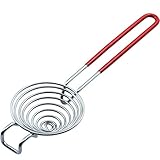
- 1 stainless steel egg yolk separator
- 1 instant-read digital food thermometer
- 1 medium mixing bowl
Instructions
- Separate the egg yolks cleanly using your separator tool, ensuring absolutely no egg white remains, as whites will ruin the meringue-like texture and cause a fishy smell.
- Place the isolated yolks into a heat-proof mixing bowl.
- If your eggs are not pre-pasteurized, set the bowl over a saucepan of gently simmering water (a double boiler) and whisk continuously until a digital thermometer reads exactly 140°F (60°C) for 3 full minutes to eliminate any salmonella risk. Remove from heat immediately to avoid scrambling.
Pro-Tip: If you struggle with egg separation, doing it while the eggs are refrigerator-cold keeps the yolk membrane firm. Always adhere to strict food safety standards; pasteurizing yolks at home not only ensures raw egg safety but actually thickens the culinary chemistry of yolks, resulting in a stabler, richer foam!
4. Whisk the Sweetened Condensed Milk Emulsion

- Want that perfect ribbon texture? Pin this whisking technique to your “Dessert Drinks” board!
Ingredients
- The 2 pasteurized egg yolks from the previous step
- 3 tablespoons of authentic sweetened condensed milk (adjust slightly for sweetness)
- ½ teaspoon pure vanilla extract (optional, but highly recommended to mask any residual egg aroma)
- 1 electric wire whisk or hand mixer
Instructions
- Combine the egg yolks, sweetened condensed milk, and vanilla extract in your deep mixing bowl.
- Beat the mixture on a low speed initially to incorporate, then whip on high speed for exactly 5 to 7 minutes.
- Stop whisking only when the egg yolk mixture has tripled in volume, turned a very pale golden yellow, and falls from the beaters in thick, fluffy ribbons that sit on top of the mixture for a few seconds before dissolving.
Pro-Tip: Proper aeration techniques require patience. Do not try this with a manual whisk unless you want a severe arm workout! The high-speed friction of the electric wire whisk creates a Lecithin emulsification, ensuring your foam stays fluffy and never collapses into your coffee.

5. Brew the Strong Bittersweet Coffee Base

- Save this foolproof brewing method to your “Morning Routine” board!
Ingredients
- The assembled Phin filter containing your ground Robusta coffee
- 4 ounces of filtered water
- 1 precision gooseneck kettle (for controlled pouring)
Instructions
- Heat your filtered water in the gooseneck kettle to exactly 200°F (93°C)—just off the boil—to prevent scorching the beans and creating an overly bitter coffee.
- Pour roughly 1 ounce of hot water evenly over the gravity press insert and allow the grounds to steep and bloom for 30 seconds.
- Fill the chamber to the top with the remaining hot water, cover with the lid, and let the coffee slowly drip into your glass. The entire process should take about 4 to 5 minutes for the perfect Vietnamese morning coffee extraction.
Pro-Tip: The secret to unlocking the deep chocolate notes in Robusta beans without excessive astringency is exact temperature control. Water hotter than 205°F will rapidly accelerate the breakdown of compounds formed during the Maillard reaction, resulting in a harsh, ashy taste instead of a smooth, bittersweet hot + cold base.


6. Float the Liquid Tiramisu Custard Topping

- The magic moment! Pin this gorgeous layering technique to your “Beautiful Beverages” board.
Ingredients
- Your freshly brewed, hot Robusta coffee base
- Your thick, fluffy whipped egg yolk mixture
- Cocoa powder or cinnamon (optional, for garnish)
- 1 clear double-wall glass mug (to display the layers)
Instructions
- Remove the Phin filter from your glass mug once the coffee has completely finished dripping.
- Pour the beautifully aerated creamy custard topping directly over the hot coffee. Because of its intense thickness, it will naturally float right on top, creating a distinct, gorgeous two-toned visual.
- Dust the top of the foam lightly with cocoa powder to complete the liquid tiramisu aesthetic and add an extra dessert-like layer of complexity.
Pro-Tip: The key to perfect layering lies in the viscosity of egg foam. If you whipped the egg and condensed milk long enough (the full 5-7 minutes), the micro-bubbles trap enough air to make the mixture significantly less dense than the liquid coffee, ensuring it never sinks to the bottom.
$1 offBestseller No. 6

7. Serve the Cà Phê Trứng in a Hot Water Bath

- Impress your guests! Pin this authentic Hanoi serving style to your “Hosting Ideas” board.
Ingredients
- Your completed Cà Phê Trứng in its glass mug
- 1 small, shallow ceramic bowl or ramekin (wider than your coffee mug)
- Boiling water
- 1 small espresso spoon
Instructions
- Place your clear glass mug containing the egg coffee gently into the shallow ceramic bowl.
- Pour an inch of boiling water into the ceramic bowl (around the outside of the mug) to create a traditional hot water bath. This authentic Hanoi technique solves the issue of keeping coffee hot while you slowly enjoy the rich drink.
- Serve immediately. To drink, use the small spoon to either stir the sweet and bitter layers together into a creamy latte-like consistency, or sip through the dense foam to get the hot coffee and cool custard in one perfect mouthful.
Pro-Tip: If you ever visit the Hanoi Old Quarter, you will notice that the iconic Cafe Giang always serves this drink in a hot water bath. Due to the cool temperature of the whipped egg mixture, the coffee underneath can cool rapidly; the water bath is a brilliant piece of Hanoi coffee culture evolution designed to preserve the ideal drinking temperature.

Key Takeaways: Your Quick Guide to Vietnamese Egg Coffee
Need a quick refresher before you start brewing? Consolidating the core principles of an authentic recipe ensures you achieve that signature Hanoi specialty flavor without constant scrolling. Whether you are double-checking your sweetened condensed milk ratios or verifying the raw egg safety temperatures, this rapid-fire summary guarantees success. Keep these essential rules in mind to craft the perfect creamy custard topping every time you step up to your coffee station.
- The Authentic Hanoi Origin: Vietnamese egg coffee summary notes show it was invented in 1946 by Nguyen Van Giang in Hanoi as an ingenious, creamy solution to a nationwide milk shortage.
- Robusta Beans are Non-Negotiable: To achieve the authentic flavor, you must brew with strong Vietnamese Robusta beans; their bold, bitter profile perfectly counterbalances the ultra-sweet topping.
- Prioritize Raw Egg Safety: Eliminate any salmonella risk by either purchasing pre-pasteurized eggs or gently pasteurizing the separated yolks over a double boiler at 140°F (60°C) for 3 minutes.
- The 5-Minute Whisking Rule: For a stable, meringue-like foam that floats, you must whip the egg yolks and sweetened condensed milk with an electric mixer for at least 5 to 7 minutes until thick ribbons form.
- Vanilla Prevents Fishiness: Adding a drop of pure vanilla extract to your egg mixture is the best way to mask any lingering savory, egg-like aromas.
- The Hot Water Bath Method: Serving the coffee mug sitting in a shallow bowl of hot water is an authentic Hanoi tradition that ensures the beverage stays warm while you sip the cool custard.
- It is a Dessert in a Glass: Treat this beverage as a rich, liquid tiramisu; it is incredibly caloric and decadent, meant to be sipped slowly as a sweet morning treat or after-dinner delight.
People Also Ask About Vietnamese Egg Coffee
Still have questions about this unique beverage? First-time brewers often wonder about the specific health, safety, and flavor profiles associated with mixing raw yolks into hot beverages. To provide you with total clarity, we have compiled detailed answers to the most common inquiries. From addressing caloric content to troubleshooting a fishy smell, these insights will elevate your understanding from a beginner level to expert barista status.
What is Vietnamese egg coffee?
Vietnamese egg coffee, or Cà Phê Trứng, is a traditional Hanoi beverage made by pouring a deeply brewed Robusta coffee base beneath a thick, frothy topping of whipped egg yolks and sweetened condensed milk.
Created in 1946 during a French War milk shortage, the drink tastes remarkably similar to a rich, caffeinated custard or liquid tiramisu. It is renowned for its striking contrast between the bitter, piping-hot coffee and the sweet, airy, velvet-like egg topping.
How to make Vietnamese egg coffee?
To make authentic Vietnamese egg coffee, whisk two pasteurized egg yolks with three tablespoons of sweetened condensed milk for 5-7 minutes until pale, thick, and ribbon-like.
Meanwhile, brew a strong shot of Robusta coffee using a traditional metal Phin filter. Once brewed, gently pour the aerated egg yolk mixture over the hot coffee so it floats perfectly on top, and serve immediately in a hot water bath.
Is Vietnamese egg coffee safe?
Yes, Vietnamese egg coffee is entirely safe to drink as long as you use pasteurized eggs to eliminate any potential salmonella risk.
While the traditional recipe uses raw yolks, modern food safety standards dictate either buying pre-pasteurized eggs in the shell or gently heating the yolks over a double boiler to 140°F (60°C) for 3 minutes before whisking.
Does egg coffee taste like egg?
When prepared correctly, egg coffee does not taste like scrambled or raw eggs at all; it tastes exactly like a sweet, creamy vanilla custard or melted marshmallow.
The extreme sweetness of the condensed milk, the high-speed aeration, and a dash of vanilla extract completely mask the savory egg flavor, transforming the yolk purely into a textural vehicle for the rich, dessert-like foam.
Can you use espresso for egg coffee?
Yes, you can absolutely use a double shot of espresso as an alternative if you do not own a traditional Vietnamese Phin filter.
However, for the most authentic flavor comparison, pull your espresso shots using a dark-roasted Robusta bean rather than a standard Arabica blend. The intense pressure of an espresso machine will extract the bold, bitter notes needed to balance the sweet topping.
How many calories in egg coffee?
A standard cup of traditional Vietnamese egg coffee contains approximately 250 to 350 calories, depending on the exact amount of sweetened condensed milk used.
Because it is heavily reliant on high-fat egg yolks and sugar-dense condensed milk, it is best enjoyed as an indulgent dessert or a rich morning treat rather than a low-calorie daily beverage.
Why is my egg coffee fishy?
A fishy smell in egg coffee usually occurs if you accidentally leave some of the egg white attached to the yolk, or if you under-whip the mixture.
The proteins in egg whites can emit a sulfurous, fishy odor when exposed to the heat of the coffee. To prevent this, cleanly separate your yolks, whip the emulsion for a full 5-7 minutes, and add a drop of vanilla extract.
What is the difference between egg coffee and salt coffee?
Egg coffee is topped with a thick, custard-like foam made from egg yolks and condensed milk, while Vietnamese salt coffee (Cà Phê Muối) features a lighter fermented cream topping infused with a pinch of salt.
Egg coffee is native to Hanoi and is intensely rich and sweet, whereas salt coffee originated in Hue and offers a savory-sweet, salted-caramel flavor profile.
Can I make egg coffee without condensed milk?
While sweetened condensed milk is strictly required for the authentic recipe, you can substitute it with heavy cream and sugar, or a dairy-free coconut condensed milk alternative.
Be aware that substituting the condensed milk alters the density and stabilization of the foam. Traditional condensed milk has the perfect sugar-to-water ratio to ensure the egg yolk whips into a stable meringue that won’t collapse into the hot coffee.
Is it served hot or cold?
Authentic Cà Phê Trứng is traditionally served piping hot, often resting in a small bowl of boiling water to maintain its temperature in the cafes of Hanoi.
However, modern variations do include iced Vietnamese egg coffee. For the iced version, the strong coffee is poured over ice cubes first, and then the thick egg cream is floated on top for a refreshing summer dessert drink.
Final Thoughts on Vietnamese Egg Coffee
Mastering the authentic Vietnamese egg coffee at home is far more than just mixing ingredients; it is a delicious foray into a rich Hanoi tradition that dates back to 1946. By understanding the unique culinary chemistry of yolks and applying our proven techniques for pasteurization and emulsification, you have completely eliminated the intimidation factor of working with raw eggs. You are now fully equipped to recreate this historic Hanoi specialty brew in your own kitchen with total confidence and safety.
Remember, the secret to achieving that perfect, gravity-defying liquid tiramisu foam lies entirely in your patience. Do not rush the 5-minute whisking process, and always opt for the bold, earthy punch of true Robusta beans to ensure your beverage has the essential sweet and bitter contrast that made Nguyen Van Giang’s original creation a global sensation. When executed properly, this authentic recipe yields a profoundly rich, dessert-like coffee experience that rivals any luxury cafe in the Hanoi Old Quarter.
Now it is your turn to bring a taste of Vietnam into your morning routine. Have you tried whisking up your own Cà Phê Trứng yet, or did you experiment with an iced version? Drop a comment below and share your home barista success stories!
Last update on 2026-10-07 / Affiliate links / Images from Amazon Product Advertising API
