
As an Amazon Associate CoffeeXplore.com earns from qualifying purchases.
Small Space Home Coffee Bar Ideas: 7 Hacks for Home Baristas
Do you struggle with a messy kitchen and limited counter space every morning? Managing cord clutter and bulky equipment on a tight budget is incredibly frustrating. Let’s explore transformative small space home coffee bar ideas for your apartment.
To create a small space home coffee bar, utilize vertical storage like floating shelves or a pegboard, repurpose narrow console tables or mobile bar carts, and optimize unused corners. By using tiered trays and moisture-resistant surfaces, you can build a highly functional, aesthetic kitchen coffee corner without sacrificing essential counter space.
Drawing from comprehensive spatial planning analysis and tested interior design methodologies, we solve small apartment footprints. A dedicated home coffee station maximizes functionality while seamlessly coordinating with your existing apartment living decor. You will discover seven renter-friendly hacks to transform awkward layouts into luxury setups.
Contents
show
How To Create A Small Space Home Coffee Bar To Solve Limited Counter Space
To create a small space home coffee bar to solve limited counter space, you must strategically utilize vertical wall storage, repurpose transitional spaces like hallways, and implement mobile furniture solutions. This approach ensures your daily brewing tools are accessible without cluttering your primary kitchen prep zones.
Before diving into specific setups, take a moment to visualize your current morning routine. Imagine a before-and-after scenario where your scattered syrup bottles, messy coffee pods, and tangled wires are replaced by a sleek, unified beverage station. Ask yourself this quick problem-identification checklist: Do you struggle with unorganized accessories? Are dark corners in your kitchen going unused? Is a tight budget keeping you from renovating? If you answered yes, a renter-friendly, space-saving approach is your best path forward.
As a space planning expert, I always emphasize that successful compact coffee corners rely on strict adherence to technical design principles. When evaluating open shelving versus closed storage, consider that open floating shelves make a room feel larger but require meticulous organization. Closed storage, like a coffee bar cabinet, hides visual clutter but requires careful steam ventilation.
When building your setup, always match the standard counter height of 36 inches to maintain an ergonomic brewing workflow. Additionally, espresso machines generate significant heat and water vapor. You must use moisture-resistant materials and ensure your high-wattage equipment is plugged into a safe, dedicated electrical setup rather than an overloaded power strip.
Small Space Home Coffee Bar Ideas: 7 Hacks for Home Baristas
The most effective small space home coffee bar ideas include installing vertical floating shelves, utilizing rolling bar carts, hiding equipment behind cabinet doors, and repurposing narrow console tables. These seven proven hacks allow you to build a comprehensive home coffee shop regardless of your square footage constraints.
Choosing between a built-in vs freestanding coffee bar ultimately depends on your housing situation. Renters benefit immensely from freestanding coffee bar furniture like narrow tables, bookshelves, and bar carts because they require zero permanent modifications. Homeowners might prefer built-in solutions that integrate directly into existing cabinetry.
Regardless of your choice, setting up a DIY coffee bar requires careful attention to detail. You must respect weight capacity guidelines for wall mounts to support heavy coffee brewing tools like a burr grinder or french press. Furthermore, implementing a strict cable management guide ensures your coffee bar accessories don’t create tripping hazards. Let’s explore these actionable, step-by-step configurations tailored specifically for tiny homes.
1. Install Floating Shelves for Vertical Coffee Storage

Pin this space-saving vertical coffee bar hack to your Dream Kitchen board!
Pairing floating shelves + mugs is the ultimate verticality optimization strategy for tiny kitchens. A wall-mounted folding coffee station instantly frees up your counters while keeping your coffee bar storage beautifully displayed.
Materials Needed
- Heavy-duty rustic wooden floating shelves (minimum 8-inch depth for canisters)
- Heavy-duty metal brackets (rated for 40+ lbs)
- Drywall anchors and long wood screws
- Airtight coffee bean canisters for freshness
- Under-shelf brass mug rack hooks
- Cordless drill and a bubble level
Step-by-Step Directions
- Measure the vertical wall space above your espresso machine, leaving at least 18 inches of clearance for steam and easy refilling of the water tank.
- Locate the wall studs using a stud finder to ensure maximum weight capacity for your ceramic mugs and heavy glass jars.
- Install the metal brackets securely into the studs or use heavy-duty drywall anchors if studs aren’t aligned.
- Mount the wooden shelves onto the brackets and check for perfect levelness to prevent spills.
- Attach small screw-in hooks to the bottom of the lowest shelf to hang your daily coffee mugs.
- Style the shelves by placing heavier items (like a burr grinder) on the bottom shelf and lighter, decorative items on top.
What most guides miss: As an interior designer, I always calculate the structural load for floating shelves. A stack of ceramic mugs and full glass syrup bottles can easily exceed 20 pounds. Always anchor directly into studs rather than relying solely on drywall toggles, and use a hydrophobic surface treatment on the wood to prevent steam damage from your brewer below.

2. Set Up a Mobile Bar Cart Coffee Station

Save this renter-friendly bar cart setup to your Apartment Living boards!
Combining a bar cart + apartment living is one of the most brilliant renter-friendly small coffee bar ideas available. A portable beverage station solves the dilemma of a rolling cart vs stationary table by offering flexible, multi-tiered organization.
Materials Needed
- 3-tier rolling bar cart with locking wheels
- Acrylic coffee pods + drawer organizer
- Woven baskets for concealing bulk coffee bags
- Cable management zip ties or adhesive clips
- Non-slip silicone mats (to prevent machine sliding)
- Dedicated heavy-duty extension cord (if outlet is far)
Step-by-Step Directions
- Assemble the rolling bar cart, ensuring the locking casters are securely fastened to prevent unwanted movement during brewing.
- Cut and place clear, non-slip silicone mats on the top glass tier to absorb vibrations from your espresso machine or grinder.
- Position your heaviest brewing equipment (coffee maker, electric kettle) on the top tier for easy, ergonomic access.
- Organize the middle tier with an acrylic pod drawer, a milk frother, and your daily mugs.
- Arrange the bottom tier with a woven basket to hide bulk coffee beans, extra filters, and cleaning supplies.
- Route the power cords down the back leg of the cart using adhesive zip ties, creating a clean, low-profile cable routing system.
Expert insight: When utilizing a mobile java corner, lock the wheels before pressing espresso to maintain an ergonomic brewing workflow. Ensure your power strip has a surge protector, and avoid running high-wattage machines on the same circuit to prevent tripping your apartment’s breaker. This careful planning ensures safe, long-term use.

3. Create a Hidden Coffee Bar Behind Cabinet Doors

Pin this brilliant hidden coffee cabinet idea for a clutter-free kitchen!
Building a hidden coffee bar behind cabinet doors perfectly addresses the minimalist desire to eliminate visual clutter. When comparing a built-in vs freestanding coffee bar, a cupboard coffee bar wins for maintaining pristine, empty countertops while respecting steam clearance measurements.
Materials Needed
- Heavy-duty slide-out wood cabinet drawer (measure your cabinet width)
- Battery-operated LED motion-sensor puck lights
- Adhesive shelf liners (waterproof)
- Slim airtight storage containers
- Drill and wood screws (for the sliding track)
- Heat/steam resistant cabinet mat
Step-by-Step Directions
- Empty a lower or mid-level kitchen cabinet completely and remove the existing standard shelves.
- Measure the interior dimensions carefully to ensure your coffee maker will fit, factoring in steam clearance measurements (leave at least 6-8 inches above the machine).
- Install the heavy-duty sliding track hardware into the base of the cabinet, using a drill to secure the wood screws.
- Mount the sliding drawer onto the tracks, ensuring it pulls out smoothly and can support the weight of a water-filled machine.
- Stick waterproof adhesive shelf liners to the bottom of the drawer to protect the wood from inevitable water spills or coffee drips.
- Attach motion-sensor LED puck lights to the ceiling of the cabinet so your hidden espresso nook illuminates automatically when the doors open.
An often-overlooked strategy: If your coffee maker produces a lot of steam (like a drip brewer or espresso steam wand), you must pull the sliding drawer fully out during use. Prolonged moisture inside a closed cupboard will cause wood warping. I recommend applying a quick coat of polyurethane to the interior cabinet walls as an extra moisture-resistant material barrier.

4. Optimize a Narrow Console Table for Hallways

Save this genius hallway coffee station idea for your narrow apartment!
A narrow console table coffee bar for hallways turns dead space into an aesthetic morning destination. Pairing a console table + entryway locations utilizes small space furniture to permanently fix an awkward layout.
Materials Needed
- Ultra-narrow console table (maximum 10-12 inches deep)
- Wall-mounted floating shelf (for matching width above the table)
- Slim gooseneck electric kettle
- Pour over kit or compact espresso machine
- Decorative woven storage baskets (to fit under the table)
- Flat plug extension cord (to sit flush against the wall)
Step-by-Step Directions
- Measure your hallway width. Ensure that once the narrow table is placed, you still have a minimum of 36 inches of walking clearance to meet standard home safety codes.
- Assemble the console table and place it tightly against the wall near an available electrical outlet.
- Swap your standard bulky coffee maker cord for a flat-plug extension cord so the table can sit completely flush against the baseboards.
- Arrange your coffee bar accessories linearly. Keep the coffee maker on one end and your mugs/canisters on the other to prevent an overly cluttered look.
- Slide stylish woven baskets onto the bottom shelves or directly on the floor beneath the table to hold heavy bags of coffee and cleaning supplies.
- Mount a mirror or a piece of kitchen shelf decor above the table to define the space and make the narrow hallway feel larger.
Tested for durability: When choosing between a bar cart vs console table for a hallway, the console table always wins because of its shallow depth. To prevent tall, narrow tables from tipping when you press down on an espresso portafilter, use furniture safety straps to anchor the table directly to the wall studs. This ensures an interior designer recommended level of safety.
$17.00 offBestseller No. 4

5. Mount a Pegboard for Space-Saving Wall Storage

Pin this brilliant pegboard wall organization hack to your DIY Projects board!
A pegboard provides the ultimate modular shelving systems for a diy home coffee bar. By utilizing hooks + coffee cups in a grid pattern, you bypass the debate of adhesive hooks vs screws by creating a customizable, secure wall feature.
Materials Needed
- Metal or heavy-duty wooden pegboard panels
- Pegboard mounting hardware (spacers and screws)
- Assorted metal pegboard hooks (J-hooks for mugs)
- Small pegboard wire baskets (for coffee pods or filters)
- Custom pegboard shelf inserts
- Level and measuring tape
Step-by-Step Directions
- Locate a blank stretch of wall directly next to your primary coffee maker or above a small counter space.
- Mount the pegboard securely to the wall. Crucial step: You must use the included spacers behind the pegboard so there is a gap between the board and the wall to allow the hooks to slot in.
- Configure your modular shelving systems by placing the longest hooks at the bottom for hanging heavy ceramic mugs by their handles.
- Attach wire baskets at eye level to corral loose items like K-cups, sugar packets, or matcha whisks.
- Install a flat shelf insert near the top to display decorative items like a vintage french press or a small plant.
- Reorganize the hooks as needed; the beauty of a pegboard is that the layout can evolve as your home coffee shop equipment changes.
Pro styling tips: When weighing the options of adhesive hooks vs screws for mounting a pegboard in a rental, always choose screws and simply patch the drywall later with spackle. A fully loaded pegboard holding ceramic mugs and glass jars is far too heavy for adhesive strips and poses a major shatter hazard if it falls. Safe installation is paramount.

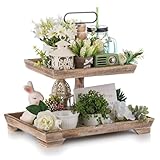
6. Organize a Kitchen Corner with a Tiered Tray

Save this clever corner space organization tip to your Kitchen Hacks board!
Pairing a kitchen corner + tiered tray leverages aesthetic cohesion theory to transform dark corners into functional decor. Elevating syrup bottles + riser platforms maximizes vertical space while defining your coffee corner design.
Materials Needed
- Two or three-tier wooden or metal serving tray
- Mini glass syrup dispensers (with gold or black pumps)
- Small airtight jars for sugar and cinnamon
- Espresso cups and saucers
- Small gold or black stirring spoons
- Battery-operated mini ring light or stick-on puck light
Step-by-Step Directions
- Clear out the deepest, darkest corner of your kitchen counter and wipe it down completely.
- Assemble your two-tier tray, ensuring the central column is tightly screwed in so the trays don’t wobble.
- Decant your store-bought coffee syrups into uniform glass syrup bottles + riser to instantly elevate the aesthetic and reduce visual label clutter.
- Arrange the taller items (syrup bottles, tall jars) on the bottom tier where there is more vertical clearance.
- Style the top tier with your smaller items: espresso cups, a tiny jar of cinnamon sticks, and your stirring spoons.
- Place the fully styled tray perfectly into the corner, setting your coffee maker immediately adjacent to it for easy access.
What most guides miss: Utilizing aesthetic cohesion theory, a drink prep area looks drastically less cluttered when you remove commercial packaging. Decanting syrups and beans into matching containers tricks the eye into seeing one unified decor piece rather than a messy pile of groceries. To fix dark corners, attach a small, battery-operated puck light directly under the upper kitchen cabinet above the tray.
7. Repurpose a Bookshelf into a Coffee Beverage Center

Pin this brilliant furniture upcycling idea for your home cafe!
Combining a bookshelf + coffee bar through furniture upcycling creates a high-capacity coffee beverage center. A credenza coffee station provides ample storage for beans and mugs but requires a strict hydrophobic surface treatment to prevent damage.
Materials Needed
- Small waist-high bookcase or narrow credenza
- Clear waterproof polyurethane or wax sealer
- Foam brush for applying sealer
- Cable hole cover grommet (plastic or metal)
- Hole saw drill attachment (2-inch diameter)
- Storage baskets matching the shelf dimensions
Step-by-Step Directions
- Clean the top surface of your bookshelf thoroughly to prepare it for sealing.
- Apply a generous coat of waterproof polyurethane using a foam brush to the top surface, allowing it to dry completely. This creates a necessary water-resistant barrier.
- Drill a 2-inch hole cleanly through the back panel of the bookshelf (right above the top surface) using your hole saw attachment.
- Insert the plastic grommet into the drilled hole to create a professional-looking cable pass-through for your coffee maker’s power cord.
- Set up your coffee maker and grinder on the newly sealed top shelf, feeding the cords neatly through the back hole.
- Curate the lower shelves by mixing function and aesthetics—use one shelf strictly for woven baskets holding coffee bags, and another to display your favorite mugs and coffee table books.
Expert insight: Standard living room furniture like bookshelves and credenzas are made from MDF or particleboard, which will bubble and warp instantly if wet. Always apply a clear hydrophobic surface treatment (like Polycrylic) to the top surface before placing a coffee machine on it. This simple furniture upcycling step transforms a cheap shelf into a durable pantry coffee nook.

Key Takeaways: Your Quick Guide to Small Space Home Coffee Bar Ideas
The most crucial elements of designing a small space home coffee bar involve maximizing vertical planes, choosing flexible furniture, and relentlessly eliminating visual clutter. By applying these organization hacks, you can create a luxurious morning coffee station regardless of your kitchen’s size.
- Optimize Vertical Space Immediately – When dealing with a small kitchen footprint, always look up. Utilizing wall-mounted floating shelves or pegboards pulls bulky items off the counter, maximizing your usable prep space.
- Prioritize Renter-Friendly Mobility – If you cannot drill holes, a bar cart coffee station is the ultimate solution. It provides three tiers of storage and can be rolled out of the way, making it the perfect apartment coffee station.
- Eliminate Visual Clutter Through Decanting – The fastest way to elevate a mini coffee bar is by decanting store-bought syrups and beans into uniform glass jars and canisters. This creates instant aesthetic cohesion.
- Always Protect Non-Kitchen Furniture – If you are upcycling a bookshelf or console table into a beverage station, you must apply a clear water-resistant sealant to the top. Standard furniture will warp under the moisture of an espresso machine.
- Manage Cords for a Clean Look – Cord clutter ruins the aesthetic of a small space. Use flat-plug extension cords, drill cable pass-through holes in furniture, and use zip-ties along table legs to keep wires hidden.
- Respect Steam and Heat Clearances – As a space planning expert rule of thumb, always leave at least 6-8 inches of vertical clearance above your coffee maker to prevent steam from warping your upper kitchen cabinets.
People Also Ask About Small Space Home Coffee Bar Ideas
Understanding how to execute coffee bar layouts effectively requires answering common spatial and furniture compatibility questions. Below, we address the most frequent concerns regarding organization, weight capacities, and styling.
How to make a coffee bar in a small space?
To make a coffee bar in a small space, utilize vertical wall space, corners, or mobile furniture like bar carts. Start by finding an unused area—such as a dark kitchen corner, a narrow hallway, or an empty patch of wall. Install floating shelves, set up a slim console table, or use a tiered tray to organize your coffee maker, mugs, and syrups vertically, keeping the footprint minimal and the aesthetic clean.
Where to put a coffee station in a small kitchen?
The best places to put a coffee station in a small kitchen are L-shaped corners, the space under upper cabinets, or on a rolling cart nearby. If your counters are completely full, consider repurposing a lower cabinet drawer with sliding tracks to hide your machine, or mount a pegboard on an empty wall. The goal is to keep it near a power outlet without interrupting your main cooking prep zones.
What is the best furniture for a small coffee bar?
The best furniture for a small coffee bar includes narrow console tables, 3-tier rolling bar carts, and small upcycled bookshelves. When choosing furniture, look for pieces that offer vertical storage (multiple shelves) and possess a shallow depth (10 to 12 inches) so they don’t block walkways. Always ensure the top surface is treated to be moisture-resistant to handle inevitable spills.
Can you use a bookshelf as a coffee station?
Yes, you can absolutely use a bookshelf as a coffee station, provided you waterproof the top surface. Standard bookshelves are often made from particleboard which warps when exposed to water or steam. Apply a clear polyurethane sealant to the top shelf, drill a hole in the back panel for cable management, and use the lower shelves to store your mugs, beans, and aesthetic coffee table books.
How do you organize coffee syrups in a small area?
To organize coffee syrups in a small area, decant them into uniform glass dispensers and arrange them on a tiered tray or riser. Keeping syrups in their original, bulky plastic bottles creates visual clutter and takes up excessive space. By transferring them into slim, matching pump bottles and elevating them on a wooden riser, you save counter space and instantly give your coffee nook a luxury, high-end cafe feel.
Are floating shelves safe for heavy espresso machines?
Floating shelves are generally not safe for heavy espresso machines unless they are supported by heavy-duty brackets bolted directly into wall studs. A standard espresso machine filled with water can weigh 20-30 pounds. The vibrations from the internal pump can also cause a shelf to loosen over time. It is highly recommended to keep heavy machines on a solid counter or table, using the floating shelves strictly for lightweight items like mugs and beans.
How much space do you need for a home coffee bar?
You need a minimum of 12 inches of width and 15 inches of vertical clearance to create a functional home coffee bar. This is just enough space to house a single-serve coffee maker or slim espresso machine alongside a small canister of coffee. However, for a more comfortable setup that includes a grinder, syrups, and mug storage, a width of 24 to 36 inches is the ideal sweet spot for small apartments.
How to hide coffee bar cords?
To hide coffee bar cords, use flat-plug extension cords, drill grommet holes into furniture, and bundle wires with adhesive zip-ties along table legs. Cord clutter can make a small space look chaotic. If your coffee bar is on a console table, run the cord straight down the back leg and secure it with black clips. If it’s on a counter, group the cords tightly and tuck them behind an opaque canister or cutting board.
Is a bar cart good for coffee?
A bar cart is excellent for a coffee station because it is compact, multi-tiered, and completely renter-friendly. The mobility allows you to roll it closer to an outlet when brewing and tuck it into a closet or corner when not in use. The multiple tiers are perfect for separating your machine (top), accessories and mugs (middle), and bulk coffee storage or cleaning supplies (bottom).
How to build a diy coffee station on a budget?
To build a DIY coffee station on a budget, upcycle existing furniture, utilize a tiered tray on your counter, or install inexpensive wooden bistro shelves. You don’t need expensive custom cabinetry. A simple pegboard from a hardware store with some S-hooks can beautifully organize all your coffee accessories on an empty wall, giving you a functional and trendy aesthetic for a fraction of the cost of store-bought furniture.
Final Thoughts on Small Space Home Coffee Bar Ideas
Creating a dedicated espresso nook in a tiny apartment might seem impossible at first glance, but as these small space coffee bar ideas prove, limitations often breed the best creativity. Whether you are upcycling a narrow console table for your hallway, mounting industrial floating shelves to maximize vertical space, or rolling out a chic bar cart, you can easily participate in home cafe culture without sacrificing your essential kitchen prep areas.
The secret to a successful kitchen coffee corner lies in smart spatial planning and eliminating visual clutter. By decanting your syrups, utilizing tiered trays in dark corners, and strictly managing your electrical cords, you elevate a simple coffee maker into a curated morning ritual spot. Remember to always prioritize safety by adhering to weight limits for wall mounts and applying water-resistant sealants to upcycled furniture, maintaining true home decor standards that look beautiful and function flawlessly.
You don’t need a massive kitchen remodel to enjoy a barista-level experience at home. Evaluate your unique layout, choose the hack that best fits your constraints, and take an afternoon to personalize your setup. Which of these small space solutions are you planning to build this weekend? Let us know in the comments below if you’re team ‘Bar Cart’ or team ‘Floating Shelves’!
Last update on 2026-09-09 / Affiliate links / Images from Amazon Product Advertising API
