
As an Amazon Associate CoffeeXplore.com earns from qualifying purchases.
Bottomless Portafilter: Fix Spraying With 7 Expert Tips
Ever pulled an espresso shot only to have it violently explode across your kitchen counter? Dealing with a messy, sputtering extraction is an incredibly frustrating daily struggle. A bottomless portafilter exposes these extraction flaws immediately.
A bottomless portafilter sprays because of channeling, which occurs when water finds the path of least resistance through an unevenly distributed coffee puck. To stop a naked portafilter from spraying, you must improve your puck prep by grinding finer, using a WDT tool, and tamping perfectly level. This visual feedback corrects underlying mistakes.
Drawing from comprehensive analysis of current data and proven barista methodologies, this guide reveals how to master this essential diagnostic tool. Manufactured from professional-grade materials, this accessory identifies channeling instantly. You will discover seven actionable steps to eliminate splashing coffee and achieve perfect, syrupy extractions.
Contents
show
Why Is My Bottomless Portafilter Spraying Everywhere?
Your bottomless portafilter is spraying because pressurized water is finding paths of least resistance through an uneven coffee bed. A sudden, high-pressure jet of hot coffee ruining your morning routine is the hallmark of severe espresso channeling. When you transition to a naked portafilter, you lose the metal spouts that previously masked these chaotic extraction dynamics. This professional-grade accessory is not just an aesthetic upgrade for your espresso machine; it is an essential barista diagnostic tool. Crafted from heavy-duty 304 stainless steel and other food-grade materials, it identifies channeling by providing visceral feedback on your puck permeability. From an extraction physics perspective, spraying occurs due to uneven hydrodynamic flow. When water hits a poorly prepared coffee bed, it avoids dense clumps and rushes through weak spots, creating localized high-pressure jets. By learning to interpret this splashing coffee disaster, you can diagnose underlying issues and dramatically improve your extraction yield. Understanding these symptoms is the first step toward achieving professional-quality espresso.
7 Expert Tips To Fix Spraying And Master Your Bottomless Portafilter
Troubleshooting: Fixing your puck preparation is the only guaranteed way to stop a naked handle from spraying everywhere. Mastering espresso puck prep requires evaluating every step of your routine, from distribution to final tamping pressure. This comprehensive troubleshooting workflow is designed to eliminate channeling by focusing on precise barista competition standard techniques that enhance flow rate. By systematically refining your morning routine, you can correct the mechanical errors that cause uneven flow and watery espresso. We will break down exactly how to achieve an even espresso extraction by manipulating viscous resistance, optimizing headspace, and utilizing specialized tools. Following these granular, actionable steps will help you stop diagnosing extraction issues and start enjoying perfectly balanced, syrupy shots as of August 2026.
1. Calibrating Grind Size For Optimal Viscous Resistance

Pin this genius hack to your ‘Home Barista’ board to save your morning espresso routine!
Flow Rate Diagnosis: If the shot sprays everywhere instantly, your grind is far too coarse to provide adequate pressure resistance. Understanding the impact of grind size on bottomless portafilter flow is the foundational step in grinder calibration. When hot water hits coarse coffee, it blasts straight through the interstitial space, resulting in a rapid flow rate and a highly unpalatable, watery espresso. To fix this, you must increase the viscous resistance of your coffee bed by calibrating your grinder to produce finer particles.
Diagnostic Tools Needed
- High-precision coffee scales (capable of reading 0.1g increments for accurate dosing)
- Burr espresso grinder (stepless preferred for micro-adjustments)
- Fresh coffee beans (roasted within the last 2-4 weeks to ensure proper crema formation)
- Your naked extraction device (54mm diameter or 58mm diameter depending on your machine)
Calibration Steps
- Weigh your empty espresso filter holder to establish a baseline tare weight.
- Grind your standard dose (e.g., 18 grams) and confirm the exact weight on your scales.
- Extract the shot while watching the bottomless basket; if the flow is extremely rapid, pale, and sputtering in multiple directions, stop the shot immediately.
- Adjust your grinder setting to be noticeably finer to increase puck permeability resistance.
- Purge 2-3 grams of coffee to clear the old grind size from the chute, then dose and pull a new test shot to evaluate the slower, more unified flow.
Pro-Tip: In my experience studying hydrodynamic flow, a shot that sprays horizontally across your drip tray immediately upon pump activation almost always indicates a grind size that lacks the viscous resistance required to build proper 9-bar pressure. Grind finer until the first drip takes 5-8 seconds to appear, aiming for an industry standard 1:2 ratio in 25-30 seconds.

2. Distributing Grounds With The WDT Solution

Save this distribution trick to your ‘Coffee Setup’ board to banish channeling forever!
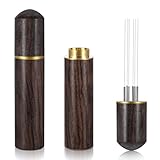
Distribution Importance: Micro-channels form when dense clumps of coffee create uneven resistance, forcing water to violently spray out of surrounding weak spots. The WDT solution (Weiss Distribution Technique) is the ultimate fix for clumpy coffee. By manually distributing the coffee particles, you eliminate the localized dead spots that cause an uneven flow. While many beginners simply tap the portafilter body to settle the grounds, tapping does nothing to break up the internal clumps generated by the grinder.
Puck Prep Tools Needed
- WDT tool (specifically one with 0.3mm or 0.35mm flexible stainless steel needles)
- Magnetic dosing funnel (matched to your basket to prevent spills)
- Your wood handle or chrome-plated brass portafilter
Distribution Steps
- Lock the magnetic dosing funnel onto the rim of your bottomless filter basket to keep your workspace clean.
- Grind your coffee directly into the basket, noting any dense clumps formed by the grinder.
- Insert the WDT tool needles all the way down to the bottom of the basket, touching the metal.
- Rake the needles through the grounds using small, rapid circular motions, working from the bottom to the top to ensure even particle distribution.
- Tap the portafilter gently once on a tamping mat to collapse any remaining interstitial space before removing the funnel.
Pro-Tip: Upgrading your espresso puck prep with a 0.3mm needle Espresso distributor is the single most effective way to cure localized spraying. Thicker needles (like paperclips or toothpicks) actually push grounds around and create new channels rather than breaking up clumps!
3. Optimizing Headspace With Precision Dosing

Pin this dosing guide to your ‘Perfect Espresso’ board so you never overfill your basket again!
Headspace Mechanics: If your coffee bed sits too close to the shower screen, the expanding puck will choke the machine and fracture, leading to messy, incomplete saturation. Optimizing your dose to match the capacity of the precision filter basket included with your portafilter is non-negotiable. Headspace optimization ensures there is a small gap of air and water between the group head gasket and the dry coffee bed, allowing the water to gently pool and saturate the puck evenly before full pressure is applied.
Dosing Equipment Needed
- Precision filter basket (check if your basket is rated for 14-16g, 18g, or 20g+)
- Magnetic dosing ring (to prevent waste while dialing in your dose)
- Espresso machine with a clean shower screen
- A clean coin (like a nickel or a two-pound coin)
Evaluation Steps
- Verify the capacity of the basket included with your professional portafilter (overdosing a 16g basket with 19g of coffee will cause extreme channeling).
- Dose and tamp your coffee as usual, ensuring a perfectly flat surface.
- Place a clean coin gently on top of the tamped coffee bed.
- Lock the naked espresso handle into the group head tightly, then immediately remove it without running any water.
- Inspect the coffee bed; if the coin was pressed deep into the coffee, your dose is too high. If the coin left zero impression, you can safely increase your dose by 0.5g.
Pro-Tip: If you are using a DeLonghi Dedica EC685 or a Breville Bambino Plus, remember that a 51mm diameter or 54mm diameter basket is deeper and narrower than standard commercial sizes. You may need to ask yourself how many grams in a 51mm bottomless portafilter is appropriate; typically, you should lower your dose to 15g-16g to maintain proper headspace.

4. Leveling And Tamping For Even Extraction

Don’t let a crooked tamp ruin your shot! Save this leveling guide to your ‘Barista Skills’ board.
Tamping Fundamentals: A crooked tamping angle creates a slanted coffee bed, causing water to rush entirely down the shallow side of the basket. While a spouted portafilter hides a crooked tamp by funneling the unbalanced coffee into one aesthetic stream, an exposed basket exposes it immediately. One side extracts fast and blonde, while the other stays dark, resulting in the dreaded donuting effect. Leveling with a calibrated tamper is a foolproof way to enforce an even espresso extraction.
Tamping Gear Needed
- Calibrated tamper (preferably a self-leveling model with a built-in rim resting flange)
- Tamping pressure mat (to protect your countertops and portafilter spouts/ears)
- An ergonomic design portafilter handle (like a walnut wood handle) for proper grip
Tamping Routine
- Rest your spoutless portafilter completely flat on the edge of your tamping pressure mat.
- Grip the tamper like a doorknob, keeping your wrist perfectly straight to avoid pressing down at an angle.
- Press straight down until you feel the calibrated tamper click (usually around 25-30 lbs of pressure) or until the coffee stops compressing.
- Evaluate the tamped bed—if you are using a standard tamper, run your fingers around the rim to ensure the depth is identical 360 degrees around.
- Inspect your extraction; if coffee flows from the edges of the basket first but not the middle, you are experiencing the donuting effect, which a self-leveling tamper will instantly cure.
Pro-Tip: Tamping harder does not slow down a shot—grinding finer does. The goal of tamping is simply to eliminate air pockets and create a perfectly level surface for the water to hit. Once the puck is fully compressed, extra force is utterly useless for controlling extraction yield.

5. Upgrading To An IMS Precision Basket

Is your stock basket ruining your espresso? Pin this upgrade guide to your ‘Coffee Gear’ board!
Hardware Limitations: Even if your puck prep is flawless, a cheap stock basket with unevenly stamped holes will force the espresso to spray wildly. Upgrading your hardware by swapping out the stock insert for an IMS Precision Basket or a VST filter basket is crucial. In the debate of IMS vs VST basket, both offer lab tested, precision engineered laser-cut holes that ensure water flows exactly the same way across the entire surface area. Comparing a single wall vs double wall basket, single walls are absolutely mandatory for naked extractions.
Upgrade Components Needed
- IMS Precision Basket or VST filter basket (size-matched to your machine, e.g., 58mm 18g)
- Your food-grade 304 stainless steel portafilter body
- A flathead screwdriver or portafilter removal tool
Upgrading Steps
- Remove the stock basket from your espresso machine filter holder by prying it out gently using the edge of a flathead screwdriver against the retention spring.
- Clean the inside of the naked espresso handle to ensure no old coffee oils will taint your fresh extractions.
- Snap your new IMS Precision Basket securely into the portafilter, ensuring the retention clip holds it firmly in place.
- Adjust your grinder; because precision baskets have vastly more holes that are laser-cut rather than machine-stamped, water flows faster. You will need to grind finer to maintain your flow rate.
- Extract a shot and watch the bottom of the basket; you should see the coffee emerge evenly from every single hole simultaneously, converging into a beautiful, centered cone.
Pro-Tip: When upgrading to a precision portafilter basket, fines migration can cause your spent pucks to initially seem wetter or messier when knocked out. This is totally normal due to the straight-walled design of precision baskets and does not negatively impact your extraction yield in the cup.

6. Balancing Flow Rate With A Puck Screen

Stop channeling at the source! Pin this puck screen trick to your ‘Espresso Hacks’ board.
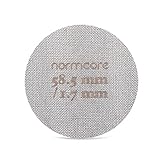
Water Dispersion Fix: Sometimes, the violent rush of water from the machine’s shower screen literally blasts a crater into your perfectly tamped coffee bed, instantly ruining the shot. Balancing this aggressive water delivery requires a Puck screen. This modern barista tool acts as a secondary diffuser, transforming the machine’s chaotic turbulent flow into smooth, protective laminar flow espresso. By dispersing the water gently over the entire coffee bed, it prevents multiple streams and severe channeling during pre-infusion.
Extraction Accessories Needed
- Espresso puck screen (usually 1.7mm thick, 150-micron mesh)
- WDT tool and calibrated tamper (prep must be done first)
- Your spoutless portafilter
Optimization Steps
- Prepare your coffee puck perfectly using your distribution and leveling tools to create a flat, dense bed.
- Place the puck screen gently on top of the tamped coffee, ensuring it sits perfectly level and flush against the edges of the basket.
- Lock the bare portafilter head into the E61 group head, being careful not to bump or dislodge the screen.
- Extract your shot; the screen will violently diffuse the water from the shower screen, cascading it evenly across the entire surface of the puck.
- Rinse the puck screen thoroughly with hot water immediately after knocking out the puck to prevent stale coffee oils from clogging the 150-micron mesh.
Pro-Tip: If you add a 1.7mm thick puck screen to your routine, you are effectively reducing your headspace optimization by 1.7mm. You may need to reduce your coffee dose by 0.5g to 1g so the rigid metal screen doesn’t scrape against the machine’s shower screen when locking in.
7. Inspecting And Polishing Group Head Dynamics

Love watching your espresso extract? Pin this mirror hack to your ‘Coffee Station’ board!
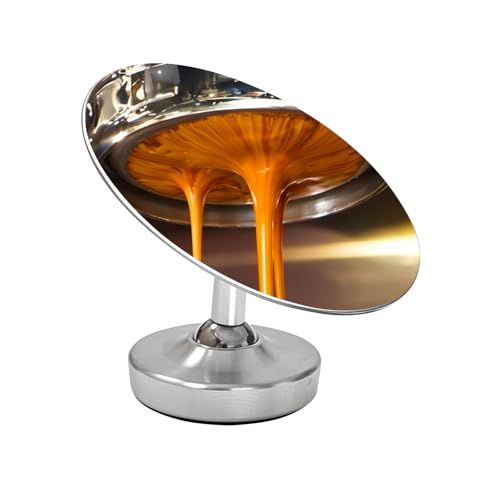
Machine Diagnostics: If you have perfected your puck prep but are still experiencing severe channeling, your machine’s mechanical dynamics may be at fault. Inspecting your brew pressure and performing regular espresso machine maintenance is crucial. A clogged shower screen or an Over Pressure Valve (OPV) pushing an excessive 13+ bars of pressure will physically blow holes through even the most perfectly tamped puck. Adding an Extraction mirror to your setup allows you to comfortably monitor these dynamics and observe the formation of crema + tiger stripes without crouching under the machine.
Diagnostic Tools Needed
- Extraction mirror (adjustable, magnetic or weighted base)
- Espresso machine maintenance kit (blind basket, Cafiza cleaning powder)
- A small machine cleaning brush
Maintenance Steps
- Place the extraction mirror on your drip tray, angling it up so you can comfortably watch the bottom of your naked espresso handle without bending over.
- Remove the portafilter and run the water (purge). Watch the shower screen; if water is shooting out in harsh, concentrated jets rather than a gentle rain, your shower screen is clogged.
- Scrub the shower screen and group head gasket with your cleaning brush to remove baked-on coffee oils.
- Perform a routine backflushing cycle using a blind basket and espresso detergent to clear the internal plumbing.
- Monitor your brew pressure gauge (if your machine has one). If your machine is blasting water well above 9 bars, it will inevitably cause channeling regardless of your puck prep.
Pro-Tip: Watching the bottom of the basket through an extraction mirror provides vital visceral feedback. Look for thick crema + tiger stripes coalescing into a single, central stream. If you see multiple streams that stubbornly refuse to join together, your puck density is still uneven.
Key Takeaways: Your Quick Guide to Bottomless Portafilters
Summary: Mastering the exposed basket portafilter requires patience, precision, and an understanding of core extraction theory. Rather than viewing the sudden mess as a failure, recognize that these chaotic sprays are providing the exact visual feedback needed to refine your puck preparation. The key to achieving professional-quality espresso lies in addressing the root causes of channeling rather than masking the symptoms. By systematically calibrating your grind, distributing your coffee evenly, and maintaining your equipment, you transform a frustrating experience into a highly rewarding daily ritual. Review these essential diagnostic fixes to ensure your next extraction is perfectly balanced, smooth, and entirely spray-free.
- The Bottomless Portafilter Is A Diagnostic Tool – A naked portafilter doesn’t magically make espresso better on its own; it serves as a visual feedback tool that exposes channeling so you can identify and fix your puck prep mistakes.
- Grind Size Dictates Flow – If your shot is sputtering rapidly and spraying horizontally, your grind is too coarse and lacks the necessary viscous resistance to build proper pressure.
- WDT Is Essential For Even Extraction – Using a WDT tool with 0.3mm needles is the most effective way to eliminate the clumpy coffee that causes microscopic channels and localized spraying.
- Precision Baskets Outperform Stock Baskets – Upgrading to a professional grade IMS Precision Basket ensures perfectly uniform holes, preventing the basket itself from causing uneven flow.
- Level Tamping Prevents Donuting – Using a calibrated tamper ensures your coffee bed is perfectly flat, preventing the donuting effect where water rushes down the sides of the basket.
- Puck Screens Calm Turbulent Flow – Adding an espresso puck screen protects the top of the coffee bed from aggressive water dispersion, promoting smooth laminar flow espresso.
- Clean Equipment Matters – Consistent espresso machine maintenance and monitoring your brew pressure ensures your machine isn’t the hidden cause behind your messy extractions.
FAQs About Bottomless portafilter
Clarification: Transitioning to an exposed basket portafilter naturally brings up several technical questions regarding machine compatibility, crema production, and proper maintenance. Understanding how a spoutless portafilter interacts with different espresso machines—from entry-level appliances to commercial setups—is critical for diagnosing extraction issues effectively. Whether you are wondering about the differences between standard and precision baskets, or simply trying to figure out why your espresso has multiple streams, addressing these common uncertainties will build your confidence. Below, we address the most frequently asked questions about this essential diagnostic tool to help you achieve the perfect extraction.
Is a bottomless portafilter worth it?
Yes, a bottomless portafilter is absolutely worth it if you want to improve your espresso quality through visual feedback. By removing the spouts, it exposes the bottom of the filter basket, allowing you to instantly identify channeling and uneven flow. According to industry standard barista training, this visceral feedback is the fastest way to master your puck preparation, making it an invaluable tool for any serious home barista looking to achieve café-quality results.
Why is my bottomless portafilter spraying?
Your bottomless portafilter is spraying because water is channeling through paths of least resistance in an unevenly prepared coffee puck. This splashing coffee effect is typically caused by three main issues: clumpy coffee grounds, a crooked tamp, or a grind size that is too coarse. To fix this messy spraying, you must use a WDT solution to distribute the grounds evenly, tamp perfectly level, and dial your grinder finer to increase puck resistance.
What size portafilter for Breville Bambino?
The Breville Bambino and Bambino Plus require a 54mm bottomless portafilter with a specific three-ear mounting design. Unlike commercial machines that use a standard 58mm diameter, Breville’s compact consumer machines utilize a narrower 54mm diameter group head. When purchasing a naked portafilter for breville, ensure it explicitly states compatibility with the Bambino line, as older Breville models (like the 58mm Dual Boiler) use entirely different portafilter dimensions.
Can you use a pressurized basket in a bottomless portafilter?
Yes, you technically can use a pressurized (dual-wall) basket in a bottomless portafilter, but it defeats the primary purpose of the tool. A bottomless filter basket is designed to provide visual feedback on your puck prep. A pressurized basket forces all the coffee through a single tiny hole at the bottom, creating artificial foam and completely masking any channeling or uneven extraction. For the best results, always pair a naked handle with a precision single-wall basket.
How to stop channeling with a naked portafilter?
To stop channeling, you must ensure perfect particle distribution and a perfectly level tamp before extraction. Start by thoroughly mixing your grounds with a fine-needle WDT tool to break up all clumps. Next, use a calibrated tamper to apply firm, perfectly even pressure. Finally, ensure your grind size is fine enough to provide adequate viscous resistance. If the water flows too fast, it will inevitably tear holes in the puck and cause channeling.
Are bottomless portafilters messy?
Bottomless portafilters are only messy if your espresso puck preparation is flawed. When properly dialed in, a spoutless portafilter will produce a clean, beautiful, singular stream of espresso that drops neatly into the cup without any splashing. However, if your puck has dead spots, clumps, or uneven density, the resulting channeling will cause high-pressure jets of coffee to spray unpredictably across your machine and countertop. The mess is simply the tool doing its diagnostic job.
What does channeling look like?
Channeling in a bottomless portafilter looks like multiple chaotic streams, bald spots on the basket, or high-pressure jets spraying outward. In a perfect extraction, coffee will emerge evenly across the entire bottom of the basket, slowly coalescing into a single, syrupy stream in the center. If you see rapid blonde streaks, areas where no coffee is emerging, or sudden sputtering jets that hit your drip tray, you are visually witnessing the water finding the path of least resistance.
Does a bottomless portafilter increase crema?
Yes, a bottomless portafilter can marginally increase crema because the espresso does not interact with metal spouts on its way to the cup. In a standard spouted espresso machine filter holder, the coffee flows down the metal channels, which can break up delicate crema bubbles and cause temperature loss. A naked portafilter allows the freshly extracted tiger stripes and crema to fall directly into the cup, resulting in a slightly thicker, more persistent crema layer.
Which bottomless portafilter is best for Gaggia Classic Pro?
The best bottomless portafilter for the Gaggia Classic Pro is a commercial-grade 58mm double-ear naked portafilter. Because the Gaggia Classic Pro uses a standard commercial E61 group head size, you have incredible flexibility. Look for options made from food-grade 304 stainless steel with an ergonomic design like a walnut wood handle. Pairing it with an IMS precision basket is highly recommended to maximize the potential of the Gaggia’s 9-bar extraction pressure.
How to clean a wooden handle portafilter?
To clean a wooden handle portafilter, unscrew the wood handle from the metal head before soaking the stainless steel in espresso detergent. Never submerge a walnut wood handle or ash wood handle in water, and never place it in the dishwasher, as the heat and moisture will cause the wood to warp, crack, and strip its natural oils. Wipe the wood with a damp cloth, and occasionally treat it with food-safe mineral oil to maintain its aesthetic appeal.
Final Thoughts on Bottomless Portafilters
Making the switch to a bottomless portafilter can feel like a harsh reality check. Going from the safety of a spouted portafilter—which neatly hides all your mistakes—to a tool that forcefully sprays coffee across your kitchen when you get it wrong can be deeply frustrating. But as any professional grade barista will tell you, this temporary mess is the absolute best thing that can happen to your coffee journey.
By embracing the naked portafilter as an essential espresso extraction tool, you are no longer guessing in the dark. You now have the visceral, visual feedback required to properly diagnose channeling, understand the importance of viscous resistance, and truly master your puck preparation. Once you perfect your WDT technique, optimize your grind size, and achieve a perfectly level tamp, you will be rewarded with a mesmerizing, syrupy extraction that yields the sweetest, most balanced espresso of your life.
Stop blaming your machine for a messy shot, and start evaluating your technique. With patience, practice, and the right barista approved tools, you will be pulling flawless, tiger-striped shots consistently. Even barista competition standard professionals use these tools daily to keep their technique incredibly sharp.
What was the biggest “aha!” moment you had when you first used a bottomless portafilter? Drop a comment below and let us know which of these 7 tips finally stopped your shots from spraying!
Last update on 2026-08-27 / Affiliate links / Images from Amazon Product Advertising API
