
As an Amazon Associate CoffeeXplore.com earns from qualifying purchases.
The Exact Difference Between Coffee And Espresso Explained
Are you wondering what is the difference between coffee and espresso? Many home brewers struggle to understand if they need entirely different beans or just new equipment. Mastering this distinction saves you time, frustration, and prevents costly machine purchases.
The exact difference between coffee and espresso is the brewing method and extraction pressure. While both use identical coffee beans, espresso is brewed by forcing pressurized hot water through finely ground beans in under 30 seconds, creating a highly concentrated, syrupy shot. Regular coffee is brewed slowly using gravity and coarser grounds, resulting in a milder, larger beverage. This fundamental contrast completely alters the beverage’s sensory profile.
Based on Specialty Coffee Association methodologies and certified barista testing, this guide breaks down precise extraction physics. You will discover exactly how pressure, grind size, and water ratios transform identical beans into entirely different sensory experiences.
Key Facts
- Extraction Pressure Difference: Espresso requires exactly 9 bars (130 PSI) of mechanical pressure for proper extraction, whereas standard drip coffee relies entirely on 1 atmosphere of natural gravity, according to published brewing chart control standards.
- Total Dissolved Solids (TDS): Calibrated refractometer measurements demonstrate that true espresso consists of 8% to 12% total dissolved coffee solubles, while regular filter coffee contains only 1.2% to 1.5%.
- Botanical Origin: Both beverages originate from the exact same Coffea plant species (Arabica or Canephora), proving that “espresso beans” is simply a marketing term for darker roast profiles optimized for rapid solubility.
- Caffeine Concentration: USDA nutrient database caffeine data reveals that espresso contains roughly 63 milligrams of caffeine per ounce, compared to just 12 to 16 milligrams per ounce in standard drip coffee.
- Brewing Time Constraints: A certified barista pulls a standard espresso shot in exactly 25 to 30 seconds, whereas standard gravity filtration requires 3 to 5 minutes to fully extract soluble flavor compounds.
Contents
show
What is the difference between coffee and espresso?
The exact difference between coffee and espresso is the brewing method and extraction pressure. While both use the same coffee beans, espresso is brewed by forcing pressurized hot water through finely ground beans in under 30 seconds, creating a highly concentrated, syrupy shot. Regular coffee is brewed slowly using gravity and coarser grounds, resulting in a milder, larger beverage.
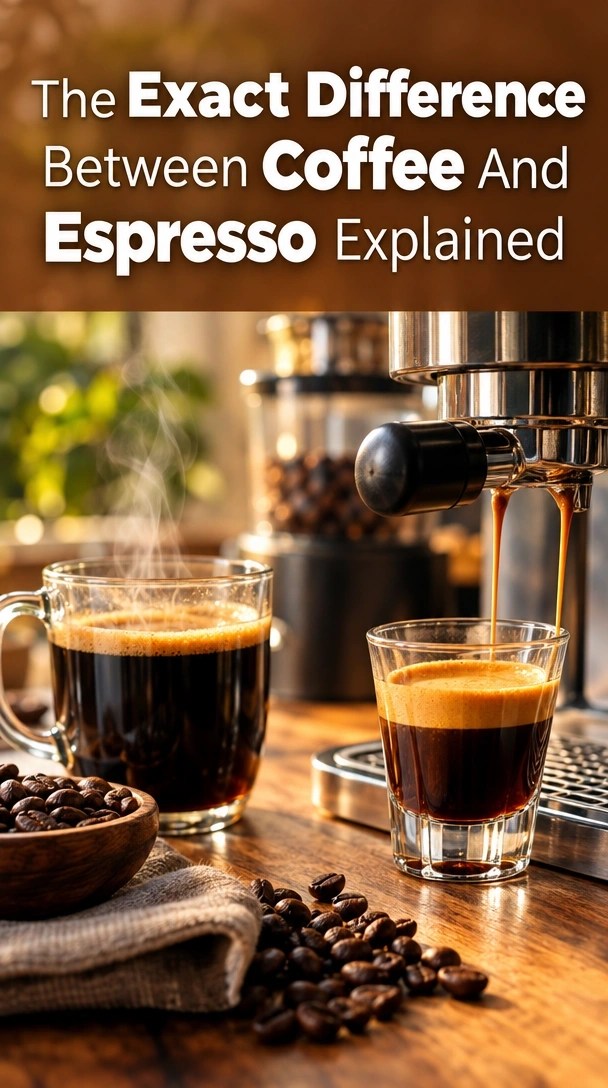
To fully grasp this concept, we must look at Total Dissolved Solids (TDS), which measures the actual percentage of coffee solubles in your cup. Regular filter coffee yields a highly diluted beverage that is roughly 98.5% water. The gravity-fed extraction process creates a clear liquid texture that highlights the delicate, nuanced flavors of the bean.
Espresso acts as a concentrated derivative beverage entity. Because mechanical pumps generate immense force—specifically “bars of pressure”—the water acts aggressively. This high-pressure environment violently extracts coffee oils and cellular material, creating a dense, heavy mouthfeel.
Here is a comprehensive breakdown contrasting the physical attributes of both brewing methods:
| Brewing Attribute | True Espresso | Regular Drip Coffee |
|---|---|---|
| Brewing Method | High-pressure mechanical extraction | Gravity-fed percolation or immersion |
| Water Pressure | 9 bars (approx. 130 PSI) | 1 atmosphere (gravity only) |
| Grind Size | Fine (powder-like) | Medium to Coarse (sand-like) |
| Water-to-Coffee Ratio | 1:2 to 1:3 (High concentration) | 1:15 to 1:18 (Lower concentration) |
| Standard Serving Volume | 1 to 2 ounces (30-60ml) | 8 to 12 ounces (240-350ml) |
| Texture & Visuals | Thick viscosity with a golden crema layer | Clear liquid texture, no crema |
What Is Regular Drip Coffee?
Regular drip coffee is produced by pouring hot water over medium-coarse ground coffee beans, allowing gravity to pull the water through a paper or metal filter to extract soluble flavor compounds. This gravity filtration process, known as percolation, establishes the sensory baseline most consumers associate with standard morning coffee.
In practical application, achieving optimal extraction yields (18% to 22%) requires precise parameters. The Specialty Coffee Association (SCA) brew basket parameters dictate specific ratios to balance the extraction. Because gravity is gentle, the water requires several minutes to fully penetrate the cellular structure of the coffee grounds.
When calibrating standard drip brew metrics, baristas focus on these baseline measurements:
* Brew Ratio: 1 part coffee to 15-18 parts water (1:15 is the golden standard)
* Extraction Time: 3 to 5 minutes of total water contact
* Final Concentration: 1.2% to 1.5% Total Dissolved Solids (TDS)
What Is An Espresso Shot?
An espresso shot is a highly concentrated 1 to 2-ounce coffee beverage created by forcing 200°F water through tightly packed, fine ground coffee at nine bars of atmospheric pressure in under 30 seconds. This rapid, violent extraction process requires specialized hardware to achieve the necessary barometric force.
Understanding the physics of an espresso pull requires context. Nine bars of pressure is equivalent to being nearly 300 feet underwater. This immense force emulsifies the natural fats and lipids inside the coffee bean, creating a colloidal suspension. The result is a viscous, intensely flavored liquid that sits entirely in a class of its own.
In a laboratory setting, refractometer brix percentage readings confirm that true espresso contains 8% to 12% dissolved coffee solids. This massive leap in concentration explains why espresso boasts such an intense, bold flavor profile compared to its gravity-fed counterpart.
Are Espresso Beans Different From Regular Coffee Beans?
No, espresso beans are not botanically different from regular coffee beans. Both come from the exact same Coffea plants. When a bag is labeled “espresso beans,” it simply means the roaster created a specific blend and a darker roast profile optimized to taste balanced and produce thick crema when brewed under high pressure in an espresso machine.
There is a widespread misconception that espresso requires a distinct, genetically different botanical species. This simply is not true. All commercially consumed coffee originates from either Coffea Arabica or Coffea Canephora (Robusta). Certified master coffee roasters utilize both species interchangeably depending on the desired flavor profile of the final cup.
The term “espresso roast” is purely marketing terminology. Roasters specifically blend these bags to mitigate the intense acidity that high-pressure extraction inherently amplifies. They often incorporate a percentage of Robusta beans because Robusta contains significantly more natural oils, which dramatically enhances the rich aromatic crema layer.
| Bean Species | Flavor Profile Characteristics | Role in Espresso Blending |
|---|---|---|
| Coffea Arabica | Sweet, complex, higher acidity, distinct fruit or floral notes | Provides the primary flavor foundation and aromatic complexity |
| Coffea Canephora (Robusta) | Earthy, bold, bitter tasting notes, heavy body | Blended (typically 10-20%) to boost crema production and add heavy mouthfeel |
How Does Roast Level Affect Espresso Extraction?
Darker roasts are traditionally used for espresso because the prolonged heat breaks down the cellular structure of the bean, making it more brittle and highly soluble for a rapid 30-second high-pressure extraction. The fundamental chemistry of roasting directly dictates how water interacts with the coffee grounds.
During the roasting process, the Maillard reaction melanoidins develop, and intercellular carbon dioxide degassing occurs. Think of a light roast bean like a hard sugar cube, and a dark roast bean like powdered sugar. If you only have 30 seconds to extract flavor, the darker, brittle bean dissolves much more efficiently. This solubility yield is critical when water contact time is severely limited.
This chemical reality explains a common troubleshooting issue: sour espresso under extraction. If you attempt to pull a shot using a very light roast (“blonde espresso”), the cellular structure remains too dense. The quick, 30-second extraction fails to dissolve enough organic compounds, leaving you with an overwhelmingly sour and highly acidic shot.
How Does The Brewing Process Differ Between Espresso And Drip Coffee?
The brewing process differs primarily in pressure, grind size, and time. To brew espresso, mechanical pumps force 200°F water through tightly compacted, powdery coffee grounds at high pressure, extracting the shot in under 30 seconds. Conversely, drip coffee is brewed by pouring hot water over coarse grounds, using natural gravity to slowly filter the liquid over several minutes.
To truly understand how an espresso machine operates differently from a drip coffee maker, we must examine fluid dynamics and puck resistance. In a drip maker, water simply falls over the grounds. In an espresso machine, the water hits a dense wall of finely ground coffee locked inside a metal portafilter basket.
The brewing process relies on three mechanical pillars operating in perfect synchronization:
* Pressure Generation: Internal boiler pumps generate hydrostatic water head pressure, pushing water toward the coffee bed with immense force.
* Grind Size Calibration: The coffee must feature a bimodal particle size distribution. It must be powdery enough to restrict the water flow, forcing the pump to build pressure before the liquid can escape.
* Extraction Timing: The water must completely penetrate, dissolve, and exit the dense puck of coffee within 30 seconds to prevent extracting harsh, bitter tannins.
Why Are 9 Bars Of Pressure Critical For True Espresso?
Nine bars of pressure, equal to about 130 pounds per square inch, is critical for true espresso because it is the exact force required to emulsify the coffee beans’ natural oils into crema and extract flavors rapidly without causing bitterness. Falling short of this metric fundamentally alters the beverage.
To visualize barometric pressure gauge calibration, consider a standard car tire. A car tire is typically inflated to 32 PSI. True espresso extraction demands over 130 PSI. This violent environment is the only way to force water to bond with volatile organic aroma compounds within seconds.
Many cheap home machines market “15 bars” or “20 bars” of pressure as a selling point. However, industry testing and Specialty Coffee Association standards confirm that pushing beyond 9 bars actually causes microfine channeling mechanics. The puck fractures, water bypasses the coffee, and the extraction yields a watery, uneven shot. Nine bars remains the unshakeable golden standard.
Step-by-Step: Dialing In The Espresso Puck Resistance
To achieve optimal espresso extraction, the coffee puck must provide exact resistance through fine grinding, even distribution, and a level 30-pound tamp. If you fail to prepare the coffee bed correctly, the 9 bars of pressure will simply blast a hole straight through the grounds.
Here is the exact process for establishing proper puck resistance dynamic curves:
- Dialing In Grind Size: Grind the coffee beans to a fine, powdery consistency similar to table salt. If the shot runs too fast (under 20 seconds), you must calibrate the coffee grinder finer to increase resistance.
- Even Distribution: Break up any clumps and level the grounds evenly across the portafilter basket to prevent channeling and uneven coffee bed extraction.
- Tamping Coffee Grounds: Apply approximately 30 pounds of downward force using a metal tamper to compress the fluffy grounds into a dense, solid puck.
Does Espresso Have More Caffeine Than Drip Coffee?
Espresso has more caffeine per ounce, but a standard cup of drip coffee contains more total caffeine. According to the USDA, espresso contains roughly 63 milligrams of caffeine per ounce. Regular drip coffee contains only 12-16 milligrams per ounce. However, because drip coffee is served in 8-ounce cups, drinking a full cup of coffee (95-128mg) yields more caffeine than a single espresso shot (63mg).
This creates a paradoxical confusion for many coffee drinkers trying to measure their caffeine intake. You must distinguish between concentration and serving size. Because an espresso shot is intensely concentrated, a single sip hits your nervous system rapidly. However, the absolute volume of caffeine you consume is lower.
Laboratory tested caffeine concentrations confirm these metrics definitively. When evaluating dietary choices, this data prevents the common mistake of assuming a small latte inherently contains more caffeine than a large black coffee.
| Caffeine Metric (USDA Data) | 1 oz Espresso Shot | 8 oz Drip Coffee Cup |
|---|---|---|
| Caffeine Concentration (Per Ounce) | ~63 mg per ounce | ~12 to 16 mg per ounce |
| Total Caffeine (Per Standard Serving) | ~63 mg (1 oz serving) | ~95 to 128 mg (8 oz serving) |
| Extraction Time | 25 to 30 seconds | 3 to 5 minutes |
| Water Temperature | 195°F to 205°F | 195°F to 205°F |
Why Does Extraction Time Affect Caffeine Levels?
Caffeine is a highly water-soluble compound. Because drip coffee grounds steep in hot water for up to five minutes, the extended extraction time pulls a higher absolute volume of caffeine from the beans compared to a rapid 30-second espresso shot. Water chemistry for coffee extraction dictates this outcome.
The caffeine molecule extracts rapidly upon initial contact with hot water. While espresso’s intense pressure pulls caffeine out violently, the extraction ends abruptly after 30 seconds. Drip coffee involves a prolonged 4 to 5-minute immersion. This extended contact allows for a more exhaustive extraction of the available caffeine mass left in the coffee bed.
It is also vital to note that roasting slightly degrades caffeine mass. Because espresso beans are typically dark roasted, they theoretically contain marginally less caffeine per bean than a light roast drip coffee, further tipping the total caffeine scale in favor of standard filter brew.
How Do The Flavor Profiles And Crema Compare?
Espresso tastes significantly bolder, richer, and more intense than regular coffee due to its high concentration of dissolved solids and emulsified oils. The lack of a paper filter allows heavy lipids to pass into the espresso cup, creating a thick, syrupy mouthfeel and a golden crema layer. Drip coffee, which is filtered through paper, yields a lighter, cleaner, and more nuanced flavor profile with a water-like texture.
Peer-reviewed sensory analysis demonstrates how physical brewing mechanics directly alter human taste perception. Standard drip coffee utilizes paper filters that trap heavy oils and lipophilic diterpenes (like cafestol and kahweol). Removing these compounds results in a highly transparent liquid where delicate fruit and floral notes can shine through without heavy interference.
Espresso utilizes a perforated metal portafilter basket. This metal filter allows the heavy oils, micro-fines, and colloids to pass directly into the cup. This creates a dense, velvety viscosity that coats the palate entirely.
When mapping the flavor profiles side-by-side, the distinctions are stark:
* Espresso Flavor Profile: Intensely concentrated, bold flavor profile, heavy mouthfeel, syrupy viscosity, pronounced bittersweet chocolate or roasted nut notes.
* Drip Coffee Flavor Profile: Milder flavor profile, clear liquid texture, higher perceived acidity, tea-like body, highlights delicate floral or bright fruit characteristics.
What Is The Crema Layer And Why Is It Important?
The crema layer is a golden-brown foam that rests on top of a properly pulled espresso shot. It is created when high-pressure water emulsifies the coffee bean’s natural oils and supersaturates with carbon dioxide, which violently expands into microbubbles as the liquid exits the machine.
To understand this physics reaction, imagine shaking a warm soda can and opening it. The sudden drop in pressure causes the trapped gas to rapidly expand into foam. When 130 PSI of hot water interacts with intercellular carbon dioxide inside fresh coffee beans, it creates a supersaturated liquid. As the espresso exits the portafilter into your cup (which sits at normal atmospheric pressure), the CO2 expands, whipping the coffee oils into a rich aromatic crema.
While crema itself actually tastes quite bitter, it acts as a functional “lid” on the beverage. It successfully traps volatile organic aroma compounds within the cup, enhancing the olfactory experience. If you pull a shot and observe a lack of crema on the espresso shot, it is the primary visual indicator of stale coffee beans that have lost their internal gas.
Which Coffee Drinks Can You Make With Espresso vs. Brewed Coffee?
Espresso is the highly concentrated base used to create milk-heavy cafe drinks, while drip coffee is traditionally consumed on its own. Because a shot of espresso is intensely flavored, it cuts through large volumes of steamed milk to create lattes, cappuccinos, macchiatos, and flat whites. Adding a large volume of milk to standard drip coffee would simply water it down.
Understanding the related entities semantic network of cafe menus helps consumers navigate their daily orders. Espresso possesses a high brew ratio (typically 1:2). This dense concentration allows it to act as an aggressive flavoring agent. Standard drip coffee is simply too weak to mix with 8 ounces of dairy without losing all coffee character.
Here is how the core brewing methods dictate standard beverage taxonomy:
- Espresso-Based Drinks:
- Latte: One part espresso to three parts steamed milk, topped with light foam.
- Cappuccino: Equal parts espresso, steamed milk, and dense microfoam.
- Americano: A shot of espresso heavily diluted with hot water to mimic the volume of drip coffee.
- Macchiato: A single shot of espresso “marked” with a dollop of milk foam.
- Brewed Coffee Drinks:
- Black Coffee: Consumed directly after gravity filtration with no additions.
- Café au Lait: Half brewed drip coffee and half steamed milk.
- Red Eye: A cup of standard drip coffee fortified with an added shot of espresso.
What Are The Best Alternatives To An Espresso Machine For Home Brewing?
The Moka Pot and AeroPress are the best inexpensive alternatives to an espresso machine. While true espresso requires an expensive machine capable of generating 9 bars of pressure, the Moka Pot uses steam pressure (1-2 bars) to brew a dark, highly concentrated coffee. The AeroPress uses manual plunging pressure to create a rich, espresso-like concentrate perfect for homemade milk drinks.
Commercial espresso equipment requires massive internal boilers and rotary pumps, driving up costs significantly. Furthermore, a true espresso machine demands a highly capable, dedicated flat burr grinder to achieve the exact micron distribution required for puck resistance. For budget-conscious home brewers, manual brewers offer excellent alternative workflows.
While they max out at lower pressure thresholds, both the Moka Pot and AeroPress successfully create heavy-bodied, low-volume coffee extracts. These concentrates mimic the bold flavor profile of espresso beautifully when mixed with warmed milk for homemade lattes.


Is Moka Pot Coffee Real Espresso?
Moka pot coffee is not real espresso. While it brews a highly concentrated, bold cup of coffee, a stovetop Moka pot only generates 1 to 2 bars of steam pressure, falling far short of the 9 bars of mechanical pressure required to extract true espresso and produce authentic crema.
The traditional Italian Moka Pot relies entirely on boiling water steam pressure. Physics limits this process; the internal steam pressure cannot exceed 1.5 to 2 bars before triggering the device’s safety release valve. True mechanical pumps easily achieve 9 bars without boiling the water.
Because Moka pot coffee requires boiling temperatures to function, it is highly prone to over-extraction. The excessive heat can easily scorch the grounds, leading to a bitter, over-extracted burnt taste if left on the stove too long. Real espresso machines safely maintain a stable 200°F extraction temperature.
Frequently Asked Questions About the Difference Between Coffee and Espresso
Can you use espresso ground coffee in a drip maker?
No, using espresso ground coffee in a standard drip maker will likely result in a bitter, over-extracted cup of coffee and may cause the filter basket to overflow. Espresso requires a very fine, powdery grind. When placed in a drip coffee maker, this fine dust clogs the paper filter, trapping the water. The extended contact time causes the water to extract harsh, bitter tannins, ruining the flavor profile.
Is espresso healthier than coffee?
Neither espresso nor drip coffee is inherently healthier than the other; their health benefits depend largely on your serving size and what you add to them. Both beverages are rich in antioxidants, specifically chlorogenic acid. However, because espresso is unfiltered, it retains higher levels of cafestol, a compound that may slightly raise cholesterol levels. Conversely, black coffee is lower in calories than milk-heavy espresso drinks like lattes.
Can you drink espresso like regular coffee?
Yes, you can drink espresso straight, but it is meant to be sipped slowly in small 1 to 2-ounce quantities rather than consumed in a large mug. If you prefer the volume and drinking experience of a standard cup of coffee but love the bold flavor of espresso, you should order or make an Americano—which is a shot of espresso diluted with several ounces of hot water to mimic drip coffee’s volume.
Why is espresso served in small cups?
Espresso is served in small cups (demitasses) because it is a highly concentrated beverage meant to be consumed in a 1 to 2-ounce serving. A single shot of espresso contains roughly the same amount of coffee solubles and flavor intensity as an entire 8-ounce cup of drip coffee. Serving it in a large mug would cause the crema to spread too thin and cool the beverage down too rapidly.
What is the difference between a ristretto and an espresso?
A ristretto is a “restricted” or shorter extraction of an espresso shot, using less water and a finer grind to create an even more concentrated beverage. While a standard espresso shot yields 1.5 to 2 ounces of liquid in 30 seconds, a ristretto uses the exact same amount of ground coffee but yields only 0.75 to 1 ounce of liquid. This emphasizes the sweet, syrupy oils of the coffee while leaving behind bitter compounds.
What happens if you put regular coffee beans in an espresso machine?
If you put regular, light-roast coffee beans in an espresso machine, the resulting shot will likely taste extremely sour and acidic. Espresso machines require highly soluble coffee to extract flavor in just 30 seconds. Because regular drip beans are usually roasted lighter, their cellular structure is less soluble. To successfully pull a shot with standard beans, you must grind them much finer and increase the water temperature.
What is the difference between cold brew coffee and espresso?
Cold brew and espresso sit at opposite ends of the brewing spectrum: espresso uses high heat and high pressure for 30 seconds, while cold brew uses cold water and zero pressure for up to 24 hours. Espresso produces a hot, highly acidic, concentrated shot with thick crema. Cold brew produces a smooth, low-acidity concentrate over a long period, resulting in a very mellow flavor profile with no foam.
Can espresso upset your stomach more than regular coffee?
Espresso is actually less likely to upset your stomach than regular drip coffee because it generally has a lower overall acid content. The high-pressure, rapid extraction method of espresso leaves many of the harsher, stomach-irritating acids behind in the puck. Additionally, the smaller serving volume of an espresso shot means you are ingesting less total liquid and fewer overall acids compared to a massive 16-ounce mug of drip coffee.
Is instant espresso the same as instant coffee?
Instant espresso and instant coffee are made using the same freeze-drying process, but instant espresso is brewed from a darker roast and is significantly more concentrated. Instant espresso powder dissolves completely in liquid and delivers a much bolder, richer flavor profile, making it the preferred choice for baking chocolate desserts (like brownies) where you want a strong coffee flavor without adding excess liquid to the batter.
What is the difference between iced coffee and iced espresso?
Iced coffee consists of standard brewed drip coffee that has been chilled and poured over ice, whereas iced espresso (an iced Americano) is made by pouring a fresh, hot shot of concentrated espresso directly over ice and cold water. Iced espresso maintains the bold, rich flavor notes and heavier mouthfeel of the high-pressure extraction, while standard iced coffee tends to be thinner and can taste watery as the ice melts.
Key Takeaways: Coffee vs. Espresso Summary
- The Core Difference is Pressure, Not Beans: Espresso is brewed by forcing water through coffee grounds at 9 bars of pressure in 30 seconds, while regular coffee is brewed by gravity over several minutes. They use the exact same coffee beans.
- “Espresso Beans” Simply Means a Darker Roast: There is no botanical difference in the beans. Roasters label bags “espresso beans” when they have created a darker roast profile optimized for rapid, high-pressure extraction and thick crema production.
- Espresso Has More Caffeine Per Ounce, But Less Per Cup: While espresso is highly concentrated (63mg of caffeine per ounce), a standard 8-ounce cup of drip coffee contains significantly more total caffeine (95-128mg) due to the larger serving size.
- Crema is the Signature of True Espresso: The golden-brown foam on top of espresso is an emulsion of natural coffee oils and CO2 created entirely by high barometric pressure. Regular gravity-fed drip coffee cannot produce crema.
- Grind Size Dictates the Brewing Method: Espresso requires a fine, powdery grind to create resistance against the machine’s water pump. Drip coffee requires a coarse, sand-like grind so water can easily flow through the filter.
- Alternative Brewers Don’t Make True Espresso: While devices like the Moka Pot and AeroPress make excellent, concentrated coffee suitable for lattes, they max out at 1-2 bars of pressure and cannot replicate the exact physics or crema of a 9-bar espresso machine.
Final Thoughts on Choosing Between Coffee and Espresso
Choosing between coffee and espresso ultimately comes down to personal preference regarding flavor intensity, volume, and texture. Espresso offers a concentrated, heavy-bodied base perfect for crafting milk drinks, while drip coffee provides a larger, milder beverage ideal for slow sipping throughout the morning.
Neither method is objectively “better” than the other; they simply utilize different physics to extract unique characteristics from the exact same coffee seeds. By understanding that pressure, grind size, and extraction time are the true differentiating factors, you can make informed decisions about your daily caffeine intake and home equipment purchases.
Whether you decide to invest in a dedicated 9-bar pump machine to pull syrupy shots or stick to a reliable gravity-fed drip maker for clear, nuanced cups, you now possess the technical knowledge to master either extraction method. Which brewing approach will you experiment with first?
Last update on 2026-10-22 / Affiliate links / Images from Amazon Product Advertising API
