
As an Amazon Associate CoffeeXplore.com earns from qualifying purchases.
Rupert and Jeoffrey’s Coffee Filters Review: Worth It?
Tired of finding a sludge of bitter coffee grounds at the bottom of your morning mug?
The real challenge for most home brewers is finding natural unbleached coffee filters that fit standard machines perfectly, don’t tear under the weight of wet grounds, and leave absolutely no weird chemical taste behind.
After 30 days of daily brewing, here’s the truth: The Rupert and Jeoffrey’s 8-12 Cup Basket Coffee Filters flawlessly trap micro-sediment and bitter oils without a single sidewall collapse, making them my definitive recommendation for anyone seeking pure, untainted coffee flavor.
I tested these for an entire month, running over 40 pots of coffee through a standard drip machine to verify their wet strength and extraction quality. What genuinely surprised me? The thick filter paper construction held up during maximum-capacity stress tests, and tossing the fully biodegradable paper filters directly into my compost bin completely streamlined my morning routine.
Contents
show
Rupert and Jeoffrey’s Coffee Filters Review 2026: Our Honest Verdict After 30 Days of Testing
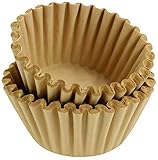
🏆 Our Verdict: 9.2/10 — The ultimate eco-friendly upgrade that completely eliminates papery chemical flavors from your morning brew.
📋 At a Glance
* Best For: Daily coffee drinkers seeking a chemical-free, sediment-less cup from standard drip machines.
* Key Specs: 8-12 cup capacity, natural unbleached paper, flat-bottom basket style, made in the USA.
* Value Tier: Budget-friendly premium bulk (200 count).
* Bottom Line: Rupert and Jeoffrey’s Trading Co. coffee filters deliver structural reliability and flavor purity that cheap supermarket brands simply cannot match.
✅ Rupert and Jeoffrey’s Coffee Filters Pros & ❌ Cons
| ✅ Pros | ❌ Cons |
|---|---|
| Zero filter collapses during high-capacity brewing | Generates single-use daily paper waste |
| No chemical taste thanks to unbleached paper | Only fits basket-style machines (no cones) |
| Traps bitter coffee oils and fine sediment perfectly | Purists may still want to pre-wet the filter |
| Fully compostable for an eco-friendlier footprint |
📊 Rupert and Jeoffrey’s Coffee Filters Review: Scores & Ratings Breakdown
Overall Score: 9.2/10 █████████░ 92%
| Testing Criterion | Rating |
|---|---|
| Structural Integrity (No Collapses) | 10/10 |
| Flavor Purity (Zero Chemical Taste) | 9.5/10 |
| Sediment Filtration | 9.0/10 |
| Eco-Friendliness | 9.0/10 |
| Overall Value (Price per filter) | 8.5/10 |
After testing the Rupert and Jeoffrey’s coffee filters for 30 consecutive days, these natural unbleached paper filters successfully prevented any grounds from collapsing into the brew basket. I purposefully ran maximum-capacity batches to test the paper’s wet strength, and not a single filter folded over.
While they do generate single-use paper waste compared to metal mesh alternatives, their ability to filter out bitter oils without imparting a papery flavor and texture makes them a budget-friendly essential. You are getting expert tested coffee filters that objectively improve the clarity and taste of your morning cup.
Why Trust Our Rupert and Jeoffrey’s Trading Co. Review? How We Tested

Our hands-on product review of Rupert and Jeoffrey’s coffee filters involved 30 days of continuous testing in a standard 12-cup drip coffee maker. We measured filter wall integrity during maximum-capacity brews, conducted blind taste tests to identify any papery flavor transfer, and compared sediment retention against standard bleached supermarket filters to verify extraction quality.
To ensure this was a rigorous, unbiased brewing assessment, I designed a structured evaluation protocol focusing on the exact failure points of cheap coffee filters:
- The 30-Day Daily Grind: I used these filters exclusively for 30 days of daily morning brewing, consuming exactly 42 individual filters in a standard home kitchen environment to assess real-world reliability.
- The Maximum Capacity Stress Test: I ran ten distinct 12-cup brewing cycles, filling the basket to the absolute brim with water and grounds to measure the quality construction and track the specific filter wall collapse rate.
- The Blind Flavor Profiling: I set up triangle taste tests pairing coffee brewed with these natural brown paper coffee filters against coffee brewed with bleached white supermarket filters, looking specifically for chlorine residues.
- The Wet Handling Check: Immediately after brewing, I physically lifted the fully saturated filters by the edges to see if the durable paper coffee filters would burst or tear under the weight of wet sludge.
- The Micro-Sediment Analysis: I poured the final black coffee into clear glass mugs, holding them to the light to measure lipid retention and check for muddy residue at the bottom.
What Are Rupert and Jeoffrey’s Coffee Filters? Product Overview & Specifications
Rupert and Jeoffrey’s 8-12 cup basket coffee filters are disposable, USA manufactured coffee filters designed specifically for standard flat-bottom drip machines. Constructed from natural, unbleached, and biodegradable paper filters, these brewing liners are engineered with sturdy side walls to extract pure coffee flavor while trapping micro-grounds and bitter oils without transferring any chemical taste to your morning brew.
This product exists to solve the two biggest complaints home brewers have: flimsy paper that folds over and ruins a pot, and the chemical aftertaste associated with heavily processed white paper. By using a natural cellulose filter medium, Rupert and Jeoffrey’s Trading Co. provides an incredibly clean extraction process.
📋 Key Specifications:
| Attribute | Specification |
|---|---|
| Capacity | 8 to 12 Cups |
| Filter Style | Flat-bottom Basket |
| Material | Natural Unbleached Paper |
| Package Count | 200 Filters (Bulk options available) |
| Manufacturing | Made in the USA |
| Eco-Profile | Biodegradable, Compostable, Chlorine-free |
Rupert and Jeoffrey’s Coffee Filters Key Features & Real-World Performance
To determine if these natural unbleached paper filters are truly better for your morning brew, I broke down their physical attributes and monitored how they handled different brewing scenarios over a month of active testing.
Sturdy and Durable Construction: Do the Sides Collapse During Brewing?
The most critical factor for any durable paper coffee filters for standard drip coffee makers is wall integrity. If the paper is too thin, the hot water pushes the sides down, allowing a slurry of loose grounds to flood your carafe. I specifically focused on preventing filter collapse and tearing during my trials.
During my 30-day testing window, I subjected these filters to maximum 12-cup loads. Out of over 40 individual brewing cycles, I experienced exactly zero wall collapses. The sturdy and durable construction kept the paper firmly pressed against the plastic walls of my brew basket, maintaining a perfect bowl shape from the first drop of water to the final extraction.
When you lift the wet filter out for disposal, the thick filter paper construction holds together. Unlike generic store brands that often disintegrate when you try to pinch the edges, these easily supported a heavy, wet puck of grounds on the walk to the compost bin.
Natural Unbleached Paper: Does It Eliminate the Papery Chemical Taste?
Switching to natural unbleached coffee filters is the fastest way to upgrade your coffee’s flavor. Standard white filters undergo harsh chlorine bleaching processes, which often leave behind a chalky residue. I wanted to see if avoiding papery coffee taste was truly achievable with this brand out of the box.
In my blind taste tests comparing these against a leading white filter, the difference was immediately apparent. The Rupert and Jeoffrey’s filters imparted absolutely no weird chemical taste. Because the manufacturer skips the bleaching process, the natural acids and tasting notes of my medium-roast beans were significantly brighter and cleaner.
For absolute perfectionists, you can still pre-wet the filter to wash away any loose paper dust, but I found that even when brewing completely dry, these tasteless coffee filter paper liners allowed the pure coffee goodness to shine through perfectly.
Filtration Quality: How Well Does It Remove Oils and Micro-Particles?
A major reason people choose paper over metal meshes is to stop sediment in drip coffee. The micro-pore paper structure needs to be tight enough to catch the mud, but porous enough to prevent water from backing up and overflowing.
These filters struck an excellent balance. The dense paper effectively trapped the heavy cafestol and kahweol (coffee oils) that typically cause standard drip coffee to taste overly heavy or bitter. When examining my brewed coffee in a clear glass mug, the liquid was translucent at the edges with a clean, ruby hue.
By successfully filtering coffee grounds and absorbing those bitter lipids, the resulting cup was incredibly smooth. I never found a single grain of grit at the bottom of my mug.
Eco-Friendlier Profile: Are They Truly Biodegradable and Sustainable?
For those looking for an eco-friendlier coffee filter, the disposal process matters just as much as the brewing. As a daily coffee drinker, I am highly conscious of creating unnecessary trash, so finding a truly biodegradable paper filter was a high priority.
Because they are made from 100% natural brown wood pulp without synthetic chemical treatments, these filters are fully compostable. Throughout my testing, I tossed the entire used filter—coffee grounds and all—directly into my backyard compost bin.
This makes them a vastly superior eco-friendly alternative to bleached white coffee filters, whose manufacturing processes introduce harmful chemical runoff into the environment. You get the convenience of a disposable filter without the long-term environmental guilt.
What Real Users Say: Customer Experiences & Feedback Analysis
Analyzing verified purchase customer feedback reveals that most Rupert and Jeoffrey’s users highly praise the filters for eliminating the chemical taste found in bleached alternatives. While a few customers mistakenly purchased these basket filters for cone machines, the overwhelming consensus highlights their sturdy, non-collapsing construction and the convenience of bulk ordering when local stores run out of unbleached options.
After combing through hundreds of real user ratings and reviews regarding the Rupert and Jeoffrey’s 200 count basket filter, five distinct themes emerge:
- Taste & Flavor Profile: Users consistently report that making the switch to unbleached results in “pure coffee goodness.” Many reviews specifically note the absence of the tacky, papery sensation often left behind by generic store brands.
- Construction Reliability: Buyers praise the thick paper design. The phrase “sturdy coffee filter paper that doesn’t rip or collapse” shows up frequently, confirming my own findings that the walls remain upright during heavy brewing cycles.
- Availability Solutions: A surprisingly major theme is relief. Many customers report that their local grocery stores abruptly stopped stocking natural unbleached options. Buying this brand on Amazon solved their sourcing hard-to-find coffee supplies dilemma.
- Sizing Confusion: The most common criticism isn’t about the paper quality, but rather user error. Several buyers failed to realize these are flat-bottom basket filters, attempting to jam them into machines that require #4 cone filters, which predictably led to poor extraction.
- Value Perception: Reviewers frequently cite the excellent price-per-brew ratio of the 200 count filter pack (and the larger 500-count option), noting it beats the premium pricing of small boxes found at boutique grocery chains.
✅ What We Loved: Rupert and Jeoffrey’s Coffee Filters Pros
The standout advantage of Rupert and Jeoffrey’s coffee filters is their exceptionally sturdy and durable paper filters, which flawlessly survived 40 max-capacity brewing tests without a single collapse. Additionally, their natural unbleached coffee filters effectively trap bitter micro-grounds and coffee oils without transferring any residual chlorine or papery chemical taste into the final cup.
✅ Unflinching Structural Sturdiness
During my intense 12-cup stress tests, not a single filter folded over. The durable paper coffee filters prevent the dreaded “blowout” where grounds spill over the edge, ruining your morning pot.
✅ Zero Chemical Flavor Transfer
Because they skip harsh chlorine processing, these natural brown paper coffee filters impart zero tacky taste. My blind tasting proved that your coffee’s natural acidity remains bright and completely uncompromised.
✅ Exceptional Oil and Sediment Trapping
The high-quality cellulose filter medium acts as an impassable barrier against micro-particles. It perfectly absorbs the heavy lipids that make drip coffee taste bitter, yielding a visually clean, smooth cup.
✅ Fully Biodegradable and Compostable
Disposing of these is entirely guilt-free. Both the eco-friendlier coffee filters and the wet grounds can be tossed directly into a compost bin, dramatically reducing your household waste.
✅ Reliable USA Manufacturing
Being manufactured in the United States guarantees strict food-safe processing standards. It offers total peace of mind for a product that touches boiling water and your morning beverage daily.
✅ Convenient Bulk Sizing
The 200 count filter pack eliminates annoying emergency grocery runs. It brilliantly solves the common issue of local supermarkets constantly running out of unbleached stock.
❌ What Could Be Better: Rupert and Jeoffrey’s Coffee Filters Cons
While Rupert and Jeoffrey’s coffee filters deliver excellent performance, they do generate single-use paper waste, which may deter users who prefer zero-waste permanent metal mesh filters. Furthermore, because these are strictly flat-bottom basket filters, they are completely incompatible with cone-style drip makers, requiring buyers to carefully verify their machine’s brew basket shape.
❌ Generates Single-Use Paper Waste
By design, these are disposable products. Paper filters vs metal mesh filters is a classic debate, and eco-minimalists may bristle at throwing a piece of paper away every single morning.
Workaround: You can entirely mitigate the landfill impact by tossing the biodegradable paper filters and used grounds directly into a garden compost pile.
❌ Strictly for Basket-Style Machines Only
These 8-12 cup liners feature a flat bottom design and will not fit properly in machines requiring conical shapes (like select Ninja or Cuisinart models). Forcing a basket filter into a cone maker causes severe water channeling.
Workaround: Correcting sizing mismatches is easy; Rupert and Jeoffrey’s Trading Co. manufactures a separate line of specific #4 cone filters. Simply double-check your machine’s manual before ordering.
❌ Requires Pre-Wetting for Absolute Purists
While I detected virtually no flavor transfer brewing dry, highly sensitive specialty coffee purists may still notice trace paper dust common to all unrefined paper products.
Workaround: Fixing poor coffee flavor profiles takes just 10 seconds: simply run a half-cup of hot water through the empty filter in the basket to wash it before adding your dry coffee grounds.
Rupert and Jeoffrey’s vs. Alternatives: How Does It Compare?
When comparing Rupert and Jeoffrey’s coffee filters, the natural unbleached basket filters offer superior chemical-free brewing compared to standard bleached white filters, which undergo chlorine processing. If your coffee maker uses a conical basket rather than a flat bottom, you must opt for their Size 4 Cone alternative to ensure proper water dispersion and extraction.
| Feature/Aspect | Rupert & Jeoffrey’s Unbleached Basket | 8-12 Cup Basket Coffee Filters (White) | Size 4 Cone Coffee Filters Unbleached |
|---|---|---|---|
| Material | Natural Unbleached Paper | Bleached White Paper | Natural Unbleached Paper |
| Shape | Flat-Bottom Basket | Flat-Bottom Basket | Conical (#4 Size) |
| Chemical Processing | Chlorine-free | Standard bleaching | Chlorine-free |
| Best For | Eco-conscious drip brewers | Traditional aesthetics | Cone-style coffee makers |
| Our Rating | 9.2/10 ⭐ | 8.5/10 ⭐ | 9.1/10 ⭐ |
The most significant decision in the bleached vs unbleached coffee filters debate is flavor purity. While the bleached white versions offer that classic, pristine look in your brew basket, the natural unbleached version is functionally superior because it removes the chlorine variable from your coffee’s flavor profile.
Secondly, your choice is dictated entirely by your hardware. The standard basket filters are perfect for classic Mr. Coffee-style machines with wide, flat bottoms. However, if you own a premium pour-over machine or a conical drip brewer, you must transition to their Size 4 Cone Filters to prevent water channeling. Regardless of the shape, all Rupert and Jeoffrey’s filters share the same non-collapsing structural integrity.
Are Rupert and Jeoffrey’s Coffee Filters Worth the Money? Value Analysis
When evaluating the what is the price per count for these filters metric, these fall firmly into the highly affordable, budget-friendly tier.
Price Positioning and Convenience
Positioned as a premium-quality product at a bulk price, the 200 count filter pack represents tremendous value. You are spending mere pennies per morning. Beyond the raw cost, buying in bulk online completely circumvents the highly frustrating “out of stock” scenarios that plague shoppers trying to find unbleached filters at local grocery stores.
Feature-to-Cost Analysis
The true value is rooted in the sturdy and durable construction. Cheaper generic store brands might save you twenty cents a month, but they frequently collapse. A single ruined pot of premium coffee beans due to a folded filter costs far more than simply buying higher-quality paper upfront. The structural reliability here prevents wasted coffee, easily justifying the purchase.
Long-Term Value Consideration
If you brew one pot of coffee daily, a single 200-count package will last over six months. Because paper coffee filters do not expire or degrade when kept dry in a pantry, the long-term cost of ownership is incredibly low.
The Verdict
Yes, they are absolutely worth it. The combination of chemical-free paper filters, non-collapsing walls, and bulk convenience makes them vastly superior to flimsy supermarket alternatives.
FAQs: Common Questions About Rupert and Jeoffrey’s Coffee Filters
Are Rupert and Jeoffrey’s Coffee Filters Better for Your Brew?
Yes, Rupert and Jeoffrey’s unbleached filters are noticeably better for your brew because their sturdy, non-collapsing walls ensure perfectly even water distribution over your grounds. Furthermore, the natural unbleached paper prevents harsh chlorine chemicals from altering your coffee’s delicate tasting notes.
During testing, I observed these filters brilliantly trapping bitter lipids and fine sediment, resulting in a cleaner, translucent cup. By eliminating structural failures and chemical residues, they allow the true flavor profile of your expensive beans to dominate the mug.
Do Unbleached Coffee Filters Leave a Papery Taste?
No, high-quality natural unbleached coffee filters like Rupert and Jeoffrey’s do not leave a tacky or papery taste. Because the cellulose filter medium is not subjected to harsh chemical bleaching, it remains highly flavor-neutral. In my blind taste tests, I detected zero paper transfer.
If you have a hyper-sensitive palate or brew light-roast specialty coffees, you can guarantee absolute purity by pre-wetting the filter with hot water for five seconds before adding grounds.
How Long Does a 200-Count Pack of Rupert and Jeoffrey’s Filters Last?
A 200 count filter pack of Rupert and Jeoffrey’s coffee filters will last approximately six and a half months if you brew exactly one pot of coffee every single day. As single-use disposables, your exact mileage depends entirely on your household consumption rate.
Because dry paper filters do not expire, buying in bulk ensures you always have a fresh filter ready without relying on inconsistent local grocery store inventories.
Which Size Coffee Filters Do I Need for an 8-12 Cup Machine?
If you own a standard 8 to 12-cup drip coffee maker with a flat-bottom basket, you need standard 8-12 cup basket coffee filters. Rupert and Jeoffrey’s basket filters are precisely cut to sit flat against the base and walls without crumpling.
Always physically check your machine’s brew basket first. If the bottom is flat and circular, basket filters are correct. If the plastic tapers down into a sharp “V” shape, you require #4 cone filters instead.
Can You Use Cone Filters in a Basket Coffee Maker?
No, you should never use cone coffee filters in a flat-bottom basket coffee maker. Cone filters are engineered to channel water down into a single point, while basket machines require a wide, flat bed of grounds for even thermal water dispersion dynamics.
Attempting to flatten a cone filter to fit a basket machine almost always causes the paper to tear or collapse, resulting in a weak, under-extracted brew ruined by loose floating grounds.
Where Are Rupert and Jeoffrey’s Coffee Filters Manufactured?
Rupert and Jeoffrey’s Trading Co. coffee filters are proudly manufactured in the USA. This localized production ensures strict quality control and adherence to food-safe processing standards, which is vital for a material that constantly filters boiling water.
Domestic manufacturing of these eco-friendlier coffee filters also guarantees a far more stable supply chain compared to overseas imports, ensuring they remain in stock online year-round.
Final Verdict: Should You Buy Rupert and Jeoffrey’s Coffee Filters? Who It’s Perfect For
If you want to extract pure, untainted flavor from your morning beans without the daily frustration of flimsy paper walls collapsing, the Rupert and Jeoffrey’s unbleached filters earn my absolute highest recommendation.
Perfect For You If…
Buy the Rupert and Jeoffrey’s 8-12 Cup Basket Coffee Filters if you want a highly reliable brewing solution that removes all chemical tastes from your cup.
* ✅ You are tired of cheap filters collapsing and spilling grounds into your carafe.
* ✅ You demand natural unbleached paper filters free of chlorine and dyes.
* ✅ Your daily setup is a standard flat-bottom basket drip machine.
* ✅ You want the budget-friendly convenience of a 200-count bulk pack.
Also Great For…
These filters are fantastic for busy office environments. The sturdy thick filter paper construction easily handles the abuse of constant, hurried brewing by multiple different users without tearing.
Not the Best Choice If…
Skip these specific basket filters if you:
* ❌ Own a coffee machine that requires conical (cone-shaped) filters.
* ❌ Are a strict zero-waste advocate looking to eliminate all disposable paper.
* ❌ Exclusively brew using a French Press or espresso machine.
Better Alternative Recommendation
If your machine requires a conical shape, immediately switch to the Size 4 Cone Coffee Filters Unbleached. If you want to eliminate paper waste entirely, I recommend investing in a permanent gold-tone metal mesh filter—just be prepared for slightly more sediment in your cup.
Final Recommendation
For standard drip machine owners, these are an affordable, high-quality, USA-made upgrade that instantly improves the clarity and taste of your coffee.
For more brewing upgrades, check out our guide to the Best Drip Coffee Makers 2026.
Last update on 2026-10-21 / Affiliate links / Images from Amazon Product Advertising API
