
As an Amazon Associate CoffeeXplore.com earns from qualifying purchases.
Japanese Royal Milk Tea Recipe: 7 Secrets to a Creamy Cup
Are you tired of brewing watery, bitter milk tea that never quite tastes right? Recreating that rich, comforting japanese royal milk tea recipe at home often feels impossible for most tea lovers.
To make a Japanese royal milk tea recipe, bring a small amount of water to a boil in a saucepan. Add Assam tea leaves and reduce the heat. After a brief steep, add whole milk and slowly simmer for 2 minutes just until it bubbles. Strain and sweeten with honey.
Drawing from comprehensive analysis of current culinary data and proven stovetop methodologies, I have perfected this authentic decoction technique. In this guide, you will discover the exact steps to brew a perfectly creamy cup. Master this foolproof method today and transform your morning routine.
Contents
show
How to Make the Authentic Japanese Royal Milk Tea Recipe at Home
Achieving the perfect creamy japanese tea requires more than just splashing cold dairy into a hot mug. This authentic japanese royal milk tea guide acts as your complete copycat manual to recreating beloved cafe styles. The secret lies in the traditional stovetop milk tea recipe method known as decoction. By simmering premium tea leaves directly in a mixture of water and milk, you extract a significantly deeper, more robust flavor profile.
This technique prevents the common frustration of watery or bitter homemade beverages. Tested thoroughly in my kitchen, this methodology guarantees precision measurements and a foolproof, barista-approved result. Learning how to make royal milk tea perfectly comes down to understanding the science of temperature control and ingredient layering, ensuring every single cup delivers that signature velvety mouthfeel.
Japanese Royal Milk Tea Recipe: 7 Secrets to a Creamy Cup
Mastering the traditional stovetop milk tea method involves seven distinct, actionable secrets that elevate a standard brew into a scientific masterclass. To achieve the perfect cup of tea, you must carefully follow this easy tea recipe and precise royal milk tea ingredients list. From selecting the optimal loose leaves to managing the exact steps to make the brew, each phase is critical for success.
This highly detailed framework ensures you achieve a velvety, cafe-quality beverage without scalding the dairy or over-extracting the tannins. By understanding the ‘why’ behind each step—such as why the water must boil before the milk is added—you will prevent common failures like curdling. Let’s dive into these seven pro barista tips to craft your ultimate creamy masterpiece.
1. Selecting and Measuring Premium Assam Tea Leaves

Pin this essential tea selection tip to your Japanese Cafe Recipes board!
To create the best base for royal milk tea, measure exactly 1.5 to 2 tablespoons of premium Assam tea leaves for every two cups of liquid. Understanding exactly which type of tea leaves yield the richest flavor is the first step to your success.
Assam tea leaves are vastly superior to standard Lipton Yellow Label tea bags for this method because their robust, malty base can easily stand up to heavy dairy. Knowing the best tea leaves for royal milk tea completely changes your brewing game. You might also consider adding a small pinch of Darjeeling tea alongside the Assam for an enhanced, aromatic floral complexity.
Ingredients
- 1.5 to 2 tablespoons of premium Assam tea leaves (CTC grade preferred for a concentrated tea base)
- Optional: A pinch of Darjeeling tea for enhanced aromatic complexity
- A precise measuring spoon
Directions
- Measure exactly 1.5 tablespoons of loose leaf tea for every 2 cups of your final liquid volume to ensure an intense tea aroma.
- Inspect the leaves to ensure they are high-quality; broken or CTC (Crush, Tear, Curl) leaves will extract faster and stronger.
- Set aside the measured leaves in a dry dish, preparing them for the immediate infusion step.
Pro-Tip: In my experience as a recipe developer, utilizing CTC (Crush, Tear, Curl) tea is the ultimate secret. Because the leaves are broken down into small pellets, they maximize the surface area, resulting in an optimal flavor extraction curve that easily cuts through the rich lipid content of whole milk.

2. Boiling the Water Base in a Stovetop Saucepan

Save this crucial first step to your Stovetop Milk Tea board!
To start the decoction process correctly, bring exactly 1/2 cup of water to a rolling boil in a small stovetop saucepan before adding any tea or milk. A common mistake for beginners is boiling milk directly, which immediately ruins the dairy proteins.
You must use a small pot tea brewing technique to rapidly open the tea leaves first without excessively diluting the final drink. This precise water + boil phase is critical for optimal extraction. Heating the water alone ensures that the leaves can expand fully before the dense milk fats envelop them.
Ingredients
- 1/2 cup of fresh, filtered cold water (crucial for proper water hardness for tea extraction)
- 1 small stainless steel stovetop saucepan (preferably with a pour spout)
Directions
- Pour the 1/2 cup of filtered water into your small stovetop saucepan.
- Place the saucepan on the stove and turn the heating element to medium-high.
- Bring to a boil quickly, watching for large, rolling bubbles to form on the surface before proceeding to the next step.
Pro-Tip: Never skip the water boiling phase! Tea leaves will not fully release their rich flavor compounds in milk alone due to dairy’s density. Extracting the leaves in a small amount of boiling water first ensures optimal Tannin extraction levels before the dairy is introduced.

3. Steeping the Leaves to Avoid a Bitter Aftertaste

Don’t let your tea get bitter—pin this steeping secret for later!
To extract maximum flavor without crossing into bitterness, add the tea leaves directly to the boiling water, reduce heat to low, and steep for exactly 60 to 90 seconds. This highly specific timing completely solves the common user pain point of a bitter aftertaste or an overwhelmingly weak tea flavor.
Proper steeping prevents over-steeping, which releases harsh, astringent compounds before the milk is even introduced to the pan. Keeping a close eye on your timer during this brief extraction window guarantees that your liquid base remains robust but perfectly smooth.
Ingredients
- The actively boiling water from the previous step
- Your pre-measured Assam tea leaves
- A precise kitchen digital timer
Directions
- Add tea leaves directly into the boiling water the second it reaches a rolling boil.
- Reduce heat to low immediately to prevent the shallow water from entirely evaporating.
- Steeping the tea leaves in the simmering water for exactly 60 to 90 seconds will build a highly concentrated tea base.
- Stir gently once or twice to ensure all dry leaves are fully saturated and submerged.
Pro-Tip: Timing is the difference between a smooth finish and astringency. Keeping this initial water steep under 90 seconds prevents the over-extraction of Tea polyphenols, giving you a robust base without the harsh, dry bitterness.

4. Simmering with Whole Milk for a Creamy Texture

Pin this beautiful milk marbling moment for your ultimate tea inspiration!
To achieve a thick, cafe-quality consistency, pour 1.5 cups of whole milk into your steeping tea base and gently simmer until the liquid transforms into a rich golden brown. This is the crucial step that transforms a standard water-based brew into a luxurious, silky milk tea.
You must add whole milk—specifically a rich dairy option like authentic Hokkaido milk—to create that highly sought-after creamy texture. You should avoid watery alternatives like skim milk; the tea and milk mixture absolutely requires the natural dairy fats to bind properly during the simmering process.
Ingredients
- 1.5 cups of fresh, cold whole milk (or reconstituted Hokkaido milk powder for ultimate authenticity)
- The steeping tea base currently on the stove
Directions
- Pour the whole milk slowly into the saucepan with the concentrated tea base.
- Stir gently to combine the tea and milk mixture, watching the color transform to a beautiful golden brown color.
- Simmering is the goal now; keep the heat on low-to-medium and gently coax the temperature up.
- Watch the edges of the saucepan closely as the liquid begins to heat through.
Pro-Tip: The secret to that iconic velvety mouthfeel lies entirely in the Lipid content for mouthfeel. Avoid skim milk or almond milk if you want authentic results; the dairy fats are required to bind with the tea compounds and create a thick, luxurious body.

5. Tempering the Heat to Prevent Milk Curdling

Save this pro-barista heat control secret to your recipe boards!
To heat the milk tea without ruining the dairy, simmer the mixture for a maximum of 2 minutes, carefully tempering the heat so it never reaches a rapid rolling boil. Implementing this proper temperature control directly solves the massive kitchen pain point of scorched milk or an unappetizing scorched pan.
By constantly watching for the right visual cues, you are actively preventing film on milk and ensuring the dairy sugars caramelize gently. The art of tempering requires patience, but it guarantees your beverage maintains its delicate structure.
Ingredients
- The simmering milk tea mixture
- A wooden spoon or silicone spatula
- Optional: An instant-read digital cooking thermometer
Directions
- Heat the mixture gently, stirring continuously scraping the bottom of the pot to prevent the milk sugars from catching.
- Monitor the edges of the liquid carefully. You are looking for tiny bubbles forming exclusively around the rim.
- Simmer for 2 minutes max, maintaining this sub-boiling temperature (around 160°F to 170°F if using a thermometer).
- Remove from heat the absolute second the mixture looks like it is about to bubble up or rise. Do not let it reach a rolling boil!
Pro-Tip: If you let the milk come to a rolling boil, you will trigger an aggressive Casein-tannin interaction and scorch the dairy sugars. Stopping just short of a boil prevents milk curdling and ensures the Maillard reaction in dairy creates a sweet, toasted richness rather than a burnt flavor.

6. Straining the Brew for a Velvety Mouthfeel

Don’t let tea leaves ruin your drink—pin this straining technique!
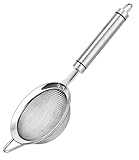
To remove all gritty sediment and achieve a flawless texture, carefully strain and pour the hot mixture through a fine mesh strainer directly into your serving cup. Successfully transferring the beverage from the cooking pot means completely eliminating all tea leaf sediment.
A dedicated fine mesh strainer is non-negotiable for proper straining; a standard colander simply has holes that are too large. This technique also provides a gentle aeration as you pour into a cup, lifting the aromatics and creating a frothy top characteristic of cafe-style drinks.
Ingredients
- Your hot, finished milk tea mixture
- A small fine mesh strainer
- Your favorite ceramic mug or heat-proof glass
Directions
- Position the fine mesh strainer securely over your chosen mug.
- Pour into a cup slowly and steadily, allowing the hot liquid to pass through the mesh while catching all the expanded tea leaves and any potential milk film.
- Press the leaves gently with the back of a spoon against the strainer to extract the last few drops of highly concentrated, flavorful syrup.
- Discard or compost the spent tea leaves immediately.
Pro-Tip: Using a fine mesh strainer rather than a standard colander is critical. The fine mesh not only removes all gritty tea leaf sediment, but the slight aeration as the liquid passes through the mesh actually enhances the Specific gravity of milk, giving you that signature frothy top characteristic of the classic royal milk tea.
7. Dissolving the Sweetener for an Authentic Cafe Taste

Pin this authentic sweetening trick to complete your recipe!
To match the iconic taste of Japanese bottled teas, stir in 1-2 teaspoons of gum syrup or honey immediately while the tea is piping hot to ensure complete dissolution. You can easily sweeten with honey or a traditional liquid syrup to achieve a perfectly balanced sweetness.
Understanding the comparison between sugar + honey or stevia vs gum syrup is essential for dissolving your sweetener fully without leaving a grainy residue at the bottom of the mug. Adding the sugar while the liquid is hot integrates the flavors seamlessly into the dairy.
Ingredients
- Your freshly strained, piping hot cup of royal milk tea
- 1-2 teaspoons of Japanese gum syrup, honey, or granulated sugar
- A tea spoon for mixing
Directions
- Add your preferred sweetener to the hot cup of tea immediately while the temperature is still high.
- Dissolving the sweetener requires gentle, continuous stirring for about 15 seconds to ensure no syrup sinks and sticks to the bottom.
- Sample the tea with a clean spoon to check for balanced sweetness.
- Adjust by adding a few more drops of sweetener if you prefer a taste closer to bottled Sangaria.
Pro-Tip: In authentic Japanese cafe culture, liquid “gum syrup” (a type of simple syrup) is the gold standard because it dissolves instantly without leaving a grainy texture. If you are comparing honey vs sugar, remember that honey will add distinct floral notes that beautifully complement the Astringency balance of the Assam leaves!

Key Takeaways: Your Quick Guide to Japanese Royal Milk Tea Recipe
For home cooks mid-process who need a quick review, this scannable summary highlights the most critical scientific and instructional insights. Mastering the japanese royal milk tea recipe means strictly following these core rules, from the water-first methodology to the exact temperature limits. By understanding these essential steps to make your brew, you guarantee a perfect cup of tea with a consistently rich flavor. Every successful stovetop milk tea recipe requires precise attention to these foundational elements to prevent a watery or scorched disaster.
Key Takeaways:
- Boil water before adding leaves – You must extract the Assam tea leaves in a small amount of boiling water before adding dairy, as milk’s density blocks optimal flavor extraction.
- Use CTC Assam for strength – Using Crush, Tear, Curl (CTC) black tea yields a robust, concentrated tea base that won’t get lost when diluted with heavy dairy.
- Keep steep times under 90 seconds – Keep your initial water steeping brief; over-steeping releases excessive tannins that cause a harsh, bitter aftertaste.
- Use whole milk for texture – To achieve the authentic, velvety mouthfeel found in japanese cafe milk tea, you must use whole dairy for its essential lipid content.
- Never boil the milk directly – Simmer the tea and milk mixture gently; boiling it will trigger a Casein-tannin interaction that curdles the dairy and scorches the sugars.
- Strain with a fine mesh – Always strain and pour through a dedicated fine mesh tool to remove gritty tea leaf sediment and naturally aerate the drink.
- Sweeten while hot with syrup – For a true Sangaria Royal Milk Tea copycat flavor, use liquid gum syrup or honey, which dissolves instantly into the hot milky black tea.
People Also Ask About Japanese Royal Milk Tea
Exploring these questions about japanese royal milk tea will resolve lingering uncertainties regarding ingredient substitutions and common troubleshooting failures. These japanese milk tea FAQs clarify the distinct differences between standard preparations and this authentic stovetop method. Whether you are wondering about using almond milk or troubleshooting wateriness, these common royal milk tea queries provide the precise, authoritative answers you need to perfect your homemade copycat beverage.
How to make japanese royal milk tea?
To make Japanese royal milk tea, boil a small amount of water in a saucepan, add black tea leaves to steep briefly, then pour in whole milk and simmer gently for 2 minutes before straining.
This traditional stovetop method (known as decoction) extracts a much richer flavor than simply pouring cold milk into a brewed cup of tea. By cooking the leaves directly in the dairy, the natural oils and flavors bind with the milk fats, resulting in a thick, creamy texture that defines the authentic Japanese cafe experience.
What is the difference between milk tea and royal milk tea?
The main difference is the preparation method: standard milk tea is made by adding milk to separately brewed tea, while royal milk tea is made by simmering the tea leaves directly inside a mixture of water and milk on the stove.
Because of this stovetop simmering technique, the japanese black tea with milk takes on a significantly richer, more full-bodied flavor. It is a more concentrated, indulgent beverage compared to a standard morning cup, heavily utilizing the Maillard reaction in dairy to create a deeper, caramelized taste profile.
What kind of tea is used in royal milk tea?
Assam and Darjeeling black tea leaves are the absolute best choices for royal milk tea because their robust, malty flavor profiles can easily cut through the heavy richness of whole milk without losing their character.
While you can technically use any black tea, Assam tea leaves (specifically CTC grade) are preferred in Japan because they extract quickly and deeply. A popular blend is 80% Assam for a strong base and 20% Darjeeling tea for its bright, aromatic floral notes.
Can I use tea bags for royal milk tea?
Yes, you can use tea bags for royal milk tea by snipping the bags open and pouring the loose tea dust directly into the saucepan to simmer, though premium loose leaf yields a better flavor.
If you are using a royal milk tea recipe with tea bags (like Lipton Yellow Label, which is common in Japanese households), use about 3 to 4 bags for two cups. Be aware that the fannings (tea dust) inside bags extract bitterness very quickly, so reduce your initial boiling water steep time to just 45 seconds to avoid a bitter aftertaste.
How do you make royal milk tea taste like Sangaria?
To make homemade royal milk tea taste exactly like bottled Sangaria, use a blend of Darjeeling, Keemun, and Uva teas, increase your whole milk ratio to 25%, and sweeten heavily with liquid cane sugar.
The secret to a perfect Sangaria royal milk tea copycat recipe lies in the specific tea blend and elevated sweetness. Sangaria relies on a high concentration of milk fats and dissolved liquid sugar to achieve that deeply comforting, ultra-sweet convenience store flavor.
Why is it called royal milk tea?
The beverage is called “royal milk tea” because the recipe was invented in 1965 by the Japanese tea brand Lipton at their “Sir Thomas Lipton” tea house in Kyoto, naming it “royal” to sound luxurious and distinctly British.
Despite the English-sounding name, it is a purely Japanese invention. It was created to offer a premium, highly concentrated milk tea that felt more decadent and indulgent than standard western-style tea, quickly becoming a staple of Japanese cafe culture.
How to avoid bitter milk tea?
To avoid bitter milk tea, never let your tea leaves steep in the boiling water for longer than 90 seconds, and never allow the milk mixture to reach a rolling boil, which burns the dairy sugars.
Bitterness comes from over-extracting tea polyphenols (tannins). By strictly adhering to proper temperature control and gently simmering rather than aggressively boiling, you ensure a mellow flavor with a perfectly smooth finish.
What is the best milk for japanese tea?
Fresh, high-fat whole milk is universally considered the best milk for Japanese tea because the high lipid content is required to bind with the tea’s tannins to create the signature velvety mouthfeel.
For the ultimate luxurious experience, many enthusiasts seek out Hokkaido milk, known for its exceptional richness and slight vanilla sweetness. If you are comparing lactose-free alternatives, oat milk (specifically barista-style oat milk) is the best low calorie royal milk tea substitute because it closely mimics dairy thickness.
How to prevent milk skin in tea?
You can prevent an unappetizing skin from forming on your milk tea by stirring the mixture constantly while it simmers, never letting it boil, and serving it immediately after straining.
Milk skin (or a lactoderm) forms when milk proteins coagulate and dry out on the surface due to heat exposure. By tempering the heat and vigorously whisking or stirring, you disrupt this protein layer, ensuring your tea and milk mixture remains perfectly homogenous.
What sugar is best for japanese tea?
Japanese “gum syrup” (a type of liquid simple syrup) is the best sweetener for Japanese milk tea because it dissolves instantly into the liquid without leaving any granular texture at the bottom of the cup.
If you cannot find authentic Japanese gum syrup, standard simple syrup or honey makes excellent alternatives. When considering honey vs sugar, remember that honey dissolves easier in hot liquids and adds a lovely floral dimension that compliments the aromatic black tea.
Final Thoughts on the Ultimate Japanese Royal Milk Tea Recipe
Mastering this authentic japanese royal milk tea recipe completely transforms how you experience black tea at home. By abandoning the standard Western method of merely splashing cold milk into hot tea, and instead embracing the traditional Japanese stovetop simmer method, you unlock a deeply comforting, cafe-quality beverage right in your own kitchen. The magic lies entirely in the science of the process: extracting premium Assam tea leaves in a concentrated water base before gently incorporating rich whole milk.
When you respect the delicate balance of temperature—never rushing the process with a rolling boil—you are rewarded with a classic royal milk tea that boasts a flawless golden brown color and a perfectly smooth finish completely free of any bitter aftertaste. Whether you’re trying to recreate the nostalgic flavor of bottled Japanese convenience store tea or simply want to elevate your morning routine, this homemade royal milk tea technique is foolproof once you understand the steps.
Now that you know the 7 secrets to the perfect brew for serving, I want to hear about your experience! Did you use a dash of honey or stick to traditional gum syrup? Let me know how your creamy japanese tea turned out in the comments below, and don’t forget to save this japanese royal milk tea recipe guide for your next cozy afternoon tea session!
Last update on 2026-09-07 / Affiliate links / Images from Amazon Product Advertising API
