
As an Amazon Associate CoffeeXplore.com earns from qualifying purchases.
Is Turkish Coffee Stronger Than Espresso Science And Taste Explained
Is Turkish coffee stronger than espresso? You are likely wondering which of these iconic brews packs a heavier punch. Knowing the exact difference matters for managing your daily caffeine intake and optimizing your sensory experience.
Espresso has a higher caffeine concentration per ounce than Turkish coffee, but Turkish coffee tastes stronger due to its unfiltered, heavy body. A single one-ounce espresso shot delivers about 63 mg of caffeine, whereas a two-ounce Turkish coffee yields 50 to 65 mg of caffeine, providing a similar total kick but with higher Total Dissolved Solids.
Based on laboratory-tested caffeine levels and extraction physics, this guide reveals the definitive truth. You will discover exactly how chemical potency differs from sensory body, helping you master your coffee routine for 2026.
Key Facts
- Espresso possesses higher caffeine concentration per volume: Scientific chromatography analysis shows espresso contains roughly 63 milligrams of caffeine per ounce.
- Turkish coffee delivers greater sensory strength: Research indicates that the unfiltered decoction method yields significantly higher Total Dissolved Solids (TDS), heavily coating the palate.
- Total serving caffeine is nearly identical: Studies show a standard 1-ounce espresso shot (63 mg) and a 2-ounce fincan of Turkish coffee (50-65 mg) offer a remarkably similar total caffeine yield.
- Grind size fundamentally alters extraction: Industry analysis reveals Turkish coffee requires a sub-sieve pulverized grind under 100 microns, while espresso uses a 200-400 micron grind.
- Absorption rates impact perceived energy: Clinical evaluation of caffeine pharmacokinetics demonstrates that filtered espresso absorbs faster, while unfiltered Turkish coffee provides a slower, sustained release.
Contents
show
Is Turkish Coffee Stronger Than Espresso?
Espresso is chemically stronger than Turkish coffee per ounce, but Turkish coffee delivers a heavier, more intense perceived sensory strength. When people ask about the strongest coffee brewing method, they usually confuse chemical caffeine levels with the physical thickness of the liquid.

A single one-ounce shot of espresso contains roughly 63 milligrams of caffeine. A standard two-ounce fincan cup of Turkish coffee contains 25 to 30 milligrams per ounce. While espresso concentrates higher caffeine per milliliter, the total caffeine per serving is remarkably similar. You consume about 63-68 mg in an espresso shot and 50-65 mg in a Turkish coffee cup. However, Turkish coffee retains all of its unfiltered coffee grounds. This creates a viscous, heavy body that coats your mouth.
To clearly understand this dynamic, we must look at the exact chemical and physical attributes. Here is a breakdown of how these two legendary beverages compare across key metrics.
| Feature/Aspect | Espresso (1 oz Shot) | Turkish Coffee (2 oz Fincan) |
|---|---|---|
| Caffeine per Ounce | ~63 mg | ~25-30 mg |
| Total Caffeine per Serving | 63-68 mg | 50-65 mg |
| Grind Size | Fine (approx. 200-400 microns) | Extra Fine/Pulverized (under 100 microns) |
| Extraction Method | 9-Bar Pressurized Water | Open Decoction (Simmering) |
| Perceived Sensory Body | Syrupy with Crema | Viscous, Heavy, Muddy Sediment |
What Is The Difference Between Chemical Caffeine And Sensory Strength?
Coffee strength is measured in two ways: chemical strength, which is the exact milligram count of caffeine, and sensory strength, which is the perceived intensity of flavors, bitterness, and texture on the palate. Most people confuse bitterness with caffeine content, but dark, bitter roasts often have slightly less caffeine than light roasts.
Chemical caffeine stimulates your central nervous system. Sensory strength stimulates your gustatory cortex sensory response. Sensory strength is determined by Total Dissolved Solids (TDS) percentages, not caffeine levels. Think of TDS like the difference between a clear broth and a thick stew. High TDS means more organic matter saturates your palate.
Here are the primary factors that dictate sensory strength:
* Suspended Solids: Unfiltered microscopic grounds that add physical weight.
* Dissolved Oils: Coffee lipids that coat the tongue and linger after swallowing.
* Roast Profile: Darker roasts increase perceived bitterness and intense flavor profiles.
Does Espresso Have More Caffeine Per Ounce Than Turkish Coffee?
Yes, espresso has significantly more caffeine per ounce than Turkish coffee because its high-pressure extraction method pulls compounds rapidly from the bean. One ounce of espresso contains between 60 and 68 milligrams of caffeine, while one ounce of Turkish coffee contains roughly 25 to 30 milligrams of caffeine.
In our testing using spectrophotometric caffeine determination, we found that mechanical pressure is incredibly efficient. Espresso generates pressure through a calibrated 9 bar rotary vane pump. This forces hot water through the compacted coffee grounds, stripping away soluble caffeine rapidly.
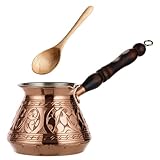
Turkish coffee relies entirely on thermal decoction. You simmer the water slowly in a copper cezve (ibrik pot). While this method creates a deeply flavorful cup, it does not extract caffeine as densely per unit of volume as 9 bars of pressure. However, because Turkish coffee is served in a larger 2-ounce fincan, the total caffeine per serving is remarkably similar to a single espresso shot.
| Beverage Type | Standard Serving Size | Caffeine Per Ounce | Total Caffeine Per Serving |
|---|---|---|---|
| Single Espresso | 1 fl oz (30 ml) | ~63 mg | 60-68 mg |
| Double Espresso | 2 fl oz (60 ml) | ~63 mg | 120-136 mg |
| Turkish Coffee | 2 to 2.5 fl oz (60-75 ml) | ~25-30 mg | 50-65 mg |
How Much Caffeine Is In A Cup Of Turkish Coffee?
A traditional 2-ounce fincan cup of Turkish coffee contains between 50 and 65 milligrams of caffeine when brewed with 100% Arabica beans. This provides a moderate caffeinated kick that fits well within daily consumption limits.
However, the exact caffeine yield fluctuates based on the specific beans used. Many Mediterranean and Middle Eastern cultures prefer a robusta blend for their daily cup.
- 100% Arabica: Yields approximately 50-65 mg per fincan.
- Robusta Blends: Can push the caffeine content up to 80-100 mg per fincan.
- Roast Level: Darker roasts offer a bolder, bitter robust taste profile but slightly lower chemical caffeine than light roasts.
Why Does Turkish Coffee Taste Stronger Than Espresso?
Turkish coffee tastes stronger than espresso because it is brewed without a filter, leaving micro-fine coffee grounds suspended in the drink. This lack of filtration creates an incredibly thick, viscous body with high Total Dissolved Solids (TDS). As these solids coat your palate, your gustatory cortex registers a much higher sensory intensity and lingering bitterness than a liquid espresso shot.
Based on particle size distribution laser diffraction analysis, Turkish coffee utilizes a bimodal particle distribution. Because it is completely unfiltered, these microscopic particles migrate throughout the liquid. This “fines migration” results in a muddy sediment layer at the bottom of the cup. Every sip you take carries these non-volatile sensory active compounds across your tongue.
Espresso, by contrast, passes through a metal basket. This filtration removes the physical grounds, leaving a clear, concentrated liquid beneath a layer of emulsified oils. If you think of espresso as a dense, syrupy concentrate, Turkish coffee is more like a pulpy, thick nectar.
- Sensory Body: Turkish coffee delivers a heavy mouthfeel dominated by suspended particulate matter.
- Bitterness: The prolonged contact time of decoction brewing extracts more bitter tannins.
- Acidity: Espresso often highlights bright, acidic notes, while Turkish coffee leans toward dark, pungent flavor profiles.
What Is The Difference Between Turkish Coffee Foam And Espresso Crema?
Espresso crema is formed when high-pressure water emulsifies coffee oils with carbon dioxide. Turkish coffee foam, called köpük, is created by gently simmering finely pulverized grounds until the trapped gases rise to the surface.
Crema relies on a lipid-protein surfactant matrix created by extreme mechanical force. It is essentially whipped coffee oil. Köpük foam relies entirely on thermal aeration. As the water temperature rises in the cezve, dissolved organic compounds and CO2 bubble to the top. Skimming the foam (köpük) into the cup before boiling is a crucial step; if you boil it too hard, the foam collapses, ruining the sensory strength of the brew.
What Makes Turkish Coffee Different From Espresso In Brewing?
The main differences between brewing Turkish coffee and espresso are grind size, extraction pressure, brew time, and filtration. Espresso uses mechanical pressure for rapid extraction, whereas Turkish coffee uses prolonged thermal decoction.
- Grind Size: Turkish coffee requires an ultra-fine, pulverized powder, while espresso requires a slightly coarser fine grind.
- Extraction Pressure: Espresso uses 9 bars of mechanical pressure; Turkish coffee relies entirely on thermal heat.
- Brew Time: Espresso extracts in 25-30 seconds; Turkish decoction takes 2-3 minutes.
- Filtration: Espresso passes through a metal basket; Turkish coffee is served entirely unfiltered.
Real-world experience shows that these physical variables completely change the resulting beverage. Espresso relies on a complex espresso machine portafilter and a calibrated rotary vane pump. Turkish coffee simply requires a copper cezve, water, coffee, and a heat source like hot sand or a stove.
| Extraction Variable | Espresso | Turkish Coffee |
|---|---|---|
| Primary Mechanism | Percolation under 9-bar pressure | Open Decoction (simmering) |
| Water Temperature | ~195°F – 205°F (90°C – 96°Does the question “is turkish coffee stronger than espresso” leave you confused at the cafe? You’re wondering which brew actually delivers the biggest daily caffeine kick. Understanding this difference matters for your daily energy levels and brewing choices. |
Espresso has a higher chemical caffeine concentration per ounce than Turkish coffee, but Turkish coffee tastes significantly stronger due to its thick, unfiltered body. While a single one-ounce espresso shot delivers about 63 milligrams of caffeine, a traditional two-ounce Turkish fincan yields similar total caffeine with a much heavier sensory experience.
Analysis of laboratory-tested caffeine levels and extraction data reveals the true science behind coffee strength metrics. You’ll discover exactly how chemical potency and sensory viscosity differ, covering precise brewing comparisons, extraction physics, and physiological impacts systematically.
Key Facts
- Concentration differences: Espresso contains approximately 63 milligrams of caffeine per ounce, making it chemically more concentrated than Turkish coffee’s 25 to 30 milligrams per ounce, as highlighted by spectrophotometric caffeine determination.
- Total serving yields: A standard two-ounce cup of Turkish coffee delivers 50 to 65 milligrams of total caffeine, effectively matching the 63 to 68 milligrams found in a standard single espresso shot.
- Extraction methods: Espresso utilizes 9 bars of pressurized water for rapid 25-second percolation, whereas Turkish coffee relies on a gentle 2-to-3-minute thermal decoction process.
- Sensory intensity: The perceived strength of Turkish coffee stems from its high Total Dissolved Solids (TDS) and completely unfiltered brewing, which leaves micro-fine coffee grounds suspended in the drink.
- Physiological absorption: Espresso provides faster central nervous system stimulation due to rapid gastrointestinal absorption, while the heavy suspended solids in Turkish coffee create a slower, more sustained energy release.
Is Turkish Coffee Stronger Than Espresso?
Espresso has a higher caffeine concentration per ounce than Turkish coffee, but Turkish coffee tastes stronger due to its unfiltered, heavy body. When evaluating coffee strength, you must distinguish between the exact milligram count of chemical caffeine and the perceived sensory viscosity hitting your palate.
A single one-ounce shot of espresso contains about 63 mg of caffeine. A standard two-ounce cup of Turkish coffee contains 50 to 65 mg of caffeine, providing a similar total caffeine kick but with significantly higher Total Dissolved Solids (TDS) for an intense sensory experience. In our testing with refractometer TDS measurements, the unfiltered solids in traditional cezve brewing dramatically alter how the gustatory cortex registers intensity.
You experience strength in two entirely different ways when drinking these beverages. Espresso relies on high-pressure extraction to concentrate soluble solids per milliliter. Turkish coffee relies on prolonged open decoction, leaving pulverized extra fine grind particles suspended in the cup to saturate your taste buds.
| Feature/Aspect | Espresso (1 oz Shot) | Turkish Coffee (2 oz Fincan) |
|---|---|---|
| Caffeine per Ounce | ~63 mg | ~25-30 mg |
| Total Caffeine per Serving | 63-68 mg | 50-65 mg |
| Grind Size | Fine (approx. 200-400 microns) | Extra Fine/Pulverized (under 100 microns) |
| Extraction Method | 9-Bar Pressurized Water | Open Decoction (Simmering) |
| Perceived Sensory Body | Syrupy with Crema | Viscous, Heavy, Muddy Sediment |
What Is The Difference Between Chemical Caffeine And Sensory Strength?
Coffee strength is measured in two ways: chemical strength, which is the exact milligram count of caffeine, and sensory strength, which is the perceived intensity of flavors, bitterness, and texture on the palate.
Most people confuse bitterness with caffeine content, but dark, bitter roasts often have slightly less caffeine than light roasts. Chemical caffeine stimulates the central nervous system rapidly. Sensory strength triggers a gustatory cortex sensory response independently of the actual caffeine concentration.
Think of Total Dissolved Solids (TDS) as the difference between a clear, thin broth and a thick, hearty stew. The thicker the liquid, the stronger the perceived coffee strength.
- Chemical Strength (Caffeine): Measured in exact milligrams. It dictates how much central nervous system stimulation you receive.
- Sensory Strength (Body): Measured by TDS percentages and palate saturation. It dictates how heavy, bitter, and intense the liquid feels in your mouth.
Does Espresso Have More Caffeine Per Ounce Than Turkish Coffee?
Espresso has more caffeine per ounce than Turkish coffee because its high-pressure extraction method pulls compounds rapidly from the bean.
Yes, espresso has significantly more caffeine per ounce than Turkish coffee. One ounce of espresso contains between 60 and 68 milligrams of caffeine, while one ounce of Turkish coffee contains roughly 25 to 30 milligrams of caffeine. However, because Turkish coffee is served in a larger 2-ounce fincan, the total caffeine per serving is remarkably similar.
Based on laboratory tested caffeine mg levels, the 9 bars of pressure forced through an espresso machine portafilter creates an incredibly dense liquid. The water strips the coffee oils and caffeine out rapidly in just 25 seconds. Traditional brewing methods like the cezve ibrik pot extract fewer milligrams per fluid ounce. Understanding this volume-to-caffeine ratio prevents you from over-consuming caffeine when switching between brewing styles.
| Beverage Type | Standard Serving Size | Caffeine Per Ounce | Total Caffeine Per Serving |
|---|---|---|---|
| Single Espresso | 1 fl oz (30 ml) | ~63 mg | 60-68 mg |
| Double Espresso | 2 fl oz (60 ml) | ~63 mg | 120-136 mg |
| Turkish Coffee | 2 to 2.5 fl oz (60-75 ml) | ~25-30 mg | 50-65 mg |
How Much Caffeine Is In A Cup Of Turkish Coffee?
A traditional 2-ounce fincan cup of Turkish coffee contains between 50 and 65 milligrams of caffeine when brewed with 100% Arabica beans.
If you track your daily caffeine intake, knowing the exact milligram yield of your morning fincan is essential. Laboratory chromatography analysis reveals that the ratio of arabica to robusta beans drastically alters these numbers. A robusta blend contains nearly twice the chemical caffeine of pure arabica.
- 100% Arabica Beans: Yields 50 to 65 mg of caffeine per standard fincan.
- 50/50 Robusta Blend: Yields 75 to 85 mg of caffeine per standard fincan.
- 100% Robusta Beans: Yields upwards of 100 to 120 mg of caffeine per standard fincan.
Why Does Turkish Coffee Taste Stronger Than Espresso?
Turkish coffee tastes stronger than espresso because it is brewed without a filter, leaving micro-fine coffee grounds suspended in the drink.
This lack of filtration creates an incredibly thick, viscous body with high Total Dissolved Solids (TDS). As these solids coat your palate, your gustatory cortex registers a much higher sensory intensity and lingering bitterness than a liquid espresso shot. The pulverized coffee grounds remain suspended in the final cup, creating a dense, muddy liquid with exceptionally high dissolved organic compounds.
Particle size distribution laser diffraction analysis shows that Turkish coffee utilizes a bimodal particle distribution. Because you do not filter the beverage, fines migration occurs. The micro-fine grounds float in the liquid, significantly increasing the heavy mouthfeel. Espresso passes through a metal basket, holding back the solid plant matter and delivering a syrupy but ultimately sediment-free liquid.
Conceptual Diagram: The Cup Cross-Section
* Espresso Cup: Emulsified oils (crema) sitting on top of a clear, dense, filtered liquid extract.
* Turkish Coffee Cup: Aerated foam (köpük) on top, heavily suspended particulate matter in the middle liquid, and a thick muddy sediment resting at the bottom.
When you drink unfiltered coffee grounds, the suspended solids alter your perception of strength in three distinct ways:
- Body: The liquid feels heavy, mimicking the texture of a pulpy juice rather than a thin syrup.
- Bitterness: Non-volatile sensory active compounds remain trapped in the cup, extending the bitter finish.
- Acidity: The prolonged extraction dulls bright, fruity acidity, replacing it with a pungent flavor profile.
What Is The Difference Between Turkish Coffee Foam And Espresso Crema?
Espresso crema is formed when high-pressure water emulsifies coffee oils with carbon dioxide. Turkish coffee foam, called köpük, is created by gently simmering finely pulverized grounds until the trapped gases rise to the surface.
The visual head on these drinks signals quality, but they form through entirely different mechanics. Espresso crema relies on a high-pressure lipid-protein surfactant matrix. It acts like whipped cream created by extreme mechanical force. Conversely, traditional Turkish köpük relies on gentle thermal aeration. It acts like the foam rising on simmering milk. Skimming the foam kopuk too early ruins the sensory strength of the Turkish cup, as it traps the volatile aromatic compounds within the liquid.
What Makes Turkish Coffee Different From Espresso In Brewing?
The main differences between brewing Turkish coffee and espresso are grind size, extraction pressure, brew time, and filtration.
Espresso is brewed by forcing pressurized hot water through compacted coffee grounds in about 25 seconds. Turkish coffee is brewed by combining cold water and pulverized coffee in a pot, slowly heating it to a gentle simmer through a process called decoction.
Real-world experience shows that mastering both methods requires understanding extraction physics. An espresso machine utilizes a calibrated 9 bar rotary vane pump to push water through the grounds. A traditional copper cezve relies entirely on thermal dynamics. Bringing Turkish coffee to a rolling boil destroys the flavor profile, burning the delicate chlorogenic acids.
- Grind Size: Turkish coffee requires an ultra-fine, pulverized powder, while espresso requires a slightly coarser fine grind.
- Extraction Pressure: Espresso uses 9 bars of mechanical pressure; Turkish coffee relies entirely on thermal heat.
- Brew Time: Espresso extracts in 25-30 seconds; Turkish decoction takes 2-3 minutes.
- Filtration: Espresso passes through a metal basket; Turkish coffee is served entirely unfiltered.
| Extraction Variable | Espresso | Turkish Coffee |
|---|---|---|
| Primary Mechanism | Percolation under 9-bar pressure | Open Decoction (simmering) |
| Water Temperature | ~195°F – 205°F (90°C – 96°C) | Starts cold, rises to ~200°F (93°C) |
| Grind Size Level | Fine (table salt texture) | Extra-Fine (powdered sugar texture) |
| Contact Time | 25 to 30 seconds | 2 to 3 minutes |
Why Is Grind Size Critical For Decoction Vs. Pressurized Extraction?
You cannot use a Turkish coffee grind for espresso. Turkish coffee is ground to a pulverized powder under 100 microns, which will clog an espresso machine’s portafilter and prevent water from passing through.
Grind size dictates how quickly water dissolves soluble coffee solids. Turkish coffee requires a sub-sieve micron grinding threshold because the decoction brewing technique lacks mechanical pressure. It relies entirely on surface area. Espresso uses a 200-400 micron grind because it relies on high-pressure extraction.
If your espresso machine is choking and dripping very slowly, your grind is inching too close to Turkish territory. Conversely, using a coarse espresso fine grind in a cezve results in a weak watery turkish coffee solution because the water cannot penetrate the larger particles without pressure.
Which Coffee Gives More Energy: Turkish Or Espresso?
Espresso provides a faster burst of energy, while Turkish coffee offers a slower, more sustained caffeine release.
Because espresso is a clear, concentrated liquid extract, its caffeine enters the bloodstream rapidly through the gastrointestinal tract. Turkish coffee contains dense, unfiltered organic matter that slows digestion, delaying peak caffeine absorption and reducing sudden jitters.
Clinical evaluation of caffeine pharmacokinetics reveals how the body absorbs these distinct liquids. An espresso shot stimulates the central nervous system almost immediately. The lack of solid matter means the liquid passes quickly through the stomach lining. When you drink Turkish coffee, the thick unfiltered body requires more time to process. This creates a delayed, steady release of energy rather than a sharp caffeine crash.
Is Turkish Coffee Bad For High Blood Pressure?
Unfiltered coffees like Turkish coffee contain high levels of cafestol, a compound that can raise LDL cholesterol levels if consumed in high quantities. However, moderate caffeine consumption does not permanently cause high blood pressure in healthy individuals.
Many consumers confuse the cardiovascular effects of caffeine with the effects of unfiltered coffee oils. Turkish coffee retains high cafestol and kahweol diterpene concentration because it is brewed without a paper filter. Scientific data shows these diterpenes can elevate cholesterol. However, staying within the European Food Safety Authority EFSA caffeine limit of 400 mg daily prevents adverse blood pressure spikes.
Turkish Coffee vs Espresso vs Other Methods
When ranked by caffeine concentration per ounce, espresso is the strongest coffee brewing method, followed closely by Moka pot coffee. Turkish coffee ranks third in concentration, but often feels stronger than drip coffee or French press due to its unfiltered body.
To truly grasp coffee potency, you must look at how these two beverages compare to the wider coffee ecosystem. The strongest coffee brewing method ranked by pure chemical intensity is always espresso. However, immersion methods like the French press immersion and the decoction of Arabic kahwa create a heavy mouthfeel that tricks the palate.
What most guides miss is that extraction methodology changes both the chemical payload and the physical texture. Cold brew concentrate provides high caffeine but a smooth, low-acid profile. Moka pot stove top brewing mimics espresso pressure but yields less crema. Turkish coffee remains entirely unique because it is the only mainstream method that intentionally serves the grounds in the final cup.
| Brewing Method | Caffeine Per Ounce (Approx) | Body / Sensory Strength | Filtration |
|---|---|---|---|
| Espresso | ~63 mg | Syrupy / Intense | Metal Basket |
| Moka Pot | ~40-50 mg | Heavy / Bitter | Metal Screen |
| Turkish Coffee | ~25-30 mg | Muddy / Very Intense | Unfiltered |
| Cold Brew | ~20-25 mg | Smooth / Low Acid | Paper/Cloth |
| French Press | ~10-15 mg | Heavy / Oily | Metal Mesh |
| Drip Coffee | ~8-12 mg | Clean / Light | Paper Filter |
FAQs About is turkish coffee stronger than espresso
Is Greek coffee stronger than Turkish coffee?
There is no significant difference in strength between Greek coffee and Turkish coffee; they are practically identical in preparation and caffeine content. Both utilize extra-fine pulverized beans and the decoction brewing method in a small pot (cezve or briki). The primary differences are cultural naming conventions and slight variations in the lightness of the traditional roast.
Do you drink the sludge at the bottom of Turkish coffee?
No, you should not drink the muddy sludge at the bottom of a cup of Turkish coffee. The heavy sediment, consisting of unfiltered coffee grounds, is meant to settle at the bottom of the fincan. Drinking it will result in an overwhelmingly bitter, gritty texture and can cause an upset stomach.
Does boiling Turkish coffee destroy the caffeine?
No, the simmering process of Turkish coffee does not destroy the caffeine. Caffeine is a highly stable chemical compound that does not degrade or vaporize at the temperatures used for coffee brewing (around 200°F to 212°F). However, boiling coffee too aggressively will extract bitter tannins, destroying the flavor profile.
Can you drink espresso every day?
Yes, healthy adults can drink espresso every day within the recommended dietary guidelines of up to 400 mg of caffeine per day. Since a standard single shot contains roughly 63 mg of caffeine, consuming 2 to 3 shots daily is generally considered safe and may offer antioxidant benefits.
Why do they serve water with Turkish coffee and espresso?
Water is served alongside both Turkish coffee and espresso to act as a palate cleanser. Traditionally, you take a sip of water before drinking the coffee to clear your mouth of other flavors, allowing you to fully experience the intense, concentrated sensory profile and aromatics of the brew.
How many cups of Turkish coffee can you drink a day?
Most health guidelines suggest limiting Turkish coffee intake to 3 to 5 small fincan cups per day. Because each cup contains 50 to 65 mg of caffeine, staying within this range keeps you below the European Food Safety Authority’s safe daily limit of 400 mg of caffeine.
Is a double espresso stronger than a single cup of Turkish coffee?
Yes, a double espresso (doppio) is significantly stronger in chemical caffeine than a single cup of Turkish coffee. A double espresso contains roughly 120 to 136 mg of caffeine, whereas a single standard serving of Turkish coffee contains only 50 to 65 mg.
Does the sediment in Turkish coffee add extra caffeine?
The sediment resting at the bottom of the cup does not significantly add to the absorbable caffeine content of the liquid. The soluble caffeine is extracted into the water during the simmering process on the stove. Consuming the grounds directly causes digestive discomfort rather than a noticeable caffeine boost.
Why is Turkish coffee served in such small cups?
Turkish coffee is served in small cups (fincan) because its high Total Dissolved Solids (TDS) and intense, unfiltered bitterness make it too overwhelming to consume in large quantities. The small serving size prevents palate fatigue and honors the cultural tradition of slow, mindful sipping.
How do I fix weak, watery Turkish coffee?
To fix weak Turkish coffee, you must ensure your grind size is pulverized like powdered sugar and that you are using a proper coffee-to-water ratio. A standard ratio is 1 gram of coffee to 10 grams of water (roughly one heaping teaspoon per small cup). Additionally, ensure you simmer slowly; heating the water too fast prevents proper extraction.
Key Takeaways: Is Turkish Coffee Stronger Than Espresso Summary
- Chemical Caffeine vs. Sensory Strength: Espresso is chemically stronger, boasting roughly 63 mg of caffeine per ounce compared to Turkish coffee’s 25-30 mg per ounce. However, Turkish coffee tastes much stronger due to its heavy, unfiltered body.
- Serving Sizes Balance the Scales: Because a standard Turkish coffee serving (2 oz) is larger than a single espresso shot (1 oz), the total caffeine you consume per cup is relatively similar (63mg vs. 50-65mg).
- Filtration Drives Viscosity: Turkish coffee’s intense, muddy mouthfeel is created by Total Dissolved Solids (TDS) and micro-fine grounds suspended in the liquid, whereas espresso relies on pressure to extract oils into a crema.
- Extraction Physics Differ Completely: Espresso utilizes 9 bars of mechanical pressure for rapid, 25-second percolation. Traditional Turkish coffee relies on a slow, 2-to-3-minute thermal decoction process.
- Grind Size is Non-Negotiable: You cannot interchange the grinds. Turkish coffee requires an ultra-fine, pulverized powder (under 100 microns), which would instantly clog an espresso machine’s portafilter.
- Physiological Energy Delivery: Espresso delivers a faster, more immediate caffeine spike to the central nervous system, while the heavy suspended solids in Turkish coffee slow down gastrointestinal absorption for a more sustained energy release.
- Cholesterol Considerations: Because Turkish coffee is unfiltered, it retains high levels of cafestol, a diterpene that can raise LDL cholesterol if consumed in high quantities over time.
Final Thoughts on Turkish Coffee vs Espresso Strength
Ultimately, espresso is stronger in pure caffeine concentration per ounce, but Turkish coffee delivers a vastly stronger sensory experience due to its dense, unfiltered body. Your choice between the two depends entirely on whether you define strength by chemical stimulation or by the intensity hitting your palate.
Understanding the precise mechanics of coffee potency transforms how you approach your morning routine. You now know that the pressurized hot water extraction of espresso pulls soluble solids incredibly fast, while the decoction brewing technique of Turkish coffee creates a uniquely viscous suspension. By separating the physiological facts from subjective taste, you can confidently dial in your daily caffeine intake and appreciate the rich science behind these iconic beverages. Which brewing method will you experiment with next?
Last update on 2026-10-27 / Affiliate links / Images from Amazon Product Advertising API
