
As an Amazon Associate CoffeeXplore.com earns from qualifying purchases.
Why Doesnt Coffee Taste Like It Smells Science Explained
Ever wondered why doesn’t coffee taste like it smells? You grind fresh beans, inhale that incredible aroma, then sip bitter disappointment. That frustrating gap between scent and flavor has a scientific explanation.
Coffee tastes different than it smells because orthonasal olfaction detects over 800 volatile compounds in dry grounds, while retronasal olfaction and the tongue struggle to perceive these aromatics once saliva degrades them during drinking. Your nose experiences an aromatic explosion your taste buds simply cannot match.
Drawing on sensory science research and biochemical analysis of saliva interaction, this guide explains the science behind the mismatch. You’ll discover exactly why your cup falls short and practical brewing fixes to bring taste closer to that incredible dry-ground aroma.
Key Facts
- Coffee aroma comes from over 800 volatile organic compounds: Research indicates the human nose can detect hundreds of aromatic molecules in coffee, while the tongue perceives only five basic tastes, creating a substantial sensory gap.
Saliva actively degrades coffee aroma molecules: Biochemical analysis reveals that salivary proteins like alpha-amylase and mucins bind to and break down volatile aromatic compounds before they reach the olfactory receptors.
Two distinct smell pathways create the mismatch: Neuroscientific research shows orthonasal olfaction (smelling through the nostrils) produces a far stronger signal than retronasal olfaction (aromas traveling from the mouth during swallowing).
Boiling water destroys delicate aromatic oils: Studies demonstrate that water above 205°F scalds heat-sensitive volatile compounds, while the optimal 195-205°F range preserves the aromatics that match coffee’s dry scent.
Ground coffee loses aroma rapidly through oxidation: Industry analysis reveals that volatile aromatic compounds begin degrading within 30 minutes of exposure to air, making fresh grinding essential for aroma retention.
Contents
show
Why Doesn’t Coffee Taste Like It Smells?
Coffee does not taste like it smells because your tongue perceives only five basic tastes, while your nose detects over 800 volatile aromatic compounds, and saliva degrades key aroma molecules during drinking. This sensory mismatch stems from the fundamental difference between how you experience dry coffee grounds and how you perceive the brewed liquid in your mouth.
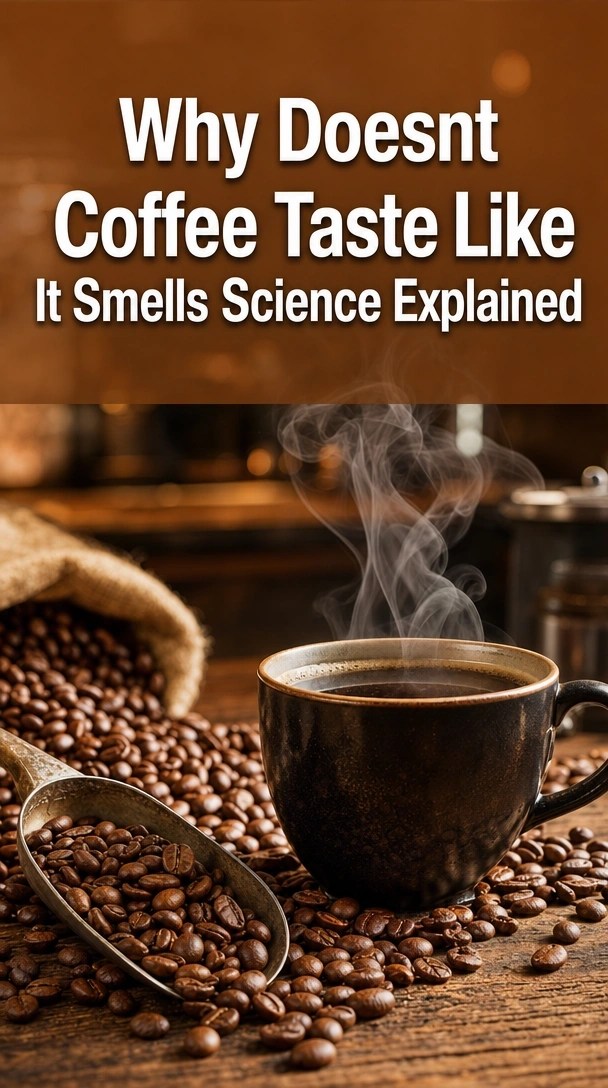
The aromatic explosion you experience when grinding fresh beans comes from volatile organic compounds (VOCs) [chemical molecules that easily evaporate into the air at room temperature]. These compounds include furans, pyrazines, and aldehydes created during the roasting process through the Maillard reaction [the chemical reaction between amino acids and sugars that produces browned, aromatic compounds].
Sensory science research, including studies from the Monell Chemical Senses Center, has shed light on why this smell-taste gap exists. The research points to a specific biochemical interaction: your saliva contains proteins that actively interfere with coffee’s aromatic molecules the moment the liquid enters your mouth. This means the very biological system designed to help you taste is working against your ability to enjoy coffee’s full aromatic profile.
Here are the key scientific reasons for the coffee smell vs taste mismatch:
- Tongue limitations: Your taste buds [sensory receptors on the tongue] detect only five basic taste modalities: bitter, sour, sweet, salty, and umami. None of these capture the complexity of coffee’s aroma.
- Saliva interference: Salivary proteins bind to and degrade volatile aromatic compounds before they can reach your olfactory receptors.
- Weak retronasal pathway: The internal route from your mouth to your nose during swallowing produces a much weaker signal than direct inhalation through your nostrils.
- Evaporation during brewing: Many volatile compounds dissipate into the air during the extraction process, leaving behind more bitter, non-volatile compounds in the cup.
This sensory gap can feel especially frustrating because coffee is one of the most aromatic foods humans consume. The chemical complexity of roasted coffee rivals wine and chocolate. Yet the moment you take a sip, that complexity seems to vanish, replaced by bitterness or dullness. Understanding the biology behind this phenomenon transforms frustration into knowledge, and knowledge into better brewing.
How Does Orthonasal Olfaction Differ From Retronasal Olfaction?
Orthonasal olfaction detects scent from the outside air through the nostrils, whereas retronasal olfaction detects flavors traveling from the mouth to the nose during swallowing, creating a weaker signal. These two distinct pathways explain why dry coffee grounds smell dramatically better than the brewed coffee tastes.
When you smell coffee beans or freshly ground coffee, you use your orthonasal pathway [external route where air carries scent molecules through your nostrils into the nasal cavity]. The aroma travels straight up to your olfactory receptors [specialized nerve cells that detect odor molecules] located in the roof of your nasal cavity. This direct route delivers an intense, concentrated signal to your olfactory bulb [the brain’s smell center]. Think of it like smelling the air around a bakery versus tasting the bread itself. The fragrance hits your nose at full strength, unmodified by any other biological process.
When you drink coffee, a completely different pathway activates. The liquid enters your mouth, and as you swallow, aroma molecules travel from the back of your throat through the retro nasal passage [the internal channel connecting the mouth to the nasal cavity]. This is retronasal olfaction [internal scent detection during eating and drinking]. The signal traveling this route is weaker because the aromatic compounds have been diluted, warmed, and partially broken down by saliva and the brewing process itself.
Here’s the key difference in airflow direction:
- Orthonasal olfaction: External air flows into the nostrils, carrying concentrated scent molecules directly to the nasal cavity receptors. This produces the intense “coffee aroma” experience.
- Retronasal olfaction: Internal air flows from the mouth, up through the throat, and into the nasal cavity. This produces a fainter, less distinct flavor perception.
The olfactory nerve stimulation from the orthonasal route is simply more powerful. Research on retronasal perception confirms that the internal pathway delivers fewer odor molecules to the receptors, and those molecules arrive in a degraded state. That’s why the same coffee that smells like caramel, berries, and chocolate in the bag tastes flat or bitter in the cup.
Try this simple experiment: inhale deeply through your nose while holding a cup of freshly brewed coffee near your face. Then take a sip and pay attention to the aroma while swallowing. You’ll notice the intensity difference immediately. That’s the orthonasal versus retronasal olfactory system in action.
Why Do Saliva Proteins Break Down Coffee Volatiles?
Saliva contains enzymes like alpha-amylase and mucins that bind to coffee’s volatile organic compounds, trapping them before they can stimulate the olfactory receptors needed to perceive aroma. This biochemical interaction is the hidden barrier between the incredible smell of dry grounds and the disappointing taste of brewed coffee.
Your saliva is not just water. It contains a complex mixture of proteins, enzymes, and other molecules designed to begin digestion the moment food enters your mouth. Two components matter most for coffee:
- Salivary alpha-amylase [digestive enzyme that breaks down carbohydrates]: This enzyme interacts with coffee’s aromatic compounds, chemically modifying them and reducing their ability to bind to your olfactory receptors.
- Mucins [gel-like proteins that lubricate and protect the mouth]: These proteins physically trap hydrophobic [water-repelling] aroma molecules, essentially wrapping them up so they cannot evaporate into your nasal cavity.
Biochemical analysis of saliva interaction reveals that this combination of enzymatic breakdown and physical trapping significantly reduces the number of aromatic molecules that reach your olfactory system. The volatile compounds that made the dry grounds smell incredible—furfurylthiol, pyrazines, methional—get neutralized the moment they contact your saliva.
Here’s an analogy that makes this easier to understand: imagine dry coffee grounds as a freshly baked loaf of bread. The aroma fills the room. Now imagine pouring water on that bread and eating it with a generous amount of saliva coating your mouth. The water dilutes the flavor, and the saliva begins digesting it immediately. The same thing happens to coffee’s aromatic molecules—they’re literally trapped and broken down before they can register as flavor.
This explains why coffee’s aroma perception changes so dramatically between smelling and tasting. The dry grounds release their volatile organic compounds into the air for your orthonasal pathway to detect. But once brewed and swallowed, those same compounds face the saliva barrier. The hydrophobic coffee aroma volatiles get captured by mucins, while enzymes like alpha-amylase begin altering their chemical structure. By the time any aroma signal reaches your brain through the retronasal route, it’s a shadow of what your nose detected moments earlier.
One practical takeaway: letting coffee cool slightly before sipping can reduce the rate of saliva binding. Hotter liquid accelerates chemical reactions, including the interaction between saliva proteins and coffee volatiles. A few degrees of cooling can preserve more of the aromatic profile.
What Chemical Compounds Are Lost During Brewing?
Roasted coffee releases over 800 volatile compounds like furfurylthiol and pyrazines, but boiling water causes many to evaporate instantly, leaving behind less aromatic, more bitter non-volatile compounds in the cup. Understanding exactly which compounds vanish during brewing helps explain why the dry grounds smell so much better than the liquid tastes.
Coffee’s astonishing aroma comes from volatile organic compounds (VOCs) [chemical molecules that vaporize easily at room temperature]. These compounds are created during the roasting process, when green coffee beans undergo the Maillard reaction and other chemical transformations. Flavor chemist analysis of coffee has identified hundreds of these aromatic molecules, each contributing a distinct note to the overall scent profile.
The roasting process generates several key compound families:
- Furans: Contribute sweet, caramel-like, and roasted notes
- Pyrazines: Add nutty, earthy, and roasted aromas
- Aldehydes: Provide fruity, green, and floral characteristics
- Sulfur compounds: Deliver the distinctive roasted coffee aroma
The problem is that many of these volatile compounds are extremely unstable. When you brew coffee with hot water, a significant portion evaporates into the air instead of dissolving into the liquid. This process, called aromatic volatilization [the conversion of liquid or solid aroma molecules into gas], is why your kitchen fills with the smell of coffee while your cup tastes relatively flat.
Here’s a breakdown of specific compounds and how they behave during brewing:
| Compound Name | Scent Profile | Stability in Hot Water |
|---|---|---|
| Furfurylthiol | Roasted Coffee | Low (Dissipates quickly) |
| Alkylpyrazines | Nutty/Earthy | Medium (Some retention) |
| Phenylindanes | Bitter/Dark | High (Contributes to aftertaste) |
| Methional | Potato/Sweet | Low (Breaks down easily) |
As the table shows, the compounds that make coffee smell incredible—like furfurylthiol and methional—are exactly the ones that disappear during brewing. The compounds that survive, like phenylindanes, tend to contribute bitterness rather than pleasant aromatics. This selective loss is a core reason why the coffee aroma vs flavor gap exists.
2-furfurylthiol, in particular, is one of the most important odor compounds in coffee. It provides that signature “roasted coffee” scent that fills coffee shops. Yet its stability in hot water is very low. It evaporates quickly, which is why the strongest coffee aroma is detected immediately after brewing, then fades as the coffee cools.
Another important factor is oxidation. Once coffee is ground, its oils and volatile compounds are exposed to oxygen. Oxidation destroys volatile coffee molecules, and this process accelerates with heat and time. The longer ground coffee sits before brewing, the more its aromatic profile degrades. That is why freshly ground coffee always smells more intense than pre-ground coffee from a bag.
Steam volatilization during brewing plays a role as well. The steam rising from your cup carries aromatic compounds into the air. While this creates the delightful coffee smell that fills your home, it also means those compounds are leaving your cup before you take a sip. The very act of brewing coffee beautifully perfumes your space at the expense of your coffee’s flavor.
How Can You Make Coffee Taste Like It Smells?
To align taste with smell, use freshly ground beans, maintain water temperature between 195-205°F, and use a paper filter to balance oils without trapping delicate volatile aromatics. These three adjustments address the core causes of the sensory gap: compound oxidation, thermal destruction, and oil trapping.
You cannot change the biology of your saliva or the limitations of retronasal olfaction. But you can control the brewing variables that determine how many volatile aromatic compounds make it into your cup and survive until you drink it. The goal is to preserve as many of those compounds as possible during extraction, so the liquid taste aligns more closely with the dry ground scent.
Certified barista extraction methods and the SCA cupping protocol guidelines [industry standards for evaluating coffee quality] emphasize controlling four key variables: grind size, water temperature, brew time, and water-to-coffee ratio. Each variable affects which compounds are extracted from the grounds and in what proportion. Get them right, and your coffee will taste dramatically closer to how it smells.
Here are the three steps that make the biggest difference.
Step 1: How Do You Grind Whole Beans Just Before Brewing?
Grinding whole beans right before brewing preserves volatile aromatic compounds that oxidize within 30 minutes, significantly reducing the gap between how the grounds smell and how the coffee tastes. Fresh grinding is the single most effective way to capture coffee’s aromatic potential.
When you grind coffee, you dramatically increase its surface area. This releases the trapped volatile organic compounds that have been sealed inside the bean structure. The aromatic explosion you smell immediately after grinding represents the compounds at their maximum concentration. From that moment, oxidation begins destroying them.
The oxidation timeline looks like this:
- 0-5 minutes: Peak aroma. The freshly ground coffee releases maximum volatile compounds.
- 5-15 minutes: Noticeable aromatic decline as oxygen reacts with the exposed coffee oils.
- 15-30 minutes: Significant degradation. Many of the most delicate volatile compounds have oxidized.
- 30+ minutes: The ground coffee has lost most of its volatile aromatic profile. What remains are the more stable, often bitter, compounds.
This is why a burr coffee grinder [grinder that uses two rotating abrasive surfaces to produce consistent particle sizes] outperforms a blade grinder. Burr grinders produce uniform particle sizes, which ensures even extraction and preserves the structural integrity of the coffee compounds. Blade grinders chop beans unevenly, creating both powder and large chunks, which leads to inconsistent extraction and more oxidation surface area.
Pro Tip: Smell the grounds immediately after grinding. That intense, sweet, floral, nutty aroma you detect is the goal. If your brewed coffee tastes flat, the problem is likely that too much time passed between grinding and brewing, allowing those aromatic compounds to oxidize away.
Grinding right before brewing preserves the volatile aromatic compounds that create the scent profile. The fresher the grounds, the more of that scent profile transfers into your cup during extraction.
Step 2: Why Is Water Temperature Critical for Aroma Retention?
Maintain water temperature between 195-205°F during brewing to extract sweet aromatic compounds without scalding delicate oils with boiling water, which burns flavor molecules. Temperature control directly determines which chemical compounds end up in your cup.
Water temperature impacts extraction rate more than any other single variable. Different compounds dissolve at different temperatures, and each temperature zone extracts a distinct set of flavors:
- Below 190°F: Extraction slows dramatically. You get sour, underdeveloped flavors because the water fails to dissolve the sweeter, heavier compounds that balance acidity.
- 195-205°F (optimal zone): The sweet spot. Water at this temperature extracts the soluble aromatic compounds that match what you smell in the dry grounds, while preserving heat-sensitive volatile oils.
- Above 205°F (including boiling): Over-extraction and thermal destruction. Boiling water scalds the delicate aromatic oils, breaking down their molecular structure and producing harsh, bitter, burnt flavors.
The SCAA cupping protocol guidelines [industry standards from the Specialty Coffee Association of America] specifically recommend this 195-205°F range for optimal extraction. Using water that is too hot is one of the most common mistakes home brewers make. If your coffee tastes bitter, burnt, or “scorched,” scalding water could be the culprit.
Pro Tip: After your kettle reaches a full boil, let it rest for about 30 seconds before pouring. This allows the water temperature to drop from 212°F into the optimal 195-205°F range. This simple habit prevents the scalding water coffee burn that destroys delicate aromatic compounds.
Boiling water vs 200 degree brew temp makes a huge difference in flavor perception. Water at 212°F aggressively extracts bitter compounds and destroys the sensitive volatile molecules that carry coffee’s fruit and caramel notes. Water at 200°F extracts those same sweet compounds gently, preserving the balance between acidity, sweetness, and bitterness.

Step 3: How Do You Prevent Over Extraction for Bitterness?
Limit brew time to prevent over extraction, which releases bitter compounds like phenylindanes that mask the delicate volatile aromatics retained in the coffee grounds. Controlling brew time and water flow prevents the bitterness that overpowers coffee’s natural sweetness.
Over extraction [the process of pulling too many soluble compounds from coffee grounds] happens when water and coffee interact for too long. The first compounds extracted during brewing are bright, sweet, and acidic. As brewing continues, the extraction pulls increasingly bitter and astringent compounds. By the time your brew finishes, if the timing is too long, those bitter compounds dominate and mask the aromatic profile you smelled in the dry grounds.
Here are the key factors that prevent over extraction:
- Brew time: For pour-over methods, total brew time should typically fall between 2:30 and 4:00 minutes. For French press, 4:00 minutes is standard. Going significantly beyond these ranges pulls excess bitterness.
- Grind size consistency: Uneven grind sizes cause “channeling” [a brewing defect where water flows through paths of least resistance, leaving some grounds under-extracted and others over-extracted]. A consistent grind from a burr grinder prevents this.
- Water-to-coffee ratio: Using too little coffee relative to water forces each ground to extract more heavily, increasing bitterness. A ratio between 1:15 and 1:17 (coffee to water) keeps extraction balanced.
- Agitation: Stirring the coffee during brewing increases extraction. Too much agitation accelerates over extraction, while a gentle bloom [the initial pour that saturates the grounds and releases carbon dioxide] and careful pour maintain balance.
Measured total dissolved solids (TDS) [the concentration of extracted coffee solids in the brewed liquid] provides a precise way to evaluate your extraction. Brewing experts use a refractometer to measure TDS, with the optimal range typically falling between 1.15% and 1.35%. Under-extracted coffee has low TDS and tastes sour or watery. Over-extracted coffee has high TDS and tastes bitter and astringent.
Think of extraction like a Goldilocks process. Under-extraction leaves the sweet compounds locked in the grounds, creating sour, weak coffee. Over-extraction pulls too many bitter compounds, creating harsh, dark coffee. The correct extraction time lands in the sweet spot where you dissolve the aromatic volatiles that match the dry ground scent while avoiding the bitter phenylindanes that ruin it.
Pro Tip: Taste your coffee at intervals during the brew. Spoon out a small amount at the 2-minute mark, then at 2:30, then at 3:00. You’ll taste the progression from sweet to balanced to bitter. This trains your palate to recognize the optimal extraction point.
Which Brewing Methods Preserve Aroma Best?
French Press preserves more aromatic oils due to metal filtration, while pour-over methods offer brighter clarity but may filter out some heavier volatile compounds via paper filters. The choice between brewing methods is essentially a choice between oil retention and flavor clarity.
Your brewing method determines how many aromatic oils make it into your final cup. The key variable is the filter type. Metal filters let coffee oils pass through, while paper filters absorb and trap them. This single difference explains much of the taste variation between brewing methods.
Here’s how the most popular brewing methods compare:
| Brewing Method | Filter Type | Aroma Preservation | Taste Profile |
|---|---|---|---|
| French Press | Metal Mesh | High (Retains oils) | Rich, Heavy Body |
| Chemex/Pour Over | Paper | Medium (Absorbs oils) | Clean, Bright Acidity |
| AeroPress | Metal/Fabric | High (Pressurized) | Intense Concentration |
| Espresso | Paper/Metal | Very High (Trapped) | Concentrated / Volatile Dose |
Sensory panel findings indicate that coffee drinkers perceive French press coffee as having a richer mouthfeel and more intense aroma, largely because the metal mesh preserves the aromatic coffee oils that paper filters absorb. The trade-off is reduced clarity: French press coffee contains fine sediment and more oils, which can make flavors feel muddled.
Pour-over methods like Chemex use thick paper filters that absorb a significant portion of the coffee oils. This produces a cleaner, brighter cup with more pronounced acidity. The lighter body and crisp flavor profile make individual flavor notes easier to distinguish, but some of the heavier volatile compounds that contribute to the aromatic richness are lost.
AeroPress sits somewhere in between. Its pressurized extraction forces water through the grounds quickly, creating a concentrated brew. Depending on the filter used (metal or paper), it can retain more or fewer oils. The high pressure extracts intense flavor, often producing a cup that tastes remarkably close to the dry ground aroma.
Espresso offers the most concentrated extraction. The high pressure and short brew time trap volatile compounds within the crema, producing an intensely aromatic shot. However, the concentration also amplifies bitterness, which can mask some of the delicate aromatics.
Pro Tip: Try the “metal filter vs paper cupping” experiment. Brew the same coffee using a French press and a pour-over method. Taste them side by side. The French press will taste richer and more aromatic. The pour-over will taste cleaner and brighter. Neither is better—it’s a matter of which flavor profile you prefer and how closely you want your cup to match the dry grounds’ scent.
Why Does Roast Level Change The Aroma-to-Taste Gap?
Dark roasts generate more bitter phenylindanes that mask aroma, while light roasts preserve acidic fruit-derived volatiles that taste more similar to the dry bean scent. Your roast choice significantly influences how wide the smell-to-taste gap becomes.
The roasting process transforms green coffee beans through a series of chemical reactions. As roast level increases, the balance of compounds in the bean shifts dramatically. Some aromatic compounds break down, while new bitter compounds form. This directly impacts how closely the brewed coffee’s taste matches its dry aroma.
Here’s how roast level changes the sensory equation:
- Light roast: Retains more of the bean’s original acidic, fruity, and floral compounds. These volatile aromatic compounds are more stable, so the brewed coffee tastes closer to the dry ground scent. The cup tends to be brighter, sweeter, and more complex.
- Medium roast: Balances acidity and roast character. More Maillard reaction compounds form, adding caramel and nutty notes. The aroma-to-taste gap widens slightly but remains manageable.
- Dark roast: The heat breaks down sugars and acids, creating chlorogenic acid lactones and phenylindanes [bitter compounds formed during prolonged roasting]. These bitter compounds mask the delicate volatile aromatics. Dark roast coffee often smells rich and intense, but tastes harsh and bitter—the widest smell-to-taste gap of all three roast levels.
This explains the common complaint that dark roast smells rich but tastes harsh. The roasting process that produces that bold, smoky aroma also creates the bitter compounds that overwhelm your palate. Flavor chemist analysis of coffee confirms that phenylindanes increase significantly with roast darkness, and these compounds are primarily responsible for the characteristic bitter aftertaste of dark roasts.
Why dark roast coffee tastes burnt comes down to compound chemistry. The longer roasting time degrades chlorogenic acids [natural acids in coffee beans] into chlorogenic acid lactones and phenylindanes. These compounds have a distinctly bitter, almost ashy flavor profile. They coat your tongue and interfere with the perception of the sweeter, more aromatic compounds that survive the roasting process.
Light roasts, by contrast, retain more of the bean’s natural acidity and fruit-derived volatiles. The dry grounds of a light roast smell fruity, floral, or tea-like, and the brewed coffee tastes remarkably similar. This is why many specialty coffee enthusiasts prefer light roasts—they offer the smallest aroma-to-taste gap and the most complex flavor profile.
Here’s a quick way to test this in your own kitchen: buy the same coffee bean in a light roast and a dark roast. Smell them side by side, then brew both and taste them. The light roast will almost always taste closer to its dry aroma. The dark roast will smell bold but taste comparatively bitter and flat.
Frequently Asked Questions About Why Coffee Smells Better Than It Tastes
Why doesnt coffee taste like it smells?
Coffee does not taste like it smells because your tongue only detects five basic tastes while your nose detects over 800 aromatic compounds via orthonasal olfaction, and saliva degrades these volatiles upon drinking. The brain merges these signals, but when coffee enters the mouth, volatile compounds dissolve in saliva or evaporate differently than when smelling dry grounds, creating a sensory gap.
Does saliva ruin the taste of coffee?
Yes, saliva contains enzymes and proteins that bind to and break down coffee’s volatile aromatic compounds, significantly reducing the amount of scent molecules reaching the olfactory receptors during drinking. This biological process explains why warm coffee often tastes stronger than cold coffee with the same composition, as heat accelerates the interaction between the liquid and your saliva proteins.
What is retronasal olfaction in coffee tasting?
Retronasal olfaction is the process where aroma molecules travel from the back of your mouth to the nose while you swallow, differentiating it from orthonasal olfaction which occurs through the nostrils. This pathway is less sensitive than direct smelling, meaning many complex aromas detected before drinking are lost once the coffee hits the tongue.
Can coffee ever taste as good as dry grounds smell?
While it is physically impossible to fully replicate dry ground aroma in liquid, optimized brewing methods and fresh beans can minimize the gap significantly to preserve most aromatic volatiles. Using a paper filter or metal mesh and controlling water temperature helps retain the delicate compounds that constitute the “smell” of the brew.
Why does my coffee taste like hot bean water?
Tasting like hot bean water usually indicates insufficient extraction where the water fails to pull out the soluble sweet compounds that match the aromatic oils in the grounds. Adjusting grind size finer or increasing brew time can help extract those specific flavor compounds that create a rich taste profile.
Why does freshly brewed coffee lose its smell?
Freshly brewed coffee loses its smell because volatile aromatic compounds evaporate rapidly into the air once exposed, especially as the liquid cools and the surface area increases. Odor compounds like 2-furfurylthiol are highly volatile and dissipate quickly, reducing the intensity of the scent over time.
Why do coffee beans smell sweet but taste sour?
Beans smell sweet due to complex sugars, but if water temperature is too low, the extraction fails to balance those sugars against acidic compounds, resulting in a sour taste profile. Proper brewing requires high enough heat to dissolve the heavier sugars that counteract the natural acidity in the bean.
How does water temperature affect coffee aromatic compound retention?
Water temperatures between 195-205°F effectively extract soluble aromatics without destroying heat-sensitive compounds, whereas boiling water burns delicate oils and creates a harsh taste. Using a thermometer ensures you stay within the optimal range required to maintain the integrity of the volatile profile.
Which brewing method preserves coffee scent best?
A French press using a metal filter generally preserves more aromatic oils compared to paper filters which absorb some of the heavier volatile compounds and creaminess. However, pour-over methods offer higher clarity, meaning the specific top-note aroma is often cleaner but less intense overall.
Why does dark roast coffee taste burnt?
Dark roasts undergo longer heating that breaks down sugars into bitter phenylindanes, creating a charred flavor profile that masks the lighter, sweeter aromatic compounds present in the bean. Blending with light roast beans can sometimes mute this harsh bitterness while retaining roasted depth.
Key Takeaways: Why Doesn’t Coffee Taste Like It Smells
- Scientific Mismatch Mechanism – Coffee tastes different from it smells because orthonasal olfaction detects 800+ volatile compounds in dry grounds, while retronasal olfaction and the tongue struggle to perceive these once saliva degrades them during drinking.
- Saliva Barrier Effect – Salivary proteins and enzymes like alpha-amylase bind to and break down volatile aromatic compounds inside the mouth, preventing them from reaching olfactory receptors effectively.
- Brewing Optimization Strategy – To make coffee taste like it smells, grind whole beans immediately, maintain water temperature between 195-205°F, and control brew time to prevent over extracted bitterness that masks aroma.
- Roast Level Impact – Dark roast coffee creates more bitter phenylindanes which mask delicate aromatics, while light roast preserves acidic fruit notes that mimic the dry bean scent more closely.
- Equipment Influence – Burr coffee grinder consistency and French press extraction using metal filters generally preserve more aromatic oils than paper filters, helping bridge the taste gap.
- Volatile Compound Loss – Oxidation destroys volatile coffee molecules rapidly after grinding, so minimizing air exposure is critical to retaining the scent profile in the cup.
- Extraction Variables – Proper heat and time allow water to dissolve sweet solubles that match the aroma, ensuring the liquid taste aligns more closely with the dry ground scent.
Final Thoughts on Why Coffee Doesn’t Taste Like It Smells
While the biological reality of saliva degrading volatile compounds means your coffee will never perfectly replicate the dry scent of the grounds, understanding the science behind coffee smell vs taste empowers you to optimize your brew. By controlling variables like water temperature, grind size, and roast level, you can significantly narrow the gap.
The frustration of “hot bean water” is not a defect in your bean—it’s a natural result of retronasal olfaction limitations, compounded by chemical changes during brewing. But knowledge transforms this sensory mismatch from a mystery into a solvable problem.
Start with fresh beans ground right before brewing. Use water in that golden 195-205°F range. Keep your brew time controlled. Choose a roast level that matches your flavor preferences. Each adjustment brings your cup closer to that incredible aromatic experience you smell in the dry grounds.
Apply the SCA cupping protocol guidelines and fresh brewing methods outlined in 2026 to experience the richest, most aromatic cup possible. Your nose already knows what great coffee should taste like—now your brewing technique can catch up.
What has been your experience with the coffee smell vs taste gap? Have you tried adjusting your brewing method to close it? Share your results and enjoy every sip.
Last update on 2026-10-12 / Affiliate links / Images from Amazon Product Advertising API
