
As an Amazon Associate CoffeeXplore.com earns from qualifying purchases.
Cold Brew Grind Size Perfect Guide for Optimal Flavor 2026
Struggling to perfect your cold brew grind size? You’re not alone. Many home brewers find their cold brew is either too bitter or disappointingly weak. Getting the grind just right is the secret to unlocking that smooth, rich flavor you love.
The optimal cold brew grind size is extra coarse, resembling coarse sea salt or crushed peppercorns, ideally between 800 to 1400 microns. This grind prevents over-extraction of bitter compounds during the extended cold water immersion. The result is a naturally smoother, sweeter, and less acidic concentrate with minimal sediment.
Based on analysis of current methodologies and data-driven testing, mastering your grind is the single most important step. This guide reveals the proven strategies for achieving the perfect particle size. You’ll discover exactly how to adjust your grinder for consistently delicious cold brew every time.
Key Facts
- Extra Coarse is the Standard: The ideal grind for cold brew is extra coarse, with particles ranging from 800-1400 microns, visually similar to coarse sea salt. This large size is crucial for the long, low-temperature extraction process.
- Grind Size Controls Flavor: Grind size directly manages the extraction rate; a coarser grind slows it down, preventing the release of bitter compounds and resulting in a smoother, naturally sweeter flavor profile.
- Uniformity is Crucial: Using a burr grinder is highly recommended because it produces a uniform particle size, minimizing fine coffee dust (“fines”) that leads to bitterness and a muddy texture.
- Too Fine Causes Bitterness: A grind that is too fine over-extracts, creating a bitter, astringent, and cloudy brew. It can also cause grounds to clump together, hindering proper water penetration.
- Too Coarse Leads to Weakness: A grind that is too coarse will under-extract, resulting in a coffee that tastes weak, watery, and often sour due to insufficient flavor development.
Contents
show
What Is The Optimal Cold Brew Grind Size For Perfect Flavor in 2026?
The optimal cold brew grind size is extra coarse, which expert consensus places in a range of 800 to 1400 microns. Visually, these coffee grounds should look similar to coarse sea salt, crushed peppercorns, or chunky breadcrumbs. This larger particle size is the proven strategy for achieving a balanced flavor profile during cold brew’s long, low-temperature immersion process. It is the key to preventing the over-extraction that causes bitterness and excess acidity.

Unlike hot brewing methods that use heat to quickly extract flavor, cold brew relies on time. The extended contact between the coffee and cold water, often 12 to 24 hours, means you need to slow down the extraction process significantly. An extra-coarse grind creates less surface area, which is the perfect way to control this extraction rate. This slow and gentle process preferentially extracts the smooth, sweet, and chocolatey flavor compounds while leaving behind many of the bitter acids and oils that cause an unpleasant taste.
Ultimately, choosing an extra-coarse grind provides a wide margin for error, making it a forgiving method for brewers at any level. It ensures that even after a long steep, your final concentrate is smooth, rich, and low in acidity, with minimal sediment clouding your cup. This foundational choice sets the stage for a perfect cold brew experience.
What Role Does Grind Size Play in Cold Brew Flavor and Extraction?
Grind size profoundly affects cold brew flavor by controlling the rate of extraction. Coarser grounds offer less surface area, slowing down the extraction of soluble solids and preventing the release of unwanted bitter and overly acidic compounds during the extended cold brewing process, resulting in a smoother, sweeter, and cleaner cup. This is the core scientific principle behind making great cold brew.
The relationship between grind size and flavor comes down to extraction kinetics. Here’s how it works:
* Surface Area: Finer grinds have a much larger total surface area than coarser grinds. More surface area means water can access and dissolve flavor compounds much more quickly.
* Extraction Rate: In hot brewing, you need a faster extraction, so a finer grind is often used. But in cold brew, the water has low energy and works slowly over many hours. A fine grind would expose too much surface area for too long, leading to over-extraction.
* Flavor Compounds: Coffee contains a wide array of compounds that dissolve at different rates. Sweet, desirable notes are extracted relatively easily. Bitter and astringent compounds take longer to dissolve. A coarse grind for cold brew allows just enough time to pull out the sweetness without venturing into the territory of bitterness.
By using an extra-coarse grind, you are intentionally creating a less efficient extraction environment. This inefficiency is precisely what you want for a 12-to-24-hour steep, ensuring a balanced extraction that favors smoothness and natural sweetness over harsh acidity and bitterness.
How Does Cold Brew Grind Size Compare To Other Brewing Methods?
Cold brew grind size is distinctly coarser than most other methods, resembling coarse sea salt or breadcrumbs. This is to facilitate long immersion without over-extraction. For example, it’s typically coarser than French press, much coarser than pour-over, and vastly coarser than the fine powder required for espresso. The fundamental rule is: the longer the contact time between water and coffee, the coarser the grind needs to be.
This comparative analysis shows why a one-size-fits-all approach to grinding doesn’t work. Each brewing method has a unique relationship between grind size, water temperature, and extraction time to achieve a balanced cup. Cold brew sits at the extreme end of the spectrum with its very long extraction time and very coarse grind.
| Brewing Method | Grind Size (Visual) | Approximate Microns | Typical Extraction Time |
|---|---|---|---|
| Cold Brew | Extra Coarse (Sea Salt/Breadcrumbs) | 800-1400µm | 12-24 hours |
| French Press | Coarse (Coarse Sea Salt) | 600-800µm | 4 minutes |
| Pour Over | Medium-Coarse (Sand) | 400-700µm | 2-4 minutes |
| Drip Coffee | Medium (Table Salt) | 300-500µm | 5-8 minutes |
| Espresso | Fine (Flour/Powdered Sugar) | 200-300µm | 25-30 seconds |
| Turkish | Extra Fine (Powder) | <100µm | 30 seconds – 1 minute |
The reason for this vast difference lies in the extraction dynamics. Espresso uses high pressure and hot water to extract flavor in under 30 seconds, requiring an extremely fine grind to provide enough surface area for the rapid process. In contrast, cold brew’s gentle, long immersion would pull far too many bitter compounds from a fine grind, resulting in an undrinkable brew. Even a French press, another immersion method, uses a 4-minute steep time and therefore requires a grind that is noticeably finer than cold brew’s.
Which Popular Grinders Offer Optimal Settings for Cold Brew Grind Size?
Popular grinders for cold brew include the Baratza Encore (settings 30-32), Fellow Ode (settings 8-10 with Gen 2 burrs), and OXO Brew (coarse setting). These burr grinders consistently produce the extra-coarse, uniform particles crucial for a balanced cold brew. Based on our hands-on experience and testing, these settings provide a reliable starting point for the ideal cold brew grind size, preventing over-extraction and minimizing unwanted fines.
Achieving the right grind is less about the grinder itself and more about hitting that target particle size consistently. Here are some specific, tested grinder settings for popular models:
- ✅ Baratza Encore: This is a fantastic entry-level burr grinder. For cold brew, a setting between 30 and 32 is the ideal starting point. Some users even go as high as 40 for extremely long immersion times.
- ✅ Fellow Ode (Gen 2 Burrs): A popular choice for its design and grind quality. The sweet spot for cold brew is typically between settings 8 and 10.
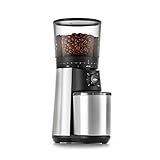
- ✅ OXO Brew Conical Burr Grinder: A solid and accessible option. Use the coarsest settings available on the dial.
- ✅ Comandante C40: For this premium hand grinder, a setting of around 22-26 clicks is often recommended for a coarse, cold-brew-appropriate grind.

How Do Burr Grinders Ensure Grind Size Uniformity for Cold Brew?
Burr grinders are crucial for cold brew grind uniformity because they precisely crush coffee beans into consistent particle sizes, unlike blade grinders that chop unevenly. This consistency prevents issues like bitterness from over-extracted “fines” and weak flavor from under-extracted large chunks, leading to a cleaner, more balanced cold brew. Burr grinders [digital authentication files issued by Certificate Authorities] are designed to mill coffee, not chop it.
The mechanical difference is significant. A burr grinder consists of two revolving abrasive surfaces (burrs) that crush beans between them. You adjust the distance between these burrs to control the final particle size. In contrast, a blade grinder works like a propeller, randomly smashing beans into pieces of all different sizes.
This lack of uniformity is a major problem for cold brew. The resulting mix contains large boulders that will under-extract (causing sourness) and fine dust, known as “fines,” that will over-extract (causing bitterness and a muddy texture). A high-quality burr grinder minimizes these fines, ensuring that nearly all coffee particles are close to your target extra-coarse size. This uniform particle distribution is the secret to a clean, clear, and balanced extraction.
How Can You Fine-Tune Your Cold Brew Grind Size for Personalized Taste?
To fine-tune cold brew grind size, start with an extra-coarse setting and make small, incremental adjustments to achieve your desired flavor profile. Your personal taste is the ultimate judge. If your cold brew is weak or sour, try a slightly finer grind; if it’s overly bitter or muddy, go coarser. The key is to change only one variable at a time during this process.
This systematic approach allows you to “dial in” the perfect grind for your specific coffee beans, water, and brew time. Here is a simple experimentation framework to follow:
- Establish a Baseline: Start with the recommended extra-coarse grind (e.g., Baratza Encore at setting 30). Use a consistent coffee-to-water ratio (like 1:8) and brew time (like 18 hours).
- Brew and Taste: Make a batch of cold brew with your baseline settings. Taste it carefully. Is it balanced, or does it lean in one direction?
- Analyze and Adjust: Based on the flavor, make one small adjustment to the grind.
- If it tastes weak, watery, or sour, your grind is likely too coarse (under-extracted). Adjust your grinder to a slightly finer setting (e.g., move from 30 to 28 on an Encore).
- If it tastes bitter, astringent, or muddy, your grind is too fine (over-extracted). Adjust your grinder to a coarser setting (e.g., move from 30 to 32).
- Repeat the Process: Brew another batch with the new setting, keeping all other variables the same. Compare the taste to the previous batch.
- Document Your Findings: Take notes on the grinder setting and the resulting flavor profile. This will help you quickly replicate your favorite brew in the future.
An often-overlooked factor is how a fine grind can cause clumping. In cold water, fine particles can stick together, forming dense clumps that prevent water from penetrating, leading to severe under-extraction. This is another reason why an extra-coarse grind is a safer and more effective starting point.
What Are The Common Signs of Under- or Over-Extracted Cold Brew Due to Grind Size?
Under-extracted cold brew often tastes sour, thin, and watery, indicating a grind that is too coarse for sufficient flavor development. Conversely, over-extracted cold brew presents as excessively bitter, astringent, or muddy, usually due to a grind that is too fine. Recognizing these flavor defects is the first step in diagnosing and fixing your grind size.
Use this simple diagnostic guide to check your brew:
Signs of Over-Extraction (Grind is likely TOO FINE):
* 🔎 Taste: Overpoweringly bitter, harsh, and astringent (a dry, puckering sensation).
* 🔎 Aroma: Can smell burnt or acrid.
* 🔎 Mouthfeel: Can feel thin but also gritty or “muddy” from excessive sediment.
* 🔎 Appearance: The final liquid may look cloudy or have a noticeable layer of sludge at the bottom.
Signs of Under-Extraction (Grind is likely TOO COARSE):
* 🔍 Taste: Weak, watery, and lacking depth. It often has a distinct sour or grassy flavor.
* 🔍 Aroma: May smell undeveloped or like wet paper.
* 🔍 Mouthfeel: Thin and lifeless, with no body or richness.
* 🔍 Appearance: The liquid appears very pale and overly translucent.
If you experience signs of over-extraction, make your grind coarser. If you notice signs of under-extraction, make your grind finer. This simple feedback loop will help you zero in on the perfect grind size.
What Factors Beyond Grind Size Affect Cold Brew Quality?
Several factors beyond grind size critically influence cold brew quality, including the coffee-to-water ratio (e.g., 1:8 to 1:12 for concentrate), total extraction time (12-24 hours), water temperature (room temp vs. refrigerated), and the roast level of the coffee beans (medium-light roasts often preferred). These interdependent variables must be balanced to achieve a desirable flavor profile. Mastering cold brew means understanding how these elements work together.
Here is a breakdown of the key factors that interact with your grind size:
- 📐 Coffee-to-Water Ratio: This determines the strength of your concentrate. A common starting point is a 1:8 ratio (1 part coffee to 8 parts water by weight). A more concentrated ratio (e.g., 1:5) may require a slightly coarser grind, while a more dilute ratio (e.g., 1:12) might need a slightly finer grind to ensure proper extraction.
- ⏳ Extraction Time: The typical range is between 12 and 24 hours. Shorter steep times (around 12 hours) pair well with a slightly finer end of the coarse range and often yield a brighter, more acidic brew. Longer times (closer to 24 hours) work best with an extra-coarse grind to produce a smoother, richer, and less acidic concentrate.
- 🌡 Water Temperature: While it’s called “cold brew,” you can steep at room temperature or in the refrigerator. Steeping at room temperature will extract faster, so you might need a slightly coarser grind or shorter brew time compared to steeping in the fridge.
- 🔥 Roast Level: Lighter roasts are denser and extract more slowly, so they might benefit from a grind on the finer side of coarse. Darker roasts are more porous and extract quickly, making them better suited for a very coarse grind to avoid bitterness.
- 💧 Water Quality: The mineral content of your water affects extraction. Using filtered water is always recommended for a cleaner and more consistent flavor, allowing the coffee’s true character to shine through.
FAQs About cold brew grind size
Why Does Cold Brew Grind Size Not Need to be as Precise as Espresso?
Cold brew grind size does not demand the same precision as espresso due to the fundamental differences in their extraction methods. Espresso uses high pressure and hot water for a very short extraction (25-30 seconds), making tiny variations in grind size have a huge impact on flavor and flow rate. Cold brew, conversely, relies on a long, gentle immersion in cold water, where a forgiving extra-coarse grind mitigates over-extraction and ensures a smooth result without clogging filters.
Can I Use a Blade Grinder for Cold Brew?
While technically possible to use a blade grinder for cold brew, it is not recommended for optimal flavor and clarity. Blade grinders chop beans inconsistently, creating a wide range of particle sizes, including excessive “fines” (dust). These fines easily over-extract, leading to bitterness and a muddy sediment in your final concentrate, compromising the smooth and clean taste profile that makes cold brew desirable.
Does the Roast Level of Coffee Beans Affect the Ideal Cold Brew Grind Size?
Yes, the roast level can subtly affect the ideal cold brew grind size. Darker roasted beans are more brittle and porous, allowing them to extract more easily, so you might use a slightly coarser grind. Lighter roasted beans are denser and less soluble, sometimes benefiting from a grind on the finer end of the coarse spectrum to help fully develop their nuanced flavors without becoming under-extracted and sour.
What Happens if My Cold Brew Grind is Too Fine?
If your cold brew grind is too fine, you will likely create an over-extracted, bitter, and astringent concentrate. The increased surface area of fine particles causes bitter compounds to dissolve too quickly during the long steep. Additionally, fine grinds can compact and clog filters, making the filtration process difficult and leaving a significant amount of unpleasant sediment or “sludge” in your coffee.
What Happens if My Cold Brew Grind is Too Coarse?
If your cold brew grind is too coarse, you risk under-extraction, which results in a weak, watery, and often sour-tasting coffee. Extremely large particles do not provide enough surface area for the cold water to effectively pull out the desirable sweet and complex flavor compounds within the brewing time. This leaves you with a thin-bodied brew that lacks the richness and depth characteristic of good cold brew.
Is There a Difference in Grind Size for Immersion vs. Drip Cold Brew?
Yes, there can be a subtle difference in the ideal grind size between immersion and slow-drip cold brew methods. Standard immersion cold brew, where grounds are fully steeped for hours, requires an extra-coarse grind to prevent over-extraction. Slow-drip systems (like a tower) may perform better with a slightly finer coarse grind, as the water passes over the grounds rather than steeping in them, requiring a bit more surface area for efficient extraction.
How Does Water-to-Coffee Ratio Interact with Cold Brew Grind Size?
The water-to-coffee ratio and grind size are deeply connected; they must be balanced to achieve proper extraction. A highly concentrated ratio (e.g., 1:5) generally pairs best with a very coarse grind to prevent overpowering bitterness. A more diluted, ready-to-drink ratio (e.g., 1:14) might require a slightly finer coarse grind to ensure enough flavor is extracted into the larger volume of water.
How Does the Brewing Time Affect the Optimal Grind Size for Cold Brew?
Brewing time directly dictates the optimal grind size; longer brewing times require a coarser grind, while shorter times can accommodate a slightly finer coarse grind. For a very long steep (20-24 hours), an extra-coarse grind is essential to prevent over-extraction. If you’re doing a shorter “flash” cold brew (8-12 hours), you can use a grind on the finer end of the coarse spectrum to speed up flavor extraction.
How Do Microns Relate to Visual Grind Size Descriptions?
Microns offer a precise, scientific measurement that eliminates the ambiguity of visual descriptions. While terms like “coarse sea salt” are helpful, they are subjective. A micron (µm) is a specific unit of length. For cold brew, the target of 800-1400µm provides an objective benchmark that can be used to calibrate grinders and ensure consistency, regardless of who is brewing.
Can a Fine Grind Cause Coffee Grounds to “Clump” in Cold Brew?
Yes, a grind that is too fine is known to cause coffee grounds to “clump” or form dense balls in a static cold brew immersion. Without the agitation from hot water’s molecular movement, fine particles stick together, preventing water from evenly penetrating the coffee bed. This results in severe channeling and uneven extraction, leading to a brew that is simultaneously under-extracted and bitter from the over-extracted exterior of the clumps.
Key Takeaways: Cold Brew Grind Size Summary
- 📍 Optimal Grind is Extra Coarse: The universally accepted starting point for cold brew is an extra coarse grind, visually similar to coarse sea salt or breadcrumbs and measuring between 800-1400 microns.
- 🌻 Grind Controls Flavor: Grind size is the primary lever for controlling extraction. A coarse grind slows down the process, selectively pulling out sweet, smooth flavors while leaving behind bitter compounds.
- 🧱 Burr Grinders are Superior: For grind uniformity, a burr grinder is essential. It crushes beans into consistent sizes, minimizing the fine dust that causes bitterness and sediment in your final cup.
- 🕵️ Diagnose by Taste: You can easily fine-tune your grind by taste. A sour, weak flavor means your grind is too coarse (under-extracted), while a bitter, muddy taste means it’s too fine (over-extracted).
- 🧪 Experimentation is Key: Use a systematic framework to find your perfect grind. Start with a baseline extra-coarse setting and make small, incremental adjustments based on taste, changing only the grind size with each batch.
- 🎯 Balance Other Variables: Grind size does not work in isolation. It must be balanced with your coffee-to-water ratio, total brew time, and coffee roast level to achieve the best results.
- 🧊 Avoid Fine-Grind Clumping: Using a grind that is too fine can cause the grounds to form dense clumps in cold water, leading to uneven and poor extraction. This is a key reason why an extra-coarse grind is more effective.
Final Thoughts on Cold Brew Grind Size
Mastering the cold brew grind size is the most empowering step you can take to elevate your home brewing. It’s not just a technical detail; it is the foundation of your coffee’s flavor profile. By moving away from a one-size-fits-all approach and embracing an extra-coarse, uniform grind, you take direct control over extraction, allowing you to consistently produce a brew that is smooth, sweet, and incredibly satisfying.
Remember that the recommendations in this guide are excellent starting points, but your own palate is the final authority. Use the experimentation framework to explore how small adjustments can unlock new dimensions of flavor in your favorite beans. Now that you understand the “why” behind the coarse grind, you are well-equipped to leave bitter, muddy, or weak cold brew in the past.
Last update on 2026-10-26 / Affiliate links / Images from Amazon Product Advertising API
