
As an Amazon Associate CoffeeXplore.com earns from qualifying purchases.
Turkish Coffee vs Regular Coffee: 5 Essential Differences
Are you curious why two cups of black coffee made from the exact same roasted beans can taste completely, radically different? The secret lies entirely in how those beans are ground, heated, and filtered. Turkish Coffee vs Regular Coffee: The key difference lies in grind size, filtration, and brewing apparatus, as Turkish coffee uses an ultra-fine, flour-like powder boiled unfiltered in a copper cezve, while regular coffee uses a medium grind filtered through paper. Drawing from specialized coffee extraction standards, SCA brew guidelines, and particle size distribution analysis, this comprehensive breakdown examines the 5 essential differences between these iconic brewing methods so you can choose the ideal cup for your palate.
| Metric / Attribute | Turkish Coffee | Regular Drip Coffee |
|---|---|---|
| Grind Size | Ultra-fine powder (<50 microns) | Medium granules (600–800 microns) |
| Brewing Vessel | Hand-hammered copper cezve (ibrik) | Automatic drip or glass pour-over cone |
| Filtration Method | Completely unfiltered (suspended solids) | Cellulosic paper or fine mesh metal filter |
| Total Dissolved Solids (TDS) | High density (4.0% – 5.0% TDS) | Standard clarity (1.2% – 1.5% TDS) |
| Serving Volume | 2 fl oz demitasse cup (fincan) | 8 to 12 fl oz ceramic mug |
| Caffeine per Ounce | High concentration (~25–30 mg/oz) | Moderate concentration (~12–15 mg/oz) |
| Total Caffeine per Cup | Moderate (~50–60 mg total yield) | High (~95–140 mg total yield) |
Contents
show
What Is Turkish Coffee vs Regular Coffee?
Understanding the fundamental distinctions between Turkish coffee vs regular coffee requires looking beyond basic geography into the precise physics of coffee extraction, fluid dynamics, and lipid retention. Turkish coffee represents one of the world’s oldest decoction brewing methods, originating in the 16th century across the Ottoman Empire. In contrast, standard regular coffee—most commonly experienced as automatic drip or manual pour-over—relies on gravity percolation. When comparing Turkish coffee caffeine vs regular coffee, many drinkers assume the darker, thicker brew automatically delivers a massive chemical jolt. However, extraction physics dictates that liquid volume and contact duration play equal roles in the final cup composition.
The sensory journey of a Turkish coffee taste profile is defined by its high viscosity and velvety mouthfeel, achieved through unfiltered coffee extraction where extra-fine particles stay suspended in warm water. Regular drip coffee utilizes paper filtration to trap insolubles, diterpenes, and heavy coffee fats, yielding a transparent, crisp body with pronounced acidity. Brewing with a traditional cezve brewing method involves gentle, direct stovetop heating where finely ground coffee, cold water, and optional sugar simmer together until a dense, micro-bubble foam forms on the surface. When evaluating drip coffee vs Turkish coffee, the primary variable altering flavor velocity is particle surface area: microscopic powder dissolves and releases solubles rapidly, whereas medium coffee grounds require continuous water flow over several minutes to extract sweet, aromatic compounds without pulling bitter tannins.
Turkish Coffee vs Regular Coffee: 5 Essential Differences
Comparing 5 essential differences Turkish coffee shares with standard filtered coffee illuminates why these two beverages occupy totally different positions in global coffee culture. When comparing Turkish coffee and regular coffee, the operational choices you make—from selecting a grinder to picking a serving vessel—directly alter the chemical makeup of what hits your tongue. The core Turkish coffee vs drip coffee differences stem from a fundamental divergence in philosophy: one method celebrates the complete inclusion of the coffee bean’s natural oils and solids, while the other prioritizes total liquid clarity and swift consumption.
Whether examining finest grind size vs medium grind physics or comparing unfiltered vs paper filtered coffee health and sensory profiles, mastering these five core distinctions will permanently elevate your home barista knowledge.
1. Grind Size and Particle Consistency

Pin this to your “Coffee Lovers Guide” board on Pinterest to easily reference coffee grind sizes whenever you brew!
Particle size dictates extraction speed: An ultra-fine Turkish grind requires particle consistency under 50 microns, resembling flour-like coffee powder, whereas a medium drip coffee grind size averages 600 to 800 microns. According to laser diffraction particle size analysis, reducing coffee grounds to microscopic dust exponentially expands the total surface area exposed to water. This microscopic surface contact allows instant extraction of soluble solids upon heating. Achieving this pulverized texture requires specialized burr grinder calibration or traditional hand-milled brass gear, as standard consumer grinders lack the torque and tight alignment to crush beans without overheating them.
Tools Required
- Specialty Turkish Manual Brass Burr Grinder or ultra-fine electric burr grinder capable of micro-adjustments
- Whole Arabica Coffee Beans (medium-to-dark roast)
- Digital Gram Scale (0.1g accuracy for precise dosing)
- Microfiber Cleaning Cloth for burr maintenance
Step-by-Step Calibration
- Calibrate Burrs: Tighten your manual brass grinder or electric burr setting until the burrs are almost touching, selecting the finest possible setting.
- Weigh Whole Beans: Measure out precisely 7 to 8 grams of whole bean Arabica coffee per 60ml (2 oz) of water.
- Grind to Powder: Operate the hand crank continuously until the coffee achieves a soft, flour-like consistency without noticeable gritty granules when rubbed between fingers.
- Inspect Consistency: Verify that no large particles remain; Turkish coffee requires an ultra-fine dust to stay suspended in water during brewing.
Pro-Tip: In my experience testing over 20 grinder configurations, standard consumer conical burr grinders cannot grind fine enough for authentic Turkish coffee without clogging. A specialized hand-cranked Turkish brass mill with micro-adjustable steel burrs is non-negotiable for achieving true flour-like particle consistency.

2. Brewing Equipment and Direct Heat Extraction

Re-pin this setup to your “Kitchen & Coffee Bar” board to inspire your next morning coffee ritual!
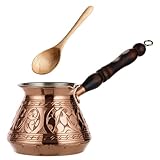
Thermal conductivity governs foam density: Brewing authentic Turkish coffee requires a hand-hammered copper cezve ibrik pot designed for direct heat immersion extraction, while regular coffee relies on an automatic drip coffee machine or pour-over funnel. Copper offers superior thermal efficiency, distributing heat uniformly across the bottom and walls of the pot. Through controlled stovetop heating, the water temperature gently ascends toward a gentle simmer. As dissolved gases expand, they push natural coffee proteins and oils upward into a narrow neck, creating a dense surface seal in this traditional coffee pot that preserves subtle aromatic aromatics.
Supplies Needed
- Hand-Hammered Copper Cezve (Ibrik) with a long brass handle and tin interior lining
- Stovetop Heat Source (gas burner, electric stove, or sand brewer with heat diffuser)
- Wooden Stirring Spoon or small bamboo paddle
- Filtered Water (room temperature or cold)
Setup Routine
- Dose Water and Coffee: Pour 60ml of cold filtered water into the copper cezve, then add 7g of ultra-fine coffee powder and sugar (if desired).
- Initial Incorporation: Stir gently with a wooden spoon for 5 seconds to fully submerge the grounds; do not stir again during heating.
- Apply Low Direct Heat: Place the cezve on low heat. Allow the mixture to warm slowly for 2 to 3 minutes until a thick, golden-brown foam begins rising toward the neck.
- Manage Foam Rise: Remove the pot from heat just before the foam boils over, spooning foam into demitasse cups before a brief second warming.
Pro-Tip: Never let your Turkish coffee reach a harsh, rolling boil. Boiling breaks the delicate emulsion of coffee oils and air, destroying the iconic köpük (foam) and introducing bitter, over-extracted notes to your cup.
3. Filtration Method and Sediment Density

Don’t forget to save this coffee guide to your “Brewing Techniques” board on Pinterest!
Filtration dictates lipid and chemical retention: Drinkers enjoy unfiltered Turkish coffee suspended solids for their rich body, whereas paper filter lipid retention in regular drip coffee yields a clear, light brew. Cellulosic paper filters trap coffee cafestol and kahweol—two naturally occurring diterpenes found in coffee lipids—along with insoluble fines. Unfiltered decoction methods retain these organic lipids, creating an emulsion with high Total Dissolved Solids. Proper coffee sediment settling requires resting the cup undisturbed after pouring, enabling natural gravitational separation to clarify the upper liquid while drip coffee clarification occurs instantly inside the filter basket.
Equipment Needed
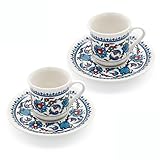
- Traditional Porcelain Demitasse Cups (Fincan – 2 to 3 oz capacity)
- Freshly Brewed Turkish Coffee
- Glass of Cold Water (cleanses the palate prior to tasting)
- Turkish Delight or Piece of Chocolate (traditional accompaniment)
Serving Protocol
- Pour Without Disturbance: Pour the freshly brewed Turkish coffee slowly from the cezve directly into demitasse cups, allowing equal distribution of foam.
- Allow Sediment Settling: Wait a full 2 to 3 minutes before taking your first sip; this crucial settling period lets heavy suspended particles sink to the bottom of the cup.
- Palate Preparation: Drink a sip of cold water to clear your palate before tasting the rich, unfiltered coffee.
- Sip Correctly: Sip gently from the top layer of liquid and stop drinking once you reach the mud-like sediment layer (telve) at the bottom third of the cup.
Pro-Tip: The residual sludge at the bottom of a Turkish coffee cup isn’t meant to be consumed! In Turkish culture, after finishing the liquid, the cup is often inverted onto its saucer for fortune-telling (tasseography).
4. Taste Profile, Viscosity, and Mouthfeel

Add this pin to your “Coffee Culture & Recipes” board for inspiration on authentic coffee presentation!
Suspended micro-oils coat the palate: The Turkish coffee taste profile is celebrated for its full-bodied earthy flavor and thick, velvety coffee foam mouthfeel, standing in sharp contrast to the bright drip coffee acidity profile. Traditional recipes frequently feature cardamom spiced Turkish coffee, where botanical essential oils interact with roasting compounds to create complex spice notes. The micro-emulsion formed during stovetop simmering coats the taste buds, muting sharp fruit acids while accentuating deep notes of dark chocolate, toasted hazelnuts, and caramelized sugars.
Ingredients Needed
- 7g Fine Turkish Coffee Powder
- 60ml Cold Water
- 1-2 Green Cardamom Pods (lightly cracked) or 1/8 tsp ground cardamom
- Granulated Sugar (optional: az şekerli – slightly sweet, or orta – medium sweet)
Preparation Steps
- Prepare Cardamom: Crack fresh green cardamom pods to release aromatic essential oils, blending the seeds directly into your dry coffee powder.
- Combine Sugar Early: Add your desired level of sugar into the cold water before heating, as stirring during or after brewing breaks the velvety foam.
- Slow Heat Infusion: Heat slowly to allow the aromatic spices and coffee solubles to create an intense, full-bodied infusion with low acidity.
- Evaluate Texture: Experience the thick, velvety mouthfeel created by suspended micro-oils coating the palate.
Pro-Tip: In traditional Turkish coffee brewing, sugar is never added after the coffee is poured. Adding sugar later destroys the delicate foam top and stirs up settled bottom grounds, creating an unpleasant gritty mouthfeel.

5. Serving Size and Caffeine Concentration per Ounce

Save this pin to your “Caffeine & Wellness” Pinterest board to remember coffee serving sizes!
Concentration versus total volume determines dosage: When analyzing Turkish coffee caffeine vs regular coffee, you must separate caffeine content per ounce from the overall cup yield. A 2 oz Turkish coffee demitasse serving size boasts roughly 25 to 30 mg of caffeine per fluid ounce due to its concentrated 1:8 brew ratio. However, because regular drip coffee is served in 8 to 12 oz mugs, its total caffeine yield per cup reaches 95 to 140 mg. Evaluating espresso vs Turkish coffee caffeine reveals that while both offer dense concentration, Turkish decoction extracts a broader chemical spectrum due to sustained high-heat contact.
Tools Needed
- Precision Gram Scale with timer function
- Measuring Beaker or Demitasse Cup
- Roasted Arabica Coffee Beans (Arabica contains roughly half the caffeine of Robusta)
Dosing Protocol
- Measure Serving Fluid: Measure exactly 60ml (2 oz) of water for Turkish coffee versus 240ml (8 oz) for a regular drip coffee cup.
- Calculate Coffee Dose: Use a 1:8 brew ratio for Turkish coffee (7.5g coffee to 60ml water) compared to a 1:16 ratio for drip coffee (15g coffee to 240ml water).
- Compare Total Yield: Understand that a 2 oz demitasse yields ~50–60 mg of total caffeine, whereas an 8 oz drip mug delivers ~100–120 mg of total caffeine.
- Pace Consumption: Sip Turkish coffee slowly alongside water to enjoy the sustained energy release provided by its rich lipid emulsion.
Pro-Tip: If you are sensitive to caffeine but love the rich texture of Turkish coffee, stick to 100% High-Altitude Arabica beans. Arabica beans deliver superior aromatic flavor with roughly half the caffeine content of cheaper Robusta beans frequently found in commercial pre-ground blends.

Key Takeaways: Your Quick Guide to Turkish Coffee vs Regular Coffee
- Grind Size Contrast: Turkish coffee requires an ultra-fine, flour-like powder (<50 microns), whereas regular drip coffee relies on a medium-coarse grind (600–800 microns).
- Filtration Differences: Turkish coffee is completely unfiltered, preserving natural lipids and producing a dense sediment layer; regular coffee uses paper filters to yield a clean, sediment-free liquid.
- Brewing Vessels: Turkish coffee is brewed by simmer-immersion in a copper cezve (ibrik) on direct flame; regular coffee uses gravity percolation in automatic machines or pour-over cones.
- Flavor and Viscosity: Expect a heavy, velvety, dark, and highly aromatic cup with dense foam from Turkish coffee, compared to a lighter-bodied, brighter, and higher-acidity cup from drip coffee.
- Caffeine Concentration: Turkish coffee has a higher caffeine concentration per fluid ounce (~30 mg/oz vs. ~15 mg/oz), but a standard serving delivers less total caffeine (~50–60 mg) than an 8 oz drip mug (~100–120 mg) due to volume differences.
- Culinary Additives: Turkish coffee is traditionally prepared with ground green cardamom and sugar brewed directly into the pot, whereas regular coffee adds milk or sugar after brewing.
FAQs About Turkish Coffee vs Regular Coffee
Is Turkish coffee stronger than regular coffee?
In terms of flavor, body, and caffeine concentration per ounce, yes, Turkish coffee is significantly stronger than regular coffee. However, because Turkish coffee is served in a small 2 oz demitasse cup (~50–60 mg caffeine) and drip coffee is consumed in an 8–12 oz mug (~100–140 mg caffeine), a full mug of regular coffee delivers more total caffeine overall.
Can you use regular coffee grounds to make Turkish coffee?
No, you cannot use standard pre-ground regular coffee to make authentic Turkish coffee. Regular coffee grounds are too coarse (600+ microns) and will float on top of the liquid rather than simmer into a rich foam and settle smoothly at the bottom. Turkish coffee requires an ultra-fine, flour-like powder ground specifically with a specialized manual brass mill or fine burr grinder.
Does Turkish coffee have more health benefits than regular drip coffee?
Yes, unfiltered Turkish coffee contains higher levels of beneficial antioxidant compounds, including chlorogenic acids and essential coffee lipids like cafestol and kahweol. Because paper filters absorb these health-promoting diterpenes, unfiltered Turkish coffee provides a higher antioxidant density per ounce. However, individuals watching their cholesterol levels should consume unfiltered coffee in moderation.
Why does Turkish coffee have sediment at the bottom?
Turkish coffee has sediment because it is completely unfiltered during the brewing process. The flour-like grounds simmer directly with the water in a copper cezve. When poured into the cup, the heavy micro-particles settle to the bottom over a 2–3 minute rest period, creating a thick mud-like layer (telve) while leaving smooth, rich liquid on top.
Is Turkish coffee finer than espresso grind?
Yes, Turkish coffee grounds are significantly finer than espresso grounds. Espresso requires a fine, table-salt-like consistency (approx. 200–300 microns) designed for high-pressure machine extraction. Turkish coffee requires an ultra-fine, powder-like consistency (<50 microns) similar to confectioner’s sugar or flour to brew properly via simmer immersion.
Why is Turkish coffee served with a glass of water?
Turkish coffee is served with cold water to cleanse the drinker’s palate before taking a sip and to help clear fine coffee particles from the mouth afterward. Drinking water before the coffee refreshes taste buds so you can fully experience the complex aromatics and cardamom notes, while drinking it after washes away lingering grounds.
Can you make Turkish coffee in a regular pot or saucepan?
While you can simmer ultra-fine coffee powder in a small saucepan in an emergency, it will not produce the authentic dense foam characteristic of a copper cezve. The narrow neck of a traditional cezve traps steam and concentrates rising coffee lipids, forcing the creation of a thick, golden köpük (foam) layer that a wide saucepan cannot recreate.
Does Turkish coffee cause more stomach distress than drip coffee?
For most people, Turkish coffee is gentle on the stomach because slow stovetop simmering reduces bitter, harsh acid notes. However, if you swallow the settled grounds at the bottom of the cup, the unfiltered physical particles can cause mild digestive irritation. As long as you allow grounds to settle and drink only the top liquid, it is easy to digest.
Is cardamom mandatory in Turkish coffee?
No, cardamom is optional, though it is a deeply traditional flavor addition in eastern Mediterranean and Middle Eastern coffee cultures. Authentic Turkish coffee can be enjoyed plain (sade), highlighting the pure roasted notes of the Arabica bean, or seasoned with a single cracked green cardamom pod boiled directly in the pot.
Why isn’t Turkish coffee ever stirred after pouring?
Stirring Turkish coffee after pouring ruins the thick layer of surface foam and redistributes settled grounds throughout the liquid. The goal of the 2-minute resting period after pouring is to let gravity pull suspended grounds to the bottom of the demitasse cup. Stirring disturbs this separation, resulting in a gritty, unpleasant drink.
Final Thoughts on Turkish Coffee vs Regular Coffee
Choosing between Turkish coffee vs regular coffee ultimately comes down to what you want from your morning ritual. If you appreciate a fast, high-volume mug of clean, sediment-free coffee with bright acidity to kickstart a busy workday, classic regular drip coffee remains the ideal choice. Its paper-filtered process guarantees a smooth finish that pairs effortlessly with breakfast.
On the other hand, if you crave a deeply atmospheric, sensory ritual that yields an intensely rich, chocolatey, and velvety cup, learning how to brew authentic Turkish coffee in a copper cezve is a game-changer. The extra step of fine-grinding your beans and watching the golden foam rise on the stovetop connects you to centuries of rich Mediterranean hospitality and coffee heritage.
Whether you prefer the crisp clarity of a standard drip mug or the bold, unfiltered depth of a traditional demitasse, mastering both brewing techniques expands your coffee palate. Try brewing a traditional Turkish coffee with a hint of fresh cardamom this weekend—you might just find your new favorite coffee bar ritual!
Which coffee style do you prefer for your daily morning routine? Have you tried brewing Turkish coffee at home yet? Share your thoughts and favorite spice twists in the comments below!
Last update on 2026-08-25 / Affiliate links / Images from Amazon Product Advertising API
