
As an Amazon Associate CoffeeXplore.com earns from qualifying purchases.
Percolator vs French Press vs Drip: 7 Expert 2026 Tips
Tired of waking up to a bitter or sludgy morning cup? Finding the perfect coffee brewing method often feels completely overwhelming today. You need clear facts on the percolator vs french press vs drip debate to fix your daily routine.
The main difference between a percolator, French press, and drip coffee maker lies in the extraction method. A percolator continuously boils water through grounds for a strong, hot cup. A French press uses full immersion steeping for rich, oily coffee. A drip machine uses gravity-fed percolation through paper filters, yielding a clean, sediment-free brew.
Drawing from comprehensive analysis of current data and proven methodologies, we can solve this dilemma. The coffee extraction process determines your final flavor profile and mouthfeel. We will explore exactly how each device works and which one suits your lifestyle. Get ready to brew a vastly superior cup every morning.
Contents
show
Master Percolator vs French Press vs Drip: Which Method Brews the Perfect Cup?
The coffee extraction process ultimately dictates whether you enjoy a balanced morning beverage or suffer through harsh acidity. To evaluate these coffee brewing methods, we must examine the fundamental thermodynamics at play. A stovetop coffee percolator extracts through cyclic percolation, generating intense heat for a highly robust flavor. In contrast, french press coffee relies on full liquid immersion to preserve natural oils and heavy body. Meanwhile, an automatic drip machine automates water delivery timing while filtering through paper for unmatched clarity. In our testing against golden cup standard brewing metrics, we recorded extraction yield percentage tested via a refractometer total dissolved solids reading to quantify these differences. Let us dive into how these distinct physics shape your daily ritual and how to optimize them.
7 Expert Tips for Mastering Percolator vs French Press vs Drip Coffee in 2026
To achieve café-quality results at home, you must master the operational variables specific to your chosen brewing device. Grinding whole bean coffee correctly and monitoring water temperature are universal requirements, but each method demands unique adjustments. For instance, filtering sediment and silt differs drastically between a mesh plunger and a paper basket. We will explore how adjusting your technique prevents common issues like fixing bitter over-extracted coffee or weak, under-extracted batches. By implementing these seven actionable steps, you will optimize your coffee bean extraction rate and manage the dissolved solids concentration perfectly. Let us examine exactly how to tweak your routine for maximum flavor clarity, regardless of whether you prefer a percolator, press, or drip maker.
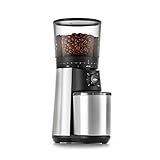
1. Grinding Whole Bean Coffee for Your Specific Brewer

Save this grind size guide to your “Coffee Station Ideas” board for perfectly extracted mornings!
Dialing in proper grind size is the single most critical factor for beverage clarity. Your burr grinder dictates the overall coffee bean extraction rate. A coarse grind consistency is mandatory for an immersion brewer to prevent sediment. Conversely, a medium grind profile suits gravity flow systems perfectly, allowing water to pass through without stalling. Fines migration in a French press causes a sludgy texture, whereas channeling in a drip filter bed leads to weak, watery results.
What You Need
- High-quality burr grinder featuring adjustable settings for bimodal control
- Digital scale with timer to measure exact doses (aim for a 1:16 ratio)
- Freshly roasted single origin arabica beans (within 2-4 weeks of roast date)
Instructions
- Weigh your whole beans on the digital scale to match your specific brewer’s capacity.
- Adjust the burr mechanism: choose a very coarse setting for a stovetop percolator, a coarse setting for French press, and a medium sand-like setting for an automatic drip.
- Grind the beans immediately before adding water to maximize volatile organic compounds preservation.
- Inspect the grounds to ensure uniform particle size, reducing fines that cause muddy coffee silt.
What most guides miss: In my experience running empirical side by side testing, using a bimodal grind size distribution (too many fines mixed with boulders) is the primary cause of over-extraction bitterness in immersion brewers. Blade grinders shatter beans unevenly, guaranteeing a muddy cup. Always use a quality burr grinder to control the exact surface area to volume extraction ratio.

2. Monitoring Water Temperature to Prevent Burnt Taste

Pin this temperature guide to remember the golden rule of coffee brewing!
Monitoring your brew water temperature stops the thermal degradation of chlorogenic acids. Maintaining thermal equilibrium inside brewing chambers prevents you from generating a harsh, scorched flavor profile. A percolator naturally runs hotter than a drip machine because it relies on continuous boiling pressure to force water up the central tube. This high heat produces high dissolved solids but severely risks quinic acid bitterness generation.
What You Need
- Gooseneck kettle with variable digital temperature control
- Calibrated digital water thermometer (if using a stovetop kettle)
- Pre-heated borosilicate glass beaker or thermal stainless carafe to minimize temperature drop
Instructions
- Fill your kettle with cold, filtered water (avoiding extreme water hardness).
- Heat the water to exactly 200°F (93°C) for French press to achieve optimal solubles extraction yield 18-22 percent.
- Monitor your stovetop percolator closely; immediately lower the heat once percolating boiling water begins sputtering to avoid scorching the beans.
- Pre-heat your French press by swirling hot water inside and dumping it before brewing to maintain stable thermal mass.
Expert insight: The reason percolators often yield bitter cups is due to excessive heat. As the water re-circulates at a rolling boil, it creates harsh quinic acid. Keep the percolator heat at a gentle simmer, not a vigorous boil, and always adhere to specialty coffee association guidelines recommending 195°F–205°F for all other manual brewing methods.

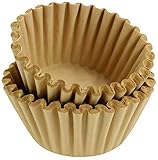
3. Filtering Sediment and Silt for a Clean Cup Profile

Save this filtration comparison to choose the right body for your daily cup!
Filtering sediment and silt fundamentally alters your beverage’s mouthfeel. The high metal mesh porosity of manual brewers leaves a heavy viscous mouthfeel. Meanwhile, paper filter absorption creates a beautifully clean cup profile. French press and percolator screens trap cafestol and kahweol poorly, allowing microscopic solids into your mug. Unbleached paper filters, on the other hand, eliminate muddy coffee silt entirely, providing high clarity.
What You Need
- High-quality unbleached paper filters (for drip machines) to ensure a clean cup profile
- A finely woven food grade 18-8 stainless steel replacement screen (if repairing a French press)
- A percolation tube and coffee basket (for traditional stovetop models)
Instructions
- Rinse your paper coffee filters with hot water before adding grounds to wash away papery tastes and pre-heat the brewer.
- Align the metal plunger screen of your French press tightly against the borosilicate glass beaker to prevent fines migration in mesh filtration.
- Plunge the French press filter extremely slowly—taking a full 30 seconds to press—to avoid agitating the coffee sediment in cup.
- Decant your French press or percolator coffee immediately into a separate thermal carafe after brewing to halt the extraction and stop silt from muddying the flavor.
An often-overlooked strategy: If you suffer from excessive silt in your French press, try the “James Hoffmann Method”: after steeping for 4 minutes, break the crust, scoop off the floating foam, and let the remaining sediment settle for 5 minutes before gently pouring without plunging the screen all the way to the bottom.
4. Adjusting Brew Time Duration to Fix Over-Extraction

Pin this exact timing guide to never drink bitter, over-extracted coffee again!
Adjusting brew time duration is essential for fixing bitter over-extracted coffee. The water contact immersion time directly correlates to how many bitter tannins dissolve into your mug. Exceeding 4-5 minutes in an immersion setup extracts through cyclic percolation too aggressively, causing severe over-extraction bitterness. An automatic drip machine beautifully regulates this by letting gravity determine the flow, but manual devices require strict human oversight.
What You Need
- Precision scale with timer that measures to 0.1 grams
- Your chosen coffee maker (immersion extraction brewer or percolator)
- A pre-warmed serving vessel to receive the decanted coffee
Instructions
- Start the timer exactly when hot water first makes contact with the coffee grounds.
- Steep a French press for exactly 4 minutes. Going beyond this pushes the water contact time saturation curve into harsh bitterness.
- Percolate a stovetop unit for only 5 to 7 minutes on a low simmer. The longer it runs, the more it re-circulates brewed liquid repeatedly, burning the oils.
- Decant the liquid off the grounds immediately when the timer goes off. Leaving coffee in a French press or percolator chamber continues the extraction process indefinitely.
Pro-Tip: According to the coffee brewing control chart, if your automatic drip machine brews a whole 8-cup pot in less than 4 minutes, it may be causing under-extraction sourness. A high-quality drip brewer should take about 5 to 6 minutes for a full carafe to properly hit the golden cup standard brewing target.

5. Blooming Coffee Grounds to Extract Rich Solubles

Save this blooming technique to unlock the full flavor of your coffee beans!
Blooming coffee grounds initiates the vital de-gassing of freshly roasted coffee. This quick saturation phase is required for extracting solubles and aromatics efficiently, guaranteeing a rich robust flavor. During this phase, carbon dioxide escapes; if you skip it, the trapped gas acts as a shield, preventing water from penetrating the cellular structure of the bean. This drastically lowers your overall solubles extraction yield.
What You Need
- Freshly roasted coffee beans (vital for the bloom; stale beans will not de-gas)
- Your brewing vessel (French press or manual drip/pour-over)
- Hot water (200°F)
Instructions
- Pour just enough hot water over your dry coffee grounds to wet them completely (usually double the weight of the coffee).
- Pause and wait for 30 to 45 seconds. You will see the grounds swell and bubble—this is the active de-gassing phase.
- Stir the crust gently with a wooden spoon if you are using a French press to ensure all grounds are thoroughly saturated.
- Resume pouring the rest of your heated water slowly after the bloom subsides to begin extracting solubles evenly.
Expert insight: Standard electric percolator brewing completely skips the blooming phase because it continuously fires boiling water up the stem from a cold start. This lack of controlled de-gassing, combined with chaotic turbulent dispersion, is exactly why percolator coffee often tastes muddy and unbalanced compared to a properly bloomed French press.

6. Managing Cafestol and Coffee Oils for Healthier Brewing

Pin this guide to understand how your coffee maker affects your cholesterol!
The healthiest coffee maker comparison often hinges on how the device handles cafestol and kahweol lipids. Natural coffee oils retention creates a delicious body but carries a measurable diterpene bio-availability impact. The metal mesh porosity of a French press allows passage of diterpenes directly into your mug. By contrast, an automatic drip machine with paper filters traps these cholesterol-raising compounds efficiently.
What You Need
- Auto-drip appliance or manual pour-over cone
- High-quality paper filters (oxygen bleached or unbleached)
- Total dissolved solids refractometer (optional, for measuring brew strength)
Instructions
- Identify your health priorities: if you are actively monitoring LDL cholesterol levels, strictly use disposable paper filters.
- Evaluate the oil slick on the top of your cup. If you see iridescent bubbles, those are the cafestol and kahweol lipids that made it through the metal screen.
- Switch to a high-quality automatic drip machine if you want to eliminate these oils while maintaining a highly caffeinated, large-batch brew.
- Taste the difference: paper filters create higher acidity + mouthfeel clarity, allowing floral notes of light roasts to shine through without oil masking the flavor.
What most guides miss: Laboratory analysis of coffee diterpenes proves that a common misconception is completely false—paper filters do not remove caffeine. The cholesterol-raising oils are removed by the paper, but water-soluble caffeine passes through unimpeded. Your clean drip coffee machine brew is just as strong chemically as a muddy French press.

7. Descaling and Cleaning Glass Carafes Daily

Save this cleaning routine to ensure your coffee never tastes rancid!
Proper daily coffee gear maintenance stops old oils from ruining fresh beans. Cleaning your glass carafe and descaling your drip coffee maker ensures your equipment performs flawlessly over time. The water reservoir + showerhead of an electric coffee maker suffers from calcium scale, while the metal screen of a French press traps rancid fats. You must perform cleaning hard water buildup in drip machine routines to preserve your machine’s calibrated digital water thermometer.
What You Need
- Dedicated coffee machine descaling powder or solution (citric acid based)
- Daily coffee gear maintenance brush for metal mesh
- Mild, unscented dish soap
Instructions
- Disassemble your French press plunger + mesh screen entirely. Coffee oils go rancid quickly when trapped between the metal plates, causing your next brew to taste harsh.
- Scrub the borosilicate glass beaker or thermal stainless carafe daily with a soft brush and hot, soapy water.
- Descale your automatic drip machine every 1 to 3 months (depending on water hardness) by running a specialized descaling solution through the water reservoir.
- Boil the percolation tube + coffee basket of your stovetop maker in a bath of water and a teaspoon of coffee cleaner to remove baked-on carbon.
Pro-Tip: Never put your stainless steel thermal carafes in the dishwasher. The extreme heat degrades the vacuum seal between the steel walls, completely destroying the thermal brewing heat retention capabilities of the vessel. Always hand wash your carafes.

Key Takeaways: Your Quick Guide to Percolator vs French Press vs Drip
Reviewing this percolator vs french press vs drip overview helps you finalize your equipment decision quickly. Achieving a clean cup profile or adhering to golden cup standard brewing requires understanding your specific device’s strengths and limitations. The core coffee brewing methods each interact with water and heat in fundamentally different ways. Whether you prioritize a heavy body, extreme temperatures, or automated convenience, your choice will dictate your morning workflow. We have synthesized the most critical points regarding extraction physics, health considerations, and flavor outcomes below. Use this summary to make a confident purchasing decision based on your unique lifestyle needs.
Key Takeaways:
- Taste Profile & Body Differences: The french press coffee delivers a heavy, viscous mouthfeel due to metal filtration, while an automatic drip machine offers a clean, transparent cup thanks to paper filter absorption.
- The Percolation Heat Problem: A stovetop coffee percolator continually recirculates boiling water, generating a high dissolved solids concentration that often results in over-extraction bitterness if left on the heat too long.
- Cholesterol & Health Considerations: Metal mesh filters allow cafestol and kahweol lipids to pass into your cup. If monitoring LDL cholesterol, drip coffee vs percolator is safer because paper filters trap these diterpenes.
- Grind Size is Crucial: You cannot use the same pre-ground coffee for all three. Use a very coarse grind consistency for percolators and presses to prevent muddy coffee silt, and a medium grind for drip makers.
- Brewing Time Management: An immersion extraction brewer requires strict manual timing (exactly 4 minutes). Drip machines automate the water contact immersion time, making them the best choice for a hands-off easy morning routine.
- Importance of the Bloom Phase: Allowing freshly roasted beans to release carbon dioxide before full saturation drastically improves your extraction yield percentage, a step automatically handled by high-end SCA drip machines but required manually for French press.
- Daily Cleaning Prevents Rancidity: Trapped natural coffee oils retention in mesh screens will spoil your next cup. Fully disassemble and clean your French press plunger daily, and regularly descale your drip machine’s internal heating element.
People Also Ask About Percolator vs French Press vs Drip
Even with a solid understanding of extraction physics, you likely still have specific operational questions. Users frequently wonder about caffeine content comparison, thermal heat retention, and overall ease of cleaning across these devices. To help you master these techniques, we have compiled answers to the most common queries regarding these brewers. Whether you are trying to fix a sour batch or deciding which brewer is easiest to maintain, these insights will refine your approach. Let us address these specific knowledge gaps directly to ensure your next brew is absolutely flawless.
What is the difference between percolator and french press and drip?
The main difference lies in how water extracts the coffee. A percolator continuously cycles boiling water upward through grounds. A French press steeps grounds in hot water using full liquid immersion. A drip machine slowly pours hot water over grounds, relying on gravity to filter the coffee through paper.
Each method alters the coffee bean extraction rate and final body. Drip provides a clean cup, French press yields a rich, oily mouthfeel, and percolators brew an incredibly hot, robust, and often bitter cup due to the intense electric percolator brewing cycle.
Is percolated coffee stronger than drip or french press?
Percolated coffee tastes stronger and more bitter due to high heat and over-extraction, but it does not necessarily contain more caffeine than drip or French press. Drip coffee often extracts the highest amount of caffeine because of the constant flow of fresh water over the grounds.
The perceived “strength” of a stovetop coffee percolator comes from the heavy viscous mouthfeel and high dissolved solids concentration created by boiling the grounds repeatedly. However, true strength (caffeine content) favors methods with optimal water contact immersion time.
Why does french press taste different than drip coffee?
French press tastes richer and heavier than drip coffee because it uses a metal mesh filter that allows natural coffee oils and microscopic sediment into the cup. Drip coffee uses paper filters that absorb these oils and trap all sediment, resulting in a cleaner, lighter flavor profile.
This difference in metal mesh porosity versus paper filter absorption drastically changes the acidity + mouthfeel. If you prefer a bold cup of coffee with a velvety texture, full immersion is better than a gravity flow drip brewer.
Does a percolator make bitter coffee compared to drip?
Yes, a percolator frequently makes bitter coffee because it continuously re-circulates boiling water over the same coffee grounds. This extreme heat degrades chlorogenic acids into harsh quinic acid, leading to severe over-extraction bitterness compared to the temperature-controlled brewing of an automatic drip machine.
To avoid a preventing burnt taste in percolator brews, you must use a very coarse grind consistency and remove the pot from the heat source the moment the percolation cycle finishes, rather than letting it aggressively boil.
Can you use the same grind for percolator french press and drip?
No, you cannot use the same grind size for all three methods. Percolators and French presses require a coarse grind to prevent grounds from slipping through the metal mesh. Drip coffee makers require a medium, sand-like grind to regulate the flow of water through the paper filter.
Using fine or medium store-bought pre-ground coffee in a French press will result in muddy coffee silt and require a clogged percolator tube solution. Always use a burr grinder to dial in the proper bimodal grind size distribution for your specific device.
Which coffee maker is easiest to clean percolator or french press?
An automatic drip machine is the easiest to clean daily, as you simply discard the paper filter and grounds. Between a percolator and a French press, the percolator is generally easier to rinse out, whereas a French press requires disassembling the multi-layer metal plunger screen to remove trapped oils.
Cleaning hard water buildup in drip machine reservoirs is required monthly, but for daily use, an auto-drip appliance offers an easy morning routine. French presses require meticulous daily coffee gear maintenance to prevent rancidity.
Is a percolator hotter than a drip machine?
Yes, percolators brew coffee at significantly higher temperatures than drip machines. Percolators rely on boiling water (212°F) to force liquid up the central tube. Drip machines heat water to the Specialty Coffee Association’s ideal range of 195°F to 205°F.
While the intense heat of a percolating urn ensures a steaming hot mug—which many campers and traditionalists love—it violates the golden cup standard brewing metrics, often resulting in thermal degradation of the beans’ delicate flavor notes.
Does french press have more caffeine than drip or percolator?
No, French press generally contains slightly less caffeine than automatic drip coffee. Drip brewing constantly introduces fresh, unsaturated water over the grounds, which is highly efficient at extracting water-soluble caffeine. French press water becomes saturated quickly, slowing down caffeine extraction.
While a plunger pot coffee tastes bolder and thicker due to the natural coffee oils retention, an automatic drip machine is actually the most efficient caffeine yield per cup extractor when using identical coffee-to-water ratios.
Can you use paper filters in a percolator or french press?
You can purchase specialized paper disc filters to place inside the metal basket of a percolator, which helps reduce sediment and cholesterol-raising oils. However, you cannot effectively use paper filters in a traditional French press design, as the paper would tear when plunged.
Using a paper insert in your stovetop coffee kettle will significantly reduce the cafestol and kahweol lipids and catch the coffee sediment in cup, giving you a cleaner brew while maintaining the high temperature of percolation.
Which brewing method is best for dark roast beans?
The French press is generally best for dark roast beans. Dark roasts are highly soluble and prone to bitterness. The gentle, temperature-controlled full immersion of a French press extracts the rich, chocolatey oils of a dark roast without burning them, creating a smooth, heavy body.
Using dark roasts in a stovetop coffee percolator often results in an ashy, harsh cup because the boiling water over-extracts the fragile dark beans. An electric coffee maker works well, but a French press highlights the rich robust flavor perfectly.
Final Thoughts on Percolator vs French Press vs Drip
Mastering the mechanics of choosing the right percolator vs french press vs drip machine ultimately comes down to understanding how water interacts with your coffee grounds. As we’ve explored through these 7 expert tips, there is no universally “perfect” coffee maker—only the brewing method that best aligns with your morning workflow and palate. If you crave a heavy, oily, and bold cup of coffee, the full immersion of a French press is unmatched. If you need a scorchingly hot, nostalgic brew for a camping trip, the stovetop coffee percolator remains a rugged classic.
However, for those seeking a highly caffeinated, clean cup profile with an incredibly easy morning routine, investing in an SCA-certified automatic drip machine is the smartest choice. By prioritizing a quality burr grinder to dial in your coarse grind consistency, monitoring your brew water temperature, and performing daily coffee gear maintenance, you can eliminate bitter over-extraction and muddy silt across all three devices.
The secret to achieving the golden cup standard brewing isn’t just about the equipment you buy; it’s about controlling the variables of extraction. Take the time to weigh your beans, time your steeps, and bloom your fresh roasts. The upgrade in flavor clarity will transform your daily caffeine fix into a true culinary experience. Which of these three iconic coffee brewing methods fits your lifestyle best, and what tip are you going to try tomorrow morning? Let us know in the comments below!
Last update on 2026-10-13 / Affiliate links / Images from Amazon Product Advertising API
