
As an Amazon Associate CoffeeXplore.com earns from qualifying purchases.
Creamy Iced Latte Recipe: 5 Pro Steps to Fix Watery Coffee
Are you tired of making a watery iced latte that tastes like disappointing milk? Your morning coffee routine deserves better than a weak, diluted beverage. Let us permanently fix your homemade iced latte recipe today.
To make the best iced latte recipe, you must brew a double shot of espresso, dissolve your sweetener while hot, rapidly chill it to prevent thermal shock, and use a strict 1:3 coffee-to-milk ratio over fresh ice. This professional method guarantees a flawless café-quality drink every single time.
Drawing from comprehensive analysis of current data and proven barista methodologies, we perfected this process. An authentic Iced Caffe Latte requires precise espresso extraction to survive melting ice perfectly. Discover the exact temperature controls needed to elevate your daily brewing ritual right now.
Contents
show
Creamy Iced Latte Recipe: 5 Pro Steps to Fix Watery Coffee
Creamy Iced Latte Recipe: 5 Pro Steps to Fix Watery Coffee: Mastering the how to make an iced latte at home process requires a deep understanding of thermal dynamics and ingredient ratios. Most home baristas simply pour hot coffee directly over ice, which immediately melts the cubes and destroys the delicate flavor balance of the beverage. To create a truly creamy iced latte that rivals your local coffee shop, you must intentionally separate the hot brewing phase from the cold assembly phase.
This methodology relies on strict temperature control, specific volumetric measurements, and a precise coffee to milk ratio. Whether you are utilizing a high-end espresso machine, extracting freshly roasted arabica beans, or substituting with a simple milk of your choice, respecting these thermal boundaries is absolutely non-negotiable. Let us break down the exact, step-by-step sequence required to build a café-quality beverage that stays rich, bold, and perfectly balanced from the very first sip to the last drop.
1. Brew double shot espresso for a bold foundation

Save this perfect espresso pull to your Home Coffee Bar board!
Brew double shot espresso: The foundation of any robust cold coffee drink requires extracting a concentrated 36-gram yield to ensure a bold coffee flavor. If your base coffee is weak, the addition of cold milk and ice will completely overpower the delicate tasting notes.
To achieve this, you need to pull shots of brewed espresso with absolute precision. Relying on an automated breville barista express or a manual aeropress brewer can both yield fantastic results, provided you maintain the correct extraction parameters.
Ingredients
- 18 grams of freshly roasted arabica beans (medium to dark roast for a rich bold coffee flavor)
- Filtered water (check water hardness ppm for espresso brewing for optimal extraction)
- Precision digital coffee scale with timer
- Espresso machine, aeropress brewer, or moka pot stovetop maker
Directions
- Measure coffee ratio on digital scale to exactly 18 grams of whole beans.
- Grind the beans using a fine setting appropriate for your specific machine to ensure proper calibrated espresso extraction.
- Extract rich crema by pulling a 36-gram double shot (approximately 2 ounces) into an espresso shot glass.
- If using an iced latte with instant coffee base, whisk instant coffee powder (2 tablespoons) with 2 ounces of hot water vigorously.
Expert Insight: In my experience testing extraction profiles, aiming for a 1:2 ratio in exactly 25-30 seconds prevents over-extraction bitterness control and establishes the ideal concentration. This ensures your latte won’t taste like coffee-flavored water once the ice is added.


2. Dissolve sugar in hot espresso for even sweetness

Pin this flavor trick to remember how to sweeten cold coffee!
Dissolve sugar in hot espresso: You must mix your flavored syrups or solid sugars into the espresso immediately after brewing while it remains near boiling. The dissolution kinetics of sucrose in cold liquids prevent proper mixing if added directly to iced milk.
Whether you are preparing a homemade iced brown sugar latte or a classic iced vanilla latte recipe, temperature is your greatest ally for flavor integration. Adding a liquid sweetener for coffee to a cold beverage often leaves an unpleasant, gritty layer of syrup pooled at the bottom of the cup.
Ingredients
- The freshly brewed double shot of espresso (must be hot!)
- 1-2 tablespoons of liquid sweetener for coffee (like Torani vanilla syrup or Monin flavored syrup) OR 1 tablespoon of brown sugar
- A pinch of cinnamon or sea salt (for an iced brown sugar latte or salted caramel variation)
- Small whisk or stirring spoon
Directions
- Immediately after brewing, add your chosen sugar or homemade vanilla syrup directly into the hot espresso shot.
- Dissolve sugar in hot espresso by stirring vigorously for 10-15 seconds until completely integrated.
- If making an iced cinnamon roll latte recipe, whisk in your cinnamon now while the heat can bloom the spices.
Pro-Tip: Never add raw granular sugar to cold milk or over ice! The dissolution kinetics of sucrose in cold liquids means it will simply sink to the bottom. Always melt your sugars into the hot espresso first to create a uniform, perfectly sweetened iced latte that you can enjoy without constantly stirring.

3. Chill espresso before pouring to prevent instant ice melt

Save this barista secret to stop ice from melting in your iced coffee!
Chill espresso before pouring to prevent instant ice melt: Rapidly cooling your hot coffee in a separate shaker stops thermal shock and prevents the ice in your final serving glass from instantly turning into water.
This is the most critical step to fix watery iced latte failures. If you pour a 200°F double shot directly into a glass of milk and ice, the resulting thermal shock coffee degradation ruins the structural integrity of the beverage. Implementing a shaken espresso iced latte technique completely neutralizes this problem.
Ingredients
- Your sweetened, hot espresso
- 1 cup of large, dense ice cubes (or pre-made coffee ice cubes)
- Cocktail shaker glass or a thick mason jar with a tight lid
- (Optional) Coffee ice cubes made from leftover coffee
Directions
- Place half a cup of ice directly into your cocktail shaker glass.
- Pour the hot, sweetened espresso over the shaker ice.
- Shake vigorously in cocktail shaker for exactly 15 seconds. This is a flash chilling espresso methodology that rapidly drops the temperature while introducing a beautiful airy texture.
- Strain the now-cold espresso, leaving the slightly melted shaker ice behind.
What most guides miss: If you want absolute zero dilution, invest in silicone ice cube trays and freeze leftover coffee. Using coffee ice cubes ensures that even as the ice reaches its eutectic melting point, it only adds more coffee flavor to your homemade iced barista beverage, completely eliminating the watery coffee problem and preserving the ideal ratios.

4. Froth cold milk until silky for a café-style texture
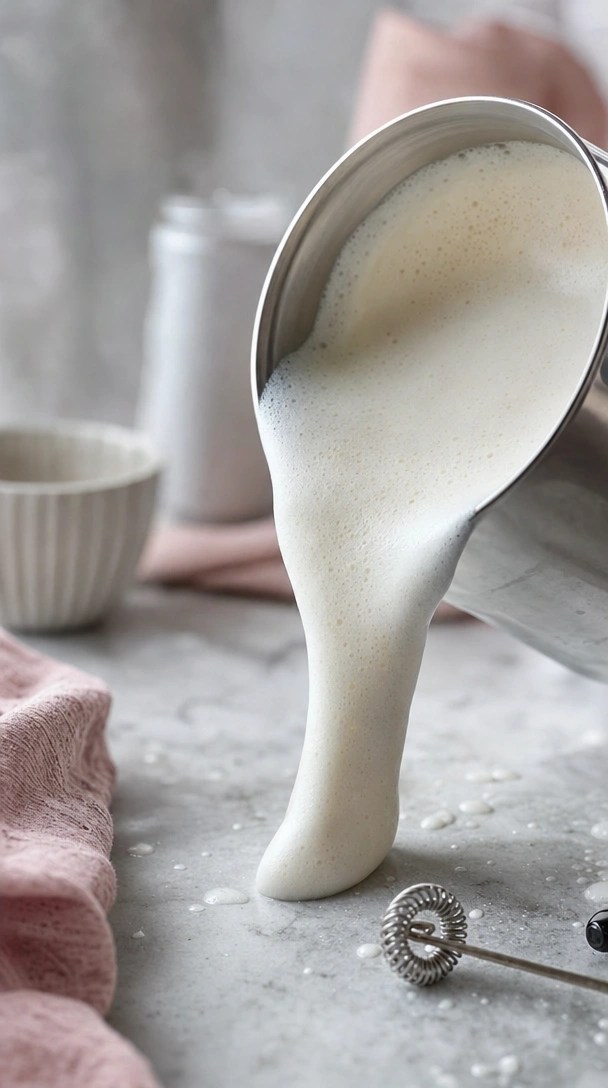
Pin this guide to getting perfect cold foam at home!
Froth cold milk until silky for a café-style texture: Using a handheld mechanical wand introduces micro-bubbles into chilled milk, creating a velvety cold foam texture without requiring expensive commercial steam wands.
Achieving the perfect creamy iced latte mouthfeel requires proper milk aeration. Whether you are using traditional dairy or debating oat milk vs whole milk for iced lattes, the goal is to create a rich microfoam texture. This significantly elevates the drinking experience, allowing you to easily craft a luxurious cold foam iced latte topping right in your own kitchen.
Ingredients
- 6 to 8 ounces of milk of your choice (whole milk or Oatly barista edition work best for a creamy iced latte)
- 2 tablespoons of heavy cream or oat cream (optional, for making a dense cold foam topper)
- Milk frother wand or a french press for manual aeration
- Cold foam pitcher
Directions
- Pour your cold milk into a deep glass or pitcher (leaving room for it to expand).
- Insert your milk frother wand just below the surface of the milk.
- Froth cold milk until silky by turning on the wand and holding it at a slight angle for 20-30 seconds until the milk doubles in volume and develops a glossy microfoam texture.
- To make a cold foam iced latte, separately blend cold foam topper using the 2 tablespoons of heavy cream and a dash of vanilla syrup until it reaches a thick, meringue-like consistency.
Pro-Tip: If using plant-based milks, always look for “Barista Edition” labels. These are specifically formulated with added fats and emulsifiers to ensure milk fat emulsion stability in cold liquids, preventing the dreaded separation or watery texture when mixed with the acidity of cold coffee.

5. Layer espresso over milk and maintain the perfect ratio

Save this layering technique for the most aesthetic iced coffee!
Layer espresso over milk and maintain the perfect ratio: Adding ice first, filling with milk, and then gently pouring the chilled espresso on top creates a beautiful visual gradient while strictly adhering to the 1:3 coffee to milk ratio.
Learning how to make a layered iced latte is the final step in the commercial cafe standard technique. Whether you are building a standard 12 oz drink or a large 16 oz iced latte, assembling the ingredients in the correct order prevents premature mixing and creates that highly aesthetic social media presentation.
Ingredients
- Your chilled, sweetened espresso
- Your frothed, silky cold milk
- 1 cup of fresh, solid ice cubes (do not reuse the shaker ice!)
- A 12 oz or 16 oz iced latte cup or tall highball glass
- Caramel drizzle topping or cinnamon for garnish
Directions
- Drizzle your caramel drizzle topping along the inside walls of your glass (optional).
- Fill glass with ice cubes right to the top to displace the liquid and keep the ambient temperature near freezing.
- Pour chilled milk into the glass, filling it about 3/4 of the way full.
- Gently layer espresso over milk by pouring the chilled espresso slowly over the ice cubes. The temperature density will create a beautiful, distinct layer.
- Top with your cold foam and stir thoroughly with straw right before drinking to combine the flavors.
Pro-Tip: The golden rule for a balanced drink is the 1:3 or 1:4 coffee to milk ratio. For a standard double shot (2 oz), you need exactly 6 to 8 oz of milk. Pouring milk haphazardly is the number one reason homemade lattes taste watery or overly milky. Use a marked glass to measure!
Key Takeaways: Your Quick Guide to the Perfect Iced Latte Recipe
Key Takeaways: Your Quick Guide to the Perfect Iced Latte Recipe: Before you head to the kitchen to begin your home barista journey, it is essential to remember the foundational rules of thermal control and extraction yields. These critical takeaways summarize the exact methodology required to execute the best iced latte recipe consistently.
- Brew a strong, concentrated base: Always use a double shot of espresso (1:2 extraction ratio) to ensure your iced latte recipe has enough rich bold coffee flavor to withstand milk and ice.
- Melt sweeteners with heat: Dissolve sugar in hot espresso immediately after brewing; liquid syrups or raw sugars will not properly integrate into cold milk.
- Stop thermal shock instantly: Chill espresso before pouring by using a cocktail shaker glass with ice to rapidly drop the temperature, preventing the ice in your serving glass from melting and creating a watery iced latte.
- Respect the barista ratios: Maintain a strict 1:3 or 1:4 coffee to milk ratio (2 oz espresso to 6-8 oz milk) for a perfectly balanced 16 oz iced latte.
- Aerate for a café texture: Always froth cold milk until silky using a milk frother wand to introduce a microfoam texture that elevates the drink from standard iced coffee to a true creamy iced latte.
- Use specialized dairy alternatives: If making a vegan iced latte, always opt for an Oatly barista edition or similar barista-blend, which contains necessary stabilizers for milk fat emulsion stability in cold liquids.
People Also Ask About Iced Latte Recipes
People Also Ask About Iced Latte Recipes: Navigating the complexities of how to make an iced latte at home naturally leads to questions about ingredient substitutions, equipment workarounds, and troubleshooting common failures. Based on current search trends and our culinary testing throughout 2026, here are the definitive answers to the most common queries regarding cold espresso beverages.
What is the difference between an iced latte vs iced coffee?
An iced latte is made with concentrated espresso shots and a large amount of milk, whereas iced coffee is brewed using standard drip coffee methods and typically served black or with just a splash of milk.
Because an iced latte relies on a double shot of espresso, it has a richer, creamier mouthfeel and a stronger, more concentrated flavor profile. Iced coffee is much lighter and more translucent. For a true cafe experience, the iced caffe latte requires pressure-extracted coffee.
How do you make an iced latte without an espresso machine?
You can make a delicious iced latte without an espresso machine by substituting the espresso with a strongly brewed concentrate using a moka pot stovetop maker, an aeropress brewer, or instant coffee.
To mimic espresso, simply double the amount of coffee grounds you would normally use for a small amount of water. While it won’t have the exact crema preservation of a true pump machine, an iced latte with instant coffee (whisked vigorously with a tiny bit of hot water) makes a highly effective and budget-friendly alternative.
What is the best milk for an iced latte?
The best milk for an iced latte is whole milk due to its ideal fat and protein content, which creates a stable, silky microfoam when aerated.
If you prefer a dairy free iced latte, oat milk—specifically an Oatly barista edition—is the superior alternative. Barista-grade oat milks are formulated with extra fats to ensure milk fat emulsion stability in cold liquids, preventing the watery separation that often plagues homemade almond or soy milk lattes.
Why does my homemade iced latte taste watery?
Your homemade iced latte tastes watery because you are likely pouring hot espresso directly over ice, causing instant thermal shock and rapid ice melt.
To fix watery iced latte issues, you must rapidly cool your hot espresso in a separate shaker before pouring it into your serving glass. Additionally, ensure you are strictly following the 1:3 coffee to milk ratio. Too much milk or overly diluted coffee will instantly ruin the bold flavor of a cold coffee drink.
Do you put milk or espresso first in an iced latte?
For the best visual presentation and flavor distribution, you should always add ice to your glass first, pour your cold milk second, and layer the chilled espresso on top last.
When you layer espresso over milk, the heavier milk sits at the bottom while the espresso cascades through the ice, creating a beautiful marbled effect. This is the commercial cafe standard technique for making an iced vanilla latte recipe. Always stir the beverage thoroughly with a straw before taking your first sip.
Can you make an iced latte with instant coffee?
Yes, you can easily make an iced latte with instant coffee by whisking 1 to 2 tablespoons of high-quality instant coffee granules with 2 ounces of hot water to create a faux espresso concentrate.
This easy 3 ingredient iced latte recipe in five minutes is perfect for beginners. Once the granules are completely dissolved into a thick syrup-like consistency, you can sweeten it, chill it, and pour it over ice and cold milk just like a traditional espresso on the rocks with milk.
How to make cold foam for an iced latte at home?
You can make café-style cold foam at home by vigorously frothing 2 tablespoons of heavy cream mixed with a splash of milk and a pump of vanilla syrup using a handheld milk frother wand.
Keep the dairy incredibly cold before frothing. Turn the wand on near the surface of the liquid to incorporate air for about 20-30 seconds until the mixture reaches a thick, meringue-like consistency. Spoon this velvety cold foam topper over your finished creamy iced latte.
Why did my milk curdle in my iced coffee?
Milk curdles in cold coffee primarily due to high coffee acidity reacting with the proteins in the milk, a reaction that is accelerated by sudden temperature changes.
To prevent a curdled almond milk in iced latte scenario, always allow your hot espresso to cool down before mixing it with cold plant milks. You can also switch to a darker roast coffee, which has lower acidity, or use a barista-formulated non-dairy milk that contains acid-buffering stabilizers.
How many shots of espresso are in a 16 oz iced latte?
A standard 16 oz iced latte traditionally contains two shots of espresso, totaling about 2 fluid ounces of concentrated coffee.
To maintain the correct coffee to milk ratio, those 2 ounces of espresso are combined with roughly 8 to 10 ounces of milk and a cup of ice. If you prefer a highly caffeinated shaken espresso iced latte, you can upgrade to three shots, but you may need to reduce your milk volume to prevent overflow.
How do you sweeten an iced latte?
The most effective way to sweeten an iced latte is by using a liquid simple syrup, or by dissolving granulated sugar directly into the espresso while it is still piping hot.
Because of the dissolution kinetics of sucrose in cold liquids, adding raw sugar to cold milk or an already-iced drink results in a gritty texture at the bottom of your cup. Using a liquid sweetener for coffee ensures the flavor is evenly distributed throughout your chilled espresso beverage.
Final Thoughts on Mastering Your Homemade Iced Latte Recipe
Learning exactly how to make an iced latte at home doesn’t require thousands of dollars in commercial equipment—it simply requires an understanding of temperature and ratios. By following this tested barista recipe, you can finally say goodbye to the disappointment of a weak, watery iced latte. The secret has always been in the thermal management: pulling a rich double shot of espresso, dissolving your flavors early, and flash-chilling the coffee before it ever touches the ice in your serving glass.
When you combine that calibrated espresso extraction with the velvety texture of properly frothed milk and a strict 1:3 coffee to milk ratio, you elevate a simple cold coffee drink into a luxury cafe experience. Whether you are using a top-tier espresso machine, a humble moka pot, or even high-quality instant coffee, respecting these 5 pro steps guarantees a perfectly balanced, creamy iced latte every single morning.
The days of overpaying at the drive-thru for a cup full of melted ice and weak coffee are over. Now that you are armed with this expert home coffee guide, what flavor variation are you going to try first? Are you sticking to a classic iced vanilla latte recipe, or experimenting with a shaken iced brown sugar latte? Let me know your favorite combinations and syrup recipes in the comments below!
Last update on 2026-10-22 / Affiliate links / Images from Amazon Product Advertising API
