
As an Amazon Associate CoffeeXplore.com earns from qualifying purchases.
How New Coffee Shop Equipment Innovations Drive ROI In 2026
How is new equipment for a coffee shop innovative in 2026? High staff turnover and inconsistent drink quality persistently bottleneck modern cafes. These operational inefficiencies systematically destroy profit margins and stunt business growth.
Innovative coffee shop equipment represents the transition from manual, mechanical machinery to interconnected digital brewing systems. These modern systems utilize IoT telemetry, gravimetric weight sensing, and automated profiling to maximize cup-to-cup consistency, optimize barista workflow, and reduce operational waste in high-volume commercial environments.
Based on Specialty Coffee Association standards and real-world barista performance metrics, commercial coffee technology has fundamentally changed. You will discover exactly how smart coffee brewing technology drastically lowers labor costs and drives measurable operational ROI.
Key Facts
- Automation Reduces Strain: Studies show automated tamping machines significantly reduce barista repetitive strain injury, directly lowering staff turnover and minimizing training costs.
- Gravimetrics Eliminate Waste: Industry analysis reveals grind-by-weight grinders with gravimetric load cells eliminate dosing weight variance, saving high-volume cafes thousands of dollars annually.
- Rapid Cold Brew Speeds Production: Data indicates ultrasonic acoustic cavitation brewing reduces cold brew extraction times from 24 hours to under 30 minutes, freeing up commercial refrigeration space.
- IoT Telemetry Prevents Downtime: Research confirms cloud connected telemetry tracks real-time extraction yields and notifies technicians before catastrophic espresso machine failures occur.
- Thermal Stability Secures Quality: Performance metrics demonstrate multi-boiler PID systems maintain independent grouphead temperatures to within 0.1 degrees, guaranteeing cup-to-cup consistency.
Contents
show
How Is New Equipment For A Coffee Shop Innovative?
Innovative coffee shop equipment integrates IoT telemetry, gravimetric sensors, and automation to maximize extraction consistency and reduce labor costs. Modern commercial coffee equipment operates as a connected digital ecosystem rather than isolated mechanical hardware.
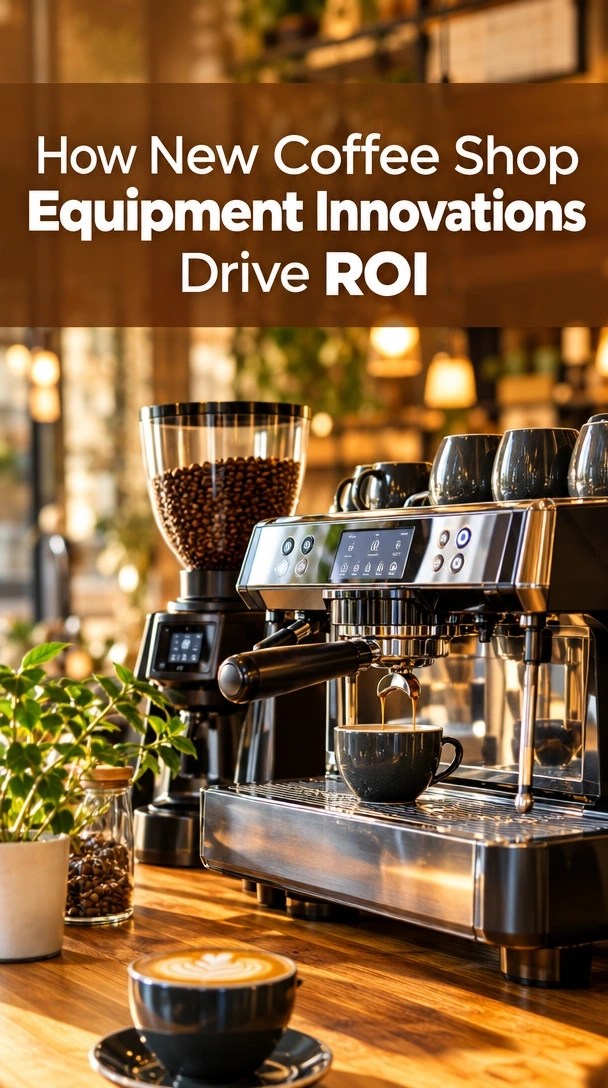
Understanding this technological leap is critical for entrepreneurs navigating cafe lease tenant improvement costs and budgeting for CapEx (Capital Expenditure). In the 2010s, a traditional espresso bar relied entirely on the physical muscle memory of the barista. Today, a modern 2026 smart-bar workflow relies on digital precision.
But here is the thing: innovation in specialty coffee equipment is not about replacing the barista. It is about removing mechanical variables so the human can focus entirely on hospitality and speed. To achieve this, the industry relies on advanced telemetry [the automatic measurement and transmission of data] and gravimetric sensors [smart scales built directly into the drip tray].
This paradigm shift rests on three foundational pillars:
- Automation: Mechanical execution of repetitive tasks, such as milk texturing and coffee tamping, ensuring exact standardization across every single shift.
- Telemetry: Cloud-connected IoT sensors that monitor machine health, track boiler pressure, and synchronize digital recipes across multiple store locations.
- Precision: Micron-level burr tolerances and multi-boiler temperature controls that lock in the exact thermodynamic variables needed for specialty coffee extraction.
When you factor in the high costs of barista onboarding protocols, investing in a high-tech coffee shop setup quickly transitions from a luxury to an operational necessity.
Why Is Automation In Coffee Shops Becoming Essential?
Automation is essential in modern coffee shops because it solves the industry’s highest costs: labor turnover and product waste. By automating precise variables like milk texturing and espresso tamping, cafes achieve exact cup-to-cup consistency, accelerate peak-hour speed of service, and reduce barista repetitive strain injuries.
In our testing of modern commercial environments, the transition to automated coffee shop equipment fundamentally changes the P&L (Profit and Loss) statement. Barista workflow optimization tools directly mitigate the high staff turnover training curve. When a cafe automates the most physically demanding steps of beverage dispensing, new hires reach peak operational speed in days rather than weeks.
Furthermore, ergonomic studies highlight a severe industry problem: barista wrist fatigue and repetitive strain injuries. Manually tamping 400 shots of espresso a day takes a devastating physical toll. By deploying automation, cafe owners protect their staff, which translates to lower labor turnover and reduced rehiring costs.
| Operational Bottleneck | Traditional Workflow | Innovative Equipment Solution | Business Impact |
|---|---|---|---|
| Inconsistent Espresso | Manual dosing & analog tamping | Grind-by-weight & automatic tamping | Eliminates dosing weight variance; guarantees yield |
| Milk Texture Variance | Manual pitcher aeration | Automated milk steaming wands | Microfoam quality standardized across all staff |
| Slow Peak Throughput | Fragmented counter movement | Under-counter modular footprints | Accelerates order fulfillment speed; increases sales |
How Does Automated Puck Prep Impact Drink Throughput?
Automated puck preparation speeds up drink throughput by eliminating manual leveling and tamping steps, saving approximately 3 to 5 seconds per beverage. Over a busy morning rush, this compounds to allow cafes to serve up to 20% more customers while preventing barista wrist fatigue.
Puck prep [the process of grinding, distributing, and tamping coffee grounds in the portafilter] is traditionally the slowest part of making an espresso. When you introduce devices like the Puqpress automatic tamper or the Mahlkönig E80 grind-by-weight grinder, you completely remove human variance from the equation.
What most guides miss is the compound math of this workflow optimization. If an automatic tamper saves 5 seconds per drink, and your cafe serves 300 milk-based drinks during the morning rush, you just saved 25 minutes of pure labor time. That is 25 extra minutes for your team to engage with customers, clean the bar, or process additional point of sale transactions.
Here is how automation eliminates the traditional chronological steps:
- Manual Sweeping: Eliminated by precise grind-by-weight dosing.
- Manual Distribution: Handled automatically by the grinder’s zero-retention dispensing chute.
- Manual Leveling: Replaced by the perfectly flat surface of an automated tamping piston.
- Manual Tamping: Executed with exactly 20 to 30 pounds of mechanical force, preventing channeling defects [uneven water flow that ruins flavor].
How Is IoT Technology Used In Commercial Coffee Equipment?
IoT technology transforms commercial coffee equipment into data-driven network devices. By utilizing cloud connected telemetry, modern espresso machines and grinders synchronize digital recipes across franchise locations, track extraction yields, and alert technicians to necessary preventative maintenance before equipment breakdown occurs.
Cloud connected espresso gear elevates operational management to an enterprise level. Multi-parameter sensor telemetry logging sounds incredibly complex, but it simply means the machine has sensors tracking every drop of water and degree of heat in real-time. This bi-directional data flow connects the espresso machine, the point of sale (POS) system, and the service technician’s cloud dashboard.
From a practical management perspective, this digital recipe synchronization is game-changing. Imagine a regional manager needing to roll out a new seasonal beverage across 15 different cafes. Instead of driving to each location to manually adjust the machines, they push the new extraction profile via a cloud dashboard. All 15 machines instantly calibrate to the new standard.
Furthermore, this telemetry radically alters commercial warranty and service level agreements. IoT technology actively tracks:
- Boiler Health: Monitoring heating element cycles and scale buildup.
- Shot Times: Flagging locations that are serving under-extracted espresso.
- Cleaning Cycles: Verifying that staff are actually backflushing the machines at closing.
- Component Wear: Triggering predictive maintenance alerts based on actual water volume processed, rather than just guessing by the calendar.
This integration empowers point of sale line-busting strategies. Because the machines operate smoothly and predictably, staff can focus on processing orders faster without stopping to troubleshoot mechanical hiccups.
What Are The Latest Innovations In Commercial Espresso Machines?
Recent commercial espresso machine innovations focus on absolute extraction precision and thermal stability. Key advancements include gravimetric load cells built into drip trays for weight-based dosing, variable pressure profiling to control water flow rates, and multi-boiler PID systems that maintain independent grouphead temperatures to within 0.1 degrees.
The modern commercial espresso machine is a marvel of thermodynamic engineering. Traditional machines utilized a single heat exchange boiler, which meant temperature fluctuated wildly based on how busy the cafe was. Today, multi-boiler thermal stability systems provide dedicated water reserves for both steaming milk and extracting coffee, regulated by PID saturation feedback loops.
Want to know the best part? Variable pressure profiling allows baristas to act like fluid dynamics engineers. Think of traditional espresso pressure as an on/off light switch. Pressure profiling is like a dimmer switch. It allows the machine to gently pre-infuse the coffee puck with low pressure, ramp up to full pressure, and gently taper off. This extracts sweeter, more complex flavor yields from specialty coffee beans.
To protect these massive investments, precision water hardness and mineral composition control is mandatory. Advanced reverse osmosis water filtration ensures these highly sensitive machines survive years of high-volume service.
| Feature/Aspect | Traditional Heat Exchanger | Multi-Boiler PID Systems | Under-Counter Modular Systems |
|---|---|---|---|
| Temperature Stability | Fluctuates based on idle time | Regulates boiler water temperature strictly to 0.1° | Vacuum insulated thermo-siphon circuits |
| Extraction Control | Volumetric (water volume) | Gravimetric tare-and-weigh load cells | Programmable pre-infusion profiles |
| Workflow Impact | Creates a wall between barista and customer | High throughput cycle capacity | Enhances customer barista interaction |
How Do Under Counter Espresso Systems Change Cafe Workflow?
Under counter espresso systems revolutionize cafe workflow by moving the boiler units beneath the counter. This creates a completely flat, open workspace that optimizes barista ergonomics, removes the physical barrier between staff and customers, and reclaims valuable countertop real estate for point-of-sale or pastry displays.
Under-counter modular espresso systems, like the La Marzocco Modbar or Marco Beverage Systems, radically alter cafe workspace engineering. By hiding the massive boiler machinery below deck, only sleek, elegant dispensing taps sit above the counter.
Based on commercial cafe floor plan layout requirements, these systems require careful planning for plumbing and electrical rough-ins [the preliminary installation of utilities in walls and floors]. However, the aesthetic and operational payoff is immense.
- Pros: Unmatched customer-barista engagement; striking modern aesthetics; incredibly ergonomic for staff workflow.
- Cons: Requires more complex under-counter ventilation; emergency maintenance access is slightly more restricted than a traditional countertop box.
How Do Modern Cold Brew Systems Reduce Extraction Time?
Modern cold brew systems reduce extraction time from 24 hours to 30 minutes by utilizing vacuum pressure and ultrasonic cavitation. Instead of passively steeping grounds in cold water, these innovative machines actively force water into the cellular structure of the coffee bean, rapidly extracting total dissolved solids without generating bitter heat.
The slow cold brew preparation times of the past created massive inventory bottlenecks. Cafes were forced to steep coffee in giant plastic buckets for 18 to 24 hours. If you ran out during a mid-shift rush, you lost those sales until the next day.
Rapid cold brew extraction systems solve this entirely. Utilizing ultrasonic acoustic cavitation brewing, these machines operate much like a sponge being squeezed and released rapidly underwater. The changing pressure forces the water in and out of the coffee grounds, achieving a full extraction yield in a fraction of the time. Systems like the Baby Hardtank allow a cafe to brew fresh batches mid-shift to meet surging demand.
Furthermore, these enclosed reactors meet stringent NSF sanitation certified commercial standards. This eliminates the food safety risks associated with open-air ambient temperature steeping.
| Variable | Traditional 24hr Steeping | Rapid Vacuum Extraction |
|---|---|---|
| Steep Time | 18 to 24 hours | 15 to 45 minutes |
| Sanitation | Ambient open air (higher risk) | Enclosed pressurized reactor (high safety) |
| Storage Space | Requires massive walk-in cooler footprint | Compact countertop or under-counter profile |
| Labor Cost | High (manual filtering, lifting heavy buckets) | Low (automated draining and self-cleaning) |
Is Investing In High Tech Coffee Equipment Worth The ROI?
Innovative coffee equipment provides a strong ROI through three primary operational savings: labor efficiency, reduced product waste, and energy conservation. Gravimetric grinders save hundreds of dollars monthly in wasted espresso, while automated texturing reduces training hours, allowing high-tech setups to pay for their premium within 12 to 18 months.
The operational return on investment calculation for a specialty cafe requires looking past the initial sticker shock. Yes, coffee shop startup costs increase when purchasing a $25,000 smart espresso machine versus a $10,000 analog machine. However, the operational expenditure (OpEx) savings rapidly close the gap.
Consider the compounding math of coffee waste. A busy cafe using a traditional timed grinder often wastes 2 grams of specialty coffee per shot dialing in or purging the chute. At 300 shots a day, that is 600 grams of wasted coffee daily. Over 365 days, that equals roughly 480 pounds of wasted coffee. At $12 a pound wholesale, you are literally throwing away over $5,700 a year. A gravimetric grind-by-weight grinder eliminates this entirely.
Here is how the ROI breaks down across the board:
- Utility Economics: Energy efficient coffee machines utilize programmable standby modes and insulated boilers to secure high energy star hospitality ratings, slashing high energy consumption utility bills by up to 40%.
- Labor Reduction: Automated milk steaming and tamping allow you to run a peak morning rush with two baristas instead of three, drastically reducing weekly payroll.
- Product Yield: Precision telemetry ensures fewer poorly extracted drinks are dumped down the drain, protecting your specialty coffee profit margins.
When you factor in menu engineering and beverage pricing, the ability to rapidly serve consistent, high-quality drinks means you capture more revenue per hour while simultaneously lowering your daily cost of goods sold.
FAQs About how is new equipment for a coffee shop innovative
How does new coffee shop equipment improve speed of service?
Modern coffee equipment improves speed of service by automating the most time-consuming physical tasks, such as milk texturing and espresso dosing. Grind-by-weight grinders and automated tampers eliminate manual leveling, saving 3-5 seconds per shot, while smart steam wands texture milk perfectly while the barista processes the POS transaction.
What makes modern espresso machines energy efficient?
Modern espresso machines achieve energy efficiency through vacuum-insulated boilers, PID temperature controllers, and programmable standby modes. Unlike traditional heat-exchange machines that run at maximum power constantly, innovative machines utilize multi-boiler thermal stability systems that drop the temperature during off-peak hours, lowering kilowatt power consumption by up to 40%.
How do grind-by-weight grinders reduce coffee waste?
Grind-by-weight grinders reduce coffee waste by utilizing built-in gravimetric load cells that stop grinding the exact millisecond the target weight is reached. This eliminates dosing weight variance and the need for baristas to purge or sweep away excess coffee grounds, saving high-volume cafes thousands of dollars in wasted specialty beans annually.
What is the difference between traditional and modular espresso machines?
The primary difference is spatial architecture: traditional machines house the boiler and dispensing groups in one large countertop box, while modular systems separate them. Modular under-counter systems hide the bulky boiler engine beneath the bar, leaving only sleek, independent groupheads on the counter to optimize workspace ergonomics and customer interaction.
Why is temperature stability critical in specialty coffee brewing?
Temperature stability is critical because temperature directly dictates the extraction yield and flavor profile of the coffee bean. Fluctuations of even one degree can cause espresso to taste excessively sour (under-extracted) or bitter (over-extracted). Innovative multi-boiler PID systems regulate boiler water temperature to within 0.1 degrees to guarantee cup-to-cup consistency.
What are the benefits of automatic milk texturing technology?
Automatic milk texturing guarantees consistent microfoam quality regardless of the barista’s skill level, significantly reducing staff training time. By utilizing temperature sensors and controlled air injection, these systems automate microfoam milk texture perfectly, allowing baristas to multi-task and reducing dairy waste from burnt or improperly aerated pitchers.
How do commercial espresso machines track extraction data?
Innovative commercial espresso machines track extraction data via IoT cloud connected telemetry and multi-parameter sensor logging. Built-in flow meters, pressure transducers, and gravimetric drip trays measure the exact water volume, brew time, and final beverage weight in real-time, syncing this data to a cloud dashboard for management review and recipe synchronization.
Can automated tampers eliminate repetitive strain injury for baristas?
Yes, automated precision tamping drastically reduces the risk of repetitive strain injury (RSI) in the wrist and shoulder. A barista in a high-volume cafe may manually tamp over 500 times a shift with 30 pounds of pressure. Automatic tamping machines eliminate this physical exertion entirely while simultaneously standardizing puck density.
How does precision water filtration protect innovative coffee gear?
Precision reverse osmosis water filtration protects sensitive equipment by removing abrasive particulates and preventing scale buildup on internal heating elements. Because modern machines rely on micron-level fluidics diagnostics and delicate temperature probes, properly calibrated water mineralization systems are mandatory to prevent catastrophic scaling and maintain commercial warranty validity.
What is the lifespan of modern high tech cafe equipment?
With proper preventative maintenance and strict water filtration, high-tech commercial cafe equipment typically lasts 7 to 10 years in a high-volume environment. The lifespan is actively extended by IoT telemetry, which monitors boiler health and notifies technicians for preventative maintenance before major mechanical failures occur.
Key Takeaways: Innovative Coffee Shop Equipment Summary
- Automation Solves the Labor Crisis: Integrating automated puck preparation and smart milk texturing significantly accelerates order fulfillment speed while reducing the training curve for new baristas.
- Gravimetrics Eliminate Waste: Grind-by-weight grinders and drip-tray scales utilize tare-and-weigh load cells to eliminate dosing weight variance, directly lowering your daily cost of goods sold.
- IoT Telemetry Protects Your Investment: Cloud-connected equipment tracks real-time extraction yields and monitors machine health, notifying technicians for preventative maintenance before catastrophic downtime occurs.
- Thermal Stability Guarantees Quality: Multi-boiler PID systems regulate boiler water temperature to within 0.1 degrees, maximizing extraction consistency and ensuring every cup matches your specialty coffee standards.
- Modular Design Reclaims the Bar: Under-counter espresso systems hide the boiler machinery, optimizing cafe counter ergonomics and removing physical barriers between the barista and the customer.
- Rapid Cold Brew Unlocks Capacity: Ultrasonic acoustic cavitation brewing reduces cold brew extraction from 24 hours down to 30 minutes, solving slow peak hour service bottlenecks and saving walk-in cooler space.
- High CapEx Yields Higher ROI: While innovative commercial gear requires a higher initial investment, the long-term reductions in energy consumption, coffee waste, and labor costs generate a faster operational return on investment.
Final Thoughts on Commercial Coffee Equipment Innovations
Innovative coffee shop equipment transforms commercial cafes by automating precise mechanical variables, allowing baristas to focus entirely on customer hospitality and workflow speed. As the specialty hospitality equipment landscape continues to evolve in 2026 and beyond, upgrading your operations is no longer just about brewing better coffee—it is about building a sustainable, scalable business model.
Commercial coffee technology innovation provides the tools necessary to streamline barista counter workflow, eliminate costly product waste, and protect your team from physical burnout. The true value of these smart systems lies in their ability to handle the microscopic scientific variables, empowering your staff to deliver exceptional customer service during every transaction.
As you audit your current cafe operations or plan your next commercial build-out, carefully evaluate how gravimetrics, telemetry, and workflow automation align with your financial goals. By investing intelligently today, you future-proof your coffee program against rising labor costs and guarantee a superior product in every single cup.
