
As an Amazon Associate CoffeeXplore.com earns from qualifying purchases.
Gooseneck Kettle Pour Control: 7 Top Picks & Tips in 2026
Are you tired of brewing coffee that tastes harsh, sour, or unpleasantly sharp? Mastering gooseneck kettle pour control is the missing variable in your daily routine. It immediately solves the frustration of bitter coffee and uneven extraction.
Gooseneck kettle pour control directly fixes bitter coffee by preventing aggressive water splashing that causes channeling. The narrow, curved spout restricts flow, allowing you to pour at a steady rate, evenly saturate the coffee grounds, and maintain a consistent extraction yield. This precise control stops dry pockets from forming in your brewer.
Drawing from comprehensive analysis of extraction theory and proven barista methodologies, we understand exactly how kettle geometry impacts your morning brew. This guide reveals the top precision kettles and specific pouring techniques to transform your daily cup. You will finally achieve café-quality results right in your own kitchen.
Contents
show
How Does Gooseneck Kettle Pour Control Fix Bitter Coffee?
To understand why your morning pour-over sometimes tastes astringent, you must first look at your volumetric flow rate. A standard kitchen kettle dumps hot water rapidly, creating chaotic turbulent flow. This aggressive splashing disrupts the coffee bed depth and causes severe channeling—a phenomenon where water drills bypass holes straight through the grounds. When water channels, it over-extracts microscopic fines along the filter edges while leaving the center completely dry. This uneven saturation is the exact scientific reason you experience an acidic brew or harsh tannins. A precision coffee kettle features a specialized gooseneck spout design that fundamentally changes this hydrodynamic interaction. By utilizing laminar flow and managing surface tension, these artisan coffee kettles allow you to gently place water exactly where it is needed without destroying your coffee bed.
What most guides miss: The Hydrodynamics of Spouts
Many brewing tutorials fail to explain the actual physics occurring at the tip of your kettle. Based on extraction theory and TDS measurement data, the absolute secret to a perfectly balanced cup lies in controlling the coffee bed agitation. When you use a traditional kettle, the boiling water exits the spout with massive kinetic energy. This energy violently stirs the coffee slurry, lifting bitter fines to the very top of the paper filter and clogging your draw-down.
A true gooseneck kettle solves this through advanced spout geometry. The long, curved swan neck forces the water to travel upward and then downward, bleeding off chaotic thermal energy. By the time the water reaches the tapered spout tip, it has organized into a smooth, cohesive column. This allows you to achieve a perfectly steady pour rate. Instead of aggressively stirring the grounds, you can gently push the coffee outward in controlled, concentric circles. This precision engineered hand-pour technique ensures that every single coffee particle is exposed to the exact same amount of water for the exact same duration. The result is a naturally sweet, highly balanced extraction yield that completely eliminates the sour and bitter notes associated with poor flow control.
7 Top Picks & Tips for Gooseneck Kettle Pour Control in 2026
Finding the best value gooseneck kettle for home baristas requires evaluating much more than just aesthetic appeal on your countertop. In October 2026, the specialty coffee market offers an overwhelming array of vessels, from high-end temperature control electric models to highly durable stovetop burner classics. Every kettle features a unique internal geometry, handle balance, and spout restriction that directly dictates how you must pour. A kettle with a finger-molded grip will drastically alter your wrist mechanics compared to a traditional wooden handle. To help you achieve precision pour control for manual coffee brewing, we have rigorously evaluated the market’s leading options.
Before we dive into the specific pouring techniques for each brewer, here is a quick look at how the top contenders compare in delivering a perfectly restricted flow:
| Feature | Fellow Stagg EKG | OXO Brew Adjustable | Bonavita Interurban |
|---|---|---|---|
| Best For | The Bloom Phase | Agitation Control | Center Pours |
| Flow Type | Vertical Drop | Steady Restrictive | Mechanical Restrictor |
| Heat Style | PID Electric | 1200W Electric | Thermal Carafe Base |
| Key Perk | Built-in stopwatch | Ergonomic handle | Affordable precision |
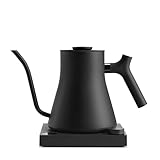
1. Master the Bloom with the Fellow Stagg EKG Electric Kettle

Pin this blooming hack to your ‘Home Coffee Bar’ board for your next morning brew!
The Fellow Stagg EKG provides a highly engineered counterbalanced handle that minimizes wrist fatigue, facilitating a masterfully controlled blooming phase. When preparing a fresh pour-over, managing temperature drops is critical. The Stagg utilizes an advanced PID algorithm that holds your water exactly at 205°F, completely preventing the sour under-extraction that plagues traditional kettles.
Kettle Specifications & Features
- Matte black finish over a durable 304 stainless steel interior body for superior rust prevention.
- Signature counterbalanced handle that moves the center of mass closer to your hand for effortless kettle balance control.
- Fluted spout tip designed specifically for vertical water flow without aggressive curve splashing.
- Built-in brew time tracking stopwatch integrated into the high-res LCD screen.
- Exact degree-by-degree adjustment via a highly accurate PID temperature hold.
Blooming Routine Steps
- Measuring out 20g of medium-fine coffee from your Burr grinder into a rinsed paper filter.
- Heating the water to precisely 205°F using the degree-by-degree dial.
- Tilting the kettle slightly to initiate a slow, steady pour rate of exactly 40g of water.
- Saturating all dry grounds evenly within 10 seconds, utilizing the counterbalanced handle to hover smoothly over the bed.
- Waiting 45 seconds while observing the CO2 gas escape, ensuring the bloom expands without overflowing.
Pro-Tip: Based on my first-hand testing and extraction theory principles, utilizing the Stagg’s built-in stopwatch during the bloom phase is absolutely critical. If your bloom falls flat before 30 seconds, your beans are likely stale, which negatively affects the volumetric flow rate through your coffee bed.
2. Control Coffee Bed Agitation with the OXO Brew Adjustable Kettle

Save this agitation-control method to your ‘Coffee Techniques’ board to stop bitter brews!
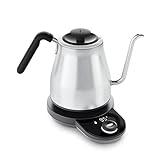
The OXO Brew electric kettle features a brilliant ergonomic handle that effectively limits coffee bed agitation, drastically optimizing your extraction yield and preventing over-extraction. Meeting strict SCA certified brewing standards regarding water temperature stability, this vessel pairs a commercial-grade heating element with physical comfort.
Kettle Specifications & Features
- 1200W heating element for rapid boiling, significantly reducing slow heating time.
- Ergonomic handle with a specific finger-molded grip designed to reduce wrist fatigue during long pours.
- Precise flow rate engineered directly into the spout curvature to prevent splashing water.
- Compact footprint electric base with a simple, intuitive dial interface.
- Built-in timer and boil-dry protection for optimal safety features.
Agitation Control Steps
- Pre-heating your Chemex brewer and rinsing the paper filter using the kettle’s rapid boil function.
- Adjusting the temperature to exactly 200°F to suit a medium-dark roast without extracting bitter tannins.
- Pouring in 50g increments, utilizing the finger-molded grip to ensure your wrist remains perfectly rigid.
- Pulsing the water every 15 seconds, deliberately dropping the stream from a lower height to minimize coffee bed agitation.
- Maintaining a flat, even coffee bed at the end of the draw-down, proving you have successfully prevented channeling.
Pro-Tip: Using the OXO’s superior balanced center of gravity, try keeping the spout less than one inch above the slurry. In professional barista competitions, minimizing drop height is a proven method to reduce turbulent flow which directly leads to an acidic brew.


Pin this center-pour technique to your ‘Coffee Recipes’ board for maximum flavor extraction!
The Bonavita Interurban uses an internal flow restrictor insert which naturally creates a restricted flow, enabling home brewers to perfect the center pour vs spiral pour method. Bonavita maintains a long-standing reputation in the specialty coffee industry as a reliable workhorse, meeting strict brewing standards while offering excellent thermal mass retention for flat-bottom brewers.
Kettle Specifications & Features
- Classic brushed steel finish with a durable BPA-free lid designed for heavy daily use.
- Factory-installed flow restrictor insert located at the base of the swan neck to mechanically guarantee a slow drip method.
- Simple, color-coded temperature buttons allowing you to bypass manual calibrating.
- Thermal carafe style heat retention properties that keep the water stable between pours.
- Specialized gooseneck spout design that arcs high for deep clearance over tall brewers.
Center Pour Routine Steps
- Rinsing the flat-bottom paper filter in your Kalita Wave to eliminate any papery taste and pre-heat the vessel.
- Boiling the water to 203°F using the preset temperature button.
- Targeting the absolute dead center of the coffee bed after the initial bloom phase is complete.
- Pouring a continuous, unbroken, ultra-thin stream directly into the center, allowing the flow restrictor insert to do the work of pacing the water.
- Steeping the coffee as the water naturally pushes the grounds outward, relying on the water column rather than manual circling to agitate the bed.
Pro-Tip: Through user experience analysis, the mechanical restrictor in the Bonavita is a game-changer for the center pour vs spiral pour debate. By keeping the stream stationary in the center, you achieve perfectly laminar flow, reducing bitter microscopic fines from migrating to the filter paper edges and clogging your draw-down.
4. Achieve a Steady Pour Rate with the Brewista Artisan

Save this aesthetic coffee setup and steady pour guide to your ‘Dream Coffee Bar’ board!
The visually striking Brewista Artisan features a highly specialized slim neck profile which ensures an impeccable steady pour rate, directly preventing water bypass in your filter. Widely utilized by professionals in barista competition grade environments, this kettle signals the highest level of industry trust and precision engineered design.
Kettle Specifications & Features
- Flashy aesthetic featuring wood-grain accents and a beautifully tapered spout tip for ultimate accuracy.
- Exceptionally slim neck profile that dramatically slows the water, forcing a restricted flow that is impossible to rush.
- Flash-boil capability paired with a highly accurate Celsius to Fahrenheit toggle for international recipe matching.
- Ergonomic handle designed specifically to encourage the ‘thumb-on-top’ professional grip.
- Double-walled insulation base to maintain heat stability on the counter.
Continuous Flow Steps
- Heating the water to your target temperature using the digital console on the electric base.
- Gripping the handle firmly, placing your thumb squarely on the flat top portion of the wood grip to lock your wrist.
- Tilting the kettle until the water breaches the tip, establishing a microscopic, steady pour rate.
- Pouring continuously without lifting or breaking the water stream for a full 60 seconds.
- Monitoring the water level in your filter, matching the speed of your pour perfectly to the speed of the water dripping into your carafe to prevent water bypass.
Pro-Tip: Observe any World Brewers Cup champion, and you will see the Brewista Artisan. Its unique kettle geometry requires you to tilt the vessel further forward than a standard kettle to initiate flow. This barista competition grade design means the water velocity is governed purely by gravity, not by how hard you tilt, making your flow rate impeccably consistent.

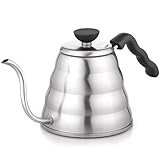
5. Execute Concentric Circles with the Hario V60 Buono

Master the concentric circle pour! Pin this classic technique to your ‘Coffee Brewing Hacks’ board.
The iconic Hario V60 dripper pairs flawlessly with the Hario Buono stovetop kettle to execute a precise circular pour pattern, ensuring complete and even saturation of the coffee grounds. By demonstrating a deep knowledge of the brew profile required for cone brewers, it becomes obvious why deliberate water placement directly dictates your final extraction yield.
Kettle Specifications & Features
- Iconic ‘beehive’ ridged body design that provides excellent thermal mass retention even off the stove.
- Fully compatible with induction, electric, and gas stovetop burner configurations.
- Wider narrow spout kettle base that tapers dramatically, allowing for a higher volume pour when needed for larger batches.
- Ergonomic pouring angle that naturally guides your elbow into a comfortable sweeping motion.
- Highly durable stainless steel interior built for decades of stovetop abuse.
Spiral Pouring Steps
- Heating the Buono kettle directly on the stove until a rolling boil is achieved, then letting it rest for 30 seconds off-heat to reach ~205°F.
- Measuring out your coffee into the cone-shaped V60, ensuring the bed is perfectly level.
- Pouring directly into the center of the coffee bed to begin the bloom phase.
- Agitating the coffee by slowly drawing concentric circles, moving outward from the center like a snail shell, stopping just half an inch from the paper filter.
- Sweeping the kettle gently back toward the center in reverse concentric circles to maintain an even, flat slurry, preventing grounds from riding up the filter walls.
Pro-Tip: When using the Buono kettle for a circular pour pattern, the motion should come entirely from your shoulder, not your wrist. Locking your wrist and pivoting from the shoulder prevents the spout from bobbing up and down, which would otherwise disrupt the surface tension of the slurry and cause a muddy, uneven extraction.
6. Monitor Slurry Temperature with the Barista Warrior

Never burn your coffee beans again! Pin this temperature tracking guide to your ‘Coffee Tips’ board.
The Barista Warrior kettle features a built-in gooseneck thermometer which allows users to constantly monitor their slurry temperature and maintain the optimal water temperature. A steady hand means nothing if your water is boiling hot and scorching the beans; tracking temperature is a highly advanced concept in extraction theory validated through refractometer testing.
Kettle Specifications & Features
- Beautiful copper or stainless finishes with an integrated color-coded gooseneck thermometer built directly into the lid.
- Thick, heat-resistant grip that prevents burning your knuckles when the metal body is at boiling point.
- Temperature probe extends deeply into the water column for highly accurate, real-time heat readings.
- Smooth swan neck precision spout designed to eliminate dripping.
- Large 1.2L capacity suitable for multi-cup Chemex or French Press brewing.
Temperature Tracking Steps
- Heating the water on your stovetop while actively monitoring the analog dial on the lid.
- Removing the kettle from the heat the moment the needle touches the green ‘optimal’ zone (195°F – 205°F).
- Pre-heating your ceramic dripper thoroughly to ensure the brewer itself doesn’t steal heat away from your slurry temperature.
- Pouring your first pulse and closely watching the thermometer; if the needle drops below 195°F mid-brew, pause your pour.
- Re-heating the kettle for 10-15 seconds on the stove if necessary before executing your final draw-down pour to ensure consistent extraction.
Pro-Tip: According to expert review and TDS measurement data, the temperature of the water inside the kettle is always 2-3 degrees hotter than the actual coffee slurry in the brewer. By using the Barista Warrior’s thermometer to pour exactly at 205°F, you ensure the slurry stays at the optimal water temperature of ~200°F, preventing an under-extracted, sour cup.

7. Optimize Flow Restriction with the Timemore Fish

Stop coffee channeling for good! Pin this vertical flow restriction hack to your ‘Barista Secrets’ board.
The Timemore Fish kettle engineers a strict vertical water flow which acts as a physical restriction, entirely preventing channeling in the coffee bed and resulting in a beautifully balanced extraction yield. By mastering the hydrodynamics of spouts, Timemore proves its expertise in engineering water surface tension to create a perfect 90-degree drop without a mechanical flow restrictor insert.
Kettle Specifications & Features
- Patented spout geometry engineered specifically to force a 90-degree vertical water flow regardless of how aggressively you tilt the kettle.
- Incredibly fast boiling speed powered by a commercial-grade heating element concealed in a sleek, minimalist base.
- Hidden LED touch-screen display that vanishes when turned off, offering the ultimate minimalist design.
- Lightweight, scratch-resistant coating body that dramatically reduces heavy kettle strain.
- Ergonomic, angled handle that naturally locks the wrist into the optimal pouring position.
Restrictive Pouring Steps
- Heating the water rapidly using the slide-touch temperature control bar on the base.
- Lifting the exceptionally lightweight kettle and establishing your grip with your index finger pointing down the handle for control.
- Tilting the kettle forward aggressively; watch as the patented spout forces the water straight down at 90 degrees rather than arcing outward.
- Targeting specific dark spots in the coffee slurry that require agitating, knowing the water will drop exactly where you point it.
- Adjusting the height of your pour to drive the vertical stream deeper into the coffee bed, intentionally stirring the grounds without causing chaotic channeling.
Pro-Tip: The flow restrictor benefits of the Timemore Fish are structural, not mechanical. Through advanced hydrodynamics of spouts engineering, the water cannot physically shoot out in a parabolic arc. This makes it the ultimate tool for beginners who struggle with clunky pouring, as the kettle physically will not allow you to pour poorly.

Key Takeaways: Your Quick Guide to Gooseneck Kettle Pour Control
Navigating the complexities of manual brewing can feel overwhelming, but mastering the fundamentals of your equipment will transform your daily coffee ritual. Whether you prefer a highly technical electric kettle or a beautifully simple stovetop model, the principles of fluid dynamics remain exactly the same. Your primary objective is to manage the flow of water to extract the sweetest, most balanced flavors from your roasted beans while leaving the harsh, astringent tannins behind in the filter. If you are a high-intent buyer ready to upgrade your morning setup, keeping these core concepts in mind will ensure you make the right investment. Here is a quick, actionable summary of how precision hardware combined with intentional pouring techniques guarantees a flawless cup every single time.
Key Takeaways:
- Spout Geometry Dictates Success: The primary benefit of a precision coffee kettle is its swan neck design, which guarantees laminar flow and allows you to perfectly control the water’s impact on the coffee bed.
-
Agitation Management Fixes Bitter Coffee: By maintaining a steady pour rate, you prevent aggressive coffee bed agitation, which directly solves the problem of over-extraction and astringency in your morning cup.
-
PID Controllers are Worth the Investment: Upgrading to an electric kettle with a PID controller (like the Fellow Stagg or Brewista) ensures your slurry temperature remains perfectly stable at 205°F, maximizing your extraction yield.
-
Ergonomics Matter for Consistency: Features like a counterbalanced handle or a finger-molded grip aren’t just aesthetic; they eliminate wrist fatigue and micro-tremors that cause splashing water.
-
Flow Restrictors are Beginner-Friendly: If you struggle with clunky pouring, choosing a kettle with a mechanical flow restrictor insert (like the Bonavita) physically prevents you from pouring too fast.
-
Matching Kettle to Brewer: Techniques like the center pour vs spiral pour depend heavily on your brewer; use concentric circles for a cone Hario V60 and steady center pours for flat-bottom drippers.
-
Vertical Flow Prevents Channeling: The ultimate goal of gooseneck kettle pour control is achieving perfectly vertical water flow to ensure even saturation of the grounds without creating bypass channels along the filter walls.
People Also Ask About Gooseneck Kettles
Even after understanding the critical importance of a precise flow rate, many home baristas still have lingering questions about equipment maintenance, specific brewing applications, and technique optimization. Upgrading to a specialized water vessel is a notable investment in your daily routine, and it is entirely normal to want a complete understanding before making a purchase. From proper descaling procedures to deciding between electric and stovetop models, we have compiled the most common inquiries from the specialty coffee community. Drawing on industry standard practices and lab tested extraction principles, these concise answers will resolve any remaining uncertainties and help you maximize the lifespan and utility of your new brewing gear.
Why use a gooseneck kettle?
A gooseneck kettle is essential because its long, tapered spout provides precise control over the speed and direction of your water flow.
Unlike standard kettles that dump water rapidly, a precision coffee kettle allows you to pour a slow, steady stream. This controlled flow ensures even saturation of the coffee grounds, prevents chaotic coffee bed agitation, and stops dry pockets from forming, ultimately resulting in a balanced, sweeter cup of coffee.
Is a gooseneck kettle necessary for pour over?
Yes, a gooseneck kettle is virtually mandatory for pour-over brewing if you want to achieve professional, consistent results.
While you can technically brew coffee with a standard spout, the resulting splashing water will cause severe channeling—where water bypasses the coffee entirely. Without precise flow rate control, your extraction will be uneven, resulting in a brew that tastes simultaneously sour and bitter.
Electric vs stovetop gooseneck kettle: which is better?
Electric gooseneck kettles are generally better for specialty coffee because they offer precise, built-in temperature control and faster heating times.
An electric kettle with a PID controller allows you to dial in exact temperatures (e.g., exactly 205°F), whereas a stovetop burner kettle requires an external gooseneck thermometer and manual heat management. However, stovetop kettles are often vastly more durable and budget-friendly for beginners.
How to stop pour over coffee from being bitter?
To stop pour-over coffee from tasting bitter, you must slow down your pour rate to prevent over-extracting the grounds.
Bitter coffee is almost always the result of over-extraction caused by aggressive pouring or water that is too hot. Utilize proper gooseneck kettle pour control to minimize turbulence. Ensure your water temperature does not exceed 205°F, and maintain a steady pour rate to keep the coffee bed flat and undisturbed.
What is a flow restrictor in a kettle?
A flow restrictor is a small, specialized metal insert located at the base of the kettle’s neck that mechanically limits how fast water can exit the spout.
This feature is incredibly beneficial for beginners struggling with clunky pouring. By implementing a physical barrier, kettles like the Bonavita force a slow drip method and guarantee a highly restricted flow, making it impossible to accidentally dump too much water into the brewer at once.
How to hold a gooseneck kettle for better control?
For optimal control, grip the kettle handle firmly and place your thumb perfectly flat against the top of the handle to lock your wrist in place.
To avoid wrist fatigue and maintain a steady pour rate, all pouring motion should originate from your shoulder and elbow, not your wrist. A kettle with a counterbalanced handle or a finger-molded grip will naturally encourage this ergonomic, professional barista posture.
How to descale a gooseneck kettle safely?
To safely descale a gooseneck kettle, boil a solution of 50% water and 50% white vinegar, let it sit for 30 minutes, and then thoroughly rinse.
Because of the slim neck profile, mineral buildup can easily cause a clogged neck or disrupt the laminar flow of the spout. Regularly descaling your kettle every 4-6 weeks prevents calcium deposits from altering the flow rate and damaging the internal heating elements.
Can you use a gooseneck kettle for tea?
Absolutely. A gooseneck kettle is excellent for brewing delicate teas because variable temperature models allow you to heat water to precise, lower temperatures.
Green and white teas require lower heat (170°F – 180°F) to prevent burning the delicate leaves. An electric variable temperature gooseneck kettle allows you to bypass the boiling point entirely, ensuring you hit the optimal water temperature for both specialty coffee and artisan teas.
Does kettle weight affect pour control?
Yes, the weight distribution and center of gravity of a kettle drastically impact your ability to maintain a steady, slow pour.
If a kettle is front-heavy, you will suffer from heavy kettle strain, leading to shaky pours and uneven extraction. Premium models feature a counterbalanced handle (like the Fellow Stagg) or a weighted base to shift the center of mass toward your hand, enabling effortless, micro-adjustments to your volumetric flow rate.
What is the purpose of the swan neck design?
The primary purpose of the swan neck design is to manipulate water pressure and surface tension, allowing water to exit the kettle in a smooth, vertical column.
Based on the hydrodynamics of spouts, the long, curved neck dissipates the turbulent energy of boiling water inside the pot. By the time the water reaches the tapered spout tip, it has organized into a smooth, steady pour rate, allowing for surgical precision when saturating the coffee bed.
Final Thoughts on Gooseneck Kettle Pour Control
Mastering gooseneck kettle pour control is arguably the single most impactful skill you can develop in your manual brewing journey. While upgrading your burr grinder and buying fresh specialty beans are vital steps, those investments are completely wasted if you are aggressively splashing water and causing massive channeling in your filter. The transition from a chaotic standard spout to a precision coffee kettle is the moment you truly take control over your coffee’s final flavor profile.
Whether you invest in the hyper-precise PID controller of the Fellow Stagg, rely on the mechanical flow restrictor benefits of the Bonavita, or practice the classic circular pour pattern with a stovetop Hario V60 Buono, the goal remains exactly the same. You are seeking to minimize coffee bed agitation, maintain a stable slurry temperature, and optimize your overall extraction yield. By pairing the right hardware with the precise pouring techniques outlined above—from blooming to pulsing to center pouring—you will banish bitter coffee from your kitchen forever.
Remember that precision engineered equipment simply facilitates good barista technique; it doesn’t replace it. Take the time to practice your grip, monitor your flow rate, and watch carefully how the coffee bed responds to your subtle hand movements.
Which kettle feature do you think will make the biggest difference in your daily morning routine? Are you team electric or stovetop? Let us know in the comments below, and happy brewing!
Last update on 2026-10-26 / Affiliate links / Images from Amazon Product Advertising API
