

As an Amazon Associate CoffeeXplore.com earns from qualifying purchases.
Espresso Beans vs Coffee Beans Complete 2026 Guide
Ever stood in the coffee aisle, staring at two bags of beans, wondering what the real story is with espresso beans vs coffee beans? You’re not alone. The fear of buying the wrong bag and making a terrible-tasting, expensive mistake is real.
The single biggest difference between espresso beans and coffee beans is not the bean itself, but the roast and grind. All coffee, including espresso, comes from the same coffee plant. The term “espresso bean” simply refers to a coffee bean that has been roasted (typically darker) and is intended to be finely ground for brewing under high pressure in an espresso machine.
Leveraging tested frameworks and data-driven insights, this guide will clear up the confusion for good. You’ll discover the seven key differences that actually matter—from the roast profile to the final brewing method. By the end, you’ll be able to choose, grind, and brew any coffee bean with complete confidence.
Contents
show
What’s the Real Difference Between Espresso Beans and Coffee Beans?
The truth is, the difference between espresso and coffee beans has almost nothing to do with the bean’s origin and everything to do with its journey from the farm to your cup. There is no special “espresso plant.” Any coffee bean can be an “espresso bean.” The distinction is a label created by roasters to guide you toward a bean that is processed—specifically roasted and intended to be ground—in a way that performs best under the intense conditions of an espresso machine. It’s not the what, it’s the how. This guide will break down the crucial processing and preparation differences, such as the roast profile and grind size, that define your final brew.
Espresso Beans vs. Coffee Beans: A Quick Comparison
| Feature | “Espresso Beans” (Typical) | “Coffee Beans” (Typical for Drip/Filter) |
|---|---|---|
| Roast Level | Medium-Dark to Dark Roast | Light to Medium Roast |
| Surface | Often oily surface from longer roasting | Typically dry and matte |
| Flavor Profile | Full-bodied, lower acidity, bold flavor | Brighter, higher acidity, more nuanced flavors |
| Intended Grind | Fine grind for high-pressure extraction | Coarse to medium grind for gravity-fed brewing |
| Primary Use | Espresso machine, Moka Pot, AeroPress | Drip coffee maker, French Press, Pour-Over |
| Crema Production | High (roast style is optimized for it) | Low to none |
7 Key Differences That Define Your Brew in 2026
To truly master your coffee making, it’s essential to understand the seven factors that separate a bean marketed for “espresso” from one intended for “coffee.” This knowledge moves beyond marketing labels and empowers you to make informed decisions for any brewing methods you choose. We’ll explore everything from the bean’s botanical truth to the science of extraction, giving you the expertise to control the final taste in your cup. Each step in the process, from the roaster’s expertise to your own hand, plays a critical role.
1. The Bean Itself: Debunking the “Espresso Plant” Myth

Pin this fundamental coffee truth to your “Coffee Lovers” board!
Let’s clear this up first: every coffee bean in the world comes from the same plant genus, Coffea. The two most famous coffee bean species are Arabica and Robusta. Whether a bag is labeled “espresso” or “drip coffee,” the beans inside are simply coffee cherry pits. The decision to use 100% Arabica vs Robusta (or a blend of the two) is a choice made by the roaster to achieve a specific flavor and performance, especially for crema. So, when you see “espresso beans,” you’re not seeing a different species; you’re seeing a stylistic choice.
What You Need
- High-Quality Whole Beans: Look for bags that specify the species (e.g., 100% Arabica) and origin (e.g., Ethiopian Yirgacheffe). The label “espresso” is less important than the quality of the raw roasted seeds.
What To Do
- Read the Bag: Ignore the “espresso” vs “drip” marketing for a moment. Look for the roaster’s notes on origin, species (Arabica vs Robusta), and processing method (washed, natural).
- Identify Your Preference: Decide if you prefer the bright, acidic notes of a single origin coffee or the balanced, consistent flavor of a blend. This choice is more important than the marketing label.
Pro-Tip: While both are coffee, some roasters create “espresso blends” by adding a small percentage of Robusta beans to an Arabica blend. This produces more crema and adds a punchier, more traditional Italian espresso flavor, but it’s a stylistic choice, not a different type of bean.
2. The Roast Profile: Understanding the Dark, Oily Difference

Save this roast guide to finally understand your beans!
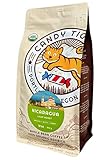
This is where the most significant difference lies. “Espresso beans” are almost always a medium-dark roast or dark roast. The question “are espresso beans roasted longer?” has a simple answer: yes. During this longer roasting process, the beans are heated past the “second crack,” a point where the bean’s structure begins to fracture. This heat caramelizes the sugars and forces the natural oils inside the bean to migrate to the surface, creating the signature oily surface you see on a classic espresso bean. This roast profile is intentionally crafted to reduce acidity and create a bold, rich flavor that stands up to the espresso brewing process.
What You Need
- A Bag of “Espresso Roast” Beans: Typically a dark roast or medium-dark roast.
- A Bag of “Filter” or “Drip” Beans: Typically a light or medium roast.
What To Do
- Visual Inspection: Pour a small amount of each side-by-side. Notice the deep brown color and oily surface sheen on the espresso beans. The filter roast beans will appear lighter and drier (matte).
- Smell Test: Inhale the aroma of both. The dark roast will have smoky, chocolatey, and roasty notes. The lighter roast will have more floral, fruity, or delicate scents.
Pro-Tip: The oily surface on a dark roast isn’t a sign of quality, it’s a sign of roast level. During the Maillard reaction and subsequent caramelization, the bean’s internal structure becomes brittle, allowing lipids (oils) to migrate to the surface. These oils can go rancid faster, so buy dark roasts in smaller quantities and check the roast date.

3. The Grind Size: Why Espresso Demands a Fine Powder

Pin this grind size chart to perfect your brew!
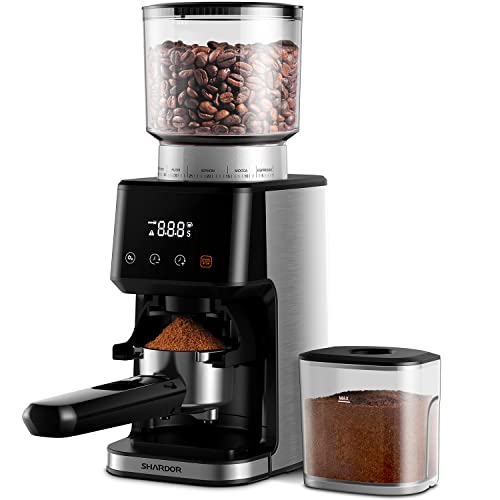
The grind size is non-negotiable and directly tied to the brewing method. Espresso requires a fine grind because the brewing process is so fast and intense. The fine, powder-like grounds create a tightly compacted puck of coffee that provides the necessary resistance for the espresso machine’s high-pressure water. Without this resistance, water would gush through, resulting in under-extraction. Conversely, a drip coffee maker requires a coarse grind to allow water to flow through via gravity over several minutes. Using a fine grind in a drip machine would clog the filter and lead to a bitter, over-extraction. A quality burr grinder is paramount for achieving the consistent particle size needed for either method.
What You Need
- A Burr Grinder: Essential for achieving a consistent fine grind for espresso. Blade grinders create inconsistent particle sizes, leading to channeling and poor shots.
- Whole Beans: Never use pre-ground coffee for espresso; it goes stale too quickly.
What To Do
- Set Your Grinder: For espresso, start with the finest setting on your burr grinder and work your way slightly coarser. This is called “dialing in.” The goal is a texture like fine sand or powdered sugar.
- Compare to Drip: If you also make drip coffee, feel the difference. A coarse grind for a French press will feel chunky, while a medium grind for drip feels like sand. The espresso grind is significantly finer.
- Adjust for Your Shot: If your espresso shot runs too fast (under 20 seconds), your grind is too coarse. If it chokes the machine or runs too slow (over 35 seconds), your grind is too fine.
Pro-Tip: The goal of a perfect espresso grind is to achieve a 1:2 ratio (e.g., 18g of coffee grounds to 36g of liquid espresso) in about 25-30 seconds. This is the sweet spot for balanced extraction yield. A quality burr grinder is the most important tool for achieving this consistency.
4. The Flavor Profile: Balancing Acidity and Bitterness

Pin this flavor guide to find your perfect coffee match!
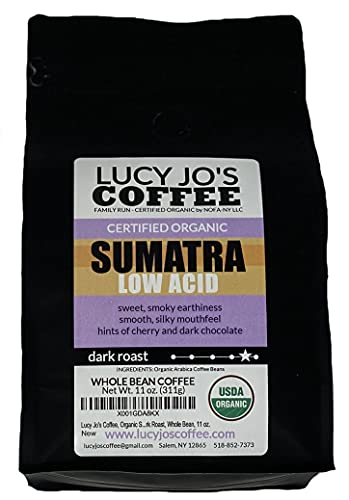
The roast level directly impacts the flavor. A darker roast decreases the perceived acidity by breaking down chlorogenic acids and increases the bitterness profile and body, resulting in the bold flavor characteristic of classic espresso. Light roasts preserve these acids, which present as bright, fruity, or floral flavor notes—highly desirable in a pour-over but often perceived as a sour extraction when brewed as espresso. Therefore, beans labeled for espresso are roasted to achieve a low acidity and a rich, deep flavor of chocolate, nuts, and caramel that is more palatable under high-pressure brewing.
What You Need
- Low-Acidity Coffee Beans: Typically a medium-dark or dark roast labeled as having notes of chocolate, nuts, or caramel.
What To Do
- Taste with Intent: Brew a shot of espresso or a strong cup from your dark roast. Look for the pleasant, deep bitterness profile, similar to dark chocolate or cacao. Note the heavy, full-bodied texture.
- Compare with a Light Roast: If possible, taste a light-roast pour-over coffee. Notice the bright, almost citrusy or berry-like “zing.” This is acidity. It’s a prized quality in filter coffee but can taste like a sour extraction in espresso if not handled by an expert barista.
- Choose Your Profile: Decide if you prefer the bold flavor and low acidity of a traditional espresso or the nuanced, bright flavors of a modern, light-roast espresso.
Pro-Tip: The term “acidity” in coffee is a positive attribute, referring to the bright, sparkling sensation, not stomach acid. However, the high-pressure, high-temperature extraction of espresso can over-emphasize this, which is why darker roasts with a balanced acidity are generally preferred for a classic espresso taste.
5. The Brewing Method: Pressure and Gravity’s Role

Pressure or Gravity? Pin the brewing method that’s right for you!
Ultimately, espresso is defined by its brewing method. An espresso is a 1-2 ounce coffee beverage created by forcing hot water through a finely-ground, compacted puck of coffee at high extraction pressure (the industry standard is 9 bars). This intense process extracts flavors and oils in about 25-30 seconds. In stark contrast, a drip coffee maker or pour-over relies on gravity to gently pull water through a much coarser bed of grounds over several minutes. This fundamental difference in physics is why the grind and roast are so critical. The bean and grind must be perfectly matched to the brewing method to achieve a balanced extraction.
What You Need
- An Espresso Machine: The tool that provides the necessary extraction pressure.
- A Drip Coffee Maker: A simple device that uses gravity.
What To Do
- Prepare for Espresso: Dose your finely ground coffee into the portafilter, distribute it evenly, and perform your puck preparation by tamping with firm, level pressure. Lock it into the espresso machine.
- Brew Under Pressure: Start the machine. Watch as it forces water through the puck, producing a rich, concentrated shot of espresso topped with crema in about 25-30 seconds.
- Prepare for Drip: Place a paper filter in your drip coffee maker, add your medium-ground coffee, and pour hot water over it (or let the machine do it). Watch as gravity slowly pulls the water through the grounds over several minutes.
Pro-Tip: The “4 Ms of Espresso” in Italian tradition are Miscela (the blend), Macinatura (the grind), Macchina (the machine), and Mano (the hand of the barista). This highlights that the bean is only one part of a system where the brewing method and operator skill are equally critical.

6. The Caffeine Content: Debunking the “Strength” Myth

Espresso shot vs. Coffee cup: Pin the real caffeine champion!
Many people ask, “do espresso beans have more caffeine?” The answer solves the great caffeine mystery. While an espresso shot has a higher caffeine concentration (more caffeine per ounce), a standard 8-ounce cup of drip coffee has a higher total amount of caffeine. A typical 1-ounce shot of espresso contains about 63mg of caffeine, whereas an 8-ounce cup of coffee contains about 95mg. The bold flavor of espresso makes it taste “stronger,” but in a typical serving, you’re actually consuming less caffeine than you would from a large mug of drip coffee.
What You Need
- A 1-ounce shot of espresso.
- An 8-ounce cup of drip coffee.
What To Do
- Analyze by Concentration: Ounce for ounce, espresso is more concentrated. This is why it has such a powerful, bold flavor. If you drank 8oz of espresso, you would consume a huge amount of caffeine.
- Analyze by Serving Size: In a typical serving, you consume far less liquid with espresso. An 8-ounce cup of coffee contains more total caffeine than a 1-ounce shot of espresso.
- Choose for Your Needs: If you want a quick, intense flavor experience, choose espresso. If you want a larger beverage to sip over time with a higher total caffeine hit, choose drip coffee.
Pro-Tip: Roasting actually burns off a tiny amount of caffeine, so technically, bean-for-bean, a lighter roast has slightly more caffeine than a dark roast. However, this difference is negligible and is completely overshadowed by the volume of water used in the final brewing method.

7. The Blend: Crafting Consistency for the Perfect Shot

Single Origin vs. Blend: Pin this to discover your flavor preference!
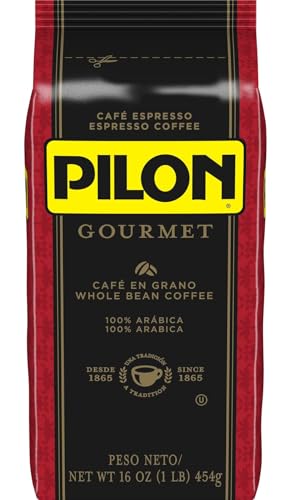
While filter coffee often celebrates the unique and sometimes wild flavor notes of a single origin coffee, traditional espresso often uses an espresso blend. This is not about cutting costs; it’s about the craft of creating flavor balance and consistency. The roaster’s expertise shines here, as they mix beans from different origins to create a signature flavor profile that is repeatable year-round, ensuring your espresso tastes the same in December as it did in June. Blends are also designed for performance, often incorporating beans that are excellent beans for crema production.
What You Need
- An Espresso Blend: Look for a bag from a reputable roaster that describes a balanced flavor profile (e.g., “chocolate, caramel, and cherry”).
- A Single Origin Coffee: A bag that lists one specific country or farm (e.g., “Kenya AA”).
What To Do
- Brew the Blend: Pull a shot of the espresso blend. Notice its balance. There are no sharp or overpowering notes. This consistency is what makes it a great daily driver for espresso.
- Brew the Single Origin: Pull a shot of the single origin coffee. It might be fantastic, or it might have a very dominant note (like high acidity) that is more challenging to balance in a high-pressure extraction.
- Find Your Fit: If you value consistency and a classic, balanced taste, stick with espresso blends. If you are an adventurous home barista who enjoys experimenting with bright and unique flavors, explore single origins.
Pro-Tip: Many third-wave coffee shops now offer exciting single origin coffee as their main espresso. This requires incredible skill from the barista approved to “dial in” the grinder and machine to properly extract these more delicate beans without creating a sour extraction. For home use, a well-crafted blend is often more forgiving and reliable.
Key Takeaways: Your Quick Guide to Espresso Beans vs Coffee Beans
- It’s the Same Plant, Not a Different Species: All coffee, whether labeled for “espresso” or “drip,” comes from the same plant. The term “espresso bean” is a marketing and processing label, not a botanical type.
-
Roast and Grind are the Key Differences: “Espresso beans” are typically a darker roast with an oily surface, and they must be ground to a fine grind to work with the high pressure of an espresso machine.
-
Flavor is a Result of the Roast: The roasting process mutes the balanced acidity found in light roasts and develops the bold flavor and pleasant bitterness profile characteristic of traditional espresso.
-
Espresso is a Method, Not Just a Bean: The defining factor of espresso is the brewing method itself: forcing hot water through a finely-ground, tamped puck of coffee at high extraction pressure.
-
A Cup of Coffee Has More Caffeine Than a Shot of Espresso: While espresso has a higher caffeine concentration per ounce, a standard 8-ounce cup of drip coffee contains more total caffeine than a 1-ounce shot simply due to volume.
-
Your Grinder is Your Most Important Tool: Achieving the correct, consistent fine grind is impossible without a quality burr grinder. It’s the key to avoiding sour extraction or bitter taste.
People Also Ask About Espresso vs Coffee Beans
Can I use regular coffee beans for espresso?
Yes, you can absolutely use regular coffee beans for espresso, but the result depends on the roast. If your “regular” beans are a medium-dark or dark roast, they will likely produce a good shot. If they are a very light roast, the shot may taste overly acidic or sour due to the intense extraction method highlighting the bean’s inherent acidity.
What happens if you use regular coffee in an espresso machine?
If you use a “regular” coarse or medium grind in an espresso machine, you will get a fast, watery, and under-extracted shot of espresso. The water will rush through the grounds too quickly without enough resistance to build pressure. This results in a weak, sour-tasting shot with no crema, often referred to as a “gusher.”
Are espresso beans stronger than coffee beans?
Espresso has a stronger, more concentrated flavor, but a regular cup of coffee typically has more total caffeine. The term “strong” can be confusing. Ounce-for-ounce, espresso has a higher caffeine concentration. However, because you drink a much larger volume of drip coffee (e.g., 8oz vs 1oz), the total caffeine intake is higher from the cup of coffee.
Why are espresso beans so oily?
Espresso beans are oily because they are typically roasted longer and at a higher temperature. This process, which goes past the “second crack,” causes the cell walls of the bean to fracture, releasing the natural oils (lipids) to the surface. Lighter roast beans do not reach this temperature, so their oils remain inside the bean.
Can you use espresso beans in a drip machine?
Yes, you can use beans labeled “espresso” in a drip coffee machine, but you must grind them to a medium coarseness. Do not use a fine, espresso-style grind, as this will clog the paper filter and cause the water to overflow, creating a bitter, over-extracted mess. When ground correctly, they will produce a bold, roasty cup of drip coffee.
Do I need a special grinder for espresso?
Yes, a high-quality burr grinder is considered essential for making good espresso. Espresso requires a very fine and consistent grind to provide proper resistance for pressure-building. Blade grinders create inconsistent particle sizes, which leads to a problem called “channeling” and results in a poor-tasting, unbalanced shot.
Does espresso roast matter?
Yes, the espresso roast style matters significantly because it is optimized for high-pressure extraction. A darker roast profile reduces the bean’s natural acidity, which can become overpowering and sour in an espresso shot. It also develops the deep, caramelized, and chocolatey flavors that are characteristic of a classic, balanced espresso.
How do I identify espresso beans without a label?
You can typically identify an espresso roast by its dark color and oily sheen. Look for beans that are a deep, rich brown to almost black color. If you see a noticeable layer of oil on the surface of the beans, it’s a strong indicator that they have undergone a dark roast suitable for espresso.
Are espresso beans and coffee beans two different things?
No, they are not two different things; they are the same thing prepared differently. Think of it like potatoes: a “baked potato” and a “french fry” both come from a potato, but they are cooked differently for different results. “Espresso beans” are just coffee beans that have been roasted and are intended to be ground for making espresso.
Can you use espresso beans for cold brew?
Yes, you can use espresso-roasted beans for cold brew, and they will produce a very rich, smooth, and chocolatey concentrate. Because cold brew is a low-and-slow, non-heat-based extraction, it minimizes the bitterness that can sometimes be associated with dark roasts, resulting in a very pleasant and bold flavor.
Final Thoughts on Your Perfect Brew
The distinction between espresso beans vs coffee beans isn’t found in the soil, but in the craft of roasting, grinding, and brewing. You now know that any bean can be used for any method, as long as you respect the principles of extraction. The “espresso” label is simply a helpful signpost pointing toward a bean roasted and blended for the intense, high-pressure world of the espresso machine. Armed with this knowledge, you are now the most important part of the coffee-making process: the hand of the barista. Which new approach will you try first for your morning brew?
Last update on 2026-06-20 / Affiliate links / Images from Amazon Product Advertising API
