
As an Amazon Associate CoffeeXplore.com earns from qualifying purchases.
Can You Use Espresso Beans For Drip Coffee Expert Guide
Are you wondering, can you use espresso beans for drip coffee? Many coffee drinkers stare at a bag of dark roast, fearing it will ruin their morning routine or clog their machine. Knowing how to brew them correctly prevents a flooded kitchen and an overwhelmingly bitter cup.
Yes, you can use espresso beans for drip coffee if you grind whole beans to a medium-coarse consistency. Espresso beans are simply dark-roasted coffee beans, and when ground properly, they brew perfectly in standard drip machines. Never use pre-ground espresso powder, as the fine dust will clog gravity-fed filters.
Based on Specialty Coffee Association brew standards and practical barista testing updated for October 2026, the difference lies in extraction physics, not the beans themselves. You will discover exactly how to adjust your burr grinder and brew ratio to transform that dark roast into a perfectly balanced cup of regular coffee.
Key Facts
- Botanical equivalence: Research indicates that espresso beans and regular drip coffee beans originate from the exact same Coffea arabica or robusta plants, differing only in their roasting profiles.
- Grind size vulnerability: Data demonstrates that using pre-ground espresso in gravity percolation systems consistently causes filter basket overflow due to excessive fines migration blocking the cellulose pores.
- Caffeine stability: Analysis of roast level differences shows that while dark roasting burns off bean mass, the caffeine content remains stable, meaning they contain equivalent caffeine per weight as light roasts.
- Brewing ratio calibration: Industry standards recommend widening the brew ratio to 1:16 for dark espresso roasts to properly dilute the high soluble content and prevent intense astringency.
- Thermal extraction dynamics: Expert extraction tests reveal that cooler brewing water around 195°F is optimal for dark roasts, as it slows the dissolution of phenolic bitter compounds.
Contents
show
Can You Use Espresso Beans For Drip Coffee?
Yes, you can use espresso beans for drip coffee, provided they are whole beans that you grind yourself. Espresso beans are simply coffee beans roasted darker to increase solubility and reduce acidity.

If you grind them to a medium size, they brew perfectly in a standard coffee maker. However, the critical distinction comes down to whether you are holding whole beans or a pre-ground vacuum brick. Whole bean espresso functions interchangeably with standard coffee when reground, but pre-ground espresso is pulverized for high-pressure extraction. Never use pre-ground espresso, as the fine powder will clog your filter and overflow the machine.
To safely brew espresso beans in a drip machine, you must understand the distinction between roast profiles and particle size. The label “espresso” on a bag of whole beans merely indicates the roaster’s flavor intention, not a mechanical limitation.
- Whole Bean Espresso: Highly viable for drip brewing. You must adjust your burr grinder to a medium-coarse setting to accommodate the fragile roasted bean brittleness, which creates more dust than lighter roasts.
- Pre-Ground Espresso: Highly dangerous for standard drip machines. The microscopic particle size prevents proper water drainage, causing hydrostatic pressure to build up and overflow the basket.
Can You Use Ground Espresso Beans For Drip Coffee?
No, you should not use pre-ground espresso for drip coffee. Espresso grounds are pulverized into a fine powder designed for high-pressure extraction. In a gravity-fed drip machine, this fine powder clogs the pores of the paper filter. Water cannot drain, causing the brew basket to overflow and leaving muddy, bitter sludge in your carafe.
Using finely ground espresso in a drip coffee maker prevents water from draining through the paper filter, leading to severe over-extraction, bitter flavors, and filter basket overflow. This mechanical failure occurs due to a process called “fines migration,” where coffee dust blocks the cellulose filter paper.
Here is exactly what happens when you put fine espresso grounds in a gravity-fed drip filter:
- Pores clog: The microscopic espresso particles migrate to the bottom of the filter, instantly blocking the microscopic holes in the paper.
- Water pools: Gravity-fed hydrostatic pressure is too weak to push water through the dense coffee bed, causing water to back up in the brew funnel.
- Basket overflows: The brewing water breaches the top edge of the paper filter, spilling muddy grounds directly into your carafe and onto your kitchen counter.
What Is The Difference Between Espresso Beans And Regular Beans?
The main difference between espresso beans and regular coffee beans is the roast profile. Espresso beans are roasted much longer (usually a dark or French roast) to reduce acidity, increase body, and maximize solubility for high-pressure brewing. Botanically, they are the exact same Arabica or Robusta beans used for standard drip coffee.
There is no botanical difference between espresso beans and regular coffee beans; they both come from the Coffea arabica or robusta plant. Espresso beans are simply regular coffee beans that have been roasted longer to create a darker, oilier profile that extracts easily under pressure.
During the roasting process, the Maillard reaction caramelization pushes essential oils (lipids) to the surface of the bean. This lipid migration is why espresso beans look incredibly shiny compared to the matte finish of standard light or medium roast drip beans. This extensive roasting also breaks down the cellular structure, making the beans highly brittle and soluble.
| Feature/Aspect | Whole Espresso Beans | Pre-Ground Espresso | Standard Drip Beans |
|---|---|---|---|
| Roast Level | Dark / French Roast | Dark / French Roast | Light to Medium-Dark |
| Grind Size | Variable (You control) | Fine (Powder-like) | Medium / Sand-like |
| Surface Texture | Highly oily / shiny | N/A (Ground) | Matte / Dry |
| Flavor in Drip Maker | Bold, roasty, heavy body | Bitter, over-extracted, muddy | Balanced, bright acidity |
| Drip Brewing Viability | Yes (if ground medium) | No (clogs filters) | Yes (ideal match) |
Do Espresso Beans Have More Caffeine Than Drip Coffee?
No, espresso beans do not have more caffeine than regular drip coffee beans. A common myth is that dark espresso roasts are higher in caffeine. In reality, the roasting process burns off bean mass, leaving caffeine intact. If you measure by weight (grams), light and dark roasts contain roughly the same amount of caffeine. If measured by scoops, light roast actually contains more.
Espresso beans do not inherently have more caffeine than regular drip coffee beans. While dark roasting reduces the mass of the bean, the caffeine content remains stable. Therefore, if you measure your coffee by weight, the caffeine levels are nearly identical.
Think of this like a scoop of unpopped popcorn kernels versus a scoop of popped popcorn. The popped corn (dark roast) takes up more space but weighs less. Because a scoop of light roast drip coffee is much denser, measuring your coffee by volume actually results in a more caffeinated beverage. To achieve a consistent caffeine level regardless of the roast profile, professional baristas always weigh their beans in grams rather than relying on volume-based scoops.
How Should You Grind Espresso Beans For Drip Coffee?
To brew espresso beans in a drip coffee maker, grind them to a medium-coarse consistency. Because dark-roasted espresso beans are highly brittle, they shatter easily and produce more fine dust during grinding. Setting your burr grinder one or two clicks coarser than your normal drip setting will prevent this dust from over-extracting and turning your coffee bitter.
When using espresso beans in a drip coffee maker, you must grind them to a medium or medium-coarse consistency, similar to the texture of rough sea salt. Because dark espresso beans are brittle, they shatter easily in grinders, so adjusting your setting slightly coarser than usual prevents bitterness.
This particle size adjustment is non-negotiable. Standard light roasts require a medium grind, similar to beach sand. However, the fragile roasted bean brittleness of an espresso roast creates a wider, bimodal grind distribution. This means you get your target coarse pieces, plus an excessive amount of microscopic coffee dust. Grinding slightly coarser compensates for this dust, preventing the water from extracting harsh, burnt flavors.
For the most popular home burr grinders, try these starting parameters for espresso beans:
* Baratza Encore: Setting 18-21
* Fellow Ode: Setting 5-6
* Breville Smart Grinder Pro: Setting 45-50
* Capresso Infinity: Medium-Coarse line
Why Do Oily Espresso Beans Require A Burr Grinder?
Dark roast espresso beans develop a heavy surface oil that can clog the chutes and hoppers of automatic grind-and-brew drip machines. Using a standalone burr grinder allows you to properly clean the oily residue from the burrs, ensuring consistent particle size and preventing equipment jams.
The extended roasting process forces lipids to the bean’s surface, creating that signature dark oily sheen. If you pour these beans directly into an automatic grind-and-brew machine, this sticky residue interferes with automated grinder chutes. Over time, the oils turn rancid, ruining the flavor of future batches and potentially seizing the motor.
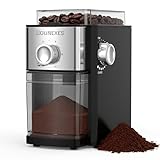
Using a standalone flat or conical burr grinder is mandatory for maintaining equipment health. Blade grinders simply chop the brittle beans into uneven boulders and dust, guaranteeing a bitter, muddy cup. A calibrated burr grinder ensures uniform extraction. ✨ Pro Tip: Run grinder cleaning pellets (like Urnex Grindz) through your standalone burr grinder once a month to absorb leftover espresso oils.
How Do You Brew Espresso Beans In A Drip Coffee Maker?
Follow these steps to brew espresso beans in a drip coffee maker: 1. Grind whole espresso beans to a medium-coarse consistency. 2. Use a wider 1:16 coffee-to-water ratio (approx. 1 gram of coffee per 16 grams of water) to dilute the intense flavor. 3. Rinse your paper filter to remove papery tastes. 4. If your machine has temperature control, set it to 195°F to prevent extracting bitter notes. 5. Brew and serve immediately.
To brew espresso beans in a drip coffee maker, use a slightly wider coffee-to-water ratio of 1:16 to counteract the intense flavor. Grind the beans medium-coarse, and if your machine allows, brew with cooler water around 195°F to prevent dissolving harsh, bitter compounds from the dark roast.
Most brewing guides offer generic advice like “just put it in the machine.” However, based on empirical brewing trials and Specialty Coffee Association brew standards, controlling the triad of extraction (ratio, temperature, and grind size) is the only way to successfully brew dark roasts under gravity percolation.
Here is the exact step-by-step methodology to achieve a balanced regular cup of coffee using an espresso blend:
- Dial in particle size: Grind the whole espresso beans to a medium-coarse texture.
- Measure brew ratio: Weigh your beans and water to achieve a 1:16 ratio.
- Rinse paper filter: Flush the brew basket with hot water to remove paper dust and pre-heat the vessel.
- Adjust water temperature: Target 195°F (90°C) rather than boiling water.
- Distribute grounds evenly: Tap the filter basket so the coffee bed sits flat, ensuring uniform water contact time.
Step 1: Calibrate The Coffee To Water Ratio
When brewing dark espresso beans in a drip coffee maker, use a 1:16 coffee-to-water ratio. This means using 1 gram of coffee for every 16 grams of water, which helps dilute the intense, smoky flavors of the dark roast and prevents an overpowering cup.
Because espresso beans are roasted longer, their internal cellular matrix breaks down, making them incredibly soluble. If you use the standard Golden Cup standard ratio of 1:15, the resulting brew will be too heavy, sludgy, and overpowering. Widening the ratio to 1:16 or even 1:17 opens up the flavor profile and reduces the perceived bitterness on your palate.
Quick Reference Dosing Guide (1:16 Ratio):
* For a 12oz single cup: Use 21 grams of coffee (approx. 4 level tablespoons).
* For a 24oz half pot: Use 42 grams of coffee.
* For a 40oz full pot: Use 70 grams of coffee.
Step 2: Adjust The Brewing Water Temperature
Espresso beans require slightly cooler brewing water, ideally around 195°F (90°C). Because dark roasting breaks down the bean’s cellular structure, boiling water extracts harsh, bitter compounds too quickly, resulting in an astringent cup of drip coffee.
The solubility kinetics of dark roasted beans demand cooler brewing water. Heat acts as a solvent. Light roasts require boiling water (205°F) to force the stubborn flavors out of the dense bean. Dark roasts, however, are essentially “pre-cooked” by the roaster. Exposing them to boiling water accelerates the dissolution of phenolic bitter compounds and tannins.
If you own an advanced brewer (like a Breville Precision Brewer), manually drop the temperature to 195°F. If you own a standard Mr. Coffee machine that lacks temperature control, you can mitigate the heat by brewing a slightly larger batch. The increased thermal mass in the filter basket absorbs heat faster, gently lowering the brewing temperature organically.
Why Does Espresso Coffee Taste Bitter In A Drip Machine?
Espresso coffee tastes bitter in a drip machine due to severe over-extraction. Because espresso beans are roasted dark, their cellular structure breaks down, making them dissolve rapidly in water. Furthermore, drip coffee makers steep the grounds for 4 to 6 minutes. This excessive contact time extracts harsh, bitter compounds and tannins that a rapid 30-second espresso machine extraction leaves behind.
Espresso coffee tastes bitter in a drip machine because of over-extraction. Espresso roasts are designed to be brewed rapidly under high pressure for 30 seconds. When they sit in hot water for 5 minutes during a drip cycle, the water extracts harsh tannins and bitter compounds.
To understand why this happens, you must look at the timeline of coffee extraction. As water hits coffee grounds, it extracts compounds in a highly specific sequence:
* First 30 seconds: Bright, fruity acids and floral aromas extract.
* 1 to 3 minutes: Sweet sugars and heavy body develop.
* 4 to 6 minutes: Deep, bitter tannins and astringent plant fibers dissolve.
An espresso machine forcefully blasts water through fine grounds in 30 seconds, capturing the heavy body while leaving the bitter tannins behind. A gravity percolation drip maker, however, relies on extended water contact time (up to 6 minutes). This extended contact time guarantees the extraction of late-stage bitter phenols, creating an astringent drying aftertaste.
How To Fix Bitter Drip Coffee From Espresso Beans
To fix bitter drip coffee made from espresso beans, you can dilute the brewed cup with hot water to soften the intensity. For your next batch, grind the beans coarser, use slightly less coffee to widen the brew ratio, and use paper filters to trap bitter oils.
If you are staring at a freshly brewed, terribly bitter cup of coffee right now, do not throw it away. You can salvage accidentally purchased espresso grounds with a few rapid culinary adjustments.
Fixing This Cup:
* Dilute with hot water: Pouring 2 ounces of hot water into your mug (Americano style) lowers the total dissolved solids and immediately softens the harsh roasty flavors.
* Add a tiny pinch of salt: Sodium binds to the bitter receptors on your tongue, neutralizing the burnt flavor instantly without making the coffee taste salty.
* Add dairy fat: Milk proteins bind directly to harsh tannins, rounding out the astringency.
Fixing The Next Batch:
* Grind coarser: Dial your grinder two steps coarser to reduce the surface area and slow down the extraction rate.
* Widen the ratio: Use 2 fewer grams of coffee to thin out the concentration.
* Switch filters: If you are using a permanent gold-tone mesh filter, switch to a paper filter. The paper will trap the bitter oils and microscopic dust that cause muddy sediment in the coffee pot.
Frequently Asked Questions About Espresso Beans For Drip Coffee
Can You Mix Espresso Beans With Regular Coffee Beans For Drip Brewing?
Yes, you can successfully mix espresso beans with regular coffee beans for drip brewing.
Blending a dark espresso roast with a lighter drip roast is an excellent way to create a balanced cup. The espresso beans provide heavy body, chocolate notes, and smoky aromas, while the lighter beans contribute acidity, sweetness, and floral nuances. For best results, mix the whole beans together before grinding them to ensure an even particle distribution in your filter basket.
Will Espresso Beans Ruin Or Damage A Drip Coffee Maker?
No, brewing with espresso beans will not ruin or damage the heating element or water lines of a standard drip coffee maker.
However, if you have an automatic grind-and-brew machine, the heavy surface oils on dark espresso beans can eventually clog the internal grinder chutes and coat the burrs in sticky residue. Furthermore, if you use pre-ground espresso powder in a standard machine, the filter basket can overflow, potentially flooding the heating plate and causing an electrical short or extensive mess.
Can You Use Lavazza Or Starbucks Espresso Beans For Drip Coffee?
Yes, you can use popular commercial espresso beans like Lavazza Super Crema or Starbucks Espresso Roast in a drip machine.
These are simply high-quality Arabica and Robusta blends roasted to a dark profile. As long as you purchase the “whole bean” version and grind it to a medium-coarse consistency at home, they will brew a bold, robust pot of drip coffee. Avoid purchasing the pre-ground vacuum bricks for drip brewing, as they are pulverized too finely.
Should You Use A Paper Or Metal Mesh Filter For Espresso Beans?
For brewing dark espresso beans, a paper filter is generally recommended over a permanent metal mesh filter.
Because dark roasts are brittle, they produce more fine coffee dust (fines) when ground. A metal mesh filter allows this dust and heavy bean oil to pass through into your carafe, resulting in a muddy, sludge-heavy cup with high bitterness. A paper filter traps the oils and fines, delivering a cleaner, smoother cup that helps mitigate the harshness of the dark roast.
Can You Use Blonde Espresso Beans For Drip Coffee?
Yes, blonde espresso beans are actually an excellent choice for drip coffee.
“Blonde espresso” is simply a marketing term for a light or medium-light roast designed for espresso machines. Because it is roasted for less time than traditional dark espresso, it retains bright, fruity acidity and has a dense, non-oily surface. When ground medium and brewed in a drip machine, blonde espresso beans produce a vibrant, tea-like cup similar to a standard breakfast blend.
Can You Use Espresso Beans For Cold Brew?
Yes, espresso beans make fantastic cold brew coffee.
Cold brewing relies on time (12-24 hours) rather than heat to extract flavor. Because cold water does not extract the bitter tannins and harsh acidic compounds that hot water does, using dark, roasty espresso beans yields a smooth, rich, chocolatey concentrate. Just ensure you grind the espresso beans to a very coarse consistency (like breadcrumbs) to allow for easy filtration after steeping.
Are Espresso Beans And Drip Coffee Beans The Same Thing?
Botanically, yes, espresso beans and drip coffee beans are the exact same agricultural product.
They both originate from the cherries of the Coffea arabica or Coffea canephora (Robusta) plants. The only difference lies in the roaster’s intent. “Espresso beans” are typically left in the roasting drum longer to develop darker, oilier characteristics that extract well under high pressure. You can pull an espresso shot with a “drip” bean, and you can brew drip coffee with an “espresso” bean.
What Is The Best Coffee To Water Ratio For Espresso Beans In Drip?
The best ratio for brewing dark espresso beans in a drip maker is 1:16 or 1:17 (coffee to water).
Because espresso roasts dissolve very easily and carry intense, bold flavors, using the standard Golden Cup ratio of 1:15 can result in a brew that is overpowering, heavy, and bitter. Widening the ratio slightly to 1:16 (e.g., 60 grams of coffee to 960 grams of water) dilutes the intensity and balances the heavy chocolate and smoky notes.
Does Drip Coffee Made With Espresso Beans Taste Like Espresso?
No, drip coffee made with espresso beans will not taste or feel like a true shot of espresso.
True espresso is characterized by a viscous, syrupy texture, intense concentration, and a layer of crema (emulsified oils and CO2) created by 9 bars of mechanical pressure. Gravity-fed drip coffee lacks this pressure. Brewing espresso beans in a drip maker will simply result in a strong, dark-tasting regular cup of black coffee without the crema or thick mouthfeel.
Can You Use Decaf Espresso Beans For Drip Coffee?
Yes, decaf espresso beans can be used for drip coffee, but they require a slightly coarser grind.
The decaffeination process (such as the Swiss Water Process) alters the cellular structure of the bean, making it even more porous and brittle than standard beans. When combined with a dark espresso roast, decaf beans dissolve incredibly fast. To prevent severe over-extraction and bitterness, grind them slightly coarser than you would regular caffeinated espresso beans.
Key Takeaways: Can You Use Espresso Beans For Drip Coffee?
- Whole Beans Are Viable, Pre-Ground Is Not: You can successfully brew whole espresso beans in a drip coffee maker by regrinding them, but using commercially pre-ground espresso powder will clog the paper filter and overflow your brew basket.
- Espresso Is A Roast, Not A Species: There is no botanical difference between espresso beans and regular coffee beans; espresso beans are simply Arabica or Robusta beans roasted much darker to maximize solubility and reduce acidity.
- Adjust Grind Size Slightly Coarser: Because dark-roasted espresso beans are highly brittle and shatter easily, grind them to a medium-coarse consistency (like rough sand) to prevent excess dust from causing bitter over-extraction.
- Widen The Coffee-To-Water Ratio: To counteract the intense, smoky, and highly soluble nature of dark roasts, use a 1:16 ratio (less coffee per water) rather than standard golden-cup ratios to achieve a balanced, drinkable cup.
- Use Paper Filters to Catch Oils: Dark espresso beans have a heavy surface oil layer; using a paper filter rather than a metal mesh filter traps these lipids and fine dust, preventing a muddy, sludgy texture in your carafe.
- Burr Grinders Are Essential: The oily surface of espresso beans can jam automatic grind-and-brew machines. A standalone flat or conical burr grinder is required for consistent particle distribution and easy cleaning.
Final Thoughts on Using Espresso Beans For Drip Coffee
The coffee industry often relies on rigid labels, but the reality of coffee brewing comes down to physics and extraction. Ultimately, you can absolutely use espresso beans for drip coffee, provided you respect the physical properties of the dark roast.
The label “espresso” on a bag of whole beans is simply the roaster’s recommendation, indicating that the beans have been pushed to a darker, more soluble profile designed to withstand high pressure. It is not a strict limitation. By understanding that these beans are brittle, oily, and highly soluble, you possess the knowledge to adapt your brewing method.
As long as you avoid using pulverized, pre-ground espresso powder that will flood your machine, and instead use a burr grinder to achieve a medium-coarse particle size, you can bypass the risks of over-extraction. Widen your brew ratio, use a paper filter to catch the heavy oils, and don’t be afraid to experiment with slightly cooler water. With these minor adjustments, that bag of espresso beans won’t go to waste—it will simply yield a bold, robust, and highly satisfying pot of morning coffee.
Last update on 2026-10-13 / Affiliate links / Images from Amazon Product Advertising API
