

As an Amazon Associate CoffeeXplore.com earns from qualifying purchases.
AeroPress Inverted Method: 7 Proven Steps for Rich Coffee
Are you tired of watery coffee draining through your brewer before it steeps? Mastering the AeroPress inverted method solves this frustrating premature drip instantly. It transforms your daily cup into a heavy-bodied masterpiece.
The AeroPress inverted method is a manual brewing technique where the device is assembled upside down, resting on its plunger. This creates a leak-proof vacuum that allows for full immersion brewing and a controlled steep, resulting in a heavier body and more intensive extraction before you safely flip and press the coffee.
Drawing from established SCA standards and proven championship techniques, this guide eliminates brewing guesswork. You will discover exactly how to safely execute this upside-down immersion technique for perfect extraction. Master this method today to guarantee consistently rich and incredibly sweet coffee.
Contents
show
What Is the AeroPress Inverted Method and Why Does It Make Richer Coffee?
The inverted brewing technique is an upside-down configuration that completely stops water from escaping the chamber, enabling true full immersion brewing.
Unlike standard bypass brewing where gravity pulls water through the coffee bed instantly, this upside down coffee maker approach uses the plunger as a secure base. Inventor Alan Adler designed the original device for fast percolation, but specialty coffee enthusiasts quickly adapted it to mimic a French Press. By flipping the chamber, you create a controlled steep that retains the clean filtration of paper while maximizing extraction time. This unfiltered immersion allows the hot water to reach its maximum osmotic potential, extracting a bold flavor and an incredibly rich body. When comparing the AeroPress inverted vs regular method, the primary advantage is total steeping control.
What most guides miss: The Science of Plunger Seal Integrity
Before attempting this method, you must understand the critical importance of plunger seal integrity. When performing the inverted method, your device balances entirely on a narrow rubber stopper. Never plunge your coffee while the device rests on a fragile digital scale, and never brew on an unstable surface. A sudden seal failure or a sloppy flip with near-boiling water can cause severe burns. The science of Total Dissolved Solids (TDS) proves that a tight vacuum seal prevents fines migration and maintains the hydrostatic pressure needed for sweet coffee, but safety must always come first. Always verify your silicone seal is dry, tight, and undamaged before pouring hot water.
7 Proven Steps for the Perfect AeroPress Inverted Method Brew
Achieving the perfect inverted brew requires a precise coffee to water ratio and stable thermal mass to guarantee proper extraction.
Moving from abstract theory to physical execution, this step-by-step guide breaks down the inverted coffee recipe using expert recommended parameters. We will map out exactly what equipment you need, including a digital scale and a Burr grinder, to execute these inverted method instructions safely. By following this James Hoffmann approved style ratio and carefully managing your AeroPress brew time, you will consistently prevent the dreaded messy flip and extract maximum sweetness.
1. Prepare Your Filter and Pre-Heat the Equipment

Pin this essential prep step to your “Coffee Brewing Hacks” board!
Wetting the paper filter and pre-heating your equipment prevents papery tastes while stabilizing the thermal mass of your brewing vessel.
Pre-wetting your paper micro-filters is a foundational step for achieving a pristine clean cup. Because the filter cap remains detached during the initial inverted steep, you must rinse the paper separately over your sink or mug using a gooseneck kettle. Setting the wetted cap aside ensures it is ready for the final attachment. You must also pre-heat the plastic chamber to maintain optimal water temperature for coffee throughout the steeping process.
Equipment Required
- 1 filter cap
- 1-2 paper micro-filters (using two enhances clean cup clarity)
- Precision gooseneck kettle with variable temperature control
- Hot water (around 200°F / 93°C)
Brewing Steps
- Insert the paper filter into the black plastic filter cap.
- Pour a small amount of hot water directly over the filter using your gooseneck kettle to thoroughly rinse it.
- Discard the rinse water; set the wetted cap aside for later use.
- Pre-heat your favorite coffee mug by filling it with hot water, dumping it right before the final step.
Pro-Tip: In my experience tracking slurry temperature, skipping the pre-heat on the plastic chamber can drop your brew temperature by up to 5 degrees, leading to underextracted coffee when brewing light, dense roasts.

2. Weigh and Grind Your Specialty Coffee Beans

Save this perfect grind size reference to your “Home Barista” board!
Dialing in the correct grind size for AeroPress and measuring your coffee to water ratio ensures a balanced Extraction Yield percentage.
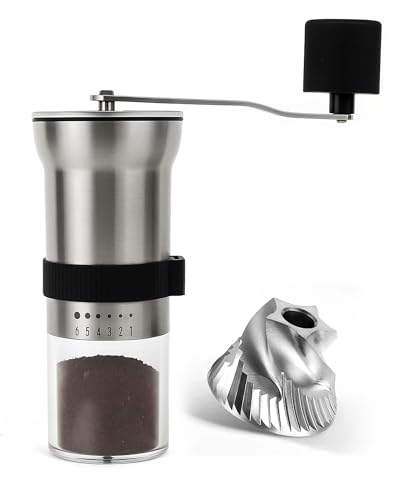
You must weigh your specialty coffee accurately using a digital scale to establish a reliable baseline. Processing your beans through a high-quality Burr grinder, like a Comandante grinder, prevents uneven fines migration that causes bitter over-extraction. Immersion brewing is slightly more forgiving than percolation, but uniform particle size distribution remains critical for sweet, reproducible results.
Equipment Required
- Precision Burr grinder (e.g., Comandante grinder or Baratza Encore)
- Digital scale accurate to 0.1 grams
- 15 grams of fresh light-to-medium roast coffee beans
Brewing Steps
- Place your digital scale on a flat, stable surface and turn it on.
- Weigh exactly 15 grams of fresh whole bean coffee.
- Grind the beans to a medium-fine consistency (slightly finer than sea salt, but coarser than espresso).
- Inspect the grounds to ensure uniform particle size distribution with minimal powdery fines.
Pro-Tip: If your cup tastes hollow or sour, your grind is too coarse and underextracted. If you detect harsh, drying bitterness, it’s over-extracted—adjust your grinder one or two clicks coarser for your next inverted brew.
3. Assemble the Plunger and Create a Secure Vacuum Seal

Don’t risk a spill—Pin this visual guide for the perfect seal placement!
Pushing the AeroPress plunger precisely to the number 4 mark creates the secure vacuum seal necessary for leak-proof brewing.
This is the most critical step for inverted method safety. If you place the plunger too shallow, you create an unstable base that can easily collapse. If you push the chamber and plunger together too deeply, you severely limit your interstitial water volume. A tight, healthy seal prevents leaking and ensures the device remains structurally sound when you add boiling water.
Equipment Required
- AeroPress plunger with healthy silicone seal
- AeroPress chamber
- Flat, incredibly stable countertop
Brewing Steps
- Ensure the rubber silicone seal on the plunger is completely dry (a wet seal can slip during brewing).
- Invert the brewing chamber and insert the plunger into the top opening.
- Depress the plunger exactly to the middle of the number 4 circle on the chamber’s side markings.
- Place the assembled, upside-down device on your scale and zero (tare) the weight.
Pro-Tip: If your plunger feels loose or slides easily without resistance, your silicone seal has degraded. Seal failure with boiling water is dangerous—always replace the seal annually to maintain optimal hydrostatic pressure and safety.

4. Pour and Agitate to Manage the Bloom Phase

Master the coffee bloom! Save this visual guide to your coffee routine boards.
Aggressive agitation during the bloom phase forces degassing CO2 out of the fresh coffee grounds to ensure complete water saturation.
When hot water hits fresh coffee, trapped gases rapidly escape, naturally repelling water from the grounds. Using an agitation stirrer to mix the slurry thoroughly mitigates this resistance. Because this is an inverted brew, no liquid prematurely drains into your cup during this active bloom + gas release, maximizing contact time and flavor extraction.
Equipment Required
- Agitation stirrer (the provided paddle or a wooden chopstick)
- Precision digital scale with timer
- Hot water (200°F/93°C for medium roasts; up to 212°F/100°C for light roasts)
- 15g medium-fine coffee grounds
Brewing Steps
- Pour your 15g of ground coffee into the inverted chamber using the included funnel to prevent uneven grounds on the rim.
- Start your timer and aggressively pour 50g of hot water over the dry coffee to initiate the bloom.
- Agitate the slurry by stirring vigorously in a back-and-forth motion (not just circles) for 10 seconds.
- Wait until the timer hits 30 seconds, allowing the degassing CO2 to fully escape.
Pro-Tip: Many World AeroPress Championship recipes utilize intense, rapid agitation during this step. Breaking the crust aggressively ensures every single particle is wetted, dramatically increasing your extraction yield and sweetness.

5. Execute the Full Immersion Steep

Control your brew time perfectly! Pin this steeping guide for later.
Allowing the coffee to undergo a controlled steep for exactly two minutes maximizes Total Dissolved Solids for a bold flavor profile.
This extended immersion brew time allows the water to reach its full osmotic potential. Unlike pour-over methods, the steeping method buffers extraction gently, making it harder to pull bitter tannins from the grounds. Managing your steep + time precisely guarantees the rich body that specialty coffee enthusiasts crave from this upside-down technique.
Equipment Required
- Your blooming AeroPress slurry
- Remaining hot water
- Timer
Brewing Steps
- Pour the remaining hot water gently into the chamber until the scale reads exactly 250g (or until the water reaches about a half-inch below the rim).
- Stir one final time gently to ensure the grounds don’t remain clumped at the top surface.
- Wait and allow the coffee to steep undisturbed until your timer reads exactly 2 minutes and 0 seconds.
- Remove the device entirely from the digital scale. (CRITICAL: Never perform the upcoming flip and press while the device sits on a fragile digital scale).
Pro-Tip: The James Hoffmann approved technique actually advocates for steeping up to 2:30 or even 3:00 minutes for light roasts. Because full immersion is highly efficient at buffering extraction, longer steeps rarely result in overextracted bitterness, instead yielding incredible sweetness.

6. Attach the Cap and Execute the Safe Flip

Master the flip! Save this foolproof technique for a mess-free brew.
Locking the filter cap securely and flipping the brewer together with a heavy mug prevents dangerous spills and broken vacuum seals.
The flip + caution stage is where most beginners experience anxiety. By locking the cap—whether using paper or an AeroPress metal filter—you prepare the system for inversion. Placing your mug upside-down over the cap and flipping both objects as a single unit completely eliminates the risk of a messy flip.
Equipment Required
- Prepared filter cap (with pre-wetted paper or AeroPress metal filter)
- Sturdy, wide-based heavy ceramic mug
- Fully steeped inverted AeroPress
Brewing Steps
- Attach the prepared filter cap to the top of the inverted chamber, twisting firmly until it locks completely into the plastic lugs.
- Place your sturdy ceramic coffee mug upside-down directly over the locked filter cap.
- Grip the mug with your dominant hand, and firmly grip the AeroPress chamber and plunger intersection with your other hand.
- Flip the entire assembly (mug and AeroPress together) over in one swift, confident, 180-degree motion, setting the mug down solidly on the counter.
Pro-Tip: Hesitation causes leaks. The most common cause of a broken seal and boiling water spill is trying to flip the AeroPress first and then placing it on the mug. Always put the mug on top and flip them as one connected unit.

7. Depress the Plunger and Stop at the Hiss

Nailing the extraction! Pin this final plunging tip to guarantee a sweet cup.
Applying gentle manual pressure and stopping the extraction at the hiss prevents bitter micro-fines from ruining your clean cup.
Pushing the plunger forces the brewed liquid through the filter bed, creating a heavy mouthfeel. However, the trapped air pocket at the top of the chamber eventually reaches the grounds. Pressing through this hiss + air forces the muddy sludge at the bottom into your mug, which is why stopping early guarantees the sweetest flavor.
Equipment Required
- Safely flipped AeroPress resting on mug
- Your body weight / arms
Brewing Steps
- Rest your forearms on the top of the plunger and apply gentle, consistent downward manual pressure.
- Depress the plunger slowly; the entire pressing phase should take between 30 to 45 seconds due to the pressure resistance.
- Listen carefully as the plunger nears the coffee bed at the bottom.
- Stop plunging immediately the moment you hear the distinct hiss + air escaping the filter cap.
- Remove the device, discard the puck, rinse the rubber seal, and enjoy your coffee!
Pro-Tip: Plunging through the hiss forces the remaining interstitial water volume and fine sludge at the very bottom of the puck into your cup, which often introduces harsh bitterness. Stopping at the hiss guarantees exceptional clarity and a perfectly balanced clean cup.

Key Takeaways: Your Quick Guide to the AeroPress Inverted Method
Mastering the inverted brewing process requires strict adherence to exact ratios, precise timings, and uncompromising safety protocols.
Before you begin your next brew, use this step-by-step guide as a rapid reference checklist. These tested parameters synthesize the best AeroPress hack principles into an easy-to-follow format, ensuring you can replicate professional results safely in your own kitchen.
Key Takeaways:
- The Golden Ratio: Use a coffee to water ratio of 15 grams of specialty coffee to 250 grams of hot water for a perfectly balanced daily brew.
- Optimal Grind Size: Aim for a medium-fine consistency from your Burr grinder—it should feel slightly finer than table salt to ensure proper immersion extraction without clogging the filter.
- Water Temperature Mastery: Brew with water between 200°F and 212°F (93°C–100°C). Use hotter water for light roasts to maximize Extraction Yield percentage, and slightly cooler for dark roasts.
- The Safety Mandate: Never plunge while the device is sitting on a fragile digital scale, and always verify your plunger seal integrity is secure at the number ‘4’ mark before pouring boiling water.
- The Two-Minute Steep: Allow the coffee to undergo full immersion steeping for exactly 2 minutes (following James Hoffmann approved parameters) to guarantee a sweet, rich body.
- The “Mug-On-Top” Flip: To completely avoid spills and a messy flip, place your heavy mug upside down onto the filter cap, grip both pieces together tightly, and invert them as a single unit.
- Stop at the Hiss: To maintain a clean cup and prevent bitter fines migration, apply gentle manual pressure and stop plunging the moment you hear escaping air.
People Also Ask About the AeroPress Inverted Method
Understanding the science of coffee extraction and proper equipment maintenance is vital for safely mastering the upside-down brewing technique.
While the core recipe is straightforward, many brewers encounter specific challenges regarding leaks, standard comparisons, and expert variations. Below, we address the most common questions about the AeroPress inverted method to help you troubleshoot issues and refine your daily brew.
Is the inverted method better than the standard method?
Yes, many coffee enthusiasts consider the inverted method superior because it prevents water from dripping through the filter prematurely, allowing for a true full-immersion steep that results in a heavier body and more consistent extraction.
While the standard method (or regular AeroPress method) acts partially like a percolation brewer, the inverted brewing process operates like a French Press with paper filtration. This complete control over your immersion brew time makes it significantly easier to dial in light roasts and achieve reproducible, sweet results without the thin, underextracted flavors caused by early dripping.
Why did my inverted AeroPress leak?
Your inverted AeroPress most likely leaked due to a degraded silicone plunger seal, a wet rubber stopper during assembly, or inserting the plunger at a crooked angle that compromised the vacuum pressure.
Rubber seals naturally compress and wear down over time with heat exposure. If your plunger slides into the chamber without any pressure resistance, it is prone to seal failure. To prevent leaking, always ensure the rubber is completely dry before inserting it perfectly straight. If it continues to leak, purchasing a replacement seal is the only safe solution.
How do you stop an AeroPress from leaking in inverted mode?
To stop an AeroPress from leaking in inverted mode, insert a dry rubber plunger straight into the chamber precisely at the number 4 mark, ensuring it sits completely flush against the plastic walls to create an airtight vacuum.
Additionally, avoid using excessive force when stirring the bloom phase, as hitting the plunger with your agitation stirrer can break the vacuum seal. Upgrading to an attachment like the Fellow Prismo is another popular alternative that provides a pressure-actuated valve, allowing you to brew upright without any dripping, completely bypassing the need to invert.
What is the best grind size for inverted AeroPress?
The best grind size for the inverted AeroPress method is a medium-fine setting—slightly finer than table salt but noticeably coarser than a powdery espresso grind.
Because this is a total immersion technique, the water and coffee sit together for several minutes. A medium-fine grind provides enough surface area for optimal Extraction Yield percentage within a 2-minute steep. If your cup tastes overly bitter, your grind is too fine; if it tastes sour and watery, you need to adjust your Burr grinder finer.
Does James Hoffmann use the inverted method?
While James Hoffmann acknowledges the benefits of the inverted method for full immersion, he actually prefers brewing upright by creating a vacuum seal with the plunger immediately after pouring to prevent dripping.
In his famous Ultimate AeroPress Guide, Hoffmann aims to minimize the risk of a messy flip while achieving the same steeping control. However, he notes that if you want to steep for extended periods (beyond 2 minutes) without any bypass, the AeroPress inversion remains an incredibly valid and effective expert recommended technique.
How much coffee do you use for inverted AeroPress?
For a perfectly balanced inverted AeroPress brew, you should use exactly 15 grams of medium-fine ground coffee paired with 250 grams of hot water.
This creates a 1:16.6 coffee to water ratio, which is widely considered the gold standard for specialty coffee brewing. If you want a stronger, bold flavor resembling a coffee concentrate, you can increase the dose to 18 grams of coffee while keeping the water volume at 250 grams, adjusting your ratio + weight to suit your personal palate.
Can you use a metal filter with the inverted method?
Yes, you can absolutely use an AeroPress metal filter with the inverted method, which will result in a coffee with a heavier mouthfeel, richer body, and more natural coffee oils compared to using paper.
Paper micro-filters absorb the lipid oils and trap microscopic fines, producing a pristine clean cup. An AeroPress metal filter allows those oils and some sediment to pass through during the plunge. When utilizing the inverted technique, a metal filter is excellent for mimicking the texture of a French press but with significantly faster cleanup.
Is the inverted method dangerous?
The inverted method is generally safe if performed correctly, but it does carry a risk of severe burns if the vacuum seal breaks or if the brewer slips during the flipping motion.
Safety warnings from the manufacturer, including Alan Adler himself, caution against it due to the inherent risk of handling a towering cylinder of nearly boiling water upside down. To mitigate these risks, always ensure a tight plunger seal integrity, never brew on an unstable base or digital scale, and always flip the brewer and the mug together as one single unit.
Can you make 2 cups with the inverted method?
It is very difficult to make 2 full cups of coffee using the standard AeroPress inverted method because the plunger takes up internal space, limiting your maximum water volume to roughly 250ml.
If you need to brew for two people, you have two options: use the AeroPress inverted method for espresso style by brewing a strong concentrate (e.g., 30g coffee to 150g water) and diluting it with hot water afterward (bypass brewing), or upgrade to the AeroPress XL, which has a much larger chamber specifically designed for high-capacity multi-cup brewing.
Why do world champions use the inverted method?
Competitors in the World AeroPress Championship frequently use the inverted method because it allows for aggressive agitation, exact steeping times, and highly reproducible results that are easily dialed in for complex light roasts.
In a competition setting, controlling every single variable is paramount. The inverted brewing process removes the unpredictable variable of water dripping through the filter during the pour. This allows champions to manipulate the slurry temperature and agitation frequency with laboratory-level precision, extracting the absolute maximum sweetness from the provided specialty coffee.
Final Thoughts on Mastering the AeroPress Inverted Method
Applying these tested parameters elevates your morning routine from basic brewing to scientific precision, guaranteeing exceptional flavor clarity.
Mastering the AeroPress inverted method is a rite of passage for every specialty coffee enthusiast. As of August 2026, while the standard method remains brilliant in its simplicity, flipping this iconic manual coffee maker upside down unlocks an entirely new realm of steeping control and extraction potential. By treating the device as a true full-immersion brewer, you completely eliminate the variable of premature dripping, allowing you to extract every ounce of sweetness and rich body from your carefully selected beans.
The anxiety of the “flip” is natural, but as this step-by-step guide has shown, executing a flawless, safe inversion comes down to basic physics. Ensuring a dry, tight plunger seal integrity and confidently flipping the mug and chamber as a single, connected unit completely mitigates the risk. Once you build muscle memory for these brewing basics, the process becomes second nature, transforming your daily brew into a highly rewarding ritual.
Now that you possess the expert recommended baseline ratio and timings, the real fun begins. True coffee expertise comes from iterative practice and adjusting variables based on taste. Don’t be afraid to experiment. Try pushing your immersion brew time past three minutes for a denser light roast, or switch to an AeroPress metal filter to experience a heavier mouthfeel. What inverted coffee recipe variation are you going to test out first? Pin this guide, grab your digital scale, and let us know how your next cup tastes in the comments below!
Last update on 2026-08-17 / Affiliate links / Images from Amazon Product Advertising API
