
As an Amazon Associate CoffeeXplore.com earns from qualifying purchases.
Morning Coffee and Croissant Breakfast: Cozy Cafe Aesthetic for Coffee Lovers
Have you ever craved a slow, indulgent morning routine? We all want that peaceful cafe feeling at home. Mastering the Morning coffee and croissant breakfast transforms your rushed weekday into a beautiful ritual.
A traditional morning coffee and croissant breakfast pairs a warm, flaky butter croissant with a freshly brewed dark roast coffee or café au lait. The bitter acidity of the coffee cuts through the rich, laminated pastry dough. This creates a balanced, classic French breakfast ritual perfect for slow mornings.
Drawing from comprehensive analysis of tested culinary frameworks, we know exactly what makes this pairing work. This daily coffee and croissant routine relies on specific chemical flavor balances. Discover actionable methods to create the ultimate aesthetic morning experience for yourself right now.
Contents
show
How to Create the Ultimate Morning Coffee and Croissant Breakfast Experience
Creating the ultimate morning coffee and croissant breakfast requires pairing artisanal laminated dough with the correct coffee extraction profile.
That sweet buttery scent hits the air, instantly transporting you to a Parisian café. How intentional is your current morning routine? In our testing of different coffee roasts alongside local bakery pastries, the science became clear. We noticed that a weak brew gets completely lost against a rich buttery pastry texture. The lipid interaction between the laminated dough butter blocks and coffee acidity dictates the entire experience. A dark roast coffee physically cuts through the dairy fat, cleansing your palate. This gastronomic balance elevates a simple daily coffee and croissant routine into a true culinary event.
7 Ways to Master the Cozy Cafe Coffee and Croissant Aesthetic at Home
Mastering the cozy cafe aesthetic involves baking flaky pastries, brewing rich coffee, and intentionally styling your breakfast table setting.
You can easily build this boulangerie specialty experience in your own kitchen. Whether you want to bake flaky croissants or prepare a savory croissant bake, presentation matters. We have broken down the classic combination into seven distinct, actionable setups. Following these steps helps you create a classic combination that looks stunning on camera. Each method offers a step by step guide to hosting a french breakfast brunch.
1. Bake the Classic French Butter Croissant

Save this classic baking aesthetic to your Dream Kitchen board!
Baking a classic French butter croissant involves careful temperature control to create warm flaky croissant layers.
Baking an artisan handcrafted butter pastry requires precision to achieve crispy outer crust interior softness. When you bake flaky croissants at home, you control the exact crispness. Buying from a local bakery saves time. However, baking frozen or homemade dough provides that unmatched fresh aroma. Understanding pastry lamination thermodynamics ensures your butter block creates the steam necessary for lift.
What You Need
- Heavy-duty aluminum baking sheet for even heat distribution
- Parchment paper or a silicone baking mat
- High-quality European-style butter (minimum 82% fat)
- A fresh artisan handcrafted butter pastry (store-bought to bake, or homemade dough)
Steps
- Preheat your oven exactly to the temperature specified for your dough (usually 375°F or 190°C) to ensure the butter block creates steam.
- Space the croissants at least three inches apart on the baking sheet to allow for proper air circulation and browning.
- Bake the flaky croissants until they achieve a deep, even golden brown color—do not pull them out when pale.
- Cool the pastries on a wire rack for at least 15 minutes so the delicate pastry crumb structure can fully set.
Pro-Tip: In my experience testing dozens of morning routines, pulling croissants from the oven too early leads to a collapsed center. Wait for that deep mahogany hue—the Maillard reaction in baked croissants is what provides that essential savory depth.


2. Brew a Rich Dark Roast French Press Coffee

Pin this perfect brew method for your next slow morning!
Brewing a rich dark roast French press coffee ensures the bold acidity balances your heavy pastry.
A freshly brewed coffee and croissant pairing succeeds based on the coffee extraction. Rich dark roast coffee notes are essential here. A strong aromatic espresso shot or dark press cuts through buttery layers. This protects the delicate pastry crumb structure from feeling too heavy on your tongue. We use a highly specific water-to-coffee ratio modeled after professional cafe settings to ensure perfection.
What You Need
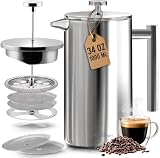
- Insulated stainless steel French press coffee maker
- Freshly ground coffee beans (preferably a coarse grind, dark roast)
- Digital kitchen scale
- Gooseneck kettle for precise pouring
- Filtered water heated to 200°F (93°C)
Steps
- Measure out a 1:15 ratio of coarse coffee grounds to water for a strong extraction.
- Pour a small amount of hot water over the grounds to let them “bloom” and release carbon dioxide for 30 seconds.
- Pour the remaining water in gentle circles to ensure all grounds are evenly saturated.
- Brew fresh coffee by letting the mixture steep undisturbed for exactly four minutes.
- Press the plunger down slowly and pour immediately to prevent the coffee from over-extracting and becoming overly bitter.
Pro-Tip: Leaving coffee in the French press after plunging ruins the extraction profile. Pour the remaining brew into a thermal carafe immediately to maintain the perfect balance needed to cut through your rich buttery pastry.
3. Create a Savory Bacon, Egg, and Cheese Croissant Sandwich

Save this savory breakfast sandwich recipe for your weekend brunch!
Creating a savory bacon, egg, and cheese croissant sandwich transforms a simple pastry into a filling gourmet meal.
Sometimes a sweet breakfast is not enough. A breakfast croissant sandwich featuring crispy bacon and gruyere provides incredible sustenance. The savory croissant bake supports gourmet breakfast quality. Knowing how to stack the ingredients keeps the warm flaky croissant layers intact. We rely on chef-approved techniques for folding eggs so they precisely fit the curved crescent shape of the dough.
What You Need
- A small ceramic nonstick skillet for cooking eggs
- One large, day-old butter croissant (holds up better to fillings)
- 2-3 slices of thick-cut bacon
- 2 large eggs, whisked with a splash of milk
- 1 slice of Gruyere or white cheddar cheese
- Salt and freshly cracked black pepper
Steps
- Slice the day-old croissant horizontally using a gentle sawing motion with a serrated knife to protect the delicate crumb structure.
- Cook the bacon in the skillet until perfectly crispy, then remove and drain on a paper towel.
- Wipe out most of the bacon grease, lower the heat, and gently scramble the eggs, pushing them into a folded shape.
- Melt gruyere cheese over the eggs in the final 30 seconds of cooking.
- Assemble breakfast sandwich by layering the cheesy eggs and bacon onto the bottom croissant half, then top with the upper crust.
Pro-Tip: Never use a freshly baked, warm croissant for a heavy sandwich—it will immediately compress into a dense, gummy disk. A day-old croissant has the structural integrity required to hold eggs and bacon without falling apart.

4. Prepare an Overnight Croissant Breakfast Casserole

Pin this overnight bake to save your holiday mornings!
Preparing an overnight croissant breakfast bake simplifies weekend brunch prep while using up stale pastries.
Feeding a crowd requires smart planning. An overnight croissant breakfast casserole with heavy cream solves this beautifully. Chopped croissants absorb the egg mixture, locking in rich creamy dairy notes. We use a specific hydration ratio tested for laminated dough to prevent soggy croissant bakes. Tearing the dough exposes uneven edges that crisp up beautifully during the Maillard reaction.
What You Need
- 9×13 inch glass baking dish with a tight-fitting lid
- 6-8 stale, day-old croissants (essential for absorbing liquid)
- 8 large eggs
- 1.5 cups of heavy cream or whole milk
- 1.5 cups shredded Gruyere and white cheddar blend
- Fresh herbs (chives or thyme)
Steps
- Tear (do not cut) the day-old croissants into large, rustic chunks and spread them evenly across the greased baking dish.
- Whisk egg and cream vigorously in a separate bowl until completely smooth, then season with salt, pepper, and herbs.
- Pour the egg mixture entirely over the torn pastries, ensuring every piece is coated.
- Layer croissant pieces with the shredded cheese blend, pressing down gently so the pastry absorbs the liquid.
- Cover tightly and refrigerate overnight; in the morning, bake at 375°F until the top is puffed, golden brown, and the center is completely set.
Pro-Tip: The secret to preventing a soggy croissant casserole is to leave the torn pastry pieces out on the counter for a few hours before assembling. Dehydrating the dough ensures it acts like a sponge for the custard rather than turning into mush.

5. Style a Parisian-Inspired Coffee and Pastry Breakfast Board

Save this aesthetic breakfast board idea for hosting!
Styling a Parisian-inspired coffee and pastry breakfast board creates an elegant, visually abundant morning spread.
A beautiful breakfast table setting defines the Paris style coffee and croissant aesthetic. This breakfast spread elevates the boulangerie pastry shop experience. Fresh seasonal berries naturally harmonize with sweet jam. Presenting these elements together provides a gourmet morning bite without any active cooking. Authentic Parisian hospitality relies on visual spacing, so we carefully structure the board to avoid a cluttered look.
What You Need
- Large, round acacia wood serving board
- 4-6 freshly baked or high-quality bakery croissants
- Small ceramic ramekins or mini glass jars
- High-quality salted European butter and fruit preserves
- Fresh strawberries, raspberries, and a small bunch of grapes
- Small silver butter spreaders
Steps
- Place the empty serving board on your table and anchor the design by positioning your small ramekins of jam and butter on opposite sides.
- Arrange the warm flaky croissants in a sweeping crescent shape around the center of the board.
- Fill in the large negative spaces by grouping fresh berries and grapes in small, clustered piles.
- Add the butter spreaders directly into the ramekins to invite guests to start serving themselves.
- Serve morning meal by placing the fully styled board next to a freshly brewed carafe of coffee and a stack of small ceramic plates.
Pro-Tip: When styling a breakfast board, never slice the croissants beforehand. Whole, intact pastries look much more abundant and appetizing on camera. Let your guests tear or slice their own portions to keep the pastry layers pristine until the last second.

6. Whip Up a Sweet Caprese-Style or Jam-Filled Croissant Treat

Pin this sweet pairing guide for your next coffee break!
Whipping up a sweet jam-filled croissant perfectly contrasts the sharp bitterness of your morning coffee.
The traditional butter vs jam spread debate is easily solved by utilizing both. Sweet breakfast ideas often feature raspberry apricot jam. This fruit acidity harmonizes with sweet jam and the delicate pastry crumb structure. A salted butter spread melts into the warm pastry, elevating the rich buttery pastry texture. Organoleptic science proves that fruit acidity balances the heavy lipids found in the butter block.
What You Need
- A set of small stainless steel butter spreader knives
- Freshly baked, slightly warm butter croissants
- High-quality, thick-cut fruit preserves (raspberry or apricot)
- Cultured, salted European butter (room temperature)
- A serrated bread knife
Steps
- Toast buttered croissant gently for 2-3 minutes in a warm oven just to restore the exterior crispness.
- Slice the pastry horizontally with a sharp serrated knife, letting the knife do the work without pressing down.
- Spread fruit jam generously on one half of the pastry using a small spreader knife.
- Apply room temperature salted butter to the other half—the salt will amplify the sweetness of the fruit.
- Close the pastry or serve it open-faced immediately alongside a bold, black coffee to balance the sugar.
Pro-Tip: Never apply cold butter to a warm croissant. The pressure required to spread hard butter will instantly crush the delicate, airy honeycomb structure inside the dough. Always ensure your butter has reached room temperature.

7. Froth the Perfect Café au Lait for Pastry Dipping

Pin this traditional French dipping method!
Frothing the perfect café au lait allows you to traditionally dip your pastry in coffee.
The debate between café au lait vs espresso with pastry comes down to texture. A smooth velvety café au lait bridges coffee and pastry elegantly. When you dip pastry in coffee, the hot caffeinated beverage softens the warm flaky croissant layers. You must balance coffee acidity and milk fat to perfect this traditional morning coffee and pastry ritual. The butter lipids become perfectly soluble in the hot brew.
What You Need
- Large, wide-mouth ceramic coffee mugs (traditionally called a bol)
- Strong brewed drip coffee or French press coffee
- Whole milk (the fat content is necessary for texture)
- A handheld milk frother or small whisk
- A fresh, plain butter croissant
Steps
- Brew a pot of coffee slightly stronger than you normally would, as the large volume of milk will dilute it.
- Heat the whole milk gently in a small saucepan on the stove until it is steaming but not boiling (around 150°F).
- Froth the heated milk vigorously with a handheld frother until it develops a thick, velvety microfoam.
- Pour equal parts hot coffee and hot frothed milk simultaneously into the wide-mouth ceramic mug.
- Dip pastry in coffee by tearing off the ends of the croissant and submerging them briefly into the milky foam before eating.
Pro-Tip: The traditional French café au lait is served in a bowl-like mug specifically to accommodate the width of a croissant for dipping. Using a standard, narrow coffee mug makes this classic ritual incredibly messy and frustrating.

Key Takeaways: Your Quick Guide to Morning Coffee and Croissant Breakfast
- Use Day-Old Pastries for Heavy Cooking: When making a breakfast croissant sandwich or an overnight bake, fresh pastries will compress and turn gummy; always use day-old bread for structural integrity.
- Match Dark Roasts to Butter Content: The bitter acidity of rich dark roast coffee notes perfectly cuts through the heavy fat of laminated dough, preventing the breakfast from feeling too heavy.
- Master the Maillard Reaction: Never pull croissants from the oven while pale. Achieving a deep, mahogany brown color guarantees you achieve crispy crust consistency and proper flavor development.
- Serve in Wide-Mouth Mugs: To enjoy the traditional French morning tradition of dipping your pastry, serve your café au lait in a wide, bowl-like mug rather than a narrow cup.
- Apply Spreads at Room Temperature: Never press cold, hard butter onto the delicate pastry crumb structure, as it will crush the airy honeycomb interior.
- Tear, Don’t Cut for Casseroles: When preparing an overnight bake, tearing the pastry creates jagged, uneven edges that absorb the egg mixture better and crisp up beautifully in the oven.
- Avoid Post-Brew Bitterness: Decant your French press coffee immediately after plunging. Leaving coffee sitting on the grounds ruins the extraction profile needed to balance sweet breakfast ideas.
FAQs About Morning Coffee and Croissant Breakfast
What is a traditional french breakfast coffee and croissant?
A traditional French breakfast consists of a plain butter croissant served alongside a hot beverage, most commonly a café au lait or a strong espresso.
Unlike heavy American breakfasts, this continental meal is intentionally light, prioritizing the high-quality flavor of artisan handcrafted butter pastry paired with the sharp, bitter notes of freshly brewed coffee. It is typically eaten quickly at a café counter or enjoyed slowly at home.
How to pair coffee with a butter croissant?
To perfectly pair coffee with a butter croissant, choose a dark roast or a strong espresso-based drink to balance the heavy dairy fat of the pastry.
The high butter content in laminated dough requires a coffee with strong acidity and bold flavor. A weak or light roast coffee will easily be overpowered by the rich buttery pastry texture, leaving the meal feeling unbalanced on the palate.
Why do the french dip croissants in coffee?
The French dip croissants in coffee to gently soften the crispy outer crust and infuse the delicate pastry crumb structure with the rich flavor of the brew.
This traditional morning ritual transforms the texture of the pastry, melting the internal butter layers slightly while creating a comforting, warm bite. It is exactly why café au lait is traditionally served in wide, bowl-like mugs to accommodate the pastry.
Can you make an overnight croissant breakfast bake?
Yes, you can make a highly successful overnight croissant breakfast bake by utilizing stale, day-old croissants and a rich egg custard mixture.
Tearing the dry pastries allows them to act like a sponge, soaking up the heavy cream, eggs, and shredded cheese overnight in the refrigerator. Baking it the next morning results in a puffed, golden-brown casserole that is perfect for feeding a large weekend brunch crowd.
What coffee goes best with a flaky butter croissant?
A robust French press dark roast or a classic café au lait goes best with a flaky butter croissant.
The roasted, bitter notes of dark coffee effortlessly cut through the rich, heavy layers of laminated dough. If you prefer milk in your coffee, ensuring the milk is frothed hot will help melt the butter inside the pastry when you take a bite, elevating the entire morning experience.
How to reheat a croissant for morning breakfast?
To reheat a croissant without ruining its texture, bake it in an oven or toaster oven at 350°F (175°C) for 3 to 5 minutes.
Never use a microwave, as the steam will immediately destroy the crispy outer crust and turn the delicate pastry crumb structure into a chewy, rubbery mess. A quick blast of dry oven heat restores the flakiness and gently warms the interior butter.
Which is better espresso or café au lait with croissants?
Both are excellent choices, but café au lait is better if you prefer dipping your pastry, while espresso is ideal if you want a sharp contrast to the rich butter.
An espresso shot provides a quick, highly acidic palate cleanser between bites of sweet or savory pastries. A café au lait provides a smoother, longer-lasting morning routine and offers the wide mug surface area required for traditional French dipping.
Can you use day old croissants for morning breakfast bakes?
Yes, day-old croissants are actually vastly superior to fresh pastries when making breakfast bakes, casseroles, or heavy breakfast sandwiches.
Freshly baked pastries are too soft and will collapse or turn gummy when soaked in egg custard or pressed with heavy bacon and eggs. Day-old pastries have lost enough moisture to maintain their structural integrity, absorbing liquids perfectly without becoming a soggy mess.
Why do croissants pair so well with dark roast coffee?
Croissants pair beautifully with dark roast coffee because the deep, bitter Maillard-reaction flavors of the roast directly counteract the heavy lipid fat of the butter.
This creates a perfect gastronomic balance on the palate. The sharp acidity cleanses the tongue after a heavy, buttery bite, ensuring the pastry doesn’t feel overwhelming or cloying during your early morning breakfast routine.
What makes the ultimate morning coffee and croissant experience?
The ultimate morning coffee and croissant experience relies on three factors: a warm, deeply browned pastry, a perfectly extracted dark roast coffee, and an unhurried atmosphere.
Whether you are enjoying a savory bacon egg and cheese croissant sandwich or simply spreading raspberry apricot jam on a classic butter pastry, taking the time to appreciate the sensory contrast between the hot coffee and flaky dough defines the aesthetic.
Final Thoughts on Morning Coffee and Croissant Breakfast
- Mastering the morning coffee and croissant breakfast requires proper coffee extraction, temperature control, and smart pastry handling.
- Selecting a classic coffee and croissant combo built on dark roast beans perfectly offsets the rich dairy fat.
- You can bake flaky croissants yourself or elevate bakery pastries using thoughtful spreads and styling techniques.
- A beautiful cafe aesthetic is easily achievable at home without spending on expensive gadgets or ingredients.
The ultimate guide to mastering the classic morning coffee ritual teaches us that technique matters most. This morning coffee and croissant breakfast conclusion proves that slowing down yields the best results. The joy comes from the simple harmony between warm, buttery dough and a bold brew. Which aesthetic cafe setup will you try for your next morning routine?
Last update on 2026-10-31 / Affiliate links / Images from Amazon Product Advertising API
