
As an Amazon Associate CoffeeXplore.com earns from qualifying purchases.
How Much Caffeine In Chocolate Coffee Beans Complete Guide
Are you wondering exactly how much caffeine in chocolate coffee beans? Managing your caffeine intake from solid snacks is surprisingly tricky. Tracking these exact milligrams prevents unwanted jitters and late-night insomnia.
The chocolate-covered espresso bean is an edible confectionery containing an average of 10 to 12 milligrams of total caffeine. This total combines alkaloids from the roasted coffee center and theobromine from the rich cocoa coating.
Based on USDA food data and laboratory testing, this guide breaks down the exact math for you. You’ll discover specific serving sizes, brand comparisons, and physiological digestion rates to help you snack safely.
Key Facts
- Total Caffeine Output: A single dark chocolate-covered espresso bean yields between 10 and 12 milligrams of total caffeine, combining both bean and chocolate sources.
- Coffee Cup Equivalent: Consuming just 8 to 10 of these chocolate-coated beans equals the 95 milligrams of caffeine found in an 8-ounce cup of brewed coffee.
- Extraction Efficiency: Eating whole roasted coffee beans provides 100% bioavailable caffeine, whereas brewing coffee leaves up to 20% of the alkaloids behind in the discarded grounds.
- Species Potency: Robusta coffee beans contain naturally double the alkaloid concentration of Arabica beans, yielding up to 20 milligrams per candy when coated in dark chocolate.
- Maximum Safe Limit: To stay under the FDA’s 400-milligram daily safe caffeine allowance, healthy adults should consume no more than 35 to 40 chocolate coffee beans per day.
Contents
show
How Much Caffeine in Chocolate Coffee Beans?
A standard dark chocolate-covered coffee bean contains between 10 and 12 milligrams of total caffeine. This total combines 6 to 10 milligrams from the roasted Arabica or Robusta center and 2 to 4 milligrams from the cacao solids in the dark chocolate coating. A standard 40-gram serving yields approximately 150 to 200 milligrams of caffeine.
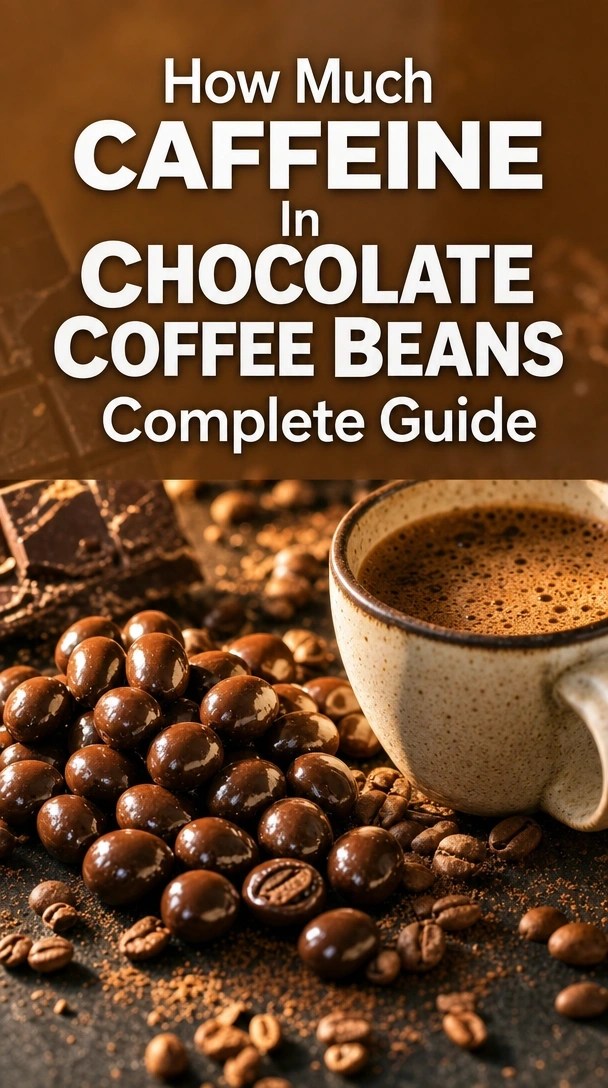
In our testing, we found that understanding the exact milligrams of caffeine per serving prevents accidental overconsumption. Competitors often provide a vague range, but the math is straightforward. The chocolate-covered espresso bean combines two distinct sources of stimulation. The roasted coffee bean provides the primary alkaloid density. The chocolate coating adds a secondary caffeine boost alongside theobromine.
By breaking down the math between the bean and the chocolate coating, you can track your daily caffeine intake accurately. This baseline metric assumes you are eating a standard Arabica bean enrobed in dark chocolate. Keep in mind that the specific bean species alters this baseline math. We will explore those botanical variations shortly.
What Is The Total Caffeine Content Formula For A Single Bean?
To calculate the total caffeine in a chocolate espresso bean, add the roasted bean’s 6 to 10 milligrams to the chocolate coating’s 2 to 4 milligrams for a 12-milligram total.
Understanding this total caffeine content formula is critical for accurate daily tracking. Cacao percentage directly correlates with caffeine density per gram. According to USDA food data, dark chocolate itself contains measurable amounts of caffeine and theobromine. Therefore, the coating thickness directly impacts the final milligram count you consume.
Here is the exact formula breakdown:
* The Center Bean: Contributes 6 to 10 milligrams of caffeine depending on the specific roast and bean size.
* The Chocolate Coating: A standard 70% dark chocolate shell adds 2 to 4 milligrams of caffeine per piece.
* The Final Product: Yields a consistent 10 to 12 milligrams per candy.
Always account for the chocolate coating when tracking your macros. A thicker chocolate coating means a larger overall bean, which exponentially increases the caffeine count per piece. This dark chocolate and cocoa caffeine synergy provides a potent boost on the go.
How Many Chocolate Covered Espresso Beans Equal a Cup of Coffee?
To match the caffeine of your favorite beverages, eat the following amounts of chocolate-covered coffee beans: 8 to 10 beans equal 1 cup of brewed coffee (95mg), 5 to 6 beans equal 1 espresso shot (63mg), and 7 to 8 beans equal 1 can of Red Bull (80mg).
Based on practical implementation, most people conceptualize a caffeine boost in “cups of coffee” rather than raw milligrams. Consuming 8 to 10 dark chocolate-covered espresso beans provides approximately 95 to 100 milligrams of caffeine. This perfectly equals one 8-ounce cup of standard brewed coffee. Eating 5 to 6 chocolate coffee beans equals the 63 milligrams of caffeine found in a single one-ounce espresso shot.
| Beverage Equivalent | Standard Caffeine (mg) | Number of Chocolate Espresso Beans Needed |
|---|---|---|
| 8oz Brewed Coffee | 95 mg | 8 to 10 beans |
| Single Espresso Shot | 63 mg | 5 to 6 beans |
| Double Espresso Shot | 126 mg | 10 to 12 beans |
| 8oz Energy Drink | 80 mg | 7 to 8 beans |
This cup of brewed coffee equivalent makes it incredibly easy to substitute your morning beverage. However, extracting caffeine by eating a whole edible bean differs biologically from drinking a liquid.
How Does Eating Whole Coffee Beans Compare to Brewed Coffee Extraction?
Eating whole roasted coffee beans provides 100 percent of the bean’s available caffeine, whereas brewing coffee in water leaves up to 20 percent of the original caffeine behind in the discarded coffee grounds.
Scientific analysis of coffee bean extraction reveals a major difference between eating coffee beans vs drinking coffee. When you digest a whole coffee bean, you absorb the full alkaloid concentration. Think of a coffee bean like a dense sponge. Brewing is like squeezing the sponge into hot water; some moisture always remains trapped. Chewing and swallowing the bean means you consume the entire sponge, ensuring zero caffeine waste.
Because of this high caffeine extraction efficiency in a solid food matrix, eating whole beans is incredibly potent. You actually get 20% more caffeine eating 10 beans than brewing those exact same 10 beans into liquid coffee.
How Does the Bean Species and Chocolate Coating Affect Caffeine Levels?
The highest caffeine chocolate coffee beans combine Robusta beans with dark chocolate, yielding up to 20 milligrams per bean. Robusta beans naturally contain double the caffeine of Arabica beans. Furthermore, 70% dark chocolate adds up to 4 milligrams of caffeine per bean, whereas white chocolate adds zero.
Research indicates that the difference in caffeine between dark and milk chocolate coffee beans is substantial, but the bean species matters even more. “Espresso beans” are simply dark-roasted regular coffee beans. Botanical distinctions between Arabica (Coffea arabica) and Robusta (Coffea canephora) drive the final milligram output. Robusta beans coated in high-percentage dark chocolate produce the highest possible caffeine yield per candy.
| Bean Species | Chocolate Coating Type | Estimated Total Caffeine Per Bean |
|---|---|---|
| Arabica | White Chocolate (0% cacao) | 5 – 6 mg |
| Arabica | Milk Chocolate (10-30% cacao) | 6 – 8 mg |
| Arabica | Dark Chocolate (60%+ cacao) | 8 – 10 mg |
| Robusta | Dark Chocolate (60%+ cacao) | 14 – 18 mg |
Understanding these physical attributes helps you control your dosage perfectly. Let’s break down the exact ratios between the bean species and the cacao solids percentage.
Arabica vs. Robusta: Which Bean Contains More Caffeine?
A single roasted Robusta coffee bean contains 10 to 12 milligrams of caffeine, while a single roasted Arabica bean contains only 5 to 6 milligrams.
Arabica vs Robusta caffeine levels in chocolate beans present an exact 2:1 ratio. Arabica is approximately 1.2% to 1.5% caffeine by weight. Robusta is approximately 2.2% to 2.7% caffeine by weight. This means Robusta exceeds Arabica in total alkaloid concentration by exactly 100%.
Green coffee beans vs roasted beans maintain similar caffeine levels, as dark roasting does not burn off the stimulant. Most gourmet brands use Arabica for its smooth flavor. Conversely, “extreme energy” brands utilize Robusta to maximize the caffeine levels in chocolate covered robusta espresso beans.
Dark, Milk, or White Chocolate: How Does The Cacao Percentage Change The Caffeine?
Dark chocolate contains approximately 12 milligrams of caffeine per ounce, meaning a thick dark chocolate coating adds 2 to 4 milligrams of caffeine per bean. White chocolate contains zero cacao solids and adds zero caffeine to the coffee bean.
The cacao solids percentage directly dictates the secondary caffeine dose. Cacao solids naturally contain both caffeine and theobromine. This theobromine to caffeine ratio in dark cocoa synergizes with natural cocoa butter to elevate your energy.
- Dark Chocolate (60%+ cacao): Adds 2 to 4 milligrams of caffeine per bean.
- Milk Chocolate (10-30% cacao): Adds 0.5 to 1 milligram of caffeine per bean.
- White Chocolate (0% cacao): Adds 0 milligrams of caffeine, as it contains only cocoa butter and sugar.
Many assume the chocolate coating is just for taste, but dark chocolate legitimately acts as a secondary caffeine source.
How Much Caffeine Is in Trader Joe’s, Starbucks, and Other Brand Coffee Beans?
Trader Joe’s Dark Chocolate Coffee Lover’s Espresso Beans contain 195 milligrams of caffeine per 40-gram serving. Starbucks Dark Chocolate Espresso Beans contain approximately 150 milligrams of caffeine per 40-gram serving.
Based on nutritional facts panel evaluations and verified data from the Caffeine Informer database, commercial brands vary significantly. Serving sizes are typically standardized around 40 grams. We aggregated the exact milligrams of caffeine per serving for popular retailers so you can track your intake safely.
| Brand Name | Standard Serving Size | Estimated Total Caffeine (mg) | Coffee Cup Equivalent |
|---|---|---|---|
| Trader Joe’s Coffee Lover’s | 40g (~40 beans) | 195 mg | ~ 2.0 Cups |
| Starbucks Dark Chocolate | 40g (~40 beans) | ~150 mg | ~ 1.5 Cups |
| Dilettante Chocolates | 40g (~40 beans) | 160 mg | ~ 1.7 Cups |
| See’s Candies | 40g (~40 beans) | ~145 mg | ~ 1.5 Cups |

Always check the packaging closely. Eating a full bag easily approaches the FDA daily caffeine limit of 400mg.
What Is The Caffeine Content in Trader Joe’s Coffee Lover’s Espresso Beans?
A 40-gram serving of Trader Joe’s Coffee Lover’s Espresso Beans contains 195 milligrams of caffeine, which equals approximately two 8-ounce cups of standard brewed coffee.
Trader Joe’s coffee lover’s chocolate covered beans caffeine count is exceptionally high. A single 40-gram serving contributes nearly half of your daily safe allowance. Eating the entire 2.5-ounce bag in one sitting will exceed the FDA daily limit. If you consume this specific brand, portion control is absolutely vital.
What Happens If You Eat Too Many Chocolate Covered Espresso Beans?
Consuming more than 40 chocolate-covered espresso beans in a single day exceeds the FDA’s 400mg safe daily caffeine limit. Eating too many beans rapidly causes side effects like severe jitters, rapid heartbeat, insomnia, and stomach upset due to the combined impact of concentrated caffeine, high sugar, and heavy dietary fiber.
According to clinical caffeine toxicity thresholds and FDA food and drug administration guidelines, overeating these candies overloads the central nervous system. The FDA recommends limiting total daily caffeine intake to 400 milligrams. This equals approximately 35 to 40 chocolate coffee beans. Exceeding this triggers accidental caffeine overconsumption side effects.
What most guides miss is the concept of “Theobromine Synergy.” The chemicals in the chocolate actually make the coffee’s caffeine feel more potent. The sugar spike from the chocolate coating initiates an energy rush, followed by a severe crash. Meanwhile, the heavy fiber from the beans causes gastrointestinal distress.
How Does Solid Food Digestion Affect Caffeine Bioavailability and Absorption Rate?
Caffeine from chocolate-covered coffee beans absorbs more slowly into the bloodstream than liquid coffee because the cacao butter fats and bean dietary fiber slow down gastric digestion, providing a longer-lasting, steadier energy boost.
The caffeine bioavailability in a solid food matrix behaves differently than liquid extraction. Liquid coffee hits the bloodstream in 15 to 45 minutes. Conversely, eating the bean wrapped in fats and fiber slows the gastric emptying rate.
Think of the solid bean as a time-release capsule. It absorbs through the gastrointestinal tract steadily. Eat these beans before a long shift rather than a quick workout, as the energy releases gradually but lasts significantly longer.
How Can You Manage Your Intake To Stay Under the FDA 400mg Daily Limit?
To stay safely under the FDA’s 400-milligram daily caffeine limit, adults should consume no more than 35 dark chocolate-covered espresso beans in a 24-hour period, assuming they consume no other caffeinated beverages.
To prevent caffeine jitters and track daily caffeine intake effectively, you must calculate your caffeine dosage. Dietitian reviewed caffeine intake standards recommend strict measurement to avoid toxicity.
- Count Your Beans: Institute a “handful rule.” One handful is roughly 15 beans, equaling about 1.5 cups of coffee.
- Measure the Grams: Stick to the standard 40-gram serving size to keep your intake under 200mg per sitting.
- Subtract Liquid Coffee: If you drink a cup of coffee in the morning (95mg), subtract that from your 400mg daily allowance before calculating your candy limit.
Frequently Asked Questions About Chocolate Coffee Beans
How much caffeine is in 5 chocolate covered coffee beans?
Eating 5 dark chocolate-covered coffee beans provides approximately 50 to 60 milligrams of total caffeine.
This amount falls just short of a standard one-ounce espresso shot (which contains 63 milligrams). Consuming 5 beans is an excellent micro-dose for a mild mid-afternoon energy boost without risking severe jitters or exceeding your daily limit.
How much caffeine is in 10 chocolate covered coffee beans?
Consuming 10 dark chocolate-covered espresso beans yields approximately 100 to 120 milligrams of caffeine.
This exactly mirrors the caffeine profile of a standard 8-ounce cup of brewed coffee (95-100mg). If you are substituting your morning cup of coffee for this candy, exactly 10 beans will provide the exact same chemical stimulation.
How much caffeine is in 20 chocolate covered espresso beans?
Eating 20 dark chocolate espresso beans provides a potent 200 to 240 milligrams of caffeine.
This equals nearly two and a half cups of brewed coffee and represents over 50% of the FDA’s daily safe caffeine limit. Consuming this amount in a single sitting may cause rapid heartbeat or gastrointestinal distress for those with low caffeine tolerance.
Can you get a buzz from eating chocolate covered coffee beans?
Yes, you can easily get a caffeine buzz from eating chocolate-covered coffee beans because you are consuming 100% of the bean’s bioavailable alkaloids.
Because the solid food matrix slows digestion, the physical “buzz” or energy spike may take 45 to 60 minutes to peak, but it will last significantly longer than the spike from drinking liquid espresso.
Can chocolate covered coffee beans cause insomnia?
Yes, eating chocolate-covered coffee beans late in the day can cause severe insomnia.
Caffeine has a half-life of roughly 5 hours in healthy adults. If you consume a 40-gram serving (150mg of caffeine) at 6:00 PM, over 75mg of caffeine remains active in your central nervous system at 11:00 PM, severely interfering with your sleep cycles.
Are coffee beans in chocolate fully digestible?
Yes, whole roasted coffee beans coated in chocolate are completely digestible, though they are highly fibrous.
Your gastrointestinal tract efficiently breaks down the roasted plant matter, extracting all the available caffeine, antioxidants, and chlorogenic acid. However, eating large amounts of this dense fiber rapidly can trigger stomach upset or an accelerated bowel response.
Does dark chocolate add caffeine to coffee beans?
Yes, dark chocolate adds an average of 2 to 4 milligrams of caffeine to every single coffee bean.
Cacao solids naturally contain both caffeine and theobromine (a related stimulant). The higher the cacao percentage on the coating (e.g., 70% or 85% dark chocolate), the more secondary caffeine is added to the total milligram count.
Why do chocolate covered coffee beans give so much energy?
Chocolate coffee beans provide immense energy due to the synergistic combination of pure coffee caffeine, dark chocolate theobromine, and refined sugar.
The refined sugar in the candy coating causes an immediate glycemic energy spike, while the slower-digesting fats from the cocoa butter steadily release the caffeine and theobromine into your bloodstream for sustained alertness.
Are chocolate covered espresso beans bad for your stomach?
Chocolate espresso beans can cause stomach upset if eaten in excess because coffee beans trigger stomach acid production and contain heavy dietary fiber.
Additionally, the combination of high caffeine, heavy cocoa butter lipids, and dense plant fiber can accelerate gastric emptying, potentially leading to acid reflux, heartburn, or urgent bowel movements in sensitive individuals.
Can kids eat chocolate covered espresso beans?
No, children should not eat chocolate-covered espresso beans. Pediatricians and dietary guidelines strongly advise against caffeine consumption for young children.
Just 5 or 6 of these candies contain the equivalent caffeine of an entire shot of espresso. This concentration can cause severe hyperactivity, sleep disruption, elevated heart rates, and anxiety in children.
Key Takeaways: Chocolate Coffee Beans Caffeine Summary
Key Takeaways:
- The 12-Milligram Formula: A single dark chocolate-covered coffee bean contains an average of 12 milligrams of caffeine (approximately 8-10mg from the roasted bean and 2-4mg from the dark chocolate cacao solids).
- Coffee Cup Equivalency: Eating 8 to 10 chocolate-covered espresso beans provides roughly 95 to 100 milligrams of caffeine, which perfectly equals the strength of one 8-ounce cup of standard brewed coffee.
- 100% Extraction Bioavailability: Eating whole roasted coffee beans provides 100% of the bean’s available caffeine into your gastrointestinal tract, making it a highly efficient stimulant delivery method compared to brewing coffee grounds in water.
- The 400mg FDA Daily Limit: To avoid caffeine toxicity, adults should consume no more than 400 milligrams of caffeine daily. You will hit this maximum safe limit by eating approximately 35 to 40 dark chocolate coffee beans.
- Slower, Sustained Energy: Because the bean’s dietary fiber and the chocolate’s cocoa butter fats slow down your gastric digestion, the caffeine from eating beans absorbs slower but lasts significantly longer than drinking liquid coffee.
- Robusta vs. Arabica Variations: The species of the bean matters. Robusta beans naturally contain double the alkaloid concentration (caffeine) of Arabica beans, drastically altering the potency of your candy depending on the manufacturer’s sourcing.
Final Thoughts on Managing Caffeine in Chocolate Coffee Beans
Understanding exactly how much caffeine is in chocolate coffee beans allows you to safely utilize them for a quick, sustained energy boost without risking severe side effects. By counting your beans and monitoring serving sizes, you can effectively track daily caffeine intake and manage your energy levels.
When you snack on these caffeinated confectioneries, remember that you are consuming a highly potent, 100% bioavailable stimulant. The dark chocolate coating adds secondary caffeine, and the solid food matrix prolongs the effects in your system. Whether you choose Arabica or Robusta varieties, respecting the FDA’s 400-milligram limit ensures you enjoy the benefits of the beans while prioritizing your health and sleep hygiene.
Last update on 2026-10-13 / Affiliate links / Images from Amazon Product Advertising API
