
As an Amazon Associate CoffeeXplore.com earns from qualifying purchases.
Industrial Coffee Station: 11 Genius DIY & Design Ideas
Struggling to fit a stylish morning prep zone into a cramped kitchen layout? Managing bulky appliances and hiding messy cords makes daily routines chaotic. Implementing brilliant industrial coffee station ideas transforms tight spaces into beautiful, highly functional sanctuaries.
To build an industrial coffee station, combine raw textures like distressed wood and exposed metal piping with modern functionality. Start with a sturdy base like a modified cabinet or metal console, install floating wood shelves for vertical storage, and incorporate hidden cable management to keep your espresso machine and barista tools organized. This foundation seamlessly blends heavy-duty utilitarian design with essential daily practicality.
Drawing from comprehensive space planning analysis and verified DIY building methodologies, this guide reveals exact spatial solutions. You will discover actionable step-by-step blueprints for building a chic industrial coffee setup tailored to your specific room constraints. Master these structural interior design techniques to safely support commercial-grade equipment and elevate your daily brewing workflow today.
Building a modern industrial coffee nook requires balancing heavy utilitarian aesthetics with smart spatial organization. When integrating espresso machines and large grinders into your home, standard kitchen counters quickly become overwhelmed by equipment and tangled cords. The industrial chic aesthetic offers the perfect solution by combining raw, durable materials like exposed metal piping and deeply distressed wood finishes with highly engineered storage solutions.
Before diving into specific builds, carefully assess your available room footprint and daily brewing workflow. Whether you want a DIY industrial coffee bar hidden inside a walk-in pantry or a bold, pipe-leg console table in your home office, these 11 structural approaches provide concrete blueprints. Each layout focuses on maximizing tight vertical areas, ensuring proper load-bearing safety for heavy machinery, and completely concealing unsightly power cables for a flawless finish.
Contents
show
1. Transform an IKEA BESTA Cabinet into a Custom DIY Coffee Bar

Save this genius IKEA BESTA coffee bar hack to your DIY Home Projects board!
Transforming IKEA cabinets into an industrial coffee bar provides a high-end built-in look on a strict budget. While custom cabinetry costs thousands, an IKEA BESTA hack vs custom cabinets comparison proves that modular furniture paired with a thick reclaimed wood surface creates an authentic, heavy-duty foundation. The dark finish of the cabinet grounds the space, while adding matte black hardware instantly elevates the factory-inspired vibe. This approach perfectly hides power cords and provides deep storage for backup beans and supplies.
Materials Needed
- 1 standard base cabinet system with doors
- Custom-cut reclaimed wood surface for the countertop
- 4-6 heavy-duty matte black hardware cabinet pulls
- 1 desk cable grommet insert (2-inch diameter)
- Under-cabinet LED light bars for the custom DIY softbox effect
- Drill with a 2-inch hole saw bit
Step-by-Step Directions
- Assemble the base cabinet frame according to the manufacturer instructions but leave the top open.
- Secure your thick wood countertop from underneath using wood screws for a flush, seamless finish.
- Drill a 2-inch hole through the back corner of the wood countertop to hide coffee bar cables.
- Insert the cable grommet to protect appliance cords from the rough wood edges.
- Integrate built-in appliances by routing all espresso machine and grinder cords down through the grommet into a hidden power strip inside the cabinet.
- Mount the LED light bars directly underneath the lip of the wood counter to illuminate the lower cabinet space.
Pro-Tip: Based on verified home renovation project testing, upgrading your basic hinges to soft-close hardware prevents heavy vibrations from your burr coffee grinders from rattling the cabinet doors loose over time.
2. Build a Small Industrial Coffee Station with a Metal Pipe Console Table

Pin this space-saving pipe console idea for your next weekend build!
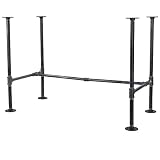
A small industrial coffee station thrives on raw, structural elements like threaded steel plumbing parts. If you have a narrow hallway or a tight kitchen corner, you can craft a pipe console table to fit those exact custom dimensions. This metal and wood console table for coffee station design utilizes heavy duty cast iron legs to securely support heavy espresso equipment without looking bulky. The open, minimalist metal framing keeps small rooms feeling airy and spacious.
Materials Needed
- 1 set of heavy duty cast iron pipe table legs (flanges, tees, and threaded pipes)
- 1 piece of butcher block or distressed wood finish timber cut to your space dimensions
- Matte clear coat metal sealant spray
- Polyurethane wood waterproof sealer
- Wood screws and an impact driver
Step-by-Step Directions
- Clean all industrial metal pipes thoroughly with degreaser to remove the factory manufacturing oil.
- Spray all metal components with a matte clear coat to provide raw steel oxidization prevention and stop rust.
- Upcycle reclaimed wood by sanding the surface smooth and applying three coats of polyurethane to prevent water damage from coffee spills.
- Assemble a metal coffee rack base by threading the pipes, tees, and floor flanges together until perfectly level.
- Flip the sealed wood top upside down and center the assembled pipe frame onto it.
- Build an industrial coffee bar by driving wood screws through the top mounting flanges directly into the wood to secure the table.
Pro-Tip: Always wipe down raw iron plumbing pipes with mineral spirits before sealing. If you skip this, the residual factory grease will prevent your clear coat from adhering, leading to rust stains on your floors.
3. Install Floating Wood Shelves on a Rustic Brick Backsplash

Love this exposed brick look? Save these floating shelf tips to your Coffee Bar inspiration board!
Mounting floating wood shelves against a textured rustic brick backsplash instantly evokes the atmosphere of an authentic downtown loft café. When you install floating shelves, you reclaim wasted vertical wall space, moving bulkier glass storage jars and coffee bean canisters off the counter. The visual contrast between the warm wood, the rugged red brick, and the sleek espresso machinery creates a perfect focal point.
Materials Needed
- 2 thick wooden shelf planks (minimum 1.5 inches thick to prevent bowing)
- 4-6 heavy-duty steel L-brackets rated for 50+ lbs each
- Masonry drill bits (if mounting directly into a rustic brick backsplash)
- Heavy-duty wall anchors or toggle bolts (for drywall)
- A laser level and stud finder
- Glass storage jars for displaying coffee beans
Step-by-Step Directions
- Use a stud finder to locate the structural wall framing, marking locations with a pencil.
- Use a laser level to project a perfectly horizontal line across your wall to ensure the shelves sit flat.
- Drill pilot holes into the studs (or use a masonry bit for brick) and secure the heavy-duty brackets to the wall.
- Install floating shelves by placing the thick wood planks onto the mounted brackets.
- Secure the wood planks to the brackets from underneath using short wood screws so they don’t slide.
- Organize coffee pods and decant your beans into airtight glass jars to display proudly on the upper shelves.
Pro-Tip: To ensure proper structural load bearing for floating shelves, always space your heavy-duty brackets exactly 16 inches apart to align with standard wall studs. A shelf holding ceramic mugs, heavy glass jars, and heavy bags of beans can easily exceed 60 pounds, which drywall anchors cannot safely support long-term.

4. Mount a Pegboard System for an Industrial Coffee Mug Rack

Need a better way to store your mugs? Pin this brilliant pegboard organizer!
A wall-mounted pegboard brings ultimate utilitarian flexibility to your daily brewing routine. When you mount a mug rack using a matte black steel panel, you create a dynamic, customizable display that easily holds heavy ceramics, milk frothers, and delicate barista tools. These wall mounted industrial coffee mug rack ideas keep your most-used accessories visible and instantly accessible while adding strong, hard-edged industrial texture to the wall.
Materials Needed
- 1 matte black metal or painted wood wall-mounted pegboard panel
- 1×2 wooden furring strips (for creating a mounting gap behind the board)
- Assorted heavy-duty raw steel pegboard hooks and baskets
- Wall anchors and mounting screws
- Assorted coffee mugs, milk frothers, and barista tools to display
Step-by-Step Directions
- Cut the wooden furring strips to match the perimeter dimensions of your pegboard panel.
- Secure the furring strips directly into the wall studs—this creates the necessary gap so hooks can slide behind the board.
- Attach the metal pegboard directly into the wooden furring frame using matte black wood screws.
- Mount a mug rack display by arranging the heavy-duty metal hooks in a visually pleasing, staggered grid pattern.
- Hang your heaviest, thickest ceramic mugs on the lowest hooks to keep the center of gravity stable.
- Add small wire metal baskets to the upper sections of the board to organize coffee pods and small accessories.
Pro-Tip: When calculating pegboard load capacity metrics, opt for powder-coated steel panels over traditional MDF fiberboard. Steel pegboards won’t warp from the steam rising from your espresso machines, and the metal hooks won’t tear out the holes under the weight of heavy stoneware mugs.

5. Design a Hidden Coffee Bar Storage Area with an Appliance Garage

Hate countertop clutter? Save this genius appliance garage idea to your Kitchen Remodel board!
Designing hidden coffee bar storage using custom appliance garages is the ultimate solution for maintaining a pristine, minimalist kitchen. By integrating wire mesh cabinet doors with heavy-duty pocket hinges, you can keep heavy burr coffee grinders and coffee syrups fully assembled on the counter. Simply slide the doors back during your morning routine, and pull them shut to instantly conceal the machinery and maintain your clean aesthetic.
Materials Needed
- Counter-height upper cabinet box
- Heavy-duty pocket door sliding hinges
- Custom wire mesh cabinet doors framed in reclaimed timber
- Dedicated 15-amp power strip with surge protection
- Coffee syrups and tall bottles for organization
- Wood veneer edge banding
Step-by-Step Directions
- Measure for a built-in coffee station by confirming your tallest appliance (usually the grinder hopper) can easily slide beneath the upper cabinets.
- Install the heavy-duty pocket door sliding hinges to the interior sides of the cabinet box.
- Attach the custom wire mesh cabinet doors to the sliding hinge tracks so the doors can open and retract smoothly back into the cabinet body.
- Drill a discrete hole through the back panel to route the heavy appliance power cords to your wall outlet.
- Customize an appliance garage by lining the interior sides with narrow spice racks to hold your syrups and tampers vertically.
- Push your espresso machine and grinder into the cabinet, leaving them plugged in and ready for daily use while completely hidden behind closed doors.
Pro-Tip: When planning bespoke joinery for appliance garages, ensure the cabinet interior has adequate ventilation. High-end espresso machines generate significant radiant heat; closing them inside a non-ventilated box immediately after brewing can cause condensation to warp the cabinet interior.

6. Set Up an Industrial Office Coffee Station on a Metal Bar Cart

Working from home? Pin this sleek office coffee cart setup to keep your caffeine close by!
An industrial office coffee station built on a rolling metal cart maximizes home office productivity without requiring a permanent renovation. This compact footprint solution is incredibly flexible, allowing you to style an industrial coffee cart with pour over coffee makers and a French press right next to your desk. By utilizing tiered wire baskets and rustic crates, you keep all supplies visible, organized, and easily accessible during busy workdays.
Materials Needed
- 1 multi-tiered industrial rolling metal cart with locking caster wheels
- Matching wire baskets or rustic crates for the lower shelves
- A silicone spill mat for the top tier
- Pour over coffee makers or a French press (ideal for areas without plumbing)
- An electric gooseneck kettle
- Airtight coffee bean canisters
Step-by-Step Directions
- Assemble your industrial metal cart, ensuring you install the locking caster wheels securely to prevent movement during hot water pouring.
- Place a black silicone tamp mat or spill tray on the top shelf to protect the raw wood textures from water rings.
- Configure a home barista setup by placing your kettle, scale, and pour-over dripper on the top tier for easy, ergonomic access.
- Use the middle tier to display barista tools, mugs, and your airtight coffee bean canisters.
- Style an industrial coffee cart by using the bottom tier to house bulkier items like extra filtered water jugs, cleaning supplies, and wire baskets full of backup supplies.
- Position the cart near your desk outlet, plugging the electric kettle into a surge protector to safely manage the electrical load.
Pro-Tip: When selecting a cart, adhere to ergonomic counter height standards. The top tier of your cart should sit comfortably between 34 to 36 inches high. If the cart is too low, repetitive bending while executing a precision pour-over routine will quickly lead to lower back strain during your workday.

7. Craft a Built-in Industrial Coffee Bar with Hidden Cable Management

Obsessed with the cordless look? Pin this hidden cable management trick to your Kitchen DIY board!
A built in coffee station with hidden cable management elevates a DIY project into a professional, architectural masterpiece. The biggest challenge with built in coffee makers and modern espresso setups is the tangled mess of thick power cords. By engineering a system to hide coffee bar cables completely beneath the counter, you create integrated hidden storage that leaves only the beautiful machinery and raw textures visible to the eye.
Materials Needed
- Recessed wall outlet boxes
- Under-counter cable management metal raceways or trays
- Heavy-duty zip ties and adhesive cable clips
- Hole saw drill bit matching your grommet size
- Brush-style cable grommet covers
- A heavy-duty surge protector
Step-by-Step Directions
- Identify exactly where your espresso machine and grinder will sit on the counter to map the shortest path for the cables.
- Drill a hole directly behind the planned machine location using a hole saw.
- Insert a brush-style cable grommet into the hole; the bristles will allow the plug to pass through while hiding the visual gap.
- Hide coffee bar cables by mounting a metal cable management raceway to the underside of the countertop inside the cabinet below.
- Install a recessed wall outlet inside the lower cabinet to provide a flush power source.
- Route all appliance cords down through the grommet, secure them tightly in the raceway using zip ties, and plug them into the hidden surge protector.
Pro-Tip: High-end dual-boiler espresso machines draw massive amounts of power. Pay strict attention to electrical load balancing for heating elements—never plug a commercial-grade espresso machine and a high-wattage microwave into the same circuit breaker line, or you will constantly trip your kitchen power during your morning routine.

8. Assemble a Space-Saving Espresso Station for Small Apartments

Tiny apartment? No problem! Pin this vertical space-saving espresso station idea!
Implementing industrial coffee station ideas for small apartments requires rethinking spatial organization entirely. To achieve effective small kitchen space solutions, you must exploit vertical volume and utilize a compact footprint console. By stacking espresso machines, magnetic tool strips, and square airtight containers vertically, you can create a highly efficient, sleek modern industrial barista zone that occupies less than a two-foot square of floor space.
Materials Needed
- A very narrow (under 12 inches deep) sleek modern industrial console table
- A compact, slim-profile espresso machine
- Tiered vertical wire shelving for countertop use
- Wall-mounted magnetic knife strips (repurposed for metal tools)
- Narrow profile knock boxes
- Stackable, square airtight storage containers
Step-by-Step Directions
- Select an unused, narrow sliver of wall space (like the side of a refrigerator or a hallway transition) to place your slim console table.
- Opt for a slim-profile espresso machine designed for a compact footprint rather than a wide commercial unit.
- Mount a strong magnetic knife strip to the wall directly above the machine to hold your metal tampers, distribution tools, and cleaning brushes vertically.
- Place a tiered wire corner shelf next to the machine to stack your ceramic mugs vertically instead of horizontally.
- Store your fresh beans in square, stackable containers rather than round jars to eliminate wasted air space between vessels.
- Set up a home espresso station by placing the narrow knock box tightly against the side of the machine to maintain a clean workflow in tight quarters.
Pro-Tip: When planning a small apartment setup, pay close attention to the volumetric coffee grinder footprint. A dedicated burr grinder often takes up more width and vertical clearance than the espresso machine itself. Consider purchasing a machine with an integrated grinder to save precious horizontal inches.


9. Configure a Commercial Industrial Coffee Bar Setup at Home

Ready for café-quality at home? Pin this commercial equipment setup guide!
Upgrading to a commercial style coffee station for home kitchens requires rigorous technical planning and hard-plumbing. A true commercial industrial coffee bar utilizes heavy-duty rotary pump espresso machines that demand dedicated water lines and structural support. When you plumb a coffee machine, you eliminate the need to refill a water tank, but you must integrate complex water filtration systems to protect your expensive commercial grade coffee equipment from mineral damage.
Materials Needed
- Commercial grade coffee equipment (rotary pump espresso machine)
- Dedicated heavy-duty wood or stone countertop
- 3/8-inch braided stainless steel water line hoses
- Under-sink water filtration systems (specifically an inline softening system)
- A large stainless steel knock box
- Plumber’s tape and adjustable wrenches
Step-by-Step Directions
- Ensure your chosen countertop can support weights exceeding 100 lbs, as dual-boiler commercial machines are incredibly heavy.
- Drill a discreet hole through the countertop directly behind where the machine will sit to route the plumbing lines down into the cabinet.
- Install an inline water softening filtration system under the sink; hard water will permanently ruin a commercial machine’s internal boilers.
- Integrate water lines for espresso makers by tapping into your kitchen’s cold water line using a T-valve fitting.
- Plumb a coffee machine by connecting the braided stainless steel hose from the filtration system directly to the machine’s rotary pump inlet.
- Set up your heavy burr grinder to the immediate right (or left, depending on your dominant hand) of the machine to optimize your daily workflow.
Pro-Tip: Meeting direct plumbed espresso machine requirements is about more than just bringing water in; you must also plan for water out. If your machine has a dedicated drip tray drain, you must route a drainage tube downward to your sink’s plumbing trap with a continuous downward slope to prevent standing water and mold.

10. Style a Vintage Industrial Coffee Nook with Reclaimed Wood

Love the vintage vibe? Save this reclaimed wood styling guide to your Rustic Decor board!
A vintage industrial coffee station perfectly bridges the gap between cold factory utilitarianism and warm farmhouse charm. By pairing a heavily textured reclaimed wood surface with antique vintage lighting fixtures, you soften the harshness of raw metal piping. This approach focuses on authentic patinas, utilizing aged brass, copper accessories, and warm Edison bulbs to create a deeply nostalgic, inviting atmosphere for your morning brewing ritual.
Materials Needed
- Authentic, locally sourced reclaimed timber planks
- Vintage lighting fixtures (like plug-in Edison bulb sconces)
- Cast iron shelf brackets with an aged patina
- Antique manual coffee grinders (for display)
- Beeswax or marine-grade wood sealant
- Copper or brass barista tools
Step-by-Step Directions
- Source your reclaimed wood from a local architectural salvage yard to ensure authentic weathering and saw marks.
- Lightly sand the wood to remove splinters, but retain the deep gouges and natural imperfections that give it character.
- Apply a heavy coat of marine-grade sealant or beeswax. This provides essential thermal protection for wood surfaces against hot mugs and steam.
- Mount your antique cast iron shelf brackets to the wall, securing the treated wood planks on top.
- Style an industrial coffee cart or shelf by installing plug-in Edison bulb wall sconces directly above the prep area for a warm, amber glow.
- Arrange your copper kettles and antique manual grinders alongside your modern brewing equipment to perfectly blend the eras.
Pro-Tip: Before installing old barn wood in your home, it requires proper reclaimed timber acclimatization. Let the wood sit inside your climate-controlled home for at least two weeks before cutting or mounting it. This allows the wood to adjust to indoor humidity, preventing it from severely warping or splitting after you’ve bolted it to the wall.

11. Integrate a Modern Industrial Coffee Setup in a Pantry

Don’t want your coffee machine in the kitchen? Pin this genius pantry integration!
Learning how to integrate a coffee station into a pantry completely removes equipment clutter from your main kitchen sightlines. This sleek modern industrial approach transforms an ordinary walk-in pantry shelf into a dedicated, highly organized brewing laboratory. By decanting all beans and powders into uniform glass storage jars, you elevate the visual appeal of the hidden space while keeping your built in coffee makers out of the primary cooking zone.
Materials Needed
- 1 deep, reinforced wooden pantry shelf (minimum 18 inches deep)
- Matching glass storage jars with bamboo or black metal lids
- Matte black wire storage baskets
- An LED motion-sensor light bar
- A low-profile coffee maker or kettle
- Coffee pod storage acrylic drawers
Step-by-Step Directions
- Clear a mid-level shelf in your walk-in pantry that sits at roughly waist height (34-36 inches from the floor) to serve as the new prep counter.
- Ensure an electrical outlet is accessible within the pantry; if not, hire an electrician to safely route power inside.
- Install a motion-sensor LED light bar directly under the shelf above your prep zone to ensure you have bright task lighting when the pantry door opens.
- Remove your beans, grounds, and sugars from their ugly retail packaging and decant them into uniform glass storage jars.
- Organize coffee accessories like extra filters, cleaning tablets, and descaling powder into the matte black wire baskets to hide the visual clutter.
- Place your coffee maker on the shelf, ensuring there is at least 15 inches of vertical clearance above it so steam can escape without warping the shelf above.
Pro-Tip: If integrating a coffee station into an enclosed pantry, be incredibly mindful of steam. Continuous brewing creates heavy moisture. If your walk-in pantry lacks an HVAC vent, the trapped humidity from your morning coffee routine can quickly cause dry goods (like flour and sugar) stored on adjacent shelves to clump and spoil.
How to build an industrial coffee station?
To build an industrial coffee station, combine a sturdy base unit like a metal console or modified cabinet with raw materials like exposed iron pipes and distressed wood shelves. Start by selecting a dedicated space in your kitchen or office. Focus on integrating matte black hardware and raw steel accents. Ensure you incorporate hidden cable management for your espresso machine, and utilize vertical wall space with floating shelves or pegboards to display your mugs and barista tools aesthetically.
What makes a coffee bar industrial style?
An industrial style coffee bar is defined by its use of utilitarian, factory-inspired materials, specifically blending raw metal finishes with heavily textured, distressed wood. Unlike the softer farmhouse aesthetic, an industrial chic aesthetic leans heavily on high-contrast elements. Key features include exposed metal piping, matte black or oil-rubbed bronze hardware, concrete or reclaimed wood countertops, and vintage Edison-style lighting.
How to hide cables on a coffee bar?
You can hide cables on a coffee bar by drilling a routing hole through the countertop, inserting a desk grommet, and running all appliance cords down into the cabinet below. Once routed beneath the surface, plug your espresso machine and burr coffee grinders into a concealed heavy-duty surge protector mounted to the interior wall of the cabinet. For open-shelf console tables, bundle cables tightly together using zip ties and secure them directly behind the rear metal legs.
Where to put a coffee station in a small kitchen?
In a small kitchen, place a coffee station in unused transitional zones, such as the side of a refrigerator, a narrow hallway wall, or tucked inside a walk-in pantry. When horizontal counter space is limited, small kitchen space solutions require thinking vertically. Use a narrow, shallow console table to hold your machine, and install tall, stacked floating shelves or a wall-mounted pegboard above it to house all your mugs, beans, and accessories.
What equipment do I need for a home coffee bar?
A complete home coffee bar requires a high-quality brewing device, a reliable burr grinder, an electric kettle, a digital scale, and airtight bean storage. While the aesthetic matters, functionality is paramount. Ensure you invest in quality barista tools like a heavy metal tamper, a milk frothing pitcher, and a sturdy knock box. Store your beans in opaque or UV-protected glass storage jars to keep them fresh.
How much does a built-in coffee station cost?
A DIY built-in coffee station using modified IKEA cabinets can cost between $300 and $600, while a custom-contracted architectural build can range from $2,000 to $5,000. The budget heavily depends on your materials and appliances. Utilizing an IKEA BESTA hack with your own sourced reclaimed wood keeps costs incredibly low. However, if you require a licensed plumber to run a dedicated water line for a commercial espresso machine, your budget will increase significantly.
What is the best wood for an industrial coffee station?
The best wood for an industrial coffee station is authentic reclaimed barn wood, butcher block hardwoods like walnut or oak, or deeply stained pine sealed with marine-grade polyurethane. The industrial chic aesthetic thrives on imperfection, making distressed, knotty woods ideal. However, because coffee prep involves boiling water and steam, the species of wood matters less than the sealant. You must apply a heavy-duty waterproof finish to provide thermal protection for wood surfaces.
How to make a farmhouse coffee bar look industrial?
To transition a farmhouse coffee bar into an industrial style, swap out white painted woods and ceramic accents for raw, heavily distressed timber and matte black metal hardware. While both styles utilize rustic elements, the industrial vs farmhouse coffee station designs differ in their edges. Replace soft, decorative corbel shelf brackets with heavy-duty cast iron plumbing pipes. Swap out white shiplap backsplashes for rustic brick backsplashes or dark textured paint.
What is an appliance garage for coffee makers?
An appliance garage is a specialized countertop-level cabinet featuring retractable doors designed to completely hide bulky coffee makers and grinders while keeping them plugged in and ready to use. By utilizing sliding pocket doors or roll-up tambour doors, appliance garages allow you to maintain a pristine, minimalist kitchen aesthetic. You simply open the doors to reveal your fully functioning modern industrial coffee nook, brew your morning cup, and slide the doors closed.
Can I use a pegboard for an industrial coffee station?
Yes, a heavy-duty metal pegboard is an excellent, highly customizable vertical storage solution for an industrial coffee station that perfectly matches the utilitarian factory aesthetic. Instead of traditional white fiberboard pegboards, opt for a powder-coated matte black or galvanized steel board. This compact footprint solution is ideal for hanging a mug collection, displaying beautifully crafted tampers and frothers, and organizing wire baskets full of coffee pods.
- Contrast Raw Textures for Authenticity: The true industrial chic aesthetic relies heavily on the tension between different textures. Always pair cold, smooth matte black metal with warm, heavily distressed wood finishes to prevent the space from looking too sterile.
- Prioritize Cable Management Early: Do not treat power cords as an afterthought. Use desk grommets, hidden coffee bar storage, and under-counter raceways to completely eliminate visual clutter and maintain a sleek, modern look.
- Protect Reclaimed Wood from Moisture: Coffee stations are high-moisture zones. You must seal reclaimed wood surfaces with heavy polyurethane, marine varnish, or beeswax to prevent permanent water damage from accidental espresso spills.
- Respect Structural Load Limits: Espresso machines, burr grinders, and thick stoneware mugs are incredibly heavy. Always anchor floating wood shelves directly into wall studs, as drywall anchors will eventually fail under the weight of an industrial setup.
- Maximize Vertical Wall Space in Small Kitchens: If you lack horizontal counter space, utilize wall-mounted pegboards and tiered corner shelving to move your storage upwards, allowing you to fit a complete barista setup into tight apartments.
- Consider Commercial Plumbing Requirements: Upgrading to commercial grade coffee equipment often requires hard-plumbing your machine directly to a water line. Always install an inline water filtration system to protect the boiler from mineral scale buildup.
Designing an industrial coffee station is one of the most rewarding home improvement projects you can undertake, perfectly marrying high-end interior design with the daily, utilitarian ritual of brewing coffee. Unlike overly polished aesthetics that require constant wiping and hiding of equipment, the industrial chic aesthetic actually celebrates the heavy machinery. The exposed metal of your espresso machine, the heavy cast iron of your burr grinder, and the rich textures of your coffee beans naturally enhance the raw, factory-inspired look.
Whether you are modifying a simple rolling cart for a home office, hacking an IKEA cabinet to hide messy cables, or committing to a fully hard-plumbed commercial setup on a reclaimed wood console, the secret lies in the details. Prioritize sturdy materials like heavy-duty pipe fittings and properly sealed timber, ensure your electrical circuits can handle the load, and utilize vertical space through pegboards and floating shelves to keep your prep area clean.
By applying these space saving industrial coffee station layouts and DIY techniques, you can transform any chaotic morning kitchen corner into a serene, highly efficient, and visually stunning café experience right inside your home. Which of these 11 industrial designs are you planning to incorporate into your space first?
Last update on 2026-10-23 / Affiliate links / Images from Amazon Product Advertising API
