
As an Amazon Associate CoffeeXplore.com earns from qualifying purchases.
9 Chic Coffee Station Ideas to Maximize Small Spaces
Are you tired of dodging messy cords in your tiny kitchen? Struggling with a cluttered kitchen makes your morning routine incredibly frustrating. You need clever coffee station ideas for small spaces to reclaim your counters.
To create a coffee station in a small space, prioritize vertical storage by installing floating shelves above your coffee maker, utilize a mobile rolling cart, or employ a tiered tray. These small kitchen spaces solutions group your essentials into one compact, organized zone while maintaining a clean aesthetic.
Drawing from first-hand experience as a renter and proven spatial optimization principles, we understand the nuances of a compact home coffee station. In this guide, you will discover nine budget-friendly, space-saving DIY layouts. Implement these actionable steps to transform any awkward corner into an aesthetic, highly functional barista-approved haven.
Contents
show
How Can You Implement Coffee Station Ideas for Small Spaces to Conquer Cluttered Kitchens?
Implementing a coffee station in a small space requires leveraging vertical storage, utilizing mobile carts, and creating contained micro-zones. When you are dealing with a small footprint, a cluttered kitchen quickly becomes a daily source of stress. The key is shifting your perspective from traditional built-in cabinetry to a highly adaptable countertop coffee bar or a freestanding small space coffee bar. By evaluating your available vertical real estate, you can get bulky espresso machines and messy cords off your primary prep surfaces.
Whether you choose a rolling cart or a wall-mounted setup, the goal remains the same: maximizing limited counter space while maintaining a chic, minimalist aesthetic. As an experienced renter, I have personally tested these space-saving hacks. In the sections below, we will explore practical DIY implementations, including a detailed cart versus shelf comparison, while prioritizing safe installation and proper weight capacity for your heavy brewing gear.
9 Chic Coffee Station Ideas to Maximize Small Spaces
Designing a beautiful kitchen coffee station in a tight apartment goes far beyond generic Pinterest inspiration. To truly maximize your area, you must implement a data-driven approach to workflow optimization, often referred to as the Golden Triangle of coffee prep. This means your water source, coffee grounds, and brewing machine should all be within one seamless, ergonomic pivot.
Whether you are building a diy coffee bar from scratch or looking for rapid small space solutions, zonal organization is critical. By grouping your daily essentials logically, you reduce morning friction and instantly elevate your home’s aesthetic. Before you design or maximize your new setup, always account for heat-safe appliance placement to protect your cabinetry. Let’s dive into these nine budget-friendly, chic, and highly actionable apartment coffee station layouts, updated with the latest styling trends for September 2026.
1. Install a Vertical Floating Shelf Coffee Nook

Pin this brilliant vertical storage hack to your Small Apartment Inspiration board!
Utilizing empty wall space above a counter is the absolute best way to store coffee supplies without sacrificing your precious meal prep area. By focusing on verticality optimization, wall mounted shelves naturally draw the eye upward, making a cramped kitchen feel significantly larger and more intentional.
Supplies Needed
- 2 heavy-duty rustic wood floating shelves (rated for 30+ lbs)
- Brass mugs + hooks for under-shelf hanging
- Minimalist glass canisters with airtight bamboo lids
- Stud finder, level, and power drill
- Clear acrylic syrup dispensers
Step-by-Step Directions
- Measure the vertical storage space above your coffee maker, ensuring at least 18 inches of clearance to prevent heat and steam damage to the bottom shelf.
- Locate the wall studs using your stud finder, marking them lightly with a pencil to ensure a secure, safe installation.
- Mount the heavy-duty brass brackets to the wall, using a level to guarantee perfectly straight lines before securing the wood + brass elements.
- Install the small brass screw-hooks into the underside of the bottom shelf, spacing them 4 inches apart to accommodate bulky ceramic mugs.
- Organize your daily essentials by decanting beans and sugar into the glass jars, placing them on the top shelf to keep your countertop coffee bar completely clear.
What most guides miss: For optimal ergonomic workflow, keep your daily-use items (like the espresso machine and grinder) on the counter, and relegate backup beans and decorative items to the higher shelves. Beware of steam from espresso machines; always seal the underside of your wood shelves with a waterproof polyurethane coating for moisture protection. Unsealed MDF or cheap pine will rapidly warp and peel when exposed to daily steam venting.
2. Organize a Mobile IKEA Style Bar Cart

Save this genius rolling cart idea for your next apartment move!
Transitioning from fixed wall shelves to mobile furniture opens up incredible flexibility for renters. Repurposing an affordable utility cart into a fully functional coffee station is the ultimate solution when zero counter space is available. This clever bar cart layout directly solves the widespread lack of storage found in modern studio apartments.
Supplies Needed
- 1 heavy-duty 3-tier metal rolling bar cart (like the famous ikea raskog cart coffee station hack or similar alternative)
- Magnetic S-hooks for hanging accessories on the sides
- A compact single-serve coffee maker or French press
- Small acrylic drawer organizers to hold a coffee pod organizer
- A heavy wooden cutting board to serve as a stable cart topper
Step-by-Step Directions
- Assemble the metal utility cart according to the instructions, ensuring the caster wheels are tightly secured and the locking mechanisms function properly.
- Place a custom-fit wooden cutting board over the top tier to create a flat, stable, heat-safe surface for your portable coffee machine.
- Designate the middle tier solely for accessories and consumables; use acrylic bins to neatly group sugar packets, stir sticks, and your favorite coffee bean jars.
- Arrange heavy items on the bottom tier—like spare water jugs, oversized mugs, or milk cartons—to lower the center of gravity and prevent the mobile cart from tipping.
- Attach magnetic S-hooks to the outer rim of the top basket to hang lightweight tools like a milk frother, measuring spoons, and small espresso cups.
Expert Insight: Following strict spatial flow principles, a compact + cart setup is vastly superior to fixed furniture in a studio apartment. You can roll it out to the living area when hosting guests, and tuck it away into an awkward corner when you need floor space. This data-driven organization technique ensures your home remains highly adaptable.
3. Hide Your Setup with a Countertop Appliance Tray

Pin this brilliant sliding tray hack to keep your counters looking pristine!
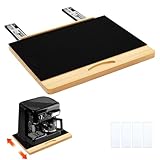
If you prefer completely clear surfaces, a hidden coffee bar is the ultimate space-saving tactic. Utilizing sliding hardware to tuck bulky appliances away helps maintain a strict minimalist aesthetic while keeping your daily brewing gear highly accessible.
Supplies Needed
- 1 smooth-gliding bamboo or acrylic sliding appliance tray
- Adhesive cable management clips for messy cords
- A compact Nespresso or sleek drip coffee maker
- Small stackable ceramic espresso cups
- Velcro zip ties for cord bundling
Step-by-Step Directions
- Measure the depth of your countertop + cabinet clearance from the wall to the edge, and the height clearance from the counter to the bottom of your upper cabinets.
- Place the bamboo sliding tray directly beneath the upper cabinet, ensuring the wheels or sliding track are free of debris.
- Set your heavy coffee machine onto the tray, pulling the power cord straight back toward the wall outlet.
- Organize the messy cords by adhering a cable clip to the back of the machine, wrapping excess wire with a velcro tie so it doesn’t snag when the tray moves.
- Slide the tray forward when it’s time to brew, ensuring steam escapes safely into the open kitchen, and simply push it back under the cabinet when finished for a clutter-free look.
Pro-Tip: Never operate a heat-producing coffee maker while it is pushed flush against the wall directly underneath wooden cabinets. Long-term steam exposure will warp the wood and peel the paint. The sliding tray is an essential professional organizer tool that marries aesthetics with crucial moisture protection.
4. Mount a Space-Saving Wooden Pegboard

Save this renter-friendly pegboard idea to instantly multiply your kitchen storage!
While a sliding tray hides your gear, a pegboard proudly displays it while solving severe storage deficits. This highly customizable, modular approach is perfect for storing an extensive mug collection and manual brewing gear directly on a blank wall, freeing up cabinets completely.
Supplies Needed
- 1 large architectural birch or plywood pegboard panel
- A matching set of wooden pegs and small interlocking shelves
- Heavy-duty drywall anchors and mounting spacers
- A manual coffee grinder and pour over dripper set
- Assorted artisanal mugs
Step-by-Step Directions
- Determine the ideal placement for your board, ensuring you leave at least 1 inch of space between the wall and the back of the panel (using spacers) so the pegs can slide in fully.
- Install the drywall anchors securely; a fully loaded coffee pegboard can easily weigh over 20 pounds, so do not rely on standard nails for this rental friendly coffee station wall ideas project.
- Map out your layout on the floor before mounting items to the wall; place your heaviest items (like a french press) on the lowest peg-shelves to maintain a safe center of gravity.
- Group your items by function: dedicate the left side to organize + hooks for your frustrating mug overflow, and the right side for brewing instruments.
- Mount a small catch-all basket to hold loose items like filters, a digital scale, and stirring spoons.
Pro-Tip: The true beauty of a wooden pegboard lies in its modular design. As an expert advice tip for small spaces: reconfigure your peg layout seasonally. Move heavy winter mugs to the top in the summer, and bring your iced-coffee glasses down to eye level. This easy diy flexibility keeps your station perpetually optimized.

5. Arrange a Narrow Console Table Brew Station

Don’t let empty hallways go to waste—pin this narrow console table idea!
Sometimes the best kitchen solution is moving the coffee out of the kitchen entirely. Utilizing a furniture solution that fits into an extremely slim footprint—like a hallway or dining room walkway—is a highly chic alternative when you have absolutely zero prep space remaining.
Supplies Needed
- 1 ultra-narrow (10 to 12 inches deep) industrial console table
- 2 large woven seagrass or rattan baskets for under-table storage
- A small, slim-profile coffee maker (like a Keurig K-Mini)
- A decorative tray to protect the wood surface
- A large wall mirror or piece of art for above the station
Step-by-Step Directions
- Measure your hallway or dining room walkway; you need at least 36 inches of clearance in front of the table to ensure comfortable foot traffic.
- Assemble the narrow console table coffee bar for hallway and anchor it to the wall using furniture straps—tall, shallow tables are highly prone to tipping, especially when top-heavy.
- Place your coffee machine on top of a decorative, waterproof tray. This catches inevitable drips and protects the wood from water ring damage.
- Tuck the large woven baskets underneath the table. Use these to hide bulky items like extra paper towels, giant bags of beans, and descaling solution.
- Hang a large mirror directly above the table. This reflects light, makes the tight hallway feel twice as large, and defines the coffee corner as an intentional design zone.
Pro-Tip: When you space-plan around an awkward corner, pay strict attention to scale and proportion. If you buy an extra-narrow table, you must ensure your coffee maker is equally slim. Do not put a massive, deep espresso machine on a 10-inch table—it will hang over the edge, creating a severe hazard and looking visually unbalanced.

6. Declutter with a Tiered Tray Organizer

Short on counter space? Pin this tiered tray organization hack!
If you cannot drill holes for a pegboard and lack floor space for a console table, you must optimize your existing counter. A tiered tray is the easiest, cheapest, and fastest way to declutter coffee accessories by forcing boundaries on loose items and creating a vertical micro-station.
Supplies Needed
- 1 sturdy two-tier wood or metal serving tray
- Set of mini glass jars for sugar and spices
- Syrup dispensers with minimalist waterproof syrup + labels
- Small wooden stirring spoons or stir sticks
- A tiny faux succulent or small decor piece for aesthetics
Step-by-Step Directions
- Clear a small footprint (roughly 12×12 inches) right next to your coffee maker; this will become your dedicated beverage center.
- Assemble your tiered tray, ensuring the center spindle is tightened securely so the top tier does not wobble.
- Decant all store-bought packaging. Pour ugly bags of sugar, cinnamon, and flavored syrups into uniform glass jars and matching pump bottles.
- Arrange the heaviest items (syrup bottles, a jar of ground coffee) on the bottom tier to anchor the tray.
- Group lighter, smaller items (sugar bowls, stir sticks, and your small decor piece) on the top tier, utilizing tray + organization logic to keep everything visually accessible.
Pro-Tip: The secret to modern decluttering methodology is establishing “visual boundaries.” By placing all loose items inside a tray, you instantly eliminate the cluttered kitchen look. The tray acts as a physical frame, turning messy random items into an intentional, highly styled kitchen vignette.

7. Transform an Awkward Corner with Built-in Style

Turn that dead kitchen space into a stunning built-in coffee bar—pin to save!
L-shaped kitchens often feature a deep, dark “dead” space where counters intersect. You can transform this awkward corner into what appears to be an expensive, custom architectural feature using cheap, renter-friendly upgrades like peel-and-stick tiles and strategic lighting.
Supplies Needed
- 1 pack of renter-friendly peel-and-stick coffee bar backsplash tiles
- Battery-operated LED puck lights with a remote control
- A corner-specific wooden shelf or corner riser
- Degreaser spray and a microfiber cloth
- A sharp utility knife and a straight-edge ruler
Step-by-Step Directions
- Clean the wall inside your corner thoroughly with a heavy degreaser. Peel-and-stick tiles will immediately fall off if there is any kitchen grease residue.
- Measure and cut your tile sheets using the utility knife, working from the bottom corner upward to ensure straight, level lines.
- Apply the faux tiles firmly to the wall, smoothing out any air bubbles, creating a distinct visual zone that separates the corner from the rest of the kitchen.
- Install the LED puck lights directly under the upper cabinets using command strips to execute brilliant under cabinet coffee station lighting ideas directly over your coffee maker.
- Elevate your coffee syrups or bean canisters on a wooden corner riser to utilize the deep, hard-to-reach space at the very back of the corner.
Pro-Tip: When choosing under-cabinet lighting, pay close attention to lighting temperature. A barista approved setup looks best under “Warm White” (2700K-3000K) bulbs, which makes coffee look rich and appetizing. Harsh daylight bulbs (5000K) will make your built-in brew station feel like a sterile hospital room, completely ruining the cozy aesthetic cohesion.
8. Upcycle a Small Bookshelf into a Coffee Pantry

Don’t throw away that old bookshelf! Pin this budget DIY upcycle idea!
When you suffer from a no pantry situation in a tiny apartment, repurposing existing furniture is a brilliant strategy. Taking an old waist-high piece and choosing to upcycle it into a high-capacity coffee pantry is one of the most effective budget-friendly coffee station ideas for small spaces.
Supplies Needed
- 1 small, sturdy thrifted bookshelf (waist-high is ideal)
- Matte chalk paint and a high-quality waterproof polycrylic sealer
- 2-3 large woven water hyacinth storage baskets
- A waterproof silicone mat (cut to the size of the top shelf)
- Your coffee maker and a collection of coffee bean jars
Step-by-Step Directions
- Refurbish your thrifted bookcase by lightly sanding it, applying a coat of trendy chalk paint (like sage green or charcoal), and sealing it with three coats of waterproof polycrylic.
- Cut the silicone mat to fit exactly over the top shelf. This invisible layer prevents standing water from ruining the newly painted finish.
- Place your coffee machine and daily accessories on the top level, treating it just like a traditional kitchen island counter.
- Organize your mugs, saucers, and beautiful glass jars on the middle open shelves where they act as aesthetic decor.
- Slide the large woven baskets onto the bottom shelf, filling them with ugly back-stock items like bags of coffee, extra filters, and cleaning supplies to solve your storage dilemma.
Pro-Tip: If you are using an IKEA Billy bookcase or a similar particleboard piece, tested for small spaces experience dictates that you must seal the top shelf. Water spills from the coffee reservoir will cause unsealed MDF to swell and bubble within days, ruining your hard work and compromising the piece’s surface durability.

9. Create a Dual-Purpose Coffee and Wine Beverage Center

AM Coffee, PM Wine? Pin this dual-beverage center idea!
Maximizing a limited furniture footprint often means combining morning and evening routines into one highly styled entertainment zone. Choosing to create a coffee + wine station on a single piece of furniture saves money and space while establishing a sophisticated caffeine haven decor focal point.
Supplies Needed
- 1 sturdy sideboard or dining room buffet
- A small, aesthetic tabletop geometric wine rack
- A stylish tray to group the coffee accessories together
- An espresso machine or Nespresso maker
- Under-shelf wine glass holders (if your sideboard has open shelving)
Step-by-Step Directions
- Clear the top of your dining room sideboard completely, creating a blank slate for your new dual-purpose drink bar.
- Establish strict zones to prevent visual clutter: dedicate the left side entirely to coffee, and the right side entirely to wine and spirits.
- Place your coffee maker on the left, anchoring the morning zone by placing all pods, sugars, and mugs onto a single containment tray.
- Assemble your tabletop wine rack on the right side, stacking your bottles neatly to draw the eye upward and balance the visual weight of the coffee machine.
- Integrate the two sides seamlessly by placing a shared decor element in the exact center, such as a tall vase with fresh branches, a lamp, or a beautiful piece of art leaned against the wall.
Pro-Tip: True aesthetic cohesion in a dual-use space relies on unified hardware. If your coffee maker is stainless steel, use silver or mirrored trays for your wine glasses. If your coffee tools are matte black, buy a matte black wine rack. This ensures the space looks like an intentional beverage center combo rather than a chaotic dumping ground.

Key Takeaways: Your Quick Guide to Coffee Station Ideas for Small Spaces
Synthesizing all of these design concepts into actionable steps is crucial for your success. As you review this quick guide to coffee station layout rules, remember that every space-saving hack relies on understanding your unique spatial constraints and daily workflow. Whether you choose to mount floating shelves or tuck a rolling cart into a corner, applying these core interior design principles will ensure your setup is both beautiful and functional. Review these critical takeaways before you begin your next DIY project to guarantee a safe, optimized, and visually stunning home cafe.
- Always Look Up for Storage – Maximize your vertical storage space by installing heavy-duty floating shelves or pegboards to get mugs and beans completely off your limited counters.
- Go Mobile When Counters are Full – An ikea raskog cart coffee station hack is the ultimate renter-friendly solution, allowing you to roll your brew station out of the way when you need floor space.
- Corral Clutter with Trays – Use a tiered tray on your counter to create visual boundaries; grouping small items together tricks the eye into seeing a clean, intentional kitchen vignette rather than a mess.
- Protect Your Cabinetry – Never run a steaming espresso machine directly under wooden cabinets. Use a sliding appliance tray to pull the machine forward for proper moisture protection.
- Utilize Dead Zones – Narrow hallways, awkward corners, and empty dining room walls are perfect places for a slim console table or a beverage center combo.
- Respect Weight Limits – Coffee machines and ceramic mugs are incredibly heavy. Always use stud finders and heavy-duty drywall anchors for any wall mounted shelves to ensure safe installation.
- Unify Your Aesthetic – Maintain aesthetic cohesion in dual-purpose spaces by decanting ugly packaging into glass jars and matching the hardware finishes between your coffee and wine tools.
People Also Ask About Coffee Station Ideas for Small Spaces
Even with a wealth of Pinterest inspiration, navigating the technical aspects of building a compact home cafe can generate a lot of questions. From navigating tight dimensions to ensuring your heavy espresso machines are securely supported, addressing these common concerns is essential before you start buying furniture. Below, we answer the most frequently asked questions about optimizing small kitchen footprints. These data-driven answers draw upon proven interior design standards and first-hand renter experience to provide you with the most reliable, actionable guidance for your upcoming DIY project.
How do you make a coffee station in a small space?
To make a coffee station in a small space, you must utilize vertical wall space, embrace mobile furniture, or carve out a micro-zone on your existing counter using a containment tray.
Start by removing your coffee maker from the center of your prep area and placing it in a dedicated corner or on a rolling utility cart. Add floating shelves or a pegboard above the machine to store mugs and beans vertically, keeping your footprint minimal while maximizing storage capacity.
Where can I put a coffee bar in a small kitchen?
The best places to put a coffee bar in a small kitchen are in awkward corners, dead wall space next to the fridge, or pulled out of the kitchen entirely into a nearby hallway or dining space.
If counter space is non-existent, look for a 12-inch gap between your cabinets and a doorway to fit a slim cart. Alternatively, placing a sliding tray under a low-clearance upper cabinet creates a hidden setup that utilizes previously wasted countertop depth.
Are floating shelves safe for a heavy espresso machine?
Standard floating shelves are generally not safe for heavy espresso machines unless they are specifically anchored directly into wooden wall studs with heavy-duty steel brackets.
According to expert advice, most quality espresso machines weigh between 20 to 45 pounds when filled with water. Floating shelves secured only with drywall anchors will eventually sag or fail under this weight, risking serious damage. Always keep heavy machines on a solid counter or cart, and use floating shelves solely for lightweight mugs and beans.
How do I organize my coffee station without a lot of counter space?
Organize a counterless coffee station by utilizing a multi-tiered rolling cart, a wall-mounted wooden pegboard, or by upcycling a small, narrow bookshelf.
By moving your setup off the kitchen counter and onto dedicated, compact furniture, you instantly declutter your primary cooking area. Using a tiered tray is another excellent decluttering methodology if you must use the counter, as it stacks your supplies vertically and establishes strict visual boundaries.
How do you organize mugs in a tiny kitchen?
Organize mugs in a tiny kitchen by installing S-hooks underneath your upper cabinets, utilizing a wall-mounted pegboard, or attaching a vertical mug tree to the side of your fridge.
Hanging mugs vertically frees up vital cabinet shelving for plates and pantry items. If you cannot drill into walls, a spinning countertop mug tree or under-shelf wire slide-on racks are excellent renter-friendly solutions to cure mug overflow.
What size should a small coffee station be?
A small home coffee station requires a minimum footprint of roughly 12 inches deep by 18 inches wide to accommodate a standard single-serve brewer and basic accessories.
For interior design scale and proportion, a rolling cart (typically 14×17 inches) or a narrow console table (10-12 inches deep) provides the perfect dimensions for tight apartments while still allowing enough surface area to actually prepare your drink comfortably.
How do I hide my coffee station when not in use?
Hide your coffee station by placing it on a sliding appliance tray tucked deeply under your upper cabinets, or by building it into a closed pantry cabinet (an “appliance garage”).
For a true minimalist aesthetic, placing your coffee gear inside an existing kitchen cabinet with retractable doors allows you to completely shut away the messy cords and clutter when guests arrive.
Can a console table work as a coffee bar?
Yes, a narrow console table makes an excellent coffee bar because its slim depth (usually 10 to 14 inches) allows it to fit neatly against blank hallway walls or dining room walkways.
This is a brilliant space-plan tactic for small apartments, as it completely removes the coffee traffic from a cramped kitchen. Just ensure you place a waterproof tray on top to protect the wood finish from accidental spills.
What are the best budget options for a small coffee station?
The best budget options for creating a coffee station include repurposing an old bookshelf, buying a $30 metal utility cart, or purchasing inexpensive floating shelves.
You do not need to hire a contractor for custom cabinetry. A simple coat of paint on a thrifted side table or utilizing a low-cost wooden pegboard from a hardware store can create a highly functional, budget-friendly setup for under $50.
How do I manage coffee machine cords in a small space?
Manage messy cords by using adhesive cable clips attached to the back of your coffee maker, bundling excess wire with velcro ties, or hiding power strips inside a decorative basket.
Leaving long cords draped across a small counter creates visual chaos. By routing the cables directly along the back of the machine or the leg of your bar cart, you instantly elevate the aesthetic and make your compact coffee setup look clean and intentional.
Final Thoughts on Coffee Station Ideas for Small Spaces
Creating a beautiful, highly functional daily brew zone isn’t reserved exclusively for massive, magazine-spread kitchens. By implementing these coffee station ideas for small spaces, you can easily transform even the most cramped, awkward corners into a stylish and efficient morning retreat. The secret to success in small kitchen spaces always comes down to thinking vertically, utilizing mobile furniture like utility carts, and establishing strict visual boundaries using trays and baskets to eliminate visual clutter.
Whether you decide to install a towering pegboard wall, upcycle a thrifted bookshelf into a complete coffee pantry, or simply tuck a sliding tray underneath your cabinets, remember that the best home coffee station is the one that streamlines your unique morning routine. You don’t need a massive renovation budget; a little creativity, some adhesive hooks, and clever space-plan strategies are all you need to brew your perfect cup in style.
Which of these compact coffee station layouts are you going to try in your home first? Let me know in the comments below, and don’t forget to pin your favorite ideas to your kitchen inspiration boards!
Last update on 2026-09-07 / Affiliate links / Images from Amazon Product Advertising API
