
As an Amazon Associate CoffeeXplore.com earns from qualifying purchases.
Coffee Filter vs Cheesecloth: 7 Proven Straining Hacks
Have you ever ruined a recipe because you lacked the right kitchen tools? Discovering you are out of cotton mesh mid-recipe is a frustrating, messy culinary nightmare. Let us solve your coffee filter vs cheesecloth dilemma today.
Coffee Filter vs Cheesecloth: Yes, you can substitute an unbleached paper coffee filter for cheesecloth to catch microscopic fine sediment and achieve perfectly clear liquids. However, paper drains much slower, possesses weak wet strength, and will tear immediately if squeezed. Always support it with a wire sieve.
Based on real-world testing in our test kitchen, we analyzed the flow dynamics of both filtration mediums. In this guide, you will discover exactly when to use each material for optimal results. Master these seven proven straining hacks to elevate your cooking right now.
Contents
show
Can You Use a Coffee Filter Instead of Cheesecloth?
Yes, you can use a coffee filter instead of cheesecloth for straining liquids like cold brew, stock, or infused oils. While a coffee filter leaves behind clear liquid by catching finer sediment than cheesecloth, it drains much slower and will tear if squeezed. Always line a fine mesh strainer with the filter for support.
When choosing between these two kitchen staples, you must understand their physical properties. A disposable filter made of unbleached paper features a microscopic micron pore size that excels at trapping tiny particulates, operating through a dense paper cellulose barrier. In contrast, reusable cotton cheesecloth is a woven fabric that offers superior tensile strength but possesses larger holes allow more fine silt to pass through unless you fold it into multiple layers.
In our side-by-side comparison, we found that the decision to substitute coffee filter for cheesecloth always comes down to a trade-off between flow rate and liquid clarity. The coffee filter blocks sediment flawlessly but requires immense patience due to its slow-draining nature. Meanwhile, cheesecloth allows fine particles through but drains rapidly and can be aggressively squeezed to extract every last drop of moisture. Always ensure you use FDA approved materials—specifically unbleached versions—to avoid any harsh bleach taste in food.
Coffee Filter vs Cheesecloth: 7 Proven Straining Hacks
Before you begin clarifying your next batch of homemade stock or rendering dairy fats, you must understand how these distinct tools interact with different culinary ingredients. Using the wrong filtration medium can ruin your food, stall your recipe, or create a massive mess on your countertops. A mesh strainer supports coffee filter applications beautifully when dealing with thin liquids, but boiling water weakens paper drastically, while multiple layers improve cheesecloth performance for heavy-duty squeezing.
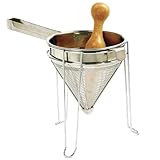
Whether you are using a rigid metal chinois, a narrow kitchen funnel, or a standard wire sieve, these seven proven techniques will ensure crystal-clear, sediment-free results every time you step into the kitchen. Let’s dive into the exact methods for filtering your favorite recipes, ensuring you have the right substitutes you probably already have on hand for any culinary emergency in September 2026.
1. Brew and Filter Crystal Clear Cold Brew Coffee

Save this crystal-clear cold brew hack to your favorite morning routine Pinterest board!
If you are tired of drinking a bitter cold brew filled with gritty sludge at the bottom of your cup, mastering the coffee filter vs cheesecloth for cold brew debate is essential. While reusable cotton cheesecloth bags for cold brew coffee are great for the initial long steep, they cannot catch the microscopic coffee fines. A drip filter made of paper provides the ultimate polish. By straining liquid from solids through paper, you stop the extraction process completely, ensuring a smooth, sweet flavor profile.
What You Need
- Unbleached paper cone filters (Size #4 provides the best surface area)
- A wire sieve or pourover cone for structural support
- A large glass cold brew pitcher or mason jar
- Coarsely ground coffee beans and filtered water
Steps
- Steep the coarse coffee grounds in your jar of water for 12 to 18 hours at room temperature.
- Line your wire sieve or pourover cone with the unbleached paper filter and set it securely over the clean pitcher.
- Pour the cold brew mixture slowly into the filter, allowing gravity to pull the liquid through.
- Drain completely without squeezing the wet paper, which prevents tearing under pressure and keeps bitter silt out of the final brew.
Pro-Tip: In our test kitchen, we found that wetting the filter paper with a splash of clean water before pouring prevents the hydrophilic properties of the dry cellulose from absorbing your precious coffee oils.

2. Clarify Homemade Butter or Render Beef Tallow

Pin this butter clarification trick to keep your cooking fats shelf-stable!
When clarifying butter or ghee or rendering beef tallow, you must separate the pure fat from the milk solids or meat proteins. Here, the cheesecloth vs coffee filter for ghee debate strongly favors cloth. Hot, heavy fats will easily burst through weak paper seams. Utilizing a food-grade cloth allows you to safely process hot liquids while trapping the milk solids, preventing any chemical leaching that might occur if you used cheap, bleached coffee papers.
What You Need
- 100 percent natural cotton cheesecloth (Grade 90 for the tightest weave)
- A chinois or standard fine mesh strainer
- A heat-proof glass jar or ceramic container
- High-quality unsalted butter or raw beef fat
Steps
- Clarify the butter by simmering it gently on the stove until the water evaporates and the white milk solids separate and sink to the bottom.
- Line your strainer with a double layer of the food-safe cotton cloth and place it over your heat-proof jar.
- Pour the hot liquid gold slowly through the fabric, ensuring the milk solids are caught by the woven textile.
- Squeeze the cooled cloth gently if necessary, as the tensile strength when wet allows cotton to withstand pressure without tearing.
Pro-Tip: For the absolute purest ghee, our chef recommended substitute is passing the liquid through the cloth twice. Cheesecloth requires washing immediately in hot soapy water to dissolve the trapped lipids before they turn rancid.
3. Strain Chicken or Beef Stock for Consomme

Save this broth-straining secret for soup season to get restaurant-quality clear stocks!
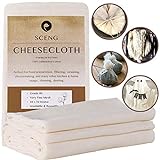
Figuring out how to strain beef stock without cheesecloth is a game-changer for home cooks striving for perfection. When straining chicken stock, skipping the cloth in favor of paper is the secret to achieving crystal clear stock using double filtration. A traditional cloth often leaves you with a cloudy stock, but the microscopic pores in paper block the fine proteins and collagen clumps. This is the ultimate technique for transforming rustic bone broth into an elegant, sediment-free consomme.
What You Need
- Large basket-style disposable filter (paper) or a double layer of muslin cloth
- A sturdy colander for the first pass
- A fine mesh strainer or bouillon strainer for the final polish
- Two large stockpots or heat-proof bowls
Steps
- Separate the large bones, vegetables, and aromatics from your homemade stock by pouring it through a standard colander into a clean pot.
- Line your fine mesh strainer with the basket coffee filter, ensuring the paper is flush against the wire to prevent tearing under pressure.
- Ladle the roughly strained stock into the paper filter in small batches. Do not dump it all at once, or you risk an overflowing funnel scenario.
- Drain completely. If the paper clogs with collagen and fat, gently discard it and replace it with a fresh filter to maintain an even flow rate.
Pro-Tip: Never squeeze a paper cone full of stock! Squeezing tears coffee filters, which will instantly dump the cloudy fine sediment passing through right back into your perfectly clear liquid, ruining your hard work.
4. Infuse and Purify Culinary Cooking Oils

Pin this brilliant hack for making gorgeous, sediment-free infused olive oils at home!
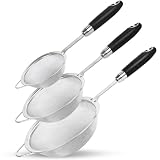
When filtering infused cooking oils, leaving any organic matter (like garlic or herbs) in the liquid can cause rapid spoilage or even dangerous botulism. Straining infused oils with unbleached paper filters is far safer than using cloth. If you are wondering, will a coffee filter work for infused oils, the answer is a resounding yes. By placing your filter + funnel setup over a glass cruet, you leverage the tight paper weave to strip away every microscopic botanical particle, ensuring your artisan oils remain shelf-stable.
What You Need
- A small, disposable filter (standard drip coffee size works perfectly)
- A kitchen funnel
- A clean, sterilized glass bottle or cruet for storage
- Your cooled, infused oil and herbs
Steps
- Infuse your oil with herbs, garlic, or chilies according to your recipe, then allow it to cool to room temperature to prevent the hot oil from melting the funnel or scalding you.
- Line the inside of your kitchen funnel with the dry coffee filter, pressing it against the sides.
- Set the funnel securely into the neck of your sterilized glass storage bottle.
- Pour the oil slowly. Because oil is highly viscous, it will drain incredibly slowly. Be patient and filter in small batches to prevent spilling.
Pro-Tip: If the oil stops dripping entirely, the paper is likely suffering from a clogged paper filter. Carefully lift the edges of the filter to release any trapped air in the bottle neck, which instantly restores the gravitational flow.
5. Drain Yogurt Whey for Thick Tzatziki Sauce

Save this easy yogurt-straining method for making incredibly thick homemade dips!
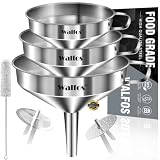
If you are straining yogurt for tzatziki, transforming thin store-bought dairy into rich, Greek-style yogurt is a simple overnight process. While straining yogurt whey using standard coffee filters works for small batches, examining the nut milk bag vs cheesecloth debate reveals a better path. A heavy-duty flour sack towel alternative or tightly woven nut milk bag performs beautifully here because paper breaks down when left soggy in the fridge overnight. Cloth guarantees you won’t scrape shredded cellulose into your dip.
What You Need
- A nut milk bag, a clean flour sack towel, or 3-4 layered basket coffee filters
- A large mixing bowl
- A wire sieve
- Standard plain or homemade yogurt
Steps
- Line your wire sieve with the nut milk bag or a thick layer of overlapping coffee filters.
- Set the sieve securely over the deep mixing bowl, ensuring the bottom of the sieve sits several inches above the bottom of the bowl so it doesn’t steep in its own liquid.
- Pour the yogurt into the center of the lined sieve.
- Drain in the refrigerator for 4 to 12 hours. The longer you wait, the thicker the resulting yogurt will be as the whey extracts into the bowl below.
Pro-Tip: If using a paper cone, do not scrape the thick yogurt out with a metal spoon! The wet paper will shred, leaving tiny bits of cellulose fiber composition in your tzatziki. Gently invert the paper to peel it away from the thickened yogurt instead.
6. Extract Fresh Fruit Juice for Homemade Jelly

Pin this jelly-making tip to get perfectly clear fruit juices without any cloudy pulp!
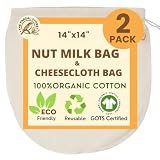
When extracting fruit juice for jelly, clarity is the ultimate hallmark of a professional preserve. In the jelly bag vs cheesecloth face-off, you must avoid paper entirely. Cooked macerated fruit is incredibly heavy, and using a paper cone will result in a disastrous blowout. Instead, rely on a heavy-duty straining sack suspended over a bowl. This durable fabric setup avoids the fraying fabric edges common with cheap cheesecloth, ensuring your juice remains pristine and lint-free.
What You Need
- A dedicated jelly bag with a stand, or a large, thick piece of muslin cloth
- A deep bowl or measuring pitcher
- Kitchen twine (if tying your own muslin bag)
- Macerated or simmered fruit pulp
Steps
- Set up your jelly strainer bag on its stand over a deep bowl. If using muslin cloth, line a colander with it or tie the corners together with kitchen twine and suspend it from a cabinet handle over a bowl.
- Ladle the hot, cooked fruit mixture carefully into the straining sack.
- Drain the fruit naturally overnight.
- Purify the juice purely through gravity. Resist the urge to squeeze the bag!
Pro-Tip: Using a dedicated jelly bag is vastly superior to standard cheesecloth because cheap cheesecloth often suffers from fraying fabric edges, which can leave lint in finished food—a major flaw when aiming for crystal-clear preserves.

7. Sift and Separate Fine Sediment from Sauces

Pin this chef’s trick for achieving incredibly silky, restaurant-quality sauces at home!
When filtering fine sediment from homemade sauces, both paper and cloth fall short. Evaluating chinois vs cheesecloth proves that thick, blended purees demand a rigid tool. If you are preparing birria de res consomme or a velvety tomato coulis, comparing a metal filter vs paper filter shows that paper clogs instantly and cloth stains permanently. A stainless steel chinois provides the structural integrity required to force a thick colloidal suspension through a fine mesh, creating a remarkably smooth mouthfeel.
What You Need
- A chinois (a conical fine mesh strainer) or standard wire sieve
- A wooden pestle or the back of a silicone ladle
- A clean saucepan or bowl
- Your blended, hot sauce base
Steps
- Set your conical chinois or wire sieve securely over a clean receiving bowl.
- Pour the thick, blended sauce into the metal strainer. Do not use paper or cloth, as the thick viscosity will cause a clogged paper filter immediately.
- Extract the liquid by pressing the sauce firmly against the metal mesh using a wooden pestle or ladle, forcing the smooth liquid through while trapping skins and seeds.
- Scrape the outside bottom of the metal strainer periodically with a spatula to encourage the thick puree to fall into the bowl.
Pro-Tip: If you are preparing birria de res consomme, skip the cheesecloth entirely. The heavy chili solids and fats will ruin a cotton cloth. A rigid bpa-free synthetic mesh or stainless steel chinois provides the necessary leverage to push the flavor through while catching the bitter chili skins.
Key Takeaways: Your Quick Guide to Coffee Filter vs Cheesecloth
Understanding the physical differences between a paper cone and a woven textile is the absolute secret to consistent culinary success. Whether your immediate kitchen priority is rapid speed, pristine clarity, or heavy-duty durability, keeping these core principles in mind will save your recipes from disaster. This quick coffee filter vs cheesecloth overview consolidates the most critical lessons from our testing, giving you the main takeaways you need to confidently choose the right filtration medium every time you cook.
- Clarity vs. Speed is the Ultimate Trade-Off: Paper coffee filters have a much smaller micron pore size, meaning they catch significantly more fine sediment and leave behind a perfectly clear liquid, but they drain exponentially slower than woven cotton.
-
Never Squeeze Wet Paper: Because of their weak wet strength, squeezing a coffee filter full of liquid will cause it to burst under pressure, ruining your straining process. If you must squeeze to extract liquid, use 100 percent natural cotton cheesecloth instead.
-
Always Support Your Filter: A coffee filter cannot support weight on its own. Always line a mesh strainer, wire sieve, or kitchen funnel with the filter to provide structural support before pouring hot liquids through it.
-
Choose the Right Cheesecloth Grade: Not all cloth is created equal. For culinary tasks, always seek out grade 90 thread count cheesecloth, which has the tightest weave, preventing lint in finished food and catching smaller particles.
-
Beware of Chemical Leaching: When substituting materials, always prioritize unbleached paper filters and unbleached cotton to prevent any residual bleach taste in food, especially when working with hot liquids or highly acidic ingredients like coffee.
-
Match the Viscosity to the Filter: Thin, watery liquids (like stocks and cold brew) filter beautifully through paper. Thick, heavy, or fatty liquids (like blended sauces or heavy dairy) demand the wider gaps of woven fabric or a rigid metal chinois.
People Also Ask About Coffee Filter vs Cheesecloth
Even armed with the right tools and techniques, you might still have highly specific questions about adapting these filtration methods to unique recipes. By addressing these exact questions about coffee filter vs cheesecloth, we can resolve the most common uncertainties and practical “what if” scenarios you might face. From basting holiday turkeys to safely washing reusable cloth, here are the expert answers to your most pressing kitchen filtration questions.
Can you use a coffee filter instead of cheesecloth for a turkey?
No, you should not use a coffee filter to wrap a turkey for basting or roasting in the oven.
While butter-soaked cheesecloth is a traditional method for keeping turkey breast moist during roasting, paper coffee filters cannot withstand prolonged oven temperatures and will burn or disintegrate. The woven fabric of cotton cheesecloth acts as a durable sponge for basting liquids; paper will simply dry out, tear, and potentially catch fire, ruining your holiday meal.
What happens if you use a coffee filter instead of cheesecloth?
If you use a coffee filter instead of cheesecloth, your straining process will take much longer, but the resulting liquid will be significantly clearer.
Because a coffee filter has smaller holes (a tighter micron pore size), it traps microscopic sediment that would normally pass through standard cloth. However, you must let gravity do the work; if you try to squeeze the paper like a straining cloth, the paper will burst and release all the trapped solids.
Is cheesecloth better than a coffee filter for cold brew?
Cheesecloth is faster and easier to squeeze, but a coffee filter is better if you want a completely sediment-free, gritless cup of cold brew.
Many coffee enthusiasts prefer using a reusable cold brew bag (which mimics cheesecloth) for the initial steep, followed by a secondary pass through a paper cone to remove the silty “mud” at the bottom of the jar. The paper filter prevents bitter over-extraction by removing the finest micro-grounds.
Why are coffee filters so slow for straining?
Coffee filters drain slowly because they are made of dense cellulose fibers designed to slow down water just enough to extract flavor from coffee grounds.
Unlike the relatively larger holes in woven cotton, the microscopic pores in paper quickly clog when filtering liquids high in fat, collagen (like bone stock), or starchy sediment. This flow dynamics reality means you often have to swap out clogged filters multiple times during a large straining project.
Can you wash and reuse cheesecloth?
Yes, high-quality, 100 percent natural cotton cheesecloth can be washed and reused multiple times if cleaned properly.
Immediately after use, rinse the cloth in hot water to remove heavy debris. Hand wash it gently with mild, unscented dish soap, or boil it in water with a splash of baking soda to remove trapped oils and sterilize it. Avoid machine washing, as standard laundry detergents can leave a chemical residue that transfers to your food.
Which filter gives you a clearer stock?
A paper coffee filter will always give you a clearer stock than standard cheesecloth.
Even a high-quality grade 90 thread count cheesecloth folded into multiple layers will allow some micro-particulates through, resulting in a slightly cloudy stock. A paper filter acts as a fine particulate barrier, ensuring you achieve a crystal-clear consomme. Just remember to line a mesh strainer with the paper so the weight of the broth doesn’t tear it.
Is unbleached cheesecloth safer for cooking?
Yes, unbleached, food-grade cheesecloth is generally considered safer for high-heat cooking and straining than heavily bleached alternatives.
Unbleached cotton retains its natural beige color because it hasn’t been treated with chlorine or harsh chemicals. Using culinary grade materials ensures that no residual bleaching agents leach into your hot liquids (like stocks or rendering fats), preserving the pure flavor of your food without any subtle chemical off-tastes.
How many layers of cheesecloth equal a coffee filter?
It typically takes 3 to 4 folded layers of high-grade (Grade 90) cheesecloth to approximate the fine sediment filtration of a single paper coffee filter.
If you are using cheap grocery store cheesecloth (which is usually a loose Grade 10 or 20), you would need to fold it over a dozen times to trap the same amount of fine sediment. When substituting, it is often easier to line a single layer of cloth with a paper filter for the best of both worlds.
Can you use a coffee filter to strain yogurt?
Yes, you can line a wire sieve with standard coffee filters to strain plain yogurt into thick, Greek-style yogurt or tzatziki.
The paper will easily allow the watery whey to drip through while holding back the milk curds. However, you must be extremely gentle when scooping the thickened yogurt off the paper later; the moisture severely weakens the weak wet strength of the paper, and scraping it with a spoon will cause it to tear and leave paper fibers in your food.
Will a coffee filter work for infused oils?
Yes, a coffee filter works beautifully for infused oils, yielding a perfectly clear, botanical-free culinary oil.
Place a small paper filter inside a kitchen funnel and pour your cooled, herb-infused oil through it. Because oil is highly viscous, it will drain incredibly slowly, but the tight paper mesh guarantees that no microscopic garlic or herb particles remain, which is essential for extending the shelf life and preventing spoilage in homemade infused oils.
Final Thoughts on Coffee Filter vs Cheesecloth
Ultimately, the great coffee filter vs cheesecloth debate doesn’t have a single winner—it entirely depends on the culinary task in front of you. If your goal is pristine clarity and removing microscopic grit from a cold brew or a delicate consomme, the tight weave of a paper filter is unmatched. However, if you’re dealing with heavy, wet ingredients like cheese curds or jelly fruits that require physical squeezing, the durable tensile strength of 100% natural cotton cheesecloth is non-negotiable.
Understanding the unique mechanics behind these simple kitchen staples elevates your daily cooking from amateur guesswork to a true professional kitchen standard. By utilizing the seven proven straining hacks outlined in this guide, you can confidently swap out tools in a pinch without sacrificing the quality, texture, or safety of your food.
Have you ever tried using a paper towel in an absolute kitchen emergency, or do you have a unique straining hack of your own? Drop your experiences in the comments below—we’d love to hear how you problem-solve and adapt in your kitchen!
Last update on 2026-09-19 / Affiliate links / Images from Amazon Product Advertising API
