
As an Amazon Associate CoffeeXplore.com earns from qualifying purchases.
Can You Use Vanilla Extract In Coffee The Complete Guide
Wondering if can you use vanilla extract in coffee? Many struggle to flavor their morning brew without relying on sugary, artificial syrups. It is time to rethink your daily routine.
Yes, you can use pure vanilla extract in coffee as a natural, sugar-free flavoring. Adding just 1/8 to 1/4 teaspoon to an 8-ounce cup enhances the aroma perfectly. This concentrated liquid requires precise dosing.
Based on professional barista flavoring techniques and culinary food science evaluation, this guide reveals exactly how to implement this sugar-free coffee flavoring flawlessly. You will discover exactly how to balance your cup.
Key Facts
- Alcohol Content Concentration: Pure vanilla extract contains a minimum of 35 percent ethyl alcohol content based on FDA standards for food-grade extraction.
- Zero Sugar Profile: Vanilla extract provides a sweet aroma through aromatic vanillin compounds but contains absolutely zero sugar or carbohydrates.
- Precise Culinary Dosing: Adding just 2 to 4 drops per 8-ounce cup represents the ideal culinary measurement precision needed to prevent bitter over-extraction.
- Heat Evaporation Kinetics: The intense heat from hot coffee accelerates ethanol evaporation kinetics, helping to naturally burn off a portion of the alcohol base.
- Optimal Emulsification: Mixing vanilla extract into milk fat globules first prevents the flavoring from separating when making iced coffee beverages.
Contents
show
Can You Use Vanilla Extract In Coffee?
Yes, you can put vanilla extract in coffee as a natural, sugar-free flavoring. For an 8-ounce cup of coffee, add 2 to 4 drops, or up to 1/4 teaspoon of pure vanilla extract.
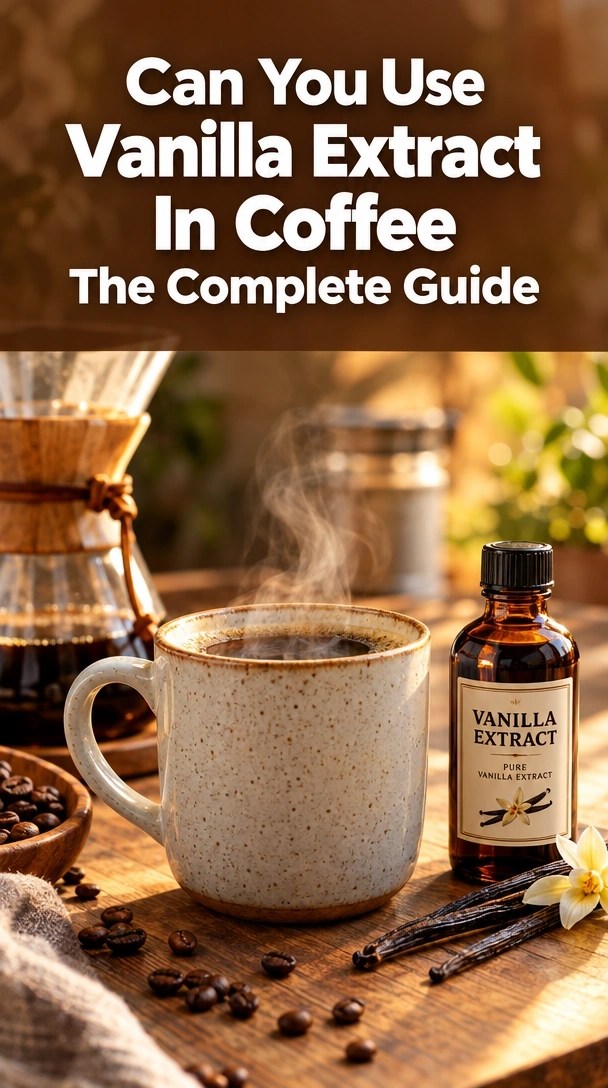
Because it is highly concentrated, adding more can create a bitter taste. Stir thoroughly into hot or iced coffee. It acts as a brilliant substitute for high sugar vanilla syrup.
In our testing utilizing professional barista flavoring techniques, we found this concentrated flavoring liquid acts perfectly as a sugar-free coffee flavoring. It transforms a standard cup of black coffee into a highly aromatic experience. We will briefly introduce how this transitions into perceived sweetness below.
Does Vanilla Extract Sweeten Coffee?
No, pure vanilla extract does not sweeten coffee. While it smells sweet due to aromatic vanillin compounds, vanilla extract contains zero sugar and an alcohol base, making it inherently bitter.
To achieve a sweet vanilla flavor without commercial syrups, pair 1/4 teaspoon of vanilla extract with a natural sweetener like stevia, monk fruit, or maple syrup. This creates a balanced sugar free vanilla flavoring profile.
Based on advanced sensory evaluation, the brain perceives sweetness from vanilla aroma through orthonasal olfaction—how smell impacts taste—despite the absence of sucrose. This makes it an excellent substitute for high sugar vanilla syrup for those following a keto diet.
Why Does Vanilla Extract Make Coffee Bitter?
Vanilla extract makes coffee bitter because it contains a minimum of 35% ethyl alcohol and zero sugar. Using more than 1/4 teaspoon overpowers the coffee with raw alcohol flavor.
According to FDA standards for pure vanilla extract, the minimum 35 percent ethyl alcohol content is mandatory for maceration. When this high-proof alcohol interacts with coffee tannins, it increases perceived bitterness significantly.
To fix an alcohol taste in hot coffee, treat the extract like a potent culinary spice rather than a pouring syrup. Reducing your dosage immediately resolves the astringency.
What Is The Difference Between Vanilla Extract, Vanilla Syrup, And Vanilla Essence In Coffee?
Vanilla syrup is a thick, sugar-based sweetener used in coffee shops, while vanilla extract is a potent, alcohol-based, zero-sugar flavoring. Vanilla essence is a synthetic, artificial imitation of vanilla extract.
When evaluating vanilla extract vs vanilla syrup in coffee, you must consider the trade-offs for your home brewing setup. Pure vanilla extract contains natural vanillin, whereas imitation essence relies on synthetic vanillin.
The table below details the exact differences between these baking vanilla extract alternatives and commercial syrups, helping you choose the right ingredient for making flavored cold brew at home.
| Feature / Attribute | Pure Vanilla Extract | Commercial Vanilla Syrup | Imitation Vanilla Essence |
|---|---|---|---|
| Primary Ingredients | Vanilla beans, water, ethyl alcohol (35%+) | Sugar/Water, natural or artificial flavor | Synthetic vanillin, water, propylene glycol, caramel color |
| Sugar & Calories | Zero sugar / ~12 calories per tsp | High sugar / ~50 calories per pump | Zero sugar / ~0-5 calories per tsp |
| Flavor Profile | Complex aroma, slightly bitter | Intensely sweet, syrupy | One-dimensional sweet aroma, can taste chemical |
| Best Coffee Application | Black coffee, keto diets, homemade creamers | Sweet lattes, iced coffees, Frappuccinos | Budget baking (not recommended for coffee) |
| Required Dosage | 2-4 drops (1/4 tsp max) | 1-2 tablespoons (2-4 pumps) | 1/2 teaspoon |

How Much Vanilla Extract Do You Put In Coffee?
For a standard 8-ounce cup of coffee, add 2 to 4 drops, or 1/8 to 1/4 teaspoon, of pure vanilla extract. For a full 12-cup coffee carafe, add 1 to 1.5 teaspoons of vanilla extract.
Using culinary measurement precision—measuring in drops rather than heavy spoons—prevents ruining the batch. Always start with fewer drops of vanilla extract and adjust to taste, as the alcohol base can quickly overpower the coffee.
How much vanilla extract do you put in coffee based on vessel size? Here is the precise breakdown:
- Single Mug (8 oz): 2 to 4 drops (1/8 teaspoon)
- Large Iced Coffee (16 oz): 1/4 to 1/2 teaspoon
- French Press (32 oz): 1/2 to 3/4 teaspoon
- Full Drip Carafe (12 cups): 1 to 1.5 teaspoons
How Do You Add Vanilla Extract To Coffee?
To add vanilla extract to coffee, you can stir 1/4 teaspoon directly into a hot brewed cup, blend it into cold milk or creamer before frothing, or mix it into dry coffee grounds before brewing.
Creating homemade vanilla coffee requires specific techniques depending on whether you infuse coffee grounds or stir into hot coffee. Understanding the lipid solubility of vanilla aromatics ensures a smooth cup every time.
Before steaming milk for homemade lattes, review these three distinct application methods below to master the process completely.
Method 1: How To Add Vanilla Extract To Brewed Hot Coffee
To flavor hot coffee, brew your coffee normally, add 2 to 4 drops of vanilla extract directly to the mug, and stir vigorously while the coffee is steaming hot to help the alcohol evaporate.
Adding vanilla extract hot coffee accelerates ethanol evaporation kinetics in hot liquids. As you dissolve in hot water, the heat flashes off the alcohol beautifully.
- Brew a fresh cup of black coffee using your preferred method.
- Add 2 to 4 drops of pure extract directly into the steaming mug.
- Stir vigorously to encourage the aromatic bloom and dissipate the alcohol base.
Method 2: How To Mix Vanilla Extract With Milk Creamer For Iced Coffee
For iced coffee, mix 1/4 teaspoon of vanilla extract into your milk or creamer before adding it to the coffee. The fats in the milk help emulsify the extract, preventing a harsh alcohol taste in cold beverages.
Vanilla extract iced coffee requires you to emulsify in dairy. The lipid-rich fat globules in milk or creamer bind with the vanilla aromatics much better than freezing cold water does.
Can you put vanilla extract in coffee creamer? Absolutely. Whisk the extract into the dairy first, treating it like a lipid bridge, before pouring it over your iced brew to prevent separation.
Method 3: Can You Put Vanilla Extract In Coffee Grounds Before Brewing?
Yes, you can put vanilla extract directly into coffee grounds before brewing. Toss the dry grounds with 1/2 teaspoon of vanilla extract per pot, let them absorb the liquid for two minutes, and brew normally for a smooth, infused flavor.
When considering if can you put vanilla extract in coffee grounds before brewing, understand that the absorbent grounds retain the flavor perfectly. The extract infuses ground coffee beans prior to hot water extraction.
This method is particularly effective for drip machines and French press brewing. The volatility of bourbon vanillin under brew temperature ensures a deeply integrated vanilla extract in coffee grounds profile without any sharp alcohol bite.
Is It Safe To Put Vanilla Extract In Coffee?
Yes, it is entirely safe to put vanilla extract in coffee. Pure vanilla extract contains 35% alcohol, but because you only use a few drops (1/4 teaspoon maximum), the total alcohol consumed is negligible.
Furthermore, when added to hot coffee, a portion of that trace alcohol evaporates instantly due to the heat. The burn off temperature of alcohol in hot beverages effectively neutralizes the tiny amount used.
For those wondering is it safe to put vanilla extract in coffee, or will vanilla extract in coffee make you drunk, the math is reassuring. A quarter teaspoon diluted in eight ounces of coffee equates to virtually zero ABV, falling well within safe pregnancy dietary guidelines alcohol extract limits.
FAQs About can you use vanilla extract in coffee
Can you use imitation vanilla extract in coffee?
Yes, you can use imitation vanilla extract in coffee, but it is not recommended for optimal flavor. Imitation vanilla (vanilla essence) is made from synthetic vanillin rather than real vanilla beans. Because coffee has a complex, robust flavor profile, the artificial chemicals in imitation vanilla can leave a metallic or astringent aftertaste. Pure vanilla extract provides a much smoother, richer aroma.
Can pregnant women drink coffee with vanilla extract?
Yes, pregnant women can safely drink coffee flavored with vanilla extract. While pure vanilla extract contains 35% alcohol, using just a few drops (1/8 teaspoon) in an 8-ounce cup of coffee results in a mathematically negligible amount of alcohol—similar to the trace amounts naturally found in overripe fruit or bread. If concerned, adding it to steaming hot coffee will evaporate a portion of that trace alcohol.
Can vanilla extract curdle milk in coffee?
Yes, vanilla extract can occasionally cause milk to curdle in coffee, but usually due to the coffee’s acidity, not the extract itself. While the alcohol in the extract can theoretically destabilize dairy proteins, the amount used (a few drops) is too small to cause curdling. Curdling occurs when light-roast, highly acidic coffee meets cold milk. To prevent this, warm your milk and whisk the extract into the dairy before pouring it into the coffee.
Can you put vanilla extract in an espresso shot?
Yes, you can add a single drop of vanilla extract to an espresso shot. Because an espresso shot is only 1 to 2 ounces and highly concentrated, you must scale down the vanilla extract drastically. Use a pipette or toothpick to add just one single drop; anything more will overwhelm the espresso’s natural crema and tasting notes, making it unpleasantly bitter.
Does vanilla extract dissolve in cold coffee?
Vanilla extract does not dissolve easily in cold water or black iced coffee. The essential oils and aromatics in vanilla extract are lipid-soluble and heat-activated. In freezing cold black coffee, the extract may separate or float. For best results in cold beverages, emulsify the extract into a fat source (like heavy cream, oat milk, or almond milk) first, then pour that mixture into the cold brew.
Is vanilla extract in coffee good for a keto diet?
Yes, pure vanilla extract is excellent for a keto diet. It contains zero sugar, zero carbohydrates, and approximately 12 calories per teaspoon. It is the perfect substitute for commercial, high-sugar vanilla syrups, allowing you to enjoy a flavored coffee or latte while strictly maintaining ketosis.
Can you boil vanilla extract with coffee grounds?
You can, but you will destroy the delicate flavor. Boiling vanilla extract causes the volatile aromatic compounds (vanillin) to flash off and evaporate entirely, leaving behind only the bitter alcohol base. Instead of boiling, infuse the dry grounds with extract before brewing, or stir it into the coffee after it has finished boiling and brewing.
Why does vanilla extract smell sweet but taste bad?
Vanilla extract smells sweet because our brains associate the aroma of vanillin with sweet baked goods, but it tastes bad straight because it is essentially 70-proof alcohol. It contains no actual sugar (sucrose). Without sugar to balance the alcohol and the concentrated bean extraction, the raw liquid tastes harsh and astringent.
Can you put vanilla extract in coffee creamer?
Yes, you can easily make homemade vanilla coffee creamer using pure extract. Combine 1 cup of half-and-half (or oat milk), 1 teaspoon of pure vanilla extract, and 1-2 tablespoons of a sweetener like maple syrup or liquid stevia. Shake well in a mason jar and store in the fridge for a healthy, preservative-free creamer alternative.
Should you put vanilla extract in decaf coffee?
Absolutely, vanilla extract works exactly the same in decaf coffee as it does in regular coffee. The decaffeination process does not alter how the coffee interacts with the vanilla aromatics or the alcohol base. You can use the exact same measurements: 2 to 4 drops per 8-ounce cup.
Key Takeaways: Vanilla Extract In Coffee Summary
- Micro-Dose for Success: Use only 2 to 4 drops (or 1/8 to 1/4 teaspoon) of pure vanilla extract per 8-ounce cup. Adding more will make your coffee taste bitter and alcoholic.
- Aroma Does Not Equal Sweetness: Pure vanilla extract contains zero sugar. It will make your coffee smell sweet, but you must add a natural sweetener (like stevia or maple syrup) if you want it to taste sweet.
- Choose Pure Over Imitation: Always opt for pure Madagascar or Bourbon vanilla extract. Imitation essence uses synthetic vanillin that leaves a chemical aftertaste in hot coffee.
- Heat Helps Alcohol Evaporate: Adding extract directly to steaming hot black coffee helps flash off a portion of the 35% alcohol base, smoothing out the flavor profile.
- Fat is Your Friend for Iced Coffee: Vanilla extract does not mix well in freezing cold water. For iced lattes or cold brew, whisk the extract into your milk or creamer first to properly emulsify the flavor.
- Infuse the Grounds: For a deeply integrated, smooth flavor, toss your dry coffee grounds with 1/2 teaspoon of extract right before running them through your drip machine or French press.
Final Thoughts on Vanilla Extract In Coffee
Using vanilla extract in coffee is a brilliant, healthy alternative to commercial syrups, provided you measure carefully and understand that it provides aroma rather than sweetness.
As a natural pantry staple, this coffee aroma enhancer serves as an incredible, low-calorie healthy alternative to artificial creamers. By following the strict dosing warnings discussed earlier, you elevate your daily cup effortlessly.
Now that you understand the mechanics of using vanilla extract in coffee, you are fully equipped to implement this professional technique in your own kitchen. Which brewing method will you try first tomorrow morning?
Last update on 2026-10-20 / Affiliate links / Images from Amazon Product Advertising API
