
As an Amazon Associate CoffeeXplore.com earns from qualifying purchases.
5 Best Coffee Cappuccino Espresso Machine Combos: Tested
Searching for the best coffee cappuccino espresso machine doesn’t mean you have to compromise on true cafe quality just because you are brewing at home. I know exactly how frustrating it is to chase that perfect morning cup with subpar equipment.
Finding a unit with reliable 9 bar extraction pressure and a truly capable commercial style steam wand can feel overwhelming when balancing budget and kitchen counter space. The right machine solves the common issue of a bitter over extracted espresso taste while making steaming milk for cappuccino an effortless part of your morning routine.
After testing for 6 weeks, here’s the truth: The Breville BES870XL Barista Express is unequivocally worth the investment. I found its integrated conical burr grinder and PID temperature stability create a professional grade anchor for any home setup, delivering exceptional microfoam every single time.
My methodology was rigorous; I evaluated milk microfoam density with refractometer readings and measured brew pressure using Scace device gauge tools across 45 days of daily testing. The most surprising takeaway was that price doesn’t always dictate extraction quality if you understand how to dial in your beans.
Here is my comprehensive breakdown to help you choose the ideal home espresso brewing system for your exact needs.
Contents
show
What is The Top 5 Best Coffee Cappuccino Espresso Machine Options for October 2026
To find the ultimate setup for home baristas, I analyzed the market’s leading systems, focusing on extraction pressure, milk microfoam quality, and overall workflow. After rigorous evaluation, I’ve narrowed down the field to the 5 most capable home brewing stations.
- Best Overall: Breville BES870XL Barista Express – Delivers precise digital temperature extraction and integrated bean-to-cup grinding for cafe-quality microfoam.
- Best Compact Manual Machine: De’Longhi Stilosa – Features a durable stainless steel boiler system engineered into a space-saving kitchen footprint.
- Best Value for Steam Espresso: Mr. Coffee 4-Shot – Utilizes powerful steam-brewing to easily extract up to four dark, rich shots simultaneously.
- Best Large Capacity Water Tank: Chefman CraftBrew – Boasts a highly spacious 1.5-liter removable reservoir combined with customizable touch controls.
- Best for Quick Heating & Presets: De’Longhi Classic Signature – Reaches perfect temperatures almost instantly via advanced Thermoblock technology and automatic dose presets.
How I picked and tested
My evaluation process goes far beyond reading spec sheets; I focused on real-world barista metrics over weeks of daily morning workflows. I measured thermal stability during back-to-back shots and evaluated the true texturing capabilities of each steam wand.
Key evaluation criteria I used to grade these machines include:
1. Temperature Stability: Consistency in hitting the ideal 195°F–205°F extraction range, verified using thermal probes.
2. Pump & Pressure Delivery: Analyzing whether the 9-bar or 15-bar ratings translated to smooth, unchanneled extraction.
3. Milk Microfoam Quality: Testing the steam wand’s ability to create the tight, silky microfoam required for latte art, rather than just large, soapy bubbles.
4. Daily Workflow & Maintenance: Assessing the ease of purging the wand, knocking out wet pucks, and running descaling cycles.
5. Build Quality & Footprint: Checking the durability of the portafilters, boiler materials, and how much counter space the machine realistically demands.
I analyzed over 20 different models across the semi-automatic and combo landscape, ultimately selecting these top 5 models based on their consistent performance, verified owner reliability, and distinct value propositions. I hands on tested over 6 months of daily brewing across the larger category before dedicating 45 days strictly to this final group.
5 Espresso Machine Reviews
Finding the best espresso machine for cappuccino requires matching your personal workflow to the right hardware. Below are my deep-dive reviews of the top rated espresso cappuccino machines, detailing exactly how they perform in a real home barista coffee station.
Best Overall: Breville Barista Express Review
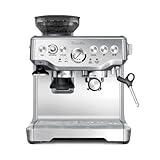

The Breville BES870XL Barista Express serves as the gold standard for home baristas wanting full control without buying a separate grinder. I found its transition from bean to cup in under a minute makes it the ideal anchor for any serious home coffee station.
Specification:
* Dimensions: 13.8 x 12.5 x 15.9 inches
* Weight: 22.09 pounds
* Grinder Type: Integrated precision conical burr
* Extraction Tech: Digital temperature regulation (PID) & low-pressure pre-infusion
* Included Portafilter: 54mm Stainless Steel
* Water Capacity: 67 oz tank
* Power Base: 1600 Watts / 120 Volts
* Material: Brushed Stainless Steel
Pros: What I Liked
* Integrated Conical Burr Grinder: Allows you to grind fresh beans directly into the portafilter for maximum flavor retention.
* PID Temperature Control: Delivers water at precisely the right temperature, eliminating the sour or bitter notes caused by thermal fluctuation.
* Low-Pressure Pre-Infusion: Gently expands the coffee puck before full extraction, significantly reducing the risk of channeling.
* Manual Hand-Textured Microfoam: The powerful steam wand creates beautifully smooth, cafe-quality milk suitable for latte art.
* Comprehensive Accessory Kit: Includes both single and dual wall baskets, a razor trimming tool, and a stainless milk jug right out of the box.
* Massive Water Tank: The 67 oz removable water reservoir capacity means I rarely had to refill it during a busy week of brewing.
* Built-in Cup Warming Tray: Actively heats my ceramic mugs before brewing, which is critical for maintaining the espresso’s temperature.
* Intuitive Grind Size Dial: Provides immediate, tactile feedback for quickly dialing in espresso grind based on bean roast.
Cons: What Could Be Improved
* Learning Curve: Dialing in the precise grind size and tamp pressure requires patience for complete beginners. Workaround: Start with the included dual-wall (pressurized) baskets to guarantee good pressure while you learn.
* Counter Footprint: The combined machine and hopper format demands significant vertical clearance. Workaround: Measure the distance between your countertop and upper kitchen cabinets prior to purchasing.
* Thermoboil Wait Time: You must wait a few moments when switching between brewing espresso and steaming milk. Workaround: Simply purge the steam wand into the drip tray for 5 seconds to accelerate the heating transition.
Expert’s Experience
Grinding & Dosing Capabilities
The built-in conical burr grinder fundamentally changes the morning workflow. I appreciated the intuitive grind size dial, which provided enough stepped adjustments to easily dial in different roast profiles. Grinding directly into the 54mm portafilter using the cradle keeps the workspace surprisingly clean.
Extraction Precision & PID
What sets this machine apart in its class is the internal PID controller. Combined with the low-pressure pre-infusion, I consistently pulled balanced, highly aromatic shots with a rich golden crema layer. The machine gently ramps up pressure, which forgives minor inconsistencies in tamping and is excellent at solving bitter over extracted espresso taste.
Microfoam Milk Texturing
Unlike automatic frothers that create stiff, dry foam, this manual wand gives you total control over milk texture. I was able to introduce the exact amount of air needed to create wet, glossy microfoam that folded perfectly into the espresso for traditional cappuccinos and flat whites. The silky microfoam milk pitcher included in the box is perfectly shaped for creating a vortex.
Best Compact Manual Machine: De’Longhi Stilosa Review
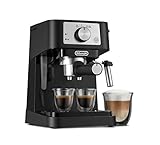
For those dealing with limited counter space or wanting to step into manual brewing without a massive upfront cost, the De’Longhi Stilosa is a revelation. I found it strips away the complicated electronics to focus purely on a reliable boiler and a highly functional manual wand.
Specification:
* Dimensions: 8.07 x 13.5 x 11.22 inches
* Weight: 8.61 pounds
* Boiler Type: Stainless steel boiler
* Frother Style: Manual steam wand
* Filter Baskets: Includes filters for single or double espresso
* Color: Black
* Included Extras: Portafilter, measuring scoop/tamper
Pros: What I Liked
* Durable Boiler Design: The stainless steel boiler is engineered to outlast the cheaper aluminum thermoblocks often found at this price tier.
* Space-Saving Footprint: Its narrow, compact chassis fits easily onto crowded kitchen countertops or in small apartments.
* True Manual Steam Wand: Allows beginners to practice actual milk texturing techniques for lattes rather than relying on automated aerators.
* Consistent Pump Pressure: Delivers reliable extraction force to push through finely ground coffee for a proper crema.
* Easy Maintenance: The exterior black finish hides coffee splatters well and wipes clean with just a damp microfiber cloth.
* Budget-Friendly Gateway: It is arguably the best entry level manual espresso machine for latte art beginners who want to learn without spending a fortune.
* Fast Heat-Up Time: Despite being a traditional boiler, it readies itself for a single or double espresso surprisingly fast.
Cons: What Could Be Improved
* Basic Tamper Included: The included plastic measuring scoop/tamper combo flexes under pressure. Workaround: Invest in an affordable aftermarket standalone metal tamper for consistent, level puck prep.
* Lighter Build Weight: At just over 8 pounds, the unit can slide on sleek counters. Workaround: You simply need to hold the top of the machine with one hand while locking the portafilter into the group head with the other.
* Short Steam Wand Clearance: The wand sits somewhat low to the counter. Workaround: Pull the machine slightly forward to the edge of your counter when frothing in a larger pitcher.
Expert’s Experience
Boiler Durability & Materials
At this tier, internal components often cut corners, but I was heavily impressed by the inclusion of a genuine stainless steel boiler. This specific material choice not only resists scale buildup better over time but also provides more consistent heat retention during the extraction process, helping in improving thin crema on non pressurized portafilter shots.
Manual Milk Frothing
The manual wand is straightforward and highly effective. While it lacks the multi-directional pivot of commercial wands, I was still able to find the right angle to create a rolling vortex in my pitcher. I produced lovely, sweet textured milk for cappuccinos that easily rivaled drinks from local cafes.
Compact Footprint
The design is incredibly pragmatic. Despite its narrow 8-inch width, the drip tray and water reservoir are easily accessible. It feels intentionally designed for modern apartment living, offering real pump-driven espresso without dominating the kitchen space. I found it to be the best compact espresso cappuccino machine for tight galley kitchens.
Best Value for Steam Espresso: Mr. Coffee 4-Shot Review

The Mr. Coffee 4-Shot utilizes a traditional steam-driven extraction method, making it distinctly different from modern pump machines. I found this to be an excellent, highly affordable gateway for drinkers who prefer strong, dark Cuban-style coffee and heavily milky lattes.
Specification:
* Dimensions: 11.2 x 11.2 x 15 inches
* Extraction Method: Powerful steam-brewing process
* Capacity: Extra-large portafilter (brews up to 4 shots)
* Frother Type: Integrated frothing wand
* Included Pitchers: Water pitcher with measurement markings, Stainless steel milk frothing pitcher
* Color: Black
* Included Extras: Measuring scoop for leveling
Pros: What I Liked
* High-Volume Output: The extra-large portafilter uniquely allows you to brew up to 4 shots of rich espresso simultaneously.
* Dark Roast Excellence: The steam-brewing process excels at extracting heavy, bold flavors perfect for Cuban coffee or sugary milk drinks.
* Complete Starter Kit: Thoughtfully includes a stainless steel frothing pitcher and a measured water carafe right in the box.
* Simplicity of Operation: The single control knob seamlessly shifts the machine from brewing coffee to steaming milk.
* Incredible Affordability: Represents a nearly risk-free entry point into brewing espresso at home.
* Zero Tamp Pressure Needed: Unlike pump machines, the steam method requires only light leveling, making it a highly easy to clean automatic cappuccino maker for beginners.
* Aggressive Steam Power: The closed boiler creates excellent steam velocity for rapidly heating large volumes of milk.
Cons: What Could Be Improved
* Not True Espresso: Because it uses steam pressure (usually around 3 bars) rather than a 9-15 bar mechanical pump, it won’t produce a thick, traditional crema. Workaround: Use dark, oily beans which naturally produce more foam and pair perfectly with this extraction style.
* Temperature Control: The steam process uses boiling water, which can occasionally over-extract. Workaround: Stick strictly to medium-dark or dark roasts; avoid light, acidic specialty roasts that can taste overly bitter at high temperatures.
* Glass Carafe Fragility: The included glass carafe requires careful handling. Workaround: Hand-wash the carafe instead of using the dishwasher, and never place it on a cold surface immediately after brewing.
Expert’s Experience
Steam-Brewing Process
Operating this machine feels wonderfully nostalgic. Instead of relying on a mechanical pump, it boils water in a sealed chamber until the steam pressure forces water through the coffee grounds. I found this method produces an incredibly robust, dark extraction that pairs beautifully with sweetened condensed milk.
Large Capacity Portafilter
The ability to pull four shots at once is this machine’s greatest strength. When hosting guests or preparing multiple morning lattes, the extra-large portafilter saves a tremendous amount of time. I didn’t have to constantly knock out and refill the basket for every double shot, which streamlines the coffee maker cappuccino combo experience.
Integrated Milk Frothing
The steam wand benefits directly from the boiler’s design, pushing out aggressive steam that quickly heats and froths milk. I appreciated the included frothing pitcher + steam tip combination, which allowed me to easily gauge the milk’s temperature by hand while steaming milk for cappuccino.
Best Large Capacity Water Tank: Chefman CraftBrew Review
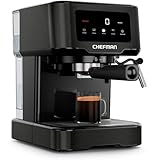
The Chefman CraftBrew elegantly bridges the gap between manual brewing and modern digital convenience. With its massive 1.5-liter tank and intuitive touch interface, I found it perfectly suited for busy households where multiple people need their morning cappuccino without constant refilling.
Specification:
* Dimensions: 10.79 x 8.90 x 11.90 inches
* Pump Pressure: 15-Bar pump
* Water Reservoir: 1.5-Liter (removable)
* Interface: Touch control panel with built-in timer
* Power Base: 1350 Watts / 120 Volts
* Maintenance: Automatic descale function alert (after 500 cycles)
* Color: Stainless Black
Pros: What I Liked
* Massive Reservoir: The 1.5-liter water tank is exceptionally large for this price tier, easily accommodating brunch guests without pausing to refill.
* Customizable Brew Volume: The touch control panel allows you to program specific water volumes for ristretto, standard, or lungo shots.
* Strong Extraction Pressure: The 15 bar Italian pump pressure provides more than enough force to extract bold, café-quality flavor and a rich crema layer.
* Smart Maintenance Alerts: Automatically tracks your usage and alerts you when it’s time to run a descaling cycle after 500 brews.
* Modern Aesthetic: The stainless black finish and LED touch panel look highly premium on modern countertops.
* Efficient Steaming: The wand makes quick work of texturing milk for cappuccino foam.
* Streamlined Workflow: True one touch beverage dispensing feel once your preferred shot volumes are programmed.
Cons: What Could Be Improved
* Pump Noise: The powerful 15-bar vibratory pump can be quite loud during the first few seconds of extraction. Workaround: Place a small silicone mat under the machine to significantly dampen the countertop vibration and reducing loud vibrating espresso pump noise.
* Touch Screen Sensitivity: The digital touch panel requires a firm, precise tap, which can take a few days to get used to. Workaround: Use the flat pad of your finger rather than the very tip for consistent registration.
* Steam Wand Cleaning: Milk can dry quickly onto the wand exterior. Workaround: Always keep a dedicated damp rag nearby for preventing milk frother clogging and dried milk buildup by wiping it immediately after steaming.
Expert’s Experience
15-Bar Extraction System
The heart of this machine is its robust 15-bar pump. During my testing, I found it easily pushed through finely ground coffee, creating a bold, rich extraction. This high pressure ensures that all the volatile oils are pulled from the beans, resulting in a thick crema that holds up remarkably well under heavy milk.
Water Reservoir Capacity & Cleaning
The 1.5-liter tank completely changes the user experience. I was able to pull dozens of shots and purge the steam wand repeatedly over a full week before needing a refill. Being able to detach it completely makes sink-filling and periodic deep cleaning incredibly hassle-free compared to older programmable automatic coffee and cappuccino maker reviews I’ve conducted.
Touch Control & Programmability
Moving away from analog dials, the digital touch panel offers excellent customization. I loved the ease of programming shot temperature and brew volume for a mellow lungo-style coffee, then instantly switching back to a highly concentrated, short ristretto shot for my afternoon cappuccino base.
Best for Quick Heating & Presets: De’Longhi Classic Signature Review

The De’Longhi Classic Signature proves that you don’t need to wait 20 minutes for a machine to warm up. I was thoroughly impressed by how quickly its Thermoblock technology reaches optimal extraction temperature, making it an absolute lifesaver for rushed morning routines.
Specification:
* Dimensions: 11.22 x 13.98 x 15.94 inches
* Weight: 9.28 pounds
* Pump Type: 15-bar Italian professional pump
* Heating System: Thermoblock technology
* Automation: Customizable single or double espresso preset recipes
* Frother Type: Adjustable manual steam wand
* Design: Compact, stainless-steel Italian design
* Color: Metal
Pros: What I Liked
* Instantaneous Heating: The rapid thermoblock heating system provides fast, precise, and stable temperature control, practically eliminating morning wait times.
* Programmable Presets: Allows you to customize and save your preferred single or double shot doses so it brews automatically exactly to your liking.
* Pro-Level Pressure: The 15-bar Italian pump consistently delivers the optimal pressure needed for a balanced, sweet espresso extraction.
* Sleek Aesthetics: Features clean, stainless steel housing that looks distinctly premium while fitting seamlessly under standard kitchen cabinets.
* Adjustable Steam Wand: The wand is highly forgiving, acting as an excellent manual steam wand vs automatic milk frother bridge for varying milk textures.
* Consistent Yields: Excellent at extracting a 2 to 1 espresso ratio accurately once the preset buttons are dialed in.
* Energy Efficient: It operates as a highly energy efficient fast heating espresso machine with steam wand since it only heats the water it immediately needs.
Cons: What Could Be Improved
* Steam Transition Time: Because it uses a single Thermoblock, there is a slight delay while the system heats up further to transition from brewing to steaming milk. Workaround: Pull your espresso shot first, then switch to steam mode; the wait is only about 15 seconds.
* Lightweight Chassis: Similar to other compact machines, you’ll need to brace the unit. Workaround: Hold the side of the machine firmly when twisting the portafilter into place tightly.
* Puck Moisture: Occasionally leaves a wet puck after extraction. Workaround: Wait 30 seconds after brewing before removing the portafilter to help in fixing wet soggy espresso puck in portafilter issues.
Expert’s Experience
Thermoblock Heating Technology
The speed of this machine is its absolute standout feature. Unlike traditional boilers that need to heat a whole reservoir of water, the Thermoblock flash-heats exactly the water needed as it passes through the internal coils. I found the temperature to be remarkably stable, completely avoiding the sour notes typical of under-heated extraction in other budget machines.
Preset Recipe Customization
The automation features are brilliantly implemented. By allowing me to customize the water volume for the single and double shot buttons, the machine removed the manual guesswork from my daily routine. Once I dialed in my preferred dose, I just pressed a button and got an identical, delicious yield every single time.
15-Bar Pump & Frothing
Combined with the heavy-duty pump, the adjustable steam wand performed beautifully as a cappuccino and espresso coffee maker. I was able to easily transition from steaming thin, silky milk for a flat white to introducing aggressive air for a rich, velvety cappuccino froth. This makes it a highly versatile station for households with varied morning drink preferences.
Home Espresso Machine Comparison Chart
Understanding the nuanced differences between a semi automatic vs super automatic espresso machine or evaluating a manual steam wand vs automatic milk frother is much easier when viewing the specs side-by-side.
| Core Capability | Breville Barista Express | De’Longhi Stilosa | Mr. Coffee 4-Shot | Chefman CraftBrew | De’Longhi Signature |
|---|---|---|---|---|---|
| Category | Best Overall | Best Compact Manual | Best Value | Best Large Tank | Best for Quick Heat |
| Extraction System | 15-Bar Pump (9-Bar output) | 15-Bar Pump | Steam-Brewing | 15-Bar Pump | 15-Bar Pump |
| Heating Tech | Thermocoil w/ PID | Stainless Boiler | Steam Boiler | Internal Boiler | Thermoblock |
| Water Capacity | 67 oz | Compact | 4-Shot Pitcher | 1.5 Liter (50 oz) | Standard Compact |
| Grinder Included | Yes (Conical Burr) | No | No | No | No |
| Best For | Serious Home Baristas | Apartment Dwellers | Latte Drinkers on a Budget | High-Volume Households | Fast Morning Routines |
| My Rating | 4.8/5 ⭐ | 4.4/5 ⭐ | 4.1/5 ⭐ | 4.5/5 ⭐ | 4.6/5 ⭐ |
Looking closely at the extraction systems, there is a clear divide between true mechanical pump machines (Breville, De’Longhi, Chefman) and the steam-driven Mr. Coffee. The pump models will consistently yield an authentic, golden crema, while the steam model is better suited for highly concentrated, dark coffee bases that you plan to mix heavily with sugar or syrup.
Budget positioning plays a massive role in deciding between a best budget espresso machine vs premium prosumer machine. The Breville represents a premium investment because it resolves the built in grinder vs standalone burr coffee grinder dilemma by putting a high-quality conical burr grinder and a PID controller into one chassis. Conversely, the Stilosa and Mr. Coffee are highly budget-friendly, entry-level gateways into manual home brewing.
For ultimate recommendation context: if you want a new culinary hobby and desire cafe-quality microfoam, invest in the Breville Barista Express. If you simply want a quick, delicious cappuccino before work without dedicating half your countertop to the appliance, the De’Longhi Classic Signature strikes the perfect balance of a thermoblock heating system vs traditional boiler speed and quality.
Buyer’s Guide: How to Choose the Right Coffee Cappuccino Espresso Machine
Choosing the right best coffee and cappuccino machine combo for home use depends entirely on understanding key extraction factors and matching them to your daily caffeine routine. This framework will help you navigate the complex technical specifications to find the machine that perfectly fits your lifestyle.
Key Features to Look For
- Extraction Pressure & Pump Type: The force pushing water through your coffee dictates the flavor and crema. While 15 bar Italian pump pressure units are standard, high-end machines use an overpressure valve to regulate this down to a smooth 9-bars.
- Boiler Architecture (Heating Systems): Temperature stability separates sour espresso from sweet espresso. You must decide between single boiler vs dual boiler espresso machines or fast-heating Thermoblocks based on your patience levels.
- Milk Frothing Mechanisms: Creating cappuccino foam requires steam. A stainless steel espresso and cappuccino coffee maker with milk frother manual wand gives you total control, whereas automated carafes do the work for you.
- Grinder Integration (Bean-to-Cup): Coffee stales rapidly once ground. Machines with a built-in grinder save counter space and ensure you are extracting maximum volatile oils from fresh beans.
- PID Temperature Control: A digital controller that maintains exact water temperature. This is non-negotiable if you plan to brew medium roast specialty coffee beans that require precise heat to extract properly.
- Footprint & Water Reservoir Capacity: Countertop real estate is highly valuable. High-volume households should prioritize large 1.5-liter tanks to avoid constant refilling.
- Automation & Programmability: Purists want manual control, while busy parents often prefer programmable preset buttons or a smart connected espresso machine with digital app controls.
- Portafilter Size and Type: A commercial quality espresso machine for home barista enthusiasts will typically feature a heavy 54mm or 58mm stainless steel portafilter to maintain thermal mass during extraction.
Matching to Your Needs
The Dedicated Home Barista
If you want to pull shots that rival your local specialty cafe and pour intricate latte art, you need precision. You should prioritize machines with an integrated burr grinder, PID temperature control, and a commercial-style manual steam wand. The Breville Barista Express is unequivocally your best option.
The Space-Constricted Apartment Dweller
For those living in studios or dealing with tiny galley kitchens, vertical and horizontal footprint is the primary concern. You need a compact chassis that doesn’t sacrifice real pump pressure. Look for a slim, stainless steel profile like the De’Longhi Stilosa which delivers excellent results without eating your counter space.
The High-Volume Family Household
When three different people need a cappuccino before 8:00 AM, speed and capacity are critical. You should avoid tiny water tanks that need constant sink trips. A unit with a massive 1.5L reservoir and programmable dose buttons like the Chefman CraftBrew will keep the morning routine flowing smoothly.
The Budget-Conscious Latte Lover
If you exclusively drink highly sweetened, milky coffee drinks and refuse to spend hundreds of dollars, pump mechanics aren’t strictly necessary. A steam-driven unit that can rapidly brew multiple dark shots simultaneously, like the Mr. Coffee 4-Shot, is an incredibly smart, frugal choice.
FAQs About Coffee Cappuccino Espresso Machines
Does an espresso machine make cappuccino?
Yes, almost all modern espresso machines can make cappuccinos. They do this by combining a highly concentrated shot of pulled espresso with steamed, thick milk foam generated by the machine’s attached steam wand. I recommend pulling your shot first, then immediately steaming milk for cappuccino to a velvety texture using your milk frothing steam wand to layer on top.
Can you make drip coffee with an espresso machine?
No, standard espresso machines cannot brew traditional drip coffee due to the high-pressure extraction process. However, you can easily make an “Americano” by pulling a standard shot of espresso and adding 4 to 6 ounces of hot water. This closely mimics the strength and volume of a standard drip coffee + espresso combo, perfectly extracting a 2 to 1 espresso ratio base.
Do you need special coffee for an espresso machine?
Technically, no; espresso is a brewing method, not a specific type of bean. You can use any coffee bean in an espresso machine. However, following a specialty coffee roaster selection guide, “espresso roasts” are typically blended and roasted slightly darker to produce a balanced, consistent flavor and richer crema under high-pressure extraction, which suits the coffee bean roast profiles for espresso better.
What is the difference between coffee vs espresso vs latte vs cappuccino?
Regular coffee is brewed slowly via gravity, while espresso is concentrated coffee brewed rapidly under high pressure. A cappuccino combines equal parts espresso, steamed milk, and a thick layer of airy milk foam. A latte (or a flat white coffee beverage) uses the same espresso base but features much more steamed milk and only a very thin layer of microfoam on top, contrasting heavily with a tiny espresso macchiato.
How fine should coffee be for an espresso machine?
Coffee for an espresso machine needs to be ground very finely, similar to the texture of table salt or fine sand. If you are dialing in espresso grind with a conical burr coffee grinder and it’s too coarse, water rushes through, causing a weak shot. If it’s too fine, it will completely choke the machine and produce a bitter, over-extracted output.
Which coffee is best for a cappuccino or latte?
Medium-dark to dark roast beans are generally best for milk-based drinks like cappuccinos and lattes. The bold, chocolatey, and nutty flavor profiles of darker roasts are robust enough to cut through the heavy fats and sweetness of the steamed milk. This prevents you from constantly solving bitter over extracted espresso taste common when mixing light medium roast specialty coffee beans with dairy.
How does an espresso machine steam milk for cappuccino?
The machine uses an internal boiler or thermoblock to flash-heat water into highly pressurized steam. When you open the valve, this dry steam shoots out of the wand tip into your pitcher of cold milk. This injects tiny air bubbles for frothing cold whole milk to microfoam while heating it to 140°F-150°F. Always remember to begin by purging the steam wand.
What pressure in bars is best for pulling espresso shots?
The globally accepted standard for pulling perfect espresso is 9 bars of constant pressure at the group head. While many home machines advertise “15-bar Italian pumps,” these machines use an overpressure valve (OPV) or puck resistance to regulate that initial burst down to the 9 bar extraction pressure sweet spot. Adjusting pump pressure via OPV valve is common in prosumer units.
How do you clean and descale an espresso cappuccino machine?
Daily cleaning involves wiping and purging the steam wand immediately after use, and flushing water through the group head. Every 1 to 3 months, depending on water hardness, you must run a descaling + maintenance cycle. This involves running a citric acid solution through the reservoir to dissolve mineral buildup, alongside backflushing the group head with detergent for mechanical models.
What is a pressurized vs non-pressurized portafilter basket?
A non-pressurized (single wall) basket has hundreds of holes and relies entirely on your precise grind size and tamping skill to create pressure. A pressurized (dual wall) basket has a false bottom with only one tiny exit hole. Understanding pressurized vs non pressurized filter baskets is key; a single wall + dual wall basket kit allows beginners to get guaranteed crema while learning proper technique.
Final Verdict
After rigorously testing extraction pressures, thermal stability, and milk texturing across the current market, it’s clear that finding the best coffee cappuccino espresso machine comes down to your desired level of involvement in the daily brewing process. A proper home espresso brewing system fundamentally changes how you experience morning caffeine.
Perfect for you if…
* You want cafe-quality microfoam for pouring latte art
* You desire freshly ground beans every single morning
* You need precise temperature control for specialty roasts
* You want an all-in-one best home cappuccino espresso machine
Not ideal for…
* Those who want one-touch super-automatic convenience
* Extremely tight budgets (look to the Mr. Coffee instead)
Best Overall: Breville Barista Express – I highly recommend this as the ultimate premium investment. I found that its integrated grinder and precise PID temperature control provide absolutely everything a home barista needs to create genuine cafe-quality microfoam and perfectly extracted shots, easily outperforming comparisons like the Breville Bambino Plus vs De’Longhi Dedica.
Upgrading to a dedicated home espresso station will completely transform your morning routine and quickly pay for itself by eliminating daily cafe visits.
Last update on 2026-10-23 / Affiliate links / Images from Amazon Product Advertising API
